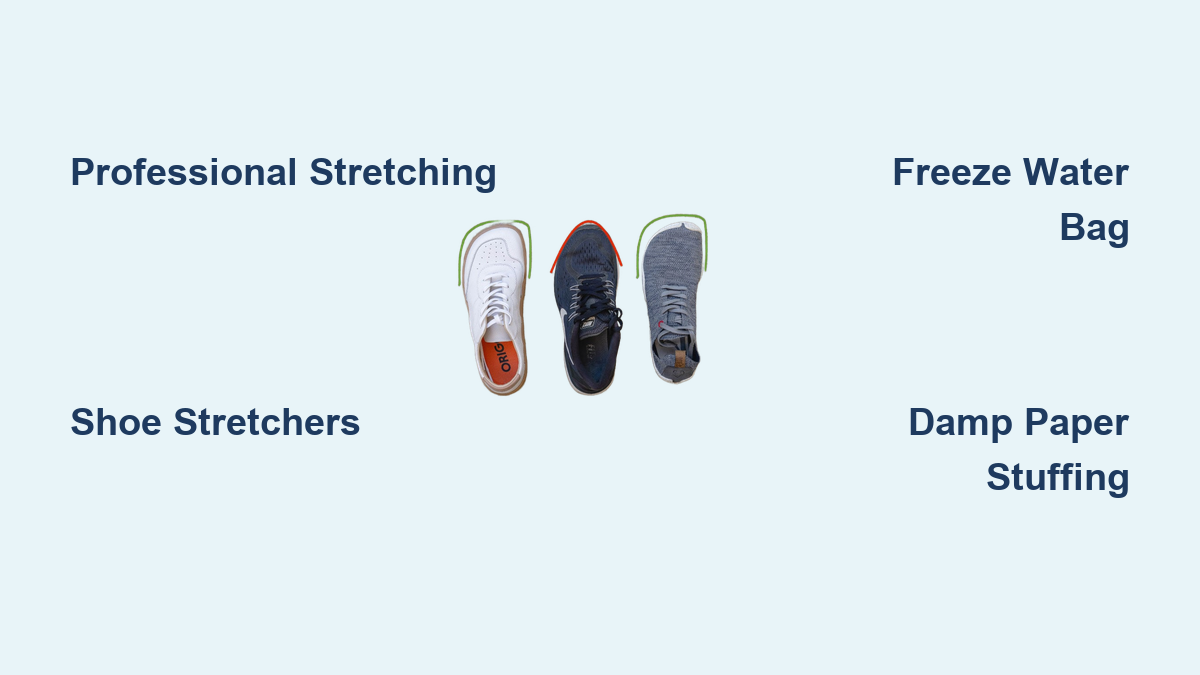
If your shoes squeeze your toes, leave red marks across the front of your feet, or cause numbness after short wear, you’re likely dealing with a narrow toe box. This common fit issue isn’t just uncomfortable—it can lead to long-term foot problems like bunions, hammertoes, and nerve damage. The good news? You don’t have to give up your favorite pair. With the right techniques, you can safely stretch and reshape shoes to match your foot’s natural width and shape.
This guide delivers practical, step-by-step solutions to fix tight toe boxes—whether you’re working with leather loafers, sneakers, or fabric flats. From professional cobbler services to DIY hacks using household items, you’ll learn how to widen shoes effectively without damaging them. Plus, you’ll discover how to prevent future fit issues by choosing better footwear and understanding your unique foot shape. Let’s stop forcing your feet into ill-fitting shoes and start making your shoes fit you.
Get Professional Shoe Stretching for Best Results
When comfort and shoe longevity matter, professional stretching is the most reliable solution. Cobblers use industrial machines that apply targeted pressure to widen the toe box, expand the instep, or stretch the ball of the foot—exactly where you need it.
Targeted Toe Box Expansion Without Damage
Shoe repair experts can focus expansion on specific areas, such as the sides of the big toe or pinky toe, where pressure builds. This precision prevents over-stretching the heel or arch.
- Machines use expandable bladders or metal rods to gently push outward.
- Can add up to half a size or more in width, especially in leather and suede.
- Ideal for formal shoes, boots, and high-end footwear you want to preserve.
Unlike DIY methods, professionals control temperature, moisture, and pressure to avoid warping or cracking the material.
What to Expect: Cost and Accessibility
Most cobbler services cost $5–$15 per shoe, depending on complexity and location. While dedicated shoe repair shops are less common today, many local shoe stores partner with repair services or offer drop-off options. Ice rinks and ski shops may also have boot stretchers that accept non-ice footwear—call ahead to confirm.
User Tip: “I had my lace-up dress shoes stretched for $6. No more pinched toes—and they still look brand new.”
If you own expensive or frequently worn shoes, this small investment pays off in long-term comfort and durability.
Use Adjustable Shoe Stretchers at Home

Four-way adjustable shoe stretchers are powerful home tools that mimic professional machines. They expand shoes in length, width, and height, making them perfect for fixing narrow toe boxes over time.
How to Stretch Shoes Gradually and Safely
- Insert the stretcher into the shoe, aligning the bunion plugs with tight spots (e.g., outer pinky toe or inner big toe).
- Turn the handle clockwise every 8–12 hours to increase tension.
- Leave in place for 24 to 72 hours.
- For better results, spray the toe box with a stretching solution before inserting.
This slow, steady pressure mimics natural wear and minimizes damage.
Best Materials for Home Stretching
- Leather: Responds exceptionally well.
- Suede: Use water-based sprays only.
- Fabric/canvas: Moderate success with added moisture.
- Rigid synthetics: Limited effectiveness—may crack under pressure.
Avoid over-tightening vegan leather shoes, as they’re prone to delamination.
Top-Rated Home Stretchers to Consider
- FootFitter: Durable with replaceable bunion plugs.
- Shoe Goo: Budget-friendly and effective.
- Brooklyn Shoe Space: Premium cedar models that absorb moisture and reduce odor.
Cedar stretchers not only shape your shoes but also help control smells and maintain structure between wears.
Apply Shoe Stretch Sprays and Oils for Flexible Expansion

Stretching sprays and oils soften shoe fibers, allowing them to expand when worn or stretched mechanically. These solutions are especially effective on leather and fabric uppers.
Choose the Right Formula for Your Shoe
| Type | Best For | Notes |
|---|---|---|
| Water-based sprays | All materials | Safe, mild action |
| Alcohol-based sprays | Leather, synthetics | Faster but can dry out materials |
| Neatsfoot oil | Pure leather only | Conditions while stretching |
Neatsfoot oil is a powerhouse—it can loosen leather enough to gain up to a full size in width.
Step-by-Step: How to Use Stretch Liquids
- Spray or brush the solution onto tight areas like the toe box and sides.
- Insert a shoe stretcher or wear the shoes with thick socks.
- Let dry completely for 6–12 hours—never rush with heat.
Avoid oversaturating, as excess liquid can weaken adhesives or discolor fabric.
Pro Tip: “Neatsfoot oil gave my boots a full size of stretch and kept the leather soft.”
Always test on a small, hidden area first if you’re concerned about color changes.
Mold Shoes to Your Feet Using Heat
Heat softens materials so they conform to your foot shape when worn. This method works well for minor tightness in flexible uppers like leather or canvas.
Hair Dryer + Thick Socks Method
- Put on two or three pairs of thick socks.
- Wear the shoes and fasten them fully.
- Use a hair dryer on medium heat to warm the toe box for 20–60 seconds.
- Walk around for 5–10 minutes while the shoe cools on your foot.
Repeat 2–3 times if needed.
Which Shoes Can Handle Heat?
- ✅ Leather, canvas, synthetic uppers: Good candidates.
- ⚠️ Suede, patent leather, bonded fabrics: High risk of damage.
- ❌ Glue-constructed shoes: Heat may loosen soles.
Warning: One user reported the sole detaching from their Vans after overheating.
After treatment, apply leather conditioner to prevent cracking and dryness.
Try the Frozen Water Bag Trick for Non-Leather Shoes

This chemical-free, low-cost method uses water’s natural expansion when frozen to gently stretch fabric and canvas shoes.
How to Freeze Shoes Wider
- Fill a zip-close plastic bag halfway with water.
- Place it inside the shoe, positioning it in the toe box.
- Seal and put the shoe in the freezer overnight.
- As water freezes, it expands—pushing the material outward.
- Remove the bag once thawed.
Ideal for Sneakers and Canvas Shoes
- Works exceptionally well on sneakers, espadrilles, and canvas shoes.
- Allows custom shaping based on where you place the bag.
- Safe and repeatable.
Tip: Use warm water to slow freezing and allow gradual pressure buildup.
User Review: “I’m buying these shoes again—they were tight at first, but the freezer trick fixed them perfectly.”
Stuff Shoes with Damp Paper for Gentle Expansion
A simple, no-cost hack using household items to create slow, steady stretching.
How to Do It Right
- Crumple damp (not dripping) newspaper or paper towels.
- Pack tightly into the toe and forefoot area.
- Leave for 12–48 hours.
- Replace with fresh damp paper if needed.
As the paper dries, it expands slightly and holds its shape, encouraging the shoe to stretch.
Best Results With
- Soft leather
- Canvas
- Knit uppers
Avoid soaking the paper—too much moisture can warp glue or promote mold.
This method is perfect for slightly narrow shoes and requires no special tools.
Break In Shoes Gradually at Home
Sometimes, the best fix is time and patience. Let your body do the work.
Wear Shoes in the Evening for Natural Stretching
Feet naturally swell during the day and are largest by evening—making it the best time to break in tight shoes.
- Start with 15–30 minutes of wear around the house.
- Gradually increase duration over several days.
- Walk on carpet to protect soles if returns are possible.
This mimics the natural break-in process and reduces shock to both foot and shoe.
Combine With Moisture for Faster Results
Wear shoes while slightly damp—either by:
– Spraying the inside lightly with water
– Wearing them in light rain
– Putting them on wet feet (with protection like socks)
As the shoe dries on your foot, it molds to your shape.
Caution: Never force this with severely tight shoes—it can cause blisters or long-term foot damage.
Avoid this method with suede, which can stain or stiffen when wet.
Modify Lacing and Insoles for Instant Relief
No stretching required. These quick fixes improve fit immediately.
Remove the Insoles
Taking out removable insoles creates instant space in the toe box by reducing upward pressure.
- Works best in sneakers (Nike, Adidas, New Balance).
- Avoid in shoes with molded footbeds (like Vans Old Skool).
Sneaker Head Trick: “The Foot Locker guy pulled out my insoles—suddenly the fit was perfect.”
You can always reinsert them later or replace with thinner orthotics.
Skip Lace Holes
Lace only the lower eyelets, skipping the upper ones over the forefoot.
- Reduces top pressure on the metatarsals.
- Lets the front of the shoe open wider.
- Great for high insteps or wide forefeet.
Pair with elastic laces for continuous flexibility.
Use Elastic Laces
Brands like Lock Laces or FixLaces provide stretch across the instep without loosening.
- Eliminates pressure points from tight lacing.
- Makes shoes easier to slip on and off.
- Ideal for swollen feet or arthritis.
Add Heel Lifts
A small lift can shift foot position, reducing forward slide and toe compression.
- Helps if your heel slips but toes are jammed.
- Encourages a more natural gait.
Use adhesive or removable lifts available at drugstores.
Immediate Comfort Hacks
Can’t stretch right now? These temporary fixes reduce pain and friction.
- Apply Vaseline to pressure points to prevent blisters.
- Use deodorant on the heel collar for smoother entry.
- Wear thin, low-bulk socks (running or compression) to maximize room.
- Insert gel pads or bunion shields to protect sensitive areas.
These don’t change the shoe’s size but make tight shoes more bearable.
Match Methods to Shoe Materials

Not all shoes respond the same. Choose the right technique for your material.
| Material | Best Methods | Avoid |
|---|---|---|
| Vegetable-tanned leather | Stretch sprays, shoe trees, neatsfoot oil | Excessive heat |
| Chrome-tanned leather | Professional stretching | Damp methods (can stiffen) |
| Suede | Professional, water-based sprays | Hair dryer, soaking |
| Canvas/fabric | Frozen bag, damp paper, heat + socks | High heat |
| Synthetic/vegan leather | Light spray only | Heat, moisture (delamination risk) |
| Knit/stretch uppers | Wear-in only | No stretching needed |
Key Fact: Only vegetable-tanned leather truly breaks in over time. Most modern materials barely stretch.
Prevent Future Fit Problems
Avoid narrow toe boxes before they start.
Shop Smart: Time Matters
- Try shoes on late in the day when feet are swollen.
- Wear the socks you plan to use with the shoes.
- Walk on hard floors to test real-world comfort.
- Check the return policy—especially for online purchases.
Trace Your Feet
- Stand barefoot on paper.
- Trace around both feet.
- Measure:
– Length: Heel to longest toe
– Width: Widest part (usually ball of foot)
– Circumference: Around the ball
Compare to brand-specific charts—many companies offer extended widths.
Expert Insight: “Length and width don’t tell the full story. Circumference is the real key to fit.”
Final Note: Narrow toe boxes are a design flaw, not a foot flaw. With the right techniques, you can reclaim comfort without sacrificing style. Prioritize professional stretching for valuable shoes, use home methods for minor fixes, and always protect your foot health. Your feet are unique—your shoes should adapt to you.