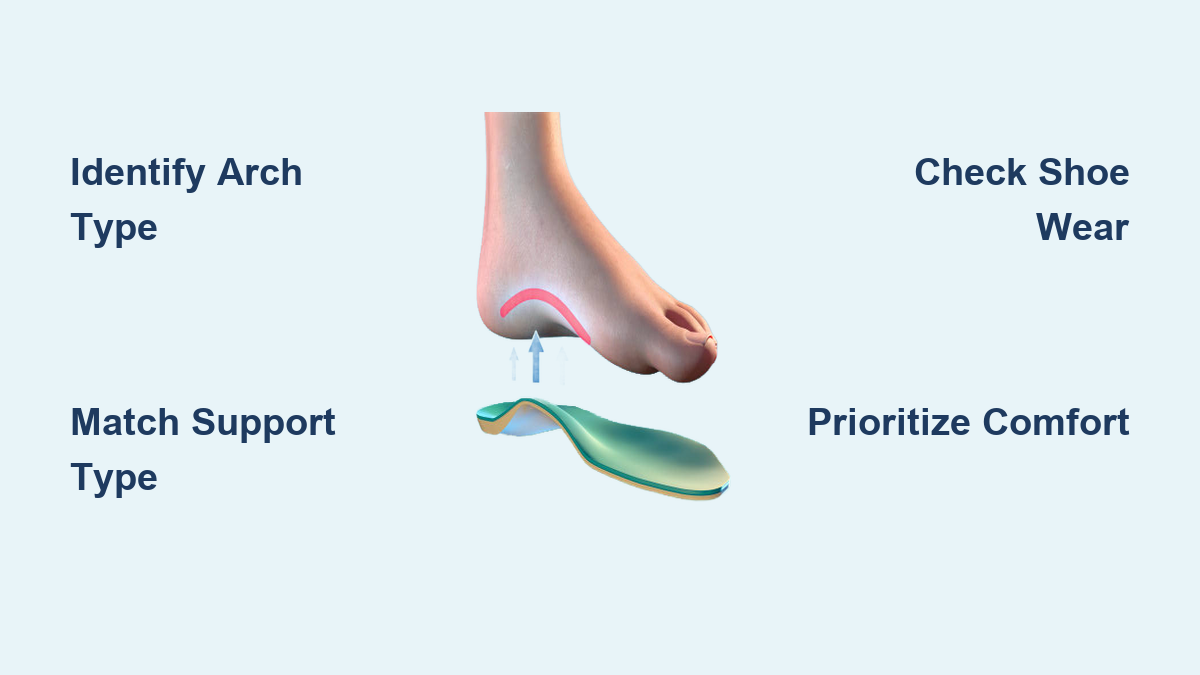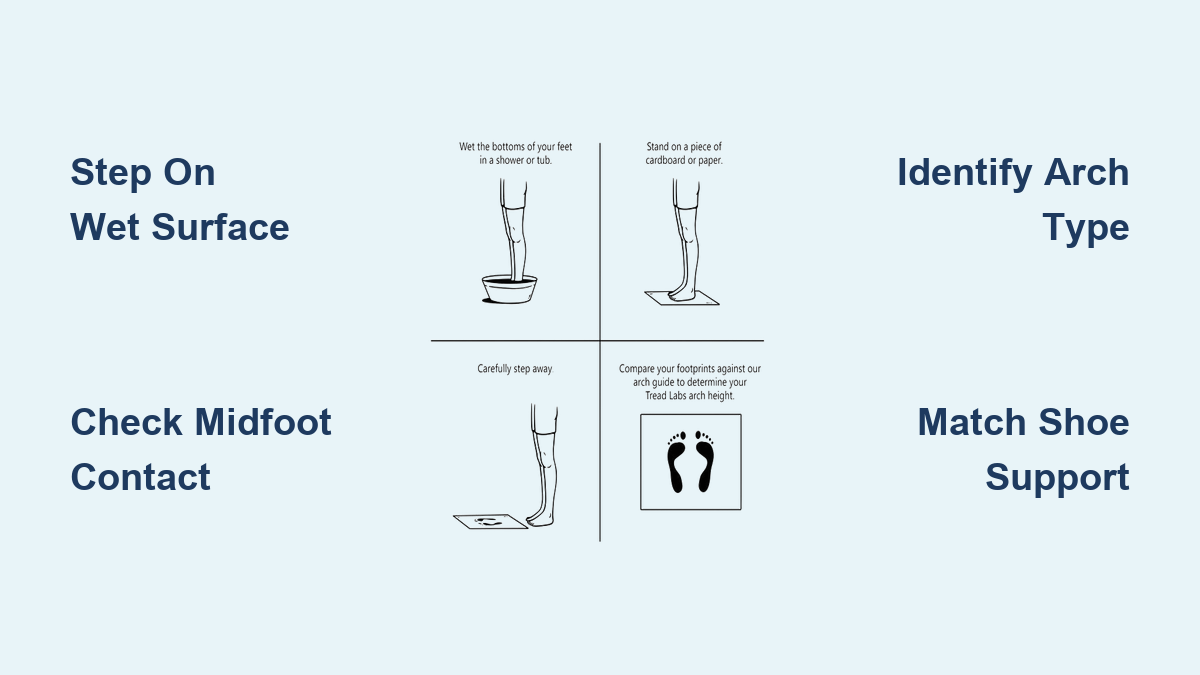
If your feet ache after standing, your shoes wear out too quickly, or running feels uncomfortable no matter what you try, the root cause may lie in your arch type. One of the simplest, most effective ways to uncover this hidden factor is the wet foot test—a quick, free, at-home method that reveals whether you have flat feet, normal arches, or high arches just by stepping on a dry surface with wet feet.
This test captures how much of your midfoot touches the ground under weight, which directly affects your gait, pronation (inward roll), and injury risk. The footprint you leave behind acts like a map of your foot’s biomechanics, helping you choose the right shoes, prevent pain, and protect your knees, hips, and back from long-term strain.
In this guide, you’ll learn how to perform the wet foot test accurately, interpret your results, identify signs of overpronation or supination, and match your arch type to the best footwear and insoles—so you can move with comfort and confidence every day.
How to Perform the Wet Foot Test: Step-by-Step
The wet foot test is easy to do at home with minimal supplies, but doing it correctly is key to accurate results.
Gather Your Materials
You’ll need:
– A shallow tray or pan (like a baking dish)
– About half an inch of water
– A dry, absorbent surface (e.g., brown paper bag, cardboard, concrete, or pavement)
Follow These Steps
- Fill the tray with enough water to wet your entire sole—don’t soak your foot.
- Step into the water, making sure your heel, arch, and ball are fully moistened.
- Step firmly onto the dry surface, placing your full body weight on the foot.
- Hold for 2–3 seconds to create a clear imprint, then lift straight up—no dragging.
- Examine the wet footprint left behind.
- Repeat with the other foot—many people have slight differences between feet.
- Take a photo for reference or comparison over time.
Critical Tip: Always perform the test while standing. Your arch collapses under load, so checking your foot while sitting or lifting it off the ground won’t reflect how it functions during walking or running.
Interpreting Your Footprint: 3 Arch Types

Your footprint reveals your arch type based on how much of the midfoot makes contact with the ground.
Normal (Neutral) Arch
- Footprint Appearance:
A clear but narrow band connects the heel and forefoot along the inner side. About half of the midfoot is filled in, showing a distinct inward curve. - What It Means:
Your foot pronates slightly to absorb shock, then rolls outward smoothly to push off—this balanced motion is ideal for efficient movement. - Injury Risk: Low to moderate.
- Prevalence: Found in roughly 30–40% of people.
✅ Choose neutral cushioned shoes
✅ Benefits from moderate support and flexibility
✅ Shows even shoe wear under heel and forefoot
Flat Feet (Low Arches / Overpronation)

- Footprint Appearance:
The imprint is almost completely filled in, with little to no inward curve. The midfoot touches the ground fully—often described as a “blob” or solid footprint. - What It Means:
Your foot rolls too far inward (overpronation), which can misalign your ankles, knees, and hips over time. - Common Injuries Include:
- Plantar fasciitis
- Shin splints
- Bunions
- Achilles tendonitis
- Knee and lower back pain
Flexible vs. Rigid Flat Feet
- Flexible: Arch appears when standing on tiptoes—needs medium arch support.
- Rigid: No arch even when not bearing weight—requires low arch support to avoid discomfort.
⚠️ Avoid soft, cushioned insoles—they lack structure and worsen instability
⚠️ Look for stability or motion-control shoes with a medial post
High Arches (Cavus Foot / Supination)

- Footprint Appearance:
Only the heel, ball, and toes leave a mark. The midfoot shows little or no contact—sometimes just a thin line or complete gap. - What It Means:
Your foot doesn’t pronate enough, leading to poor shock absorption. Weight concentrates on the outer edge, heel, and ball of the foot. - Common Injuries Include:
- Stress fractures
- Ankle sprains
- Metatarsalgia (ball-of-foot pain)
- Calluses and corns
- Plantar fasciitis (from high tension)
✅ Needs maximum cushioning to compensate for rigidity
✅ Prefers flexible, lightweight shoes that encourage natural motion
✅ Avoid stiff, motion-control footwear—it restricts needed movement
Signs Your Arch Type Is Causing Problems
Even if your wet test result seems normal, symptoms can reveal underlying issues.
Clues You Have Flat Feet
- Tired, aching feet after short periods of standing
- Pain in the arch or heel, especially in the morning
- Swelling along the inner ankle
- Difficulty standing on tiptoes
- Shoe wear on the inner edge of the sole
- Finger test: When standing, a friend can’t slide a finger under your arch—this means it’s collapsed
Clues You Have High Arches
- Pain under the heel or ball of the foot
- Feeling like you’re walking on rocks
- Frequent ankle rolls or lateral instability
- Shoe wear on the outer edge
- Clawed or hammer toes
- Calluses under the forefoot
Confirm Your Results: 3 Complementary Tests
Shoe Wear Pattern Test
Check the outsole of an old pair of walking or running shoes:
– Inner wear → Overpronation (flat feet)
– Outer wear → Supination (high arches)
– Center wear → Neutral gait
Combine this with your wet test for a more accurate picture.
Gait Observation Test
Have someone watch you walk or run barefoot:
– Overpronation: Foot visibly rolls inward; arch flattens during stance
– Supination: Foot stays on the outside edge; stiff, bouncy stride
Look for uneven shoulder or hip drop—signs of imbalance from foot mechanics.
Tiptoe Test for Flexible Flat Feet
Stand on your tiptoes:
– Arch forms? → Flexible flat foot (use medium arch support)
– No arch? → Rigid flat foot (use low arch support)
Using a high arch insole on rigid flat feet can feel like stepping on a golf ball.
How Arch Type Affects Your Body
| Arch Type | Shock Absorption | Stability | Pronation Level | Common Issues |
|---|---|---|---|---|
| Normal | Optimal | High | Balanced | Minimal risk |
| Flat | Inefficient | Low | Excessive (overpronation) | Joint pain, fatigue |
| High | Poor | Low (laterally) | Limited (supination) | Impact injuries |
Chain Reaction: Poor foot mechanics don’t stop at your feet. Overpronation can cause knee valgus (“knock knees”), hip rotation, and lower back strain. Supination increases stress on ankle ligaments and metatarsals.
Best Shoes by Arch Type
Normal Arches: Neutral Cushioned Shoes
- Look for: Moderate cushioning, firm heel counter, flexible forefoot
- Replace every 300–500 miles or 18 months
- Best surfaces: Trails, tracks, grass—avoid concrete when possible
👟 Examples: Brooks Ghost, Nike Pegasus, ASICS Gel-Nimbus
Flat Feet: Stability or Motion-Control Shoes
- Look for: Medial post, structured heel, supportive upper
- Avoid: Overly soft or flexible shoes—they worsen instability
👟 Examples: Brooks Adrenaline GTS, ASICS Gel-Kayano, Saucony Guide
High Arches: Cushioned, Flexible Shoes
- Look for: Maximum cushioning, lightweight build, rockered sole
- Avoid: Rigid or motion-control shoes—they block needed movement
👟 Examples: Hoka Clifton, Brooks Glycerin, New Balance Fresh Foam
Choosing the Right Insoles
General Rules
- Match insoles to your arch height, not comfort alone
- Use firm, durable materials that hold shape
- Consider custom orthotics if pain persists
Insoles for Normal Arches
- Moderate arch support
- Focus on heel stabilization and light cushioning
Insoles for Flat Feet
- Flexible flat feet → Medium arch
- Rigid flat feet → Low arch
- Avoid high-arch insoles—they cause pressure
- Look for medial support + deep heel cup
✅ Recommended: Superfeet Green, Powerstep MaxFit
Insoles for High Arches
- High or extra-high arch fill
- Full-length cushioning to reduce pressure
- Prioritize shock absorption
✅ Recommended: Sof Sole Airr, Spenco Polysorb, FootBalance MAX
❗ Warning: Wrong arch height = pain. If it feels like a rock under your foot, the arch is too high.
When to See a Professional
The wet foot test is a great starting point—but it’s not a diagnosis.
See a Podiatrist or Physical Therapist If:
- You have ongoing foot, heel, or arch pain
- One foot looks very different from the other
- Over-the-counter insoles don’t help
- You’ve had repeated ankle sprains or stress fractures
- You suspect a structural issue
What a Professional Can Do
- Perform gait analysis (video or pressure plate)
- Use 3D foot scanning or weight-bearing X-rays
- Prescribe custom orthotics
- Test muscle strength and flexibility
- Offer targeted rehab exercises
Some clinics use treadmill-based systems with motion sensors to measure exact pronation angles and pressure zones.
Limitations of the Wet Foot Test
While useful, the wet test has limits:
Pros:
- Free, easy, and fast
- Reflects weight-bearing function
- Helps rule out extreme arch types
Cons:
- Subjective interpretation—results vary by observer
- Doesn’t capture dynamic movement or pressure distribution
- May miss subtle imbalances
- Can’t diagnose medical conditions like posterior tibial tendonitis
Combine it with shoe wear, symptoms, and movement tests for better accuracy.
Debunking Common Myths
❌ “Flat feet need high arch insoles to fix them”
False. High arches can hurt flat feet. Use low or medium support based on flexibility.
❌ “High arches don’t need insoles”
False. They need cushioning and pressure relief, even if not rigid support.
❌ “Shoe wear always matches arch type”
Not always. Running style, terrain, and shoe design affect wear patterns.
Key Takeaways
- The wet foot test helps identify your arch type using a simple water footprint.
- Three types: normal, flat (low), high—each affects gait and injury risk.
- Always test while standing—non-weight-bearing checks are inaccurate.
- Check both feet—asymmetry is common and meaningful.
- Arch type guides shoe choice, insole selection, and injury prevention.
- Flat feet often overpronate; high arches tend to supinate.
- Match insoles to your arch height and flexibility—not just comfort.
- The test is a screening tool, not a medical diagnosis.
Final Note
Your arch type is mostly genetic—but how it affects your life isn’t set in stone. With the right shoes, proper insoles, and awareness of your biomechanics, any arch type can stay pain-free and active. Whether you’re a runner, walker, or just on your feet all day, knowing your footprint is the first step toward healthier, happier feet.