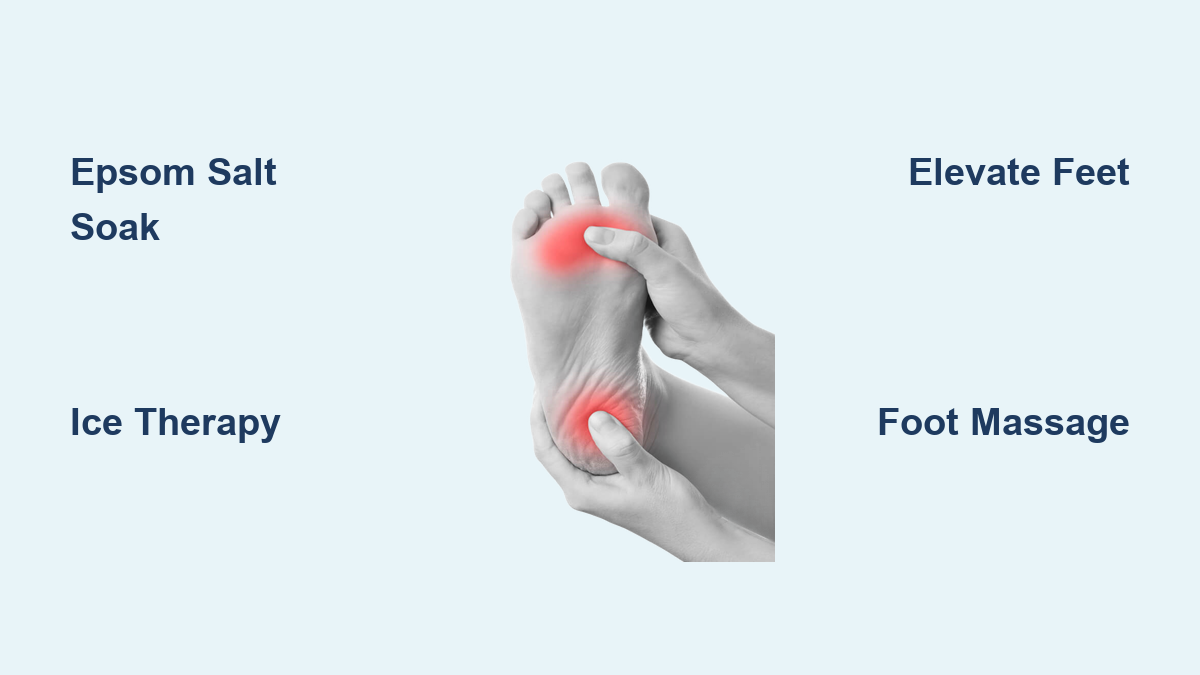
If you’ve just clocked out after 10 hours on your feet—whether as a nurse, server, retail associate, or warehouse worker—you know that deep, throbbing ache in your soles, heels, and arches. It’s not just fatigue; it’s your body signaling that your feet have endured hours of repetitive stress, poor circulation, and impact on unforgiving floors. Millions in physically demanding jobs face sore feet after a long shift, but here’s the truth: this pain doesn’t have to be your normal. With the right recovery techniques, supportive gear, and daily habits, you can relieve discomfort fast and prevent it from coming back. This guide delivers actionable, science-backed steps to treat sore feet after a long shift—so you can walk out of work feeling strong, not broken.
Soak Sore Feet in Epsom Salt for Fast Relief
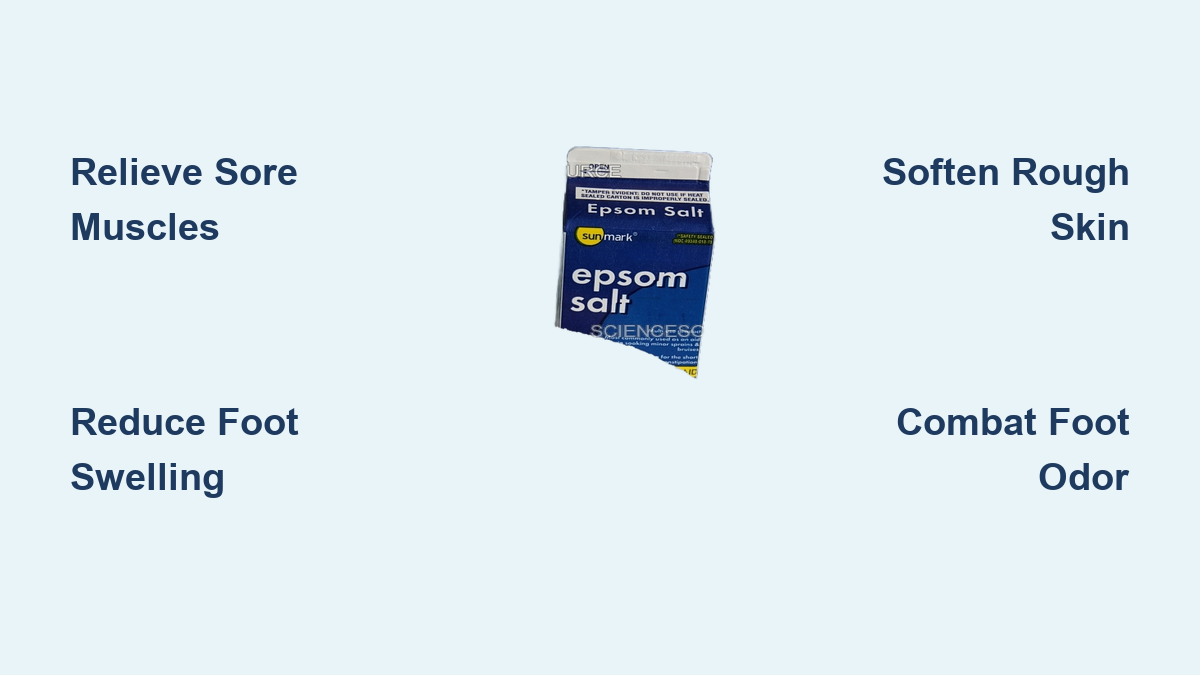
One of the quickest ways to ease tired, swollen feet is a warm Epsom salt soak. The magnesium in Epsom salt (magnesium sulfate) may help reduce inflammation and relax overworked muscles. Warm water boosts circulation, loosens stiff tissues, and soothes nerve endings.
Fill a basin with warm—not hot—water (around 92–100°F) and dissolve ½ to 1 cup of Epsom salt. Soak your feet for 15–30 minutes, ideally 2–3 times per week. For added relaxation, include a few drops of lavender or eucalyptus essential oil. Avoid soaking if you have open wounds, diabetes, or poor circulation—these conditions increase infection risk. If you’re diabetic, always inspect your feet afterward and consult your doctor before starting any soaking routine.
Ice Sore Areas to Reduce Swelling and Pain

When your heels or arches throb, especially in the morning or after standing all day, ice therapy can be a game-changer. Cold reduces inflammation, numbs nerve pain, and slows nerve signals that trigger discomfort—ideal for conditions like plantar fasciitis or heel spurs.
Wrap a frozen water bottle, ice pack, or bag of frozen peas in a thin towel to protect your skin. Apply to the most painful area—usually the heel or ball of the foot—for 10–15 minutes, 2–3 times daily. For dual benefit, roll a frozen water bottle under your foot for 5 minutes. This combines cryotherapy with deep tissue massage, breaking up tight fascia and improving flexibility. Use ice for new or acute pain; reserve heat for chronic stiffness.
Elevate Feet to Combat Swelling and Fatigue
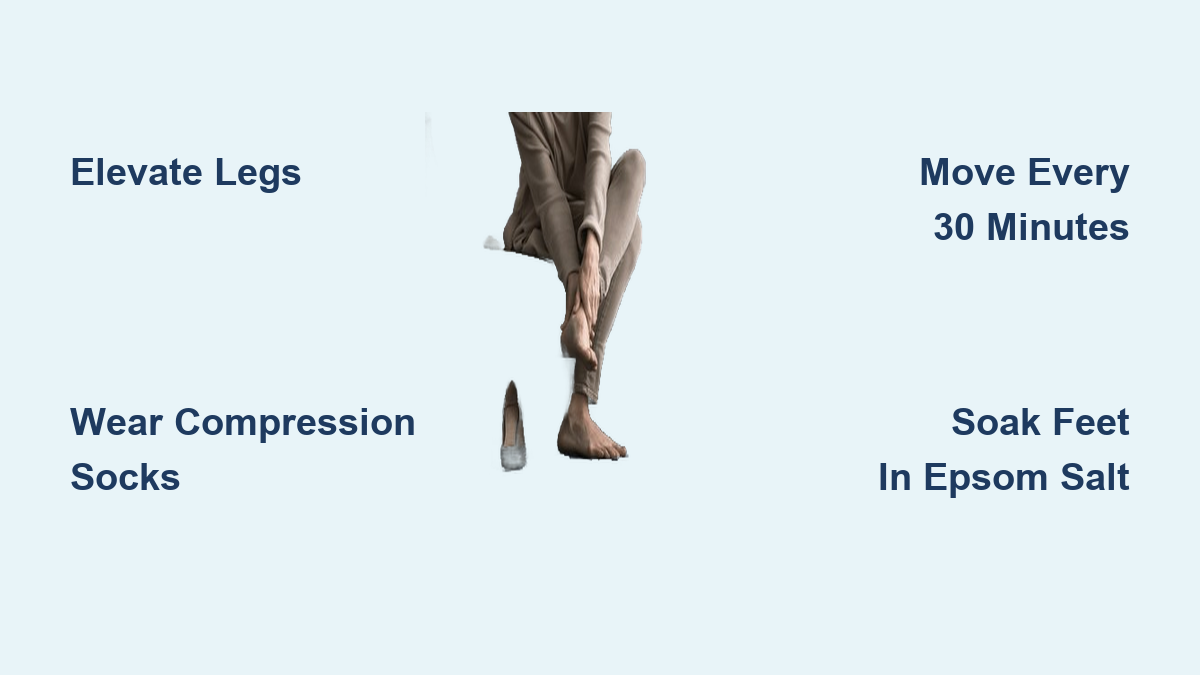
Swollen, heavy feet often result from fluid pooling due to prolonged standing. Elevating your feet helps reverse this by aiding venous return—allowing blood and lymph fluid to flow back toward your heart.
Lie down and prop your feet above heart level using pillows or by resting them against a wall. Aim for 15–20 minutes right after your shift. This simple act can dramatically reduce that “filled with cement” sensation. For deeper relief, combine elevation with gentle ankle circles to stimulate circulation.
Massage Feet to Loosen Tight Muscles and Boost Circulation
A good foot massage does more than feel great—it increases blood flow, reduces muscle tension, and breaks up adhesions in the plantar fascia.
Use your thumbs to press firmly along the arch and heel, working from the toes toward the heel. Gently pull and flex each toe to release tension. For self-massage, roll your foot over a tennis ball, foam roller, or frozen water bottle for 5–10 minutes. This targets trigger points and stretches tight tissues. Apply moisturizer or lotion to reduce friction. If you’re short on time, an electric foot massager with heat and vibration offers consistent relief with minimal effort.
Use OTC Pain Relievers and Topical Gels Wisely
Over-the-counter medications can help manage pain and inflammation when used correctly.
For both pain and swelling, ibuprofen (Advil) or naproxen (Aleve) are effective NSAIDs. Acetaminophen (Tylenol) helps with pain but doesn’t reduce inflammation. Always follow label instructions and avoid long-term use without medical supervision—especially if you have kidney, liver, or stomach issues.
For targeted relief, try topical gels or creams with menthol, eucalyptus, salicylates, or capsaicin. These create cooling or warming sensations that distract from deep aches and penetrate directly to sore areas. Apply after soaking or massaging for best results.
Wear Supportive Shoes That Fit Your Feet Perfectly

Your shoes are your first line of defense. Worn-out, flat, or unsupportive footwear worsens fatigue, alters posture, and increases injury risk.
Look for arch support, cushioned midsoles, and a roomy toe box. Your heel should stay locked in place without slipping. There should be ½ inch (about a thumb’s width) between your longest toe and the shoe tip.
Running shoes are often ideal for long shifts—they’re designed for impact absorption and stability. Avoid high heels, flip-flops, and basic foam clogs like Crocs, which offer minimal support. Replace shoes every 300–500 miles or when cushioning feels flat—even if the outer sole looks fine.
Insert Orthotics to Correct Foot Mechanics and Reduce Strain

Even supportive shoes may lack the arch support your feet need. Over-the-counter orthotics can fill the gap by providing structured cushioning and correcting mild overpronation.
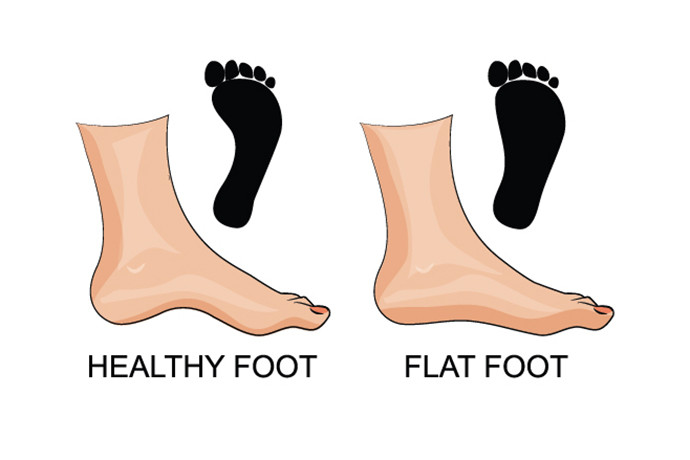
Choose firm, semi-rigid insoles over soft foam ones—they offer real support instead of just padding. Look for models designed for plantar fasciitis, flat feet, or high arches. Replace every 6–12 months. For persistent pain or biomechanical issues, custom orthotics from a podiatrist offer superior correction. These are molded to your foot and can realign your gait, reducing strain on the plantar fascia, knees, and lower back.
Wear Compression Socks to Improve Circulation and Reduce Swelling
Compression socks are a must for anyone on their feet all day. They apply graduated pressure—tightest at the ankle, looser toward the calf—to help blood flow back to the heart. This reduces swelling, fatigue, and the risk of varicose veins or deep vein thrombosis (DVT).
Choose 15–20 mmHg compression for daily wear. Modern styles come in colors and lengths that fit under scrubs, uniforms, or dress shoes. Put them on first thing in the morning before swelling sets in. Many users report feeling lighter and more energized throughout their shift.
Stretch Calves and Feet Daily to Prevent Plantar Fasciitis
Tight calves and stiff arches are major contributors to foot pain. Stretching first thing in the morning prevents the sharp heel pain common with plantar fasciitis.
Try the towel stretch: Sit with one leg straight, loop a towel around the ball of your foot, and gently pull toward you. Hold 30–45 seconds, repeat 2–3 times per foot.
Do the wall stretch: Step one foot back, keep the heel down, and lean forward until you feel a stretch in the calf. Hold 30 seconds, switch sides.
Also try ankle circles—rotate each ankle 10–15 times clockwise and counterclockwise to improve joint mobility and circulation.
Strengthen Foot Muscles to Reduce Fatigue and Improve Stability
Weak foot muscles lead to instability and overuse injuries. Strengthening exercises build endurance and support the arch.
Do towel scrunches: Place a towel on the floor and use your toes to pull it toward you. Perform 10 reps per foot.
Try marble pickups: Use your toes to grab marbles and drop them in a cup—this builds intrinsic foot strength.
Practice toe splay: Sit with feet flat and spread your toes as wide as possible. Hold 5 seconds, repeat 10 times.
Add heel raises: Rise onto your toes, then lower slowly. Do 10–15 reps. For more challenge, stand on a step and lower your heels below the edge.
Take Breaks, Use Anti-Fatigue Mats, and Rotate Shoes
Small changes at work make a big difference.
Take 2–3 minute breaks every 1–2 hours to sit, stretch, or walk. Even shifting your weight from foot to foot reduces pressure.
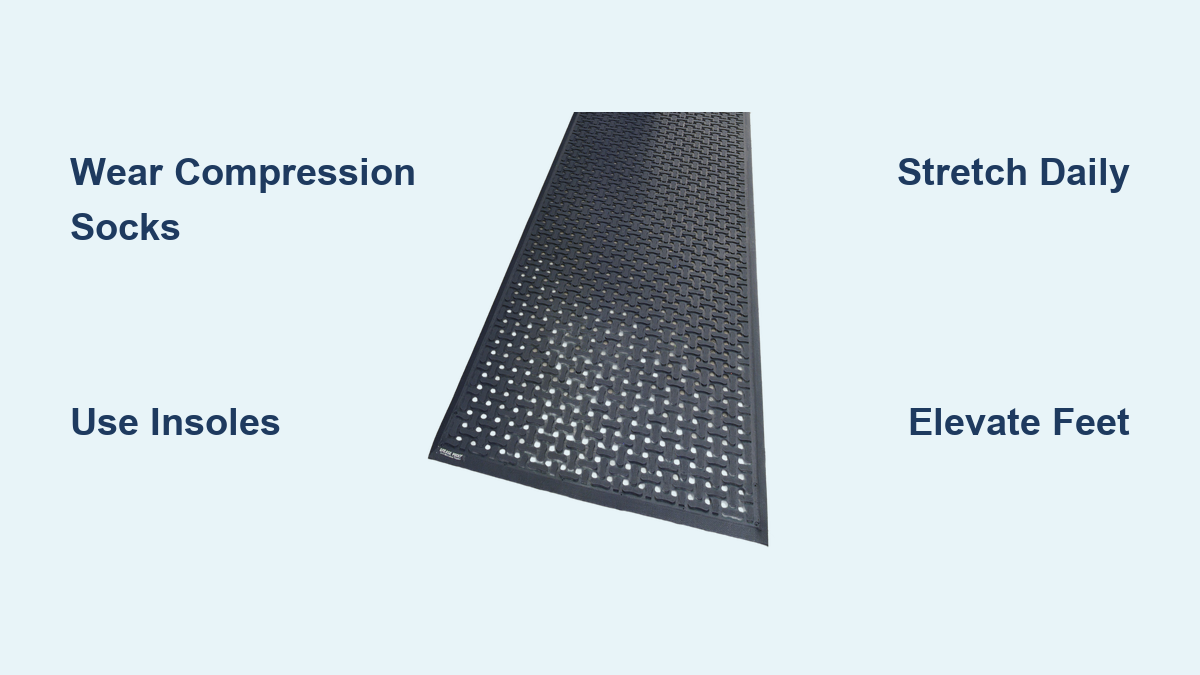
Use anti-fatigue mats if allowed—these cushioned surfaces absorb shock and reduce muscle fatigue at checkout counters, kitchen stations, or desks.
Rotate between two or more supportive shoe pairs to let each pair decompress and dry out. This also prevents repetitive strain on the same foot structures.
Maintain a Healthy Weight and Eat Anti-Inflammatory Foods
Every extra pound adds 3–4 times more pressure to your feet with each step. Excess weight increases your risk of plantar fasciitis, heel spurs, and joint pain.
Stay hydrated—dehydration leads to muscle cramps and stiffness. Drink water throughout your shift.
Eat foods rich in magnesium (spinach, almonds, bananas), calcium and vitamin D (dairy, fortified foods), and omega-3s (salmon, flaxseeds). These nutrients support muscle function, bone strength, and reduce inflammation.
Watch for Warning Signs That Need Medical Attention
Most foot pain improves with self-care, but some symptoms require a doctor. Seek help if you have:
– Pain lasting more than 2–3 weeks despite home treatment
– Severe swelling, redness, or warmth—possible infection or blood clot
– Numbness, tingling, or burning—especially if you’re diabetic
– Open sores or non-healing cuts
– Inability to bear weight—could indicate a fracture
– Visible deformities like growing bunions or hammertoes
Diabetics: Inspect feet daily. Never walk barefoot. See a podiatrist regularly—even minor issues can become serious quickly.
Build a Daily Foot Care Routine to Stay Pain-Free
Consistency prevents long-term damage.
Morning: Stretch calves and arches before getting out of bed.
During work: Wear supportive shoes, compression socks, and take micro-breaks.
Evening: Remove shoes, massage feet, elevate for 15–20 minutes, and soak or ice as needed. Apply moisturizer to prevent cracking. Do strengthening exercises.
Weekly: Check for calluses, exfoliate with a pumice stone, rotate or replace worn shoes, and assess insoles.
Sore feet after a long shift don’t have to be your reality. Start tonight: soak your feet, do a few stretches, and plan to upgrade your work shoes. Your feet carry you through every shift—give them the care they deserve.