If your feet, calves, or lower legs throb after hours on concrete, tile, or hardwood floors, you’re not imagining it—your body is sending a clear message. Millions of workers in healthcare, retail, manufacturing, and hospitality endure daily discomfort from prolonged standing on unforgiving surfaces. This isn’t just fatigue; it’s physical stress taking a toll on your muscles, joints, and circulation. Left unchecked, it can lead to chronic conditions like plantar fasciitis, varicose veins, or even joint degeneration. But relief is within reach. With the right combination of supportive footwear, movement habits, recovery techniques, and workplace adjustments, you can reduce pain, improve blood flow, and protect your foot health—starting today.
Choose the Right Supportive Shoes for Hard Floors
Your shoes are your first defense against floor-related pain. Worn-out, flat, or poorly structured footwear turns every step into a jolt of discomfort. The ideal work shoe absorbs impact, supports your arches, and aligns your posture to reduce strain.
What to Look for in Pain-Relieving Work Shoes
- Cushioned midsole: Absorbs shock and reduces pressure on joints
- Firm arch support: Prevents overpronation and stabilizes your foot
- Heel cushioning: Protects the plantar fascia and heel bone
- Slight heel lift (1–2 cm): Improves biomechanics and reduces calf tension
- Roomy toe box: Prevents nerve compression and bunions
- Rigid, stable sole: Avoid overly flexible soles that lack support
Replace your shoes every 300–500 miles or when the cushioning feels flat. Even the best shoes lose effectiveness over time.
Top Shoe Brands That Reduce Standing Pain

- Hoka One One (e.g., Hoka Clinton): Maximal cushioning ideal for long shifts
- OnCloud Cloudmonster: Favored by chefs for comfort on concrete
- New Balance: Offers excellent arch support and wide widths
- Alegria: Nurse-approved for all-day comfort and slip resistance
- Merrell: Durable with strong structural support
- Saucony: High energy return, even for non-runners
- Timberland/White’s Boots: Lightweight composite-toe options for industrial settings
Pro Tip: Always test shoes with your typical work socks. Walk around your home first to check for pressure points or instability.
Use Insoles and Orthotics to Boost Support

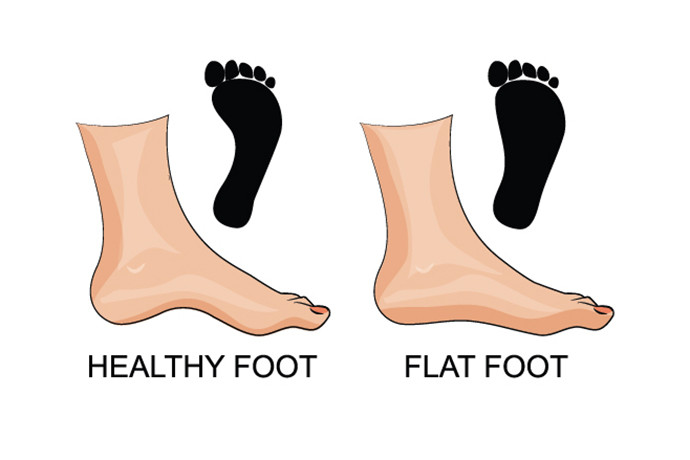
Even high-quality shoes may lack sufficient support—especially if you have flat feet, high arches, or existing foot pain. Insoles fill the gap, offering targeted relief and improved alignment.
Over-the-Counter Insoles for Daily Relief
- Cost: $40–$75
- Lifespan: 6–9 months
- Best for: Cushioning, mild arch support, heel pain relief
Top picks include:
– Superfeet: Firm arch stabilizer for biomechanical correction
– Dr. Scholl’s Custom Fit: Alleviates heel and calf pain
– Birkenstock cork inserts: Add support over factory insoles
– Gel or memory foam: Immediate comfort boost
Use the Superfeet Fit Finder tool to choose the right model. Apply code WORKRIGHT15 for 15% off.
Custom Orthotics for Chronic Pain
Custom orthotics are molded from your foot impressions by a podiatrist or pedorthist. They correct gait imbalances, overpronation, or prior injuries and can last for years. Ideal for:
– Plantar fasciitis
– Diabetes-related foot issues
– Persistent heel or arch pain
Warning: Avoid soft, squishy insoles—they collapse under long-term use. Opt for firm, structured support.
Stand on Anti-Fatigue Mats to Reduce Strain
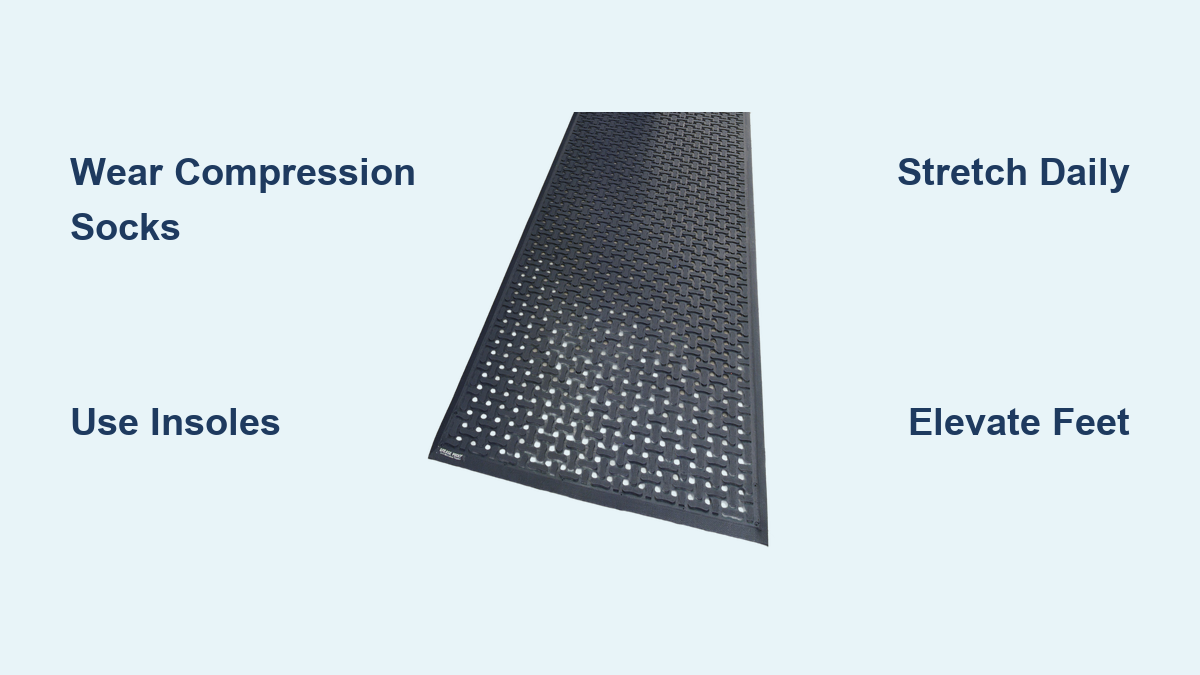
Hard floors offer zero shock absorption, increasing joint and muscle fatigue. Anti-fatigue mats reduce this strain by encouraging micro-movements and absorbing impact.
Best Mat Options for Standing Workstations
- Rubber anti-fatigue mats: Durable for kitchens, labs, and factory lines
- Ergonomic standing mats: Available through safety supply vendors
- DIY solutions: Thick cardboard, wooden platforms, or rubber doormats
OSHA Note: Employers may be required to provide mats in fixed workstations under safety regulations.
Limitation: Less practical for mobile roles like nurses or servers, but ideal for cashiers, assembly line workers, or lab techs.
Wear Compression Socks to Improve Circulation
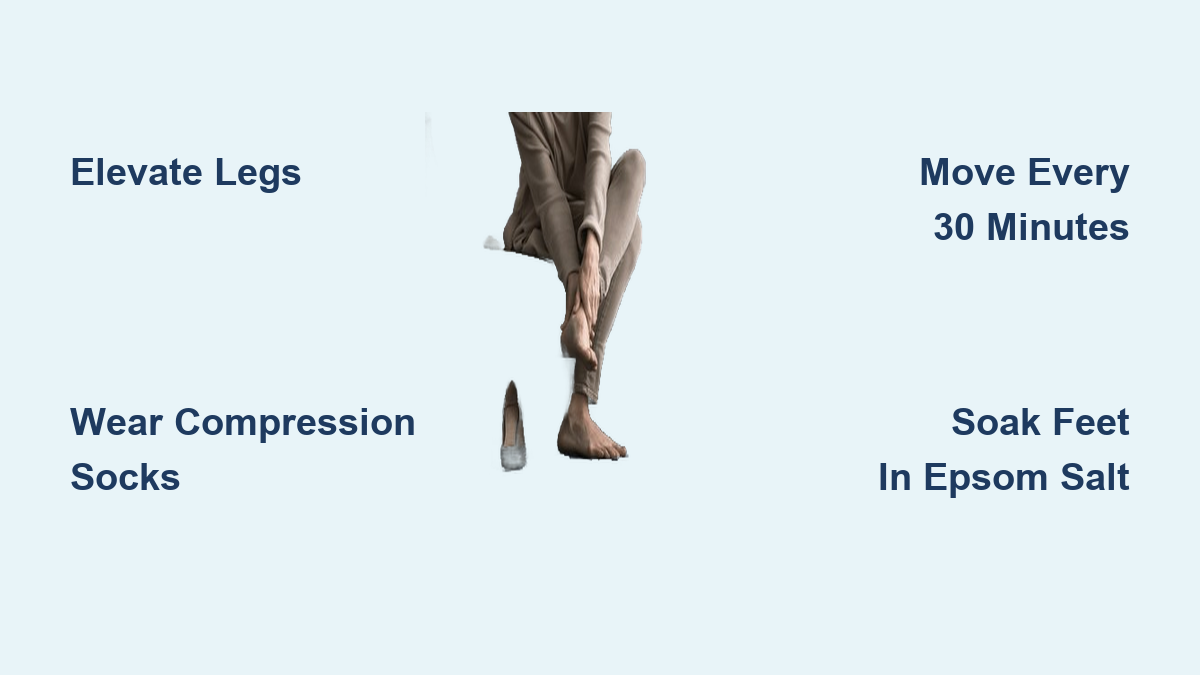
Swollen, heavy legs? Compression socks help by boosting blood flow from your feet back to your heart, reducing fluid buildup.
How Compression Socks Help
- Apply graduated pressure—tightest at the ankle, easing up the leg
- Improve venous return and reduce swelling
- Help prevent varicose veins and deep vein thrombosis (DVT)
- Delay muscle fatigue during long shifts
What to Choose
- 15–20 mmHg: Ideal for daily wear (available over-the-counter)
- Knee-high: Most effective length for circulation
- Breathable, modern fabrics: No more bulky, hard-to-wear stockings
Caution: Skip compression if you have peripheral artery disease, neuropathy, or open wounds—consult your doctor first.
Stretch Daily to Prevent Morning Heel Pain
Tight calves and plantar fascia are common culprits of foot pain. Stretching every day—especially before getting out of bed—can prevent stiffness and reduce discomfort.
Calf Stretch (Wall Stretch)
- Face a wall, hands at shoulder height
- Step one foot back, keep heel down
- Lean forward until you feel a stretch in the calf
- Hold 30–45 seconds, repeat 2–3 times per leg
For deeper soleus stretch, slightly bend the back knee.
Plantar Fascia Stretch (Towel Stretch)
- Sit with leg extended
- Loop a towel around the ball of your foot
- Gently pull toes toward you
- Keep knee straight, hold 30 seconds
Do this before getting out of bed to prevent morning heel pain.
Foot Roll with a Tennis Ball or Frozen Bottle
- Sit in a chair
- Place a tennis ball, golf ball, or frozen water bottle under your foot
- Roll slowly from heel to arch for 2–3 minutes
- Focus on tender spots
Bonus: The cold reduces inflammation—perfect after a long shift.
Strengthen Your Feet and Calves to Prevent Injury
Strong feet support your arches and reduce strain. Do these exercises 3–5 times per week to build resilience.
Short Foot Exercise
- Sit or stand barefoot
- Contract the muscles under your arch to lift it—without curling toes
- Hold 5 seconds, repeat 10 times
Builds intrinsic foot strength and improves arch stability.
Towel Scrunches
- Place a towel flat on the floor
- Use your toes to scrunch it toward you
- 10–15 reps per foot
Strengthens toes and arches—great for plantar fasciitis prevention.
Toe Lifts
- Lift only your big toe while keeping others down
- Then lift the four smaller toes while big toe stays flat
- 10–15 reps
Improves foot control and balance.
Move Frequently and Take Smart Breaks
Static standing is the enemy. Even small movements keep blood flowing and delay fatigue.
Break Every 30–60 Minutes
- Sit for 5–10 minutes
- Elevate your feet above heart level
- Use a stool or sit-stand workstation if available
Stay Active While Standing
If you can’t leave your post:
– Shift weight side to side
– Do calf raises or mini lunges
– March in place for 30 seconds
These activate the calf pump, which helps blood return to your heart.
Elevate Your Feet to Reduce Swelling
After work—or during breaks—elevate your legs to reverse fluid buildup.
How to Elevate Properly
- Lie on your back
- Rest legs on a wall, chair, or pillows
- Keep feet above heart level
- Hold 10–20 minutes
Enhance circulation: Slowly flex and point your feet during elevation.
Avoid: Limit sessions to 20–30 minutes to prevent blood pooling.
Use Heat and Cold Therapy Based on Your Pain Type

Choose the right therapy based on your symptoms.
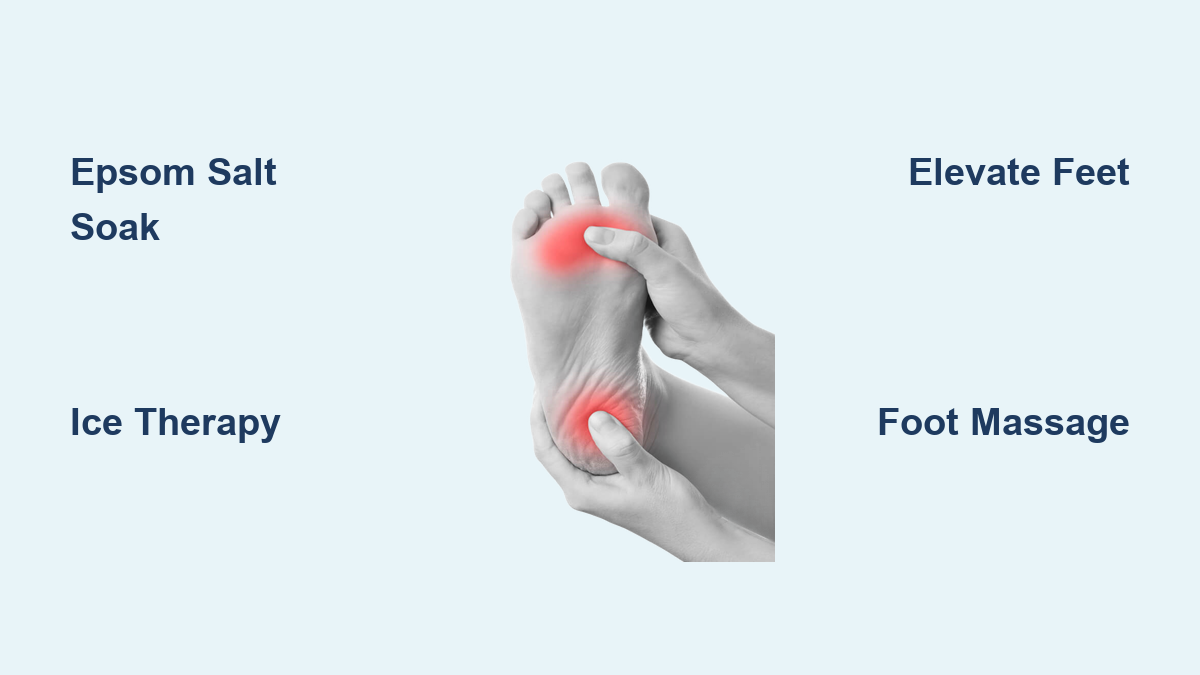
Ice for Acute Pain
- Use for new pain, inflammation, or post-shift soreness
- Apply for 10–15 minutes
- Wrap ice pack in a thin towel to protect skin
Ice reduces nerve sensitivity—not inflammation—but it numbs pain quickly.
Heat for Chronic Stiffness
- Use for tight calves, achy arches, or morning stiffness
- Try a heating pad or warm bath
- Apply for 15–20 minutes
Heat improves blood flow and relaxes tense muscles.
Try Contrast Therapy
Alternate heat and cold:
– 10 minutes heat → 10 minutes ice → repeat 2–3 times
Some users report faster recovery with this method.
Soak and Massage for Faster Recovery
Daily self-care speeds healing and reduces tension.
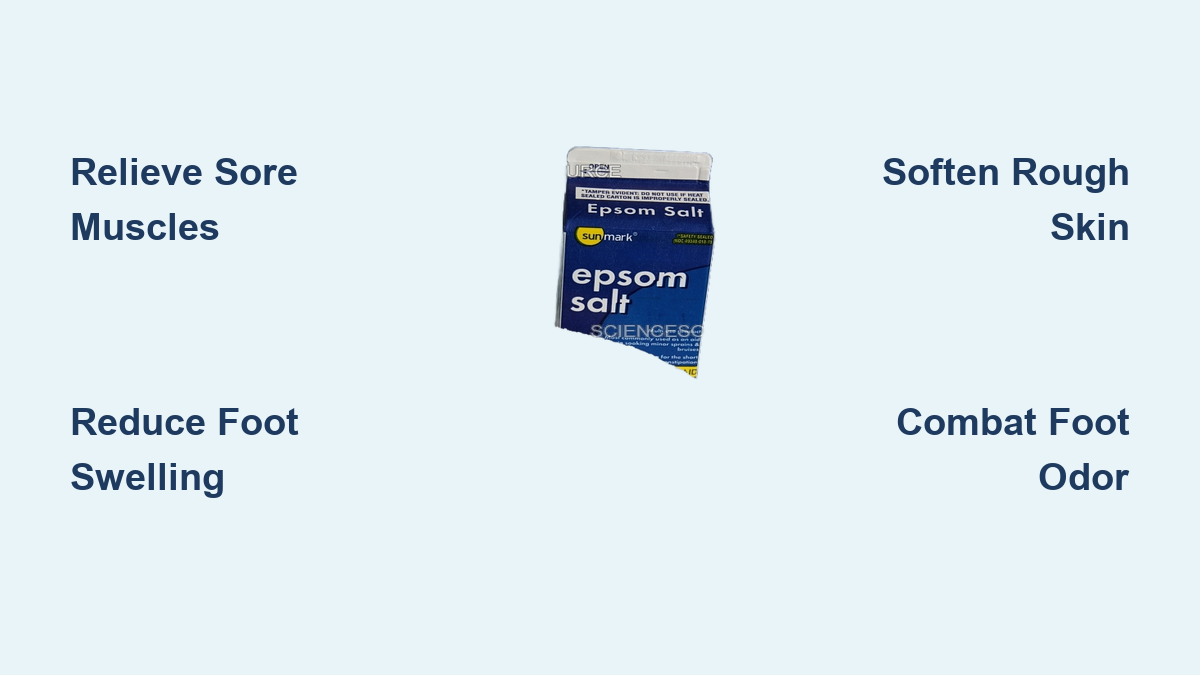
Epsom Salt Soak
- Fill a basin with warm water
- Add ½ cup Epsom salt
- Soak feet 20–30 minutes, 2–3 times weekly
- Dry thoroughly afterward
Magnesium may reduce inflammation and relax muscles.
Skip if: You have open wounds or infections.
Self-Massage Techniques
- Use thumbs to press into arches and heels
- Roll calves over a foam roller
- Try a TENS unit (~$200) for electrical pain relief
- Use a night splint if you have plantar fasciitis
Night splints keep your foot stretched overnight—preventing morning heel pain.
Wear Supportive Shoes at Home
Walking barefoot on hard floors at home worsens strain. Protect your feet even during downtime.
Best Indoor Footwear
- Oofos sandals: Recovery-focused, ultra-cushioned
- Birkenstocks: Excellent arch support
- FitFlops or Okabashi: Supportive flip-flops
- Hoka gym shoes: Cushioned for chores
Never go barefoot on tile, hardwood, or concrete—support matters 24/7.
Fuel Your Body for Recovery
Nutrition plays a surprising role in foot and leg health.
Key Supplements
- Magnesium: Reduces cramps and muscle tightness
- Vitamin D3: One user reported major pain improvement after starting
- Grape seed extract: May reduce swelling and improve circulation
- Hydration: Dehydration worsens muscle aches
Try mixing 1 Gatorade with 2 waters to maintain electrolyte balance.
Maintain a Healthy Weight to Reduce Joint Stress
Every extra pound adds pressure to your feet, knees, and spine. Even losing 20–30 pounds can significantly reduce pain and joint stress.
Weight management supports both musculoskeletal and circulatory health—key for long-term relief.
See a Doctor If Pain Persists
Home care works for most, but some conditions need professional help.
When to Seek Help
- Pain is severe, sharp, or worsening
- No improvement after 2–3 weeks
- Swelling that won’t go down
- Numbness, tingling, or burning (possible neuropathy)
- Can’t bear weight on the foot
- You have diabetes or poor circulation
Conditions That Need Diagnosis
- Plantar fasciitis
- Achilles tendonitis
- Stress fractures
- Peripheral artery disease (PAD)
- Diabetic foot complications
Professional Treatments
- Podiatrist visit: For gait analysis, custom orthotics
- Physical therapy: Targeted rehab exercises
- Imaging (X-ray, MRI): If structural damage is suspected
- Corticosteroid injections: For severe inflammation (short-term)
Gait analysis uses pressure mapping to spot imbalances and guide treatment.
Final Note: Pain from standing on hard floors isn’t normal—and it’s not inevitable. By combining supportive shoes, daily stretches, compression socks, anti-fatigue mats, and smart recovery habits, you can stand longer, work easier, and live pain-free. Start with one change today. Your feet will thank you tomorrow.