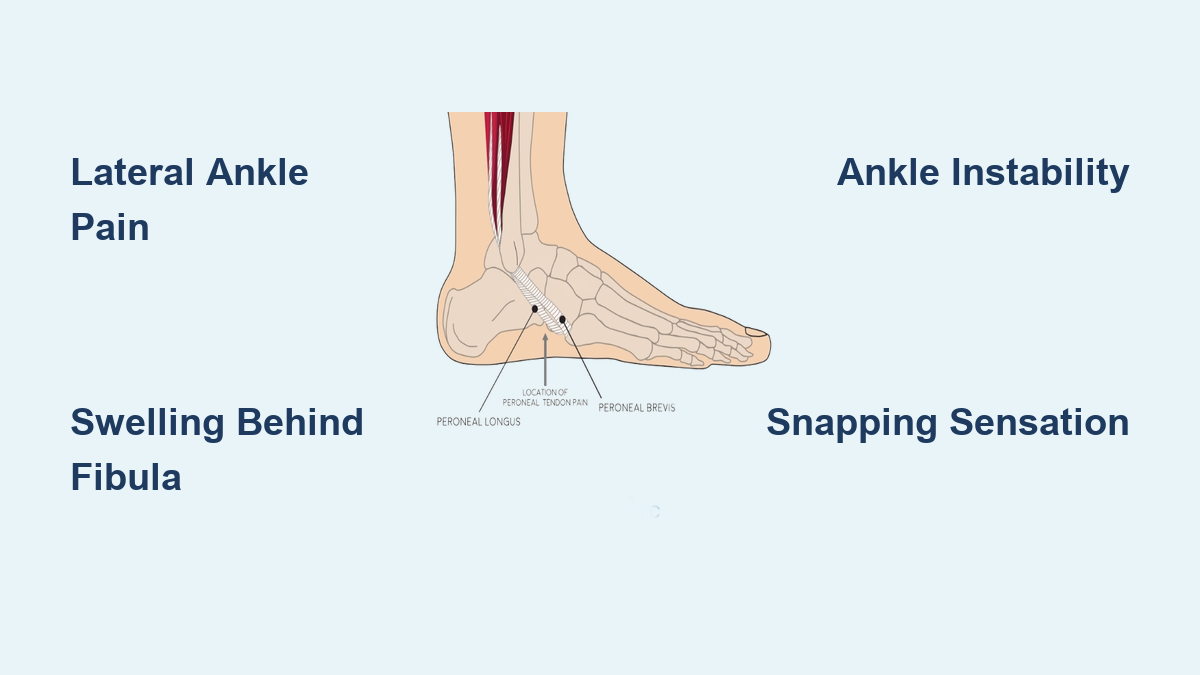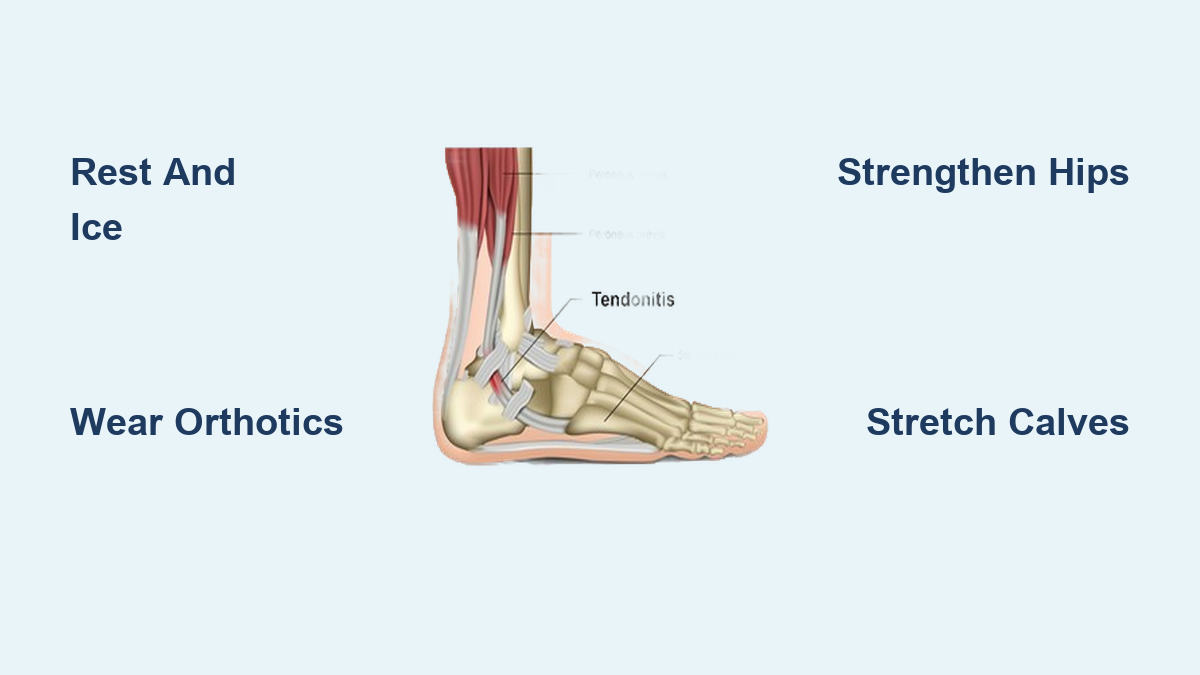
If you’ve been feeling persistent aching or sharp pain along the outside of your ankle—especially when walking on uneven ground, running, or climbing stairs—you may be dealing with peroneal tendonitis. This overuse condition occurs when the peroneal tendons, which run behind the fibula (the outer ankle bone), become inflamed or overloaded due to repetitive strain, poor foot mechanics, or previous ankle injuries. Left unchecked, this can progress from mild discomfort to chronic tendinosis or even tendon rupture.
The key to lasting relief isn’t just rest or ice—it’s relieving pressure on the peroneal tendon by addressing both the immediate inflammation and the underlying biomechanical imbalances that caused the overload. Weak hips, tight calves, flat or high arches, and improper footwear all force the peroneal muscles to work overtime, leading to strain and pain. The good news? Most cases respond well to a structured, non-surgical approach combining targeted exercises, mobility work, orthotics, and smart activity modification.
In this guide, you’ll learn how to offload the peroneal tendons, correct movement patterns, and build long-term resilience—using evidence-based strategies from sports medicine and physical therapy.
Identify What’s Causing Excess Tendon Load
Before jumping into treatment, it’s crucial to understand why your peroneal tendons are under stress. Treating symptoms without fixing root causes leads to recurring pain and delayed recovery.
Common Biomechanical Triggers
- Flat feet (pes planus): When your arch collapses, the foot rolls inward (overpronation), forcing the peroneals to fire constantly to prevent ankle roll.
- High arches (pes cavus): Rigid, high-arched feet transfer more impact to the outer ankle, increasing strain on the tendons.
- Tight calf muscles: Limited ankle dorsiflexion shifts your weight outward during push-off, overloading the peroneals.
- Weak gluteus medius: Poor hip stability causes your pelvis to drop when walking or running, triggering compensatory ankle stabilization.
- History of ankle sprains: Damaged ligaments reduce proprioception, making the peroneals work harder to protect the joint.
A 2023 study found that 82% of athletes with peroneal tendinopathy had either unresolved ankle instability or hip weakness contributing to their condition.
Correcting these issues is essential—not just for healing, but for preventing future flare-ups.
Rule Out Serious Conditions First
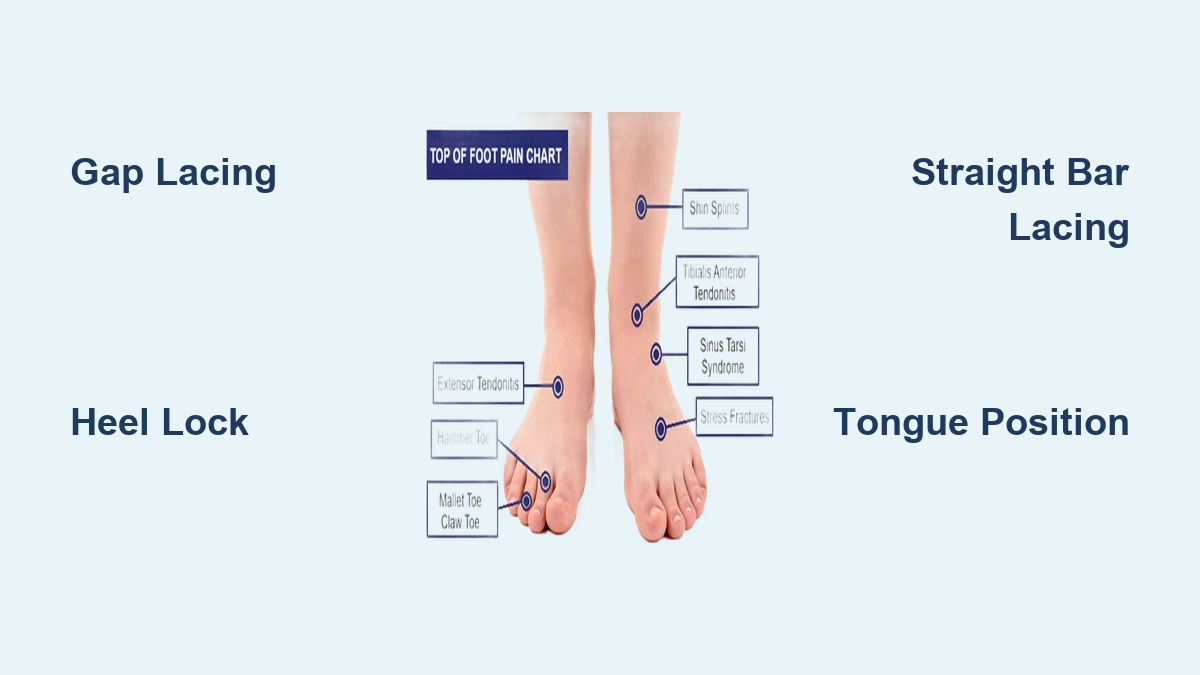
Pain behind the lateral ankle can mimic other problems:
– Chronic ankle instability
– Sinus tarsi syndrome
– Fifth metatarsal stress fracture
– Sural nerve entrapment
Always consult a healthcare provider for an accurate diagnosis. If pain persists beyond 4 weeks, imaging like ultrasound or MRI may be needed to check for tears or subluxation.
Immediate Steps to Reduce Peroneal Tendon Strain
When pain flares up, your first priority is to offload the tendon and reduce inflammation.
Apply the RICE Protocol (First 3–7 Days)
- Rest: Stop running, jumping, or any activity that worsens symptoms.
- Ice: Use ice packs for 15–20 minutes, 2–3 times daily.
- Compression: Wear a supportive ankle sleeve or compression sock.
- Elevation: Keep your foot above heart level when sitting or lying down.
Avoid complete immobilization—gentle movement prevents stiffness and supports healing.
Use NSAIDs Wisely
Over-the-counter anti-inflammatories like ibuprofen or naproxen can help manage short-term pain and swelling. However, don’t rely on them long-term, as they may interfere with tendon remodeling.
Topical gels (e.g., Voltaren) offer localized relief with fewer systemic side effects.
Use Supportive Devices to Limit Tendon Stress

Bracing and orthotics play a critical role in reducing mechanical load on the peroneal tendons.
Choose the Right Ankle Support
| Device | Best For | Benefit |
|---|---|---|
| Lateral ankle brace | Mild to moderate pain during daily activity | Limits inversion/eversion, reduces peroneal firing |
| CAM walker boot | Severe pain or swelling | Immobilizes ankle while allowing weight-bearing |
| Night splint | Morning stiffness or chronic tightness | Keeps ankle neutral overnight |
A 2022 clinical trial showed patients using a semi-rigid ankle brace reported 40% less pain during walking within two weeks.
Wear Proper Footwear and Orthotics
Your shoes directly affect peroneal workload.
For Flat Feet:
- Choose motion-control or stability shoes with firm midsoles
- Add custom or OTC orthotics with medial arch support
- Goal: Reduce overpronation and decrease compensatory tendon activation
For High Arches:
- Opt for cushioned, wide-base shoes with shock absorption
- Look for a firm heel counter and lateral support
- Avoid minimalist or unstable footwear
Research confirms that foot orthoses significantly reduce peroneal tendon strain in individuals with abnormal foot posture.
Strengthen the Entire Kinetic Chain
Relieving pressure on the peroneal tendon isn’t just about the ankle—it’s about restoring balance from foot to hip.
Warm Up with Joint Mobilization
Ankle Alphabet Tracing
- Sit with leg extended.
- Trace A–Z in the air using your big toe.
- Purpose: Lubricate joints, improve circulation, reduce stiffness.
- Frequency: Once daily.
Active Eversion + Inversion
- Slowly turn foot outward (eversion), hold 5 seconds.
- Then pull inward (inversion), hold 5 seconds.
- Perform 5 reps, 1 set.
- Tip: Keep heel slightly off the floor for full range.
Release Tight Muscles and Fascia
Foam Roll the Lateral Calf
- Place foam roller under outer lower leg.
- Roll from below the knee to the ankle.
- Pause on tender spots for 10–15 seconds.
- Duration: 1–2 minutes per leg.
Avoid rolling directly over the fibula—stay on muscle tissue.
Golf Ball Foot Massage
- Sit barefoot, place golf ball under arch.
- Roll forward and back with gentle pressure.
- Alternative: Perform towel scrunches—use toes to pull a towel toward you.
- Purpose: Activate intrinsic foot muscles, reduce peroneal overreliance.
Strengthen Key Muscles
Banded Ankle Eversion
- Anchor resistance band to fixed object.
- Loop around forefoot, sit with leg straight.
- Turn foot outward against band, return slowly.
- Sets/Reps: 3 sets of 12 reps.
- Progression: Increase band tension as pain allows.
This directly strengthens peroneus longus and brevis—critical for tendon resilience.
Calf Raises (Double to Single Leg)
- Stand on both feet, rise onto toes, lower slowly.
- Progress to single-leg raises as tolerated.
- Key cue: Shift weight slightly toward the 4th and 5th toes to engage peroneals.
- Sets/Reps: 3 sets of 15.
Short Foot Exercise
- Stand barefoot, keep heel and ball of foot grounded.
- Pull base of big toe toward heel, shortening the foot.
- Hold 10 seconds, relax.
- Sets: 3 sets of 4 reps.
- Why it works: Activates foot core muscles, improving arch support.
Side-Lying Hip Extension
- Lie on side, bottom leg bent, top leg straight.
- Slide top heel up a wall, engaging glutes (not back).
- Hold 5 seconds, lower slowly.
- Sets: 2 sets of 5.
- Purpose: Strengthen gluteus medius to prevent pelvic drop.
Midline Hinge with Band
- Anchor resistance band at knee height.
- Step into band so it pulls leg outward.
- Hinge forward on one leg, keeping foot and hip engaged.
- Return under control.
- Sets: 2 sets of 5 per side.
- Benefit: Integrates foot-hip-core stability.
Improve Balance and Proprioception
Weak ankle control leads to instability and repeated microtrauma.
Single-Leg Balance
- Stand on affected leg, hands at sides.
- Hold 20–30 seconds.
- Progressions:
- Close eyes
- Stand on foam pad
- Add head turns
Perform daily—this trains the nervous system to stabilize the ankle automatically.
Inverted Y Balance Drill
- Stand on one leg.
- Tap opposite foot:
- Forward
- To the side
- Diagonally backward
- Return to center after each tap.
- Duration: 1 minute continuous.
- Purpose: Mimics real-world challenges like hiking or trail running.
Stretch Tight Muscles That Increase Tendon Stress
Tightness in the posterior chain pulls on the ankle and increases peroneal demand.
Standing Calf Stretch (Gastrocnemius)
- Face wall, hands on wall.
- Back leg straight, heel down.
- Lean forward until stretch in upper calf.
- Hold: 30 seconds × 3 reps per leg.
Bent-Knee Calf Stretch (Soleus)
- Same position, but bend back knee while keeping heel down.
- Lean forward.
- Hold: 30 seconds × 3 reps.
- Key: Targets deeper soleus—often tight in runners.
Hamstring Stretch with Towel
- Lie on back, loop towel around foot.
- Gently straighten leg until stretch in back of thigh.
- Keep opposite leg flat.
- Hold: 30 seconds × 3 sets.
Towel Stretch for Plantar Fascia
- Sit with leg straight.
- Loop towel around ball of foot.
- Gently pull toes toward body.
- Hold: 30–60 seconds × 3 sets.
- Frequency: 3x daily, especially in the morning.
Recovery Timeline and Safe Return to Activity

Healing time varies, but consistency is the biggest predictor of success.
| Stage | Duration | Key Actions |
|---|---|---|
| Acute (Mild) | 2–4 weeks | Rest, ice, gentle mobility, begin strengthening |
| Subacute (Moderate) | 4–8 weeks | Add resistance, balance drills, orthotics |
| Chronic (Tendinosis) | 3–6+ months | Eccentric loading, gait retraining, possible injections |
Most people see improvement within 4–6 weeks of daily exercise adherence.
When to Progress
Advance only when:
– No pain during or after exercise
– You can complete all reps with good form
– Single-leg balance exceeds 30 seconds
Final Action Plan: Relieve Peroneal Tendon Pressure
| Step | What to Do |
|---|---|
| 1 | Get diagnosed—rule out fractures or nerve issues |
| 2 | Stop aggravating activities—rest during flare-ups |
| 3 | Ice and compress—reduce swelling 2–3x/day |
| 4 | Brace or support—use ankle sleeve or CAM boot if needed |
| 5 | Wear proper shoes + orthotics—correct foot mechanics |
| 6 | Do daily exercises—focus on foot, ankle, hip strength |
| 7 | Stretch calves and hamstrings—3x/day |
| 8 | Improve balance—practice single-leg drills daily |
| 9 | Progress slowly—only advance when pain-free |
| 10 | Prevent relapse—maintain strength and proper footwear |
Healing takes time. Stay patient, stay consistent, and trust the process. With proper care, most people recover fully within 6–8 weeks and return to activity stronger than before.
Listen to your body. If pain worsens, swelling increases, or you feel instability, seek professional care. Early action prevents chronic issues and keeps you moving—pain-free.