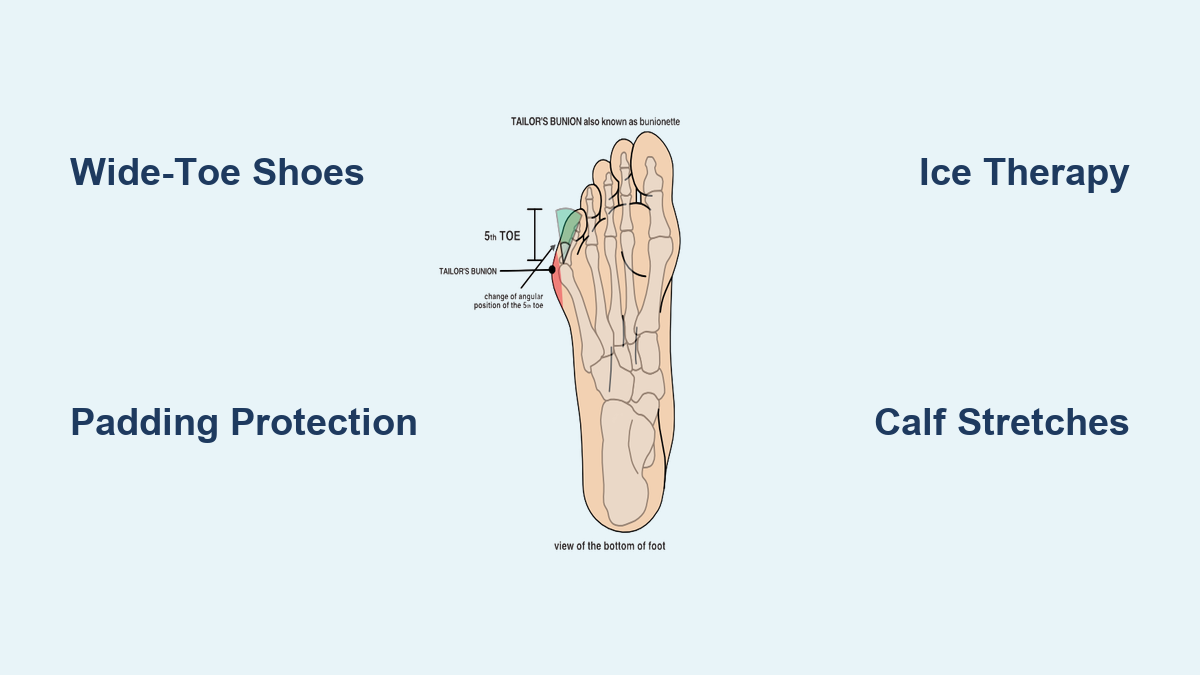
If you’ve noticed a tender bump forming on the outer edge of your foot near your little toe, you may be dealing with a tailor’s bunion—also known as a bunionette. This condition occurs when the head of the fifth metatarsal bone protrudes outward, creating a visible lump that often becomes red, swollen, and painful—especially when pressed by shoes. Over time, this can make walking uncomfortable and severely limit your footwear choices.
While surgery is the only way to correct the bony deformity, the good news is that you can significantly reduce pressure, ease pain, and slow progression using non-invasive methods. With the right combination of footwear adjustments, padding, exercises, and lifestyle changes, most people manage tailor’s bunions successfully without ever needing an operation. This guide delivers science-backed, podiatrist-recommended strategies to relieve pressure from a tailor’s bunion and keep you moving comfortably.
Wear Shoes with a Wide, Deep Toe Box to Prevent Irritation
The #1 mistake people make? Wearing shoes that squeeze the forefoot. Narrow or pointed footwear forces the little toe inward, pushing the fifth metatarsal outward and worsening the bunion over time.
Choose Footwear That Fits Your Natural Foot Shape
Look for shoes with:
– A roomy toe box that allows your toes to spread naturally
– Low heels (under 1 inch) to reduce forward foot pressure
– Flexible uppers made of soft leather, mesh, or stretchable fabric
– Adjustable closures like laces or straps for a customized fit
Top shoe brands for tailor’s bunions:
– Keen – Built-in toe protection and wide forefoot
– Vionic – Excellent arch support with wide-width options
– Orthofeet – Stretchable fabric uppers that conform to bumps
– Altra – Foot-shaped design with zero heel drop
– New Balance – Wide widths (2E, 4E, 6E) in walking and running styles
Avoid high heels, pointed toes, and rigid materials like patent leather—they increase lateral pressure and accelerate deformity.
Test Your Shoe Fit the Right Way
Many people wear shoes that are too narrow—even if they feel “okay” at first.
Try this simple test:
1. Remove the insole.
2. Stand on it barefoot.
3. If your forefoot overhangs the edges, the shoe is too narrow.
Pro tip: Shop in the afternoon when feet are slightly swollen for a more accurate fit.
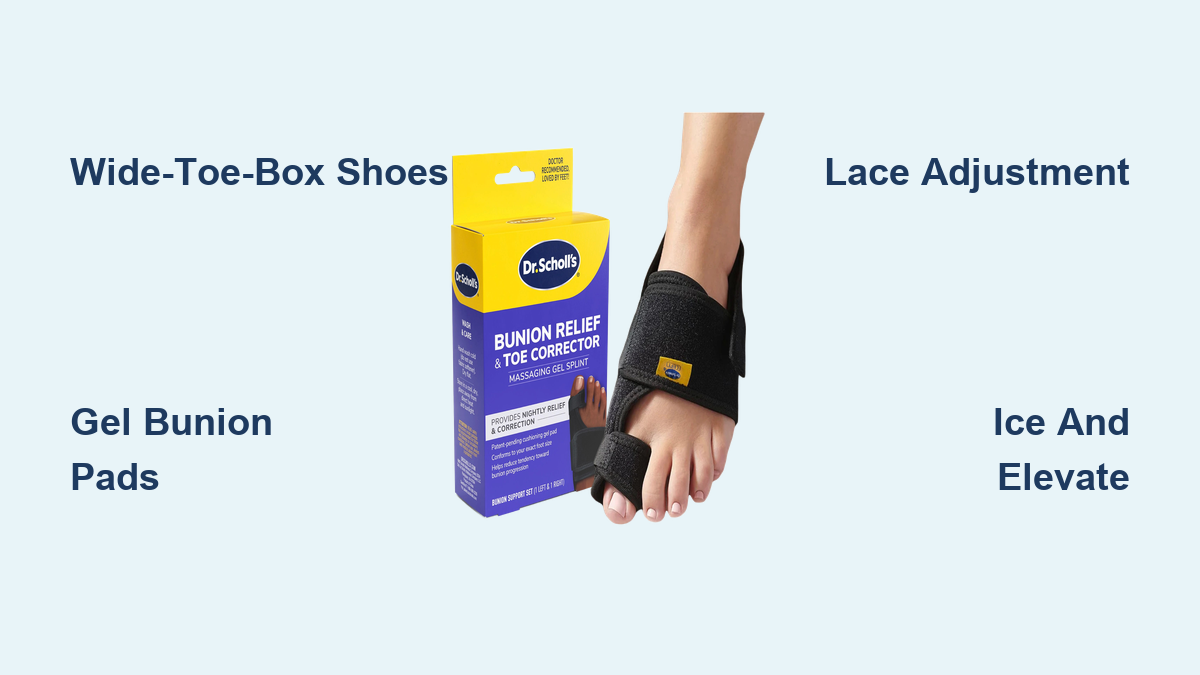
Use Silicone Pads and Gel Shields to Cushion the Bump

Direct shoe contact turns a minor bump into a painful hotspot. Protective padding creates a buffer, reducing friction and discomfort.
Apply Medical-Grade Silicone or Gel Pads
Silicone bunionette sleeves wrap around the protrusion, offering:
– Shock absorption
– Friction reduction
– Skin protection
Recommended products:
– Dr. Frederick’s Tailor’s Bunion Pad – Designed specifically for lateral bumps with built-in toe separation
– Silipos Bunionette Sleeve – Medical-grade silicone that stays in place all day
– Fleecy web padding – Ideal for sensitive or blistered skin
Apply Pads Before Putting on Shoes
Always place pads on clean, dry skin before wearing shoes to ensure proper positioning.
Tips:
– Replace pads regularly to avoid bacterial buildup
– Use non-adherent dressings if the skin is broken
– Avoid adhesive pads if you have diabetes or fragile skin
Wear Custom Orthotics to Redistribute Forefoot Pressure

Orthotics won’t remove the bump, but they redirect pressure away from the fifth metatarsal, improving foot mechanics and reducing pain.
Invest in Custom-Made Insoles
Over-the-counter inserts help mild cases, but custom orthotics are the gold standard. Made from a mold of your foot, they:
– Correct overpronation or flat feet
– Support arches
– Reduce excessive motion that contributes to metatarsal drift
Key features to look for:
– Adjustable arch height (e.g., FootChair Orthotic)
– Slim profile for use in dress shoes or heels
– Ability to add lateral forefoot posting to offload the bunion area
Pair Orthotics With Proper Footwear
For best results, combine orthotics with:
– Wide-width shoes
– Flexible soles that absorb impact
– Stretched or modified uppers (see below)
Stretch and Modify Shoes to Accommodate the Bump
Even well-fitting shoes may need adjustments to fully relieve pressure on a tailor’s bunion.
Use a Ball-and-Ring Shoe Stretcher
Target the exact spot where your bunion rubs:
1. Insert the stretcher into the shoe.
2. Turn the knob to expand the ring over the bump.
3. Leave overnight.
4. Repeat as needed.
For better results, use a heated shoe stretcher—heat makes leather and fabric more pliable.
Visit a Cobbler for Professional Spot Stretching
Cobblers can punch out or stretch specific areas using specialized tools. This is especially helpful for:
– Dress shoes
– Work boots
– Ski boots (a common source of pressure—often called the “6th toe”)
Ask for “lateral quarter stretching” to target the outer side of the shoe.
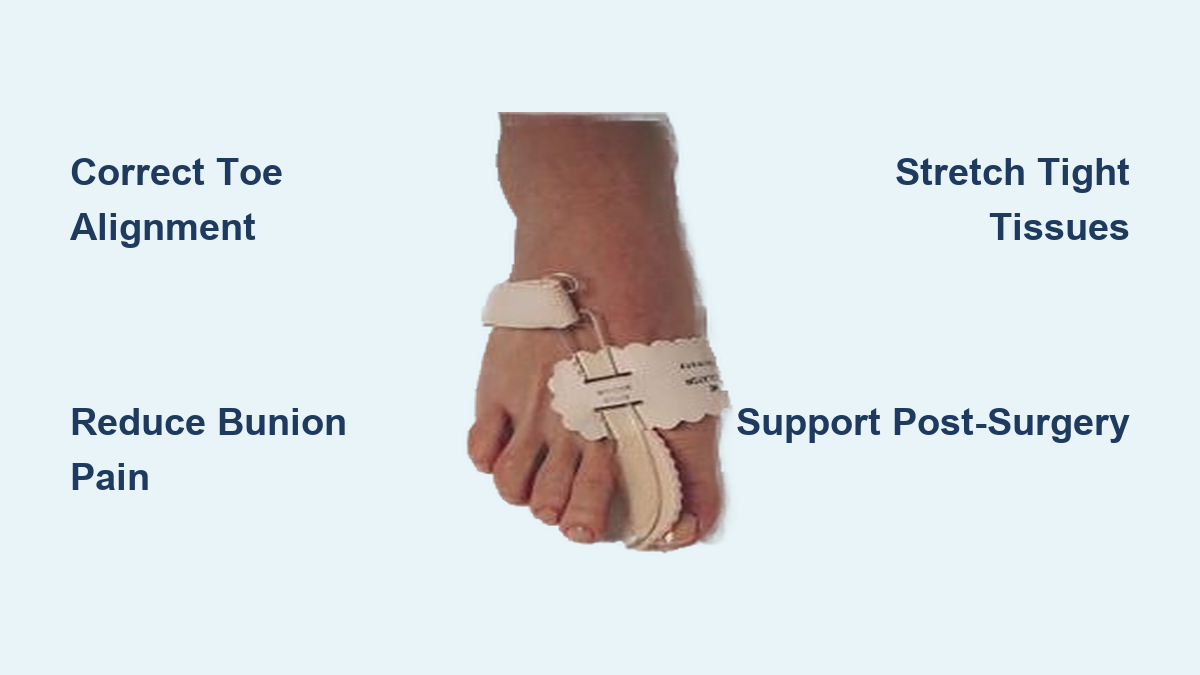
Correct Toe Alignment With Separators and Dynamic Devices

Misalignment of the little toe contributes to pressure. Realignment tools help restore natural positioning.
Use Silicone Toe Spacers
Place a Silipos toe separator between the fourth and fifth toes to:
– Reduce crowding
– Prevent rubbing
– Encourage natural spacing
Wear them at home or inside roomy shoes.
Try Flamingo Feet for Daily Correction
Flamingo Feet is a dynamic alignment device that gently pulls toes into proper position.
Benefits:
– Can be worn inside shoes (trim second toe pad if needed)
– Trains muscles to maintain alignment
– Improves neuromuscular control
Use daily to prevent worsening and reduce strain on the fifth MTP joint.
Perform Calf Stretches and Foot Strengthening Exercises
Muscle imbalances and tight calves increase forefoot loading. Strengthening and stretching restore balance and reduce pressure.
Stretch Tight Calf Muscles Daily
Tight calves limit ankle motion, forcing more weight onto the forefoot.
Gastrocnemius stretch:
1. Stand facing a wall, hands on wall.
2. Step back with the affected leg, keeping heel down.
3. Lean forward until you feel a stretch in the upper calf.
4. Hold 30 seconds, repeat 3 times.
Soleus stretch (deeper calf):
1. Same position, but bend the back knee.
2. Keep heel on the ground.
3. Hold 30 seconds, repeat 3 times.
Do both stretches daily, especially before walking or exercising.
Strengthen the Abductor Digiti Minimi
This small muscle stabilizes the little toe. Weakness allows inward drift.
Exercise:
1. Sit barefoot, focus on moving only the fifth toe.
2. Use fingers to gently pull the little toe outward.
3. Try to hold the position for 5–10 seconds.
4. Repeat 10–15 times, once or twice daily.
Over time, this builds muscle memory and improves alignment.
Practice Toe Splaying
Enhances intrinsic foot muscle control.
How to:
1. Sit or stand barefoot.
2. Spread all toes apart as wide as possible.
3. Hold for 5 seconds.
4. Relax.
5. Repeat 10 times.
Do this 2–3 times daily to improve foot stability.
Manage Inflammation With Ice and Topical Treatments
When the bunion flares up, act fast to reduce swelling and pain.
Apply Ice After Activity
Cold therapy reduces inflammation and numbs pain.
Method:
– Use crushed ice in a damp towel or a contoured gel pack
– Apply for 10–20 minutes, 2–3 times per day
– Never apply ice directly to skin
Best times to ice:
– After walking
– After wearing shoes
– During flare-ups
Use Topical Pain Relievers
Biofreeze roll-on provides cooling relief without pills. For severe bursitis, a podiatrist may recommend:
– Topical NSAID creams
– Steroid creams (under supervision)
– Corticosteroid injections – short-term relief (limited to 2–3 per year)
Modify Activities and Lifestyle to Reduce Forefoot Load
Small changes can have a big impact on symptom control.
Follow the Pain Activity Ladder
Use a 0–10 pain scale to guide activity:
– 0–3 (Green zone): Safe to continue
– 4–5 (Yellow zone): Monitor closely, reduce intensity
– 6+ (Red zone): Stop—risk of flare-up
Break long walks or standing tasks into short segments with rest.
Maintain a Healthy Weight
Every extra pound increases forefoot pressure. Losing 5–10% of body weight can reduce pain and improve healing.
Use tools like the NHS BMI calculator and consider structured programs like:
– NHS 12-week weight management
– Weigh to Go
– Local dietitian support
Quit Smoking
Smoking impairs blood flow and tissue repair. NHS Stop Smoking Services double your chances of quitting—ask your GP for a referral.
Handle Flare-Ups With the POLICE Protocol
When pain suddenly increases, follow this modern rehab approach:
P – Protection
Avoid aggravating activities. Wear supportive, roomy shoes or slippers.
O – Optimal Loading
Don’t immobilize completely. Walk gently as tolerated.
L – Ice
Apply 10–20 minutes, 2–3 times daily.
C – Compression
Lightly wrap with an elastic bandage if swelling is present. Do not wrap tightly.
E – Elevation
Raise foot above heart level when resting to reduce swelling.
After 2–3 days, switch to heat therapy (e.g., heat pad with cover) for 10–15 minutes, 3–4 times daily.
Consider Surgery Only When Conservative Care Fails
If pain persists despite 6+ months of non-surgical care and limits daily life, surgery may be an option.
Common Procedures
- Bunionette resection (shaving) – Removes the bony bump
- Metatarsal osteotomy – Cuts and realigns the bone
- Soft tissue repair – Tightens loose ligaments
Minimally Invasive Surgery (MIS)
- Small incisions
- Faster recovery (weeks vs. months)
- Early weight-bearing possible
Full recovery can take up to 12 months.
Prevent Further Progression With Smart Habits
You can’t reverse a tailor’s bunion without surgery—but you can stop it from getting worse.
Wear Supportive, Adjustable Sandals
Avoid flip-flops. Choose adjustable straps and arch support (e.g., Vionic, OluKai).
Use Custom Footbeds in Tight-Fitting Shoes
For ski boots or dress shoes, custom footbeds and shell punching create space over the bunion.
Address Problems Early
At the first sign of a lump or shoe discomfort, switch to wider shoes, start exercises, and see a podiatrist.
Final Tips for Lasting Relief
Footwear is your first line of defense—choose width, depth, and flexibility.
Custom orthotics and padding provide targeted pressure relief.
Daily stretches and toe exercises correct imbalances.
Early intervention prevents surgery.
Partner with a podiatrist for a personalized plan. Most people manage symptoms successfully without surgery.
Correct alignment + targeted muscle training + proper footwear = lasting relief from a tailor’s bunion.
Start today—your feet will thank you.