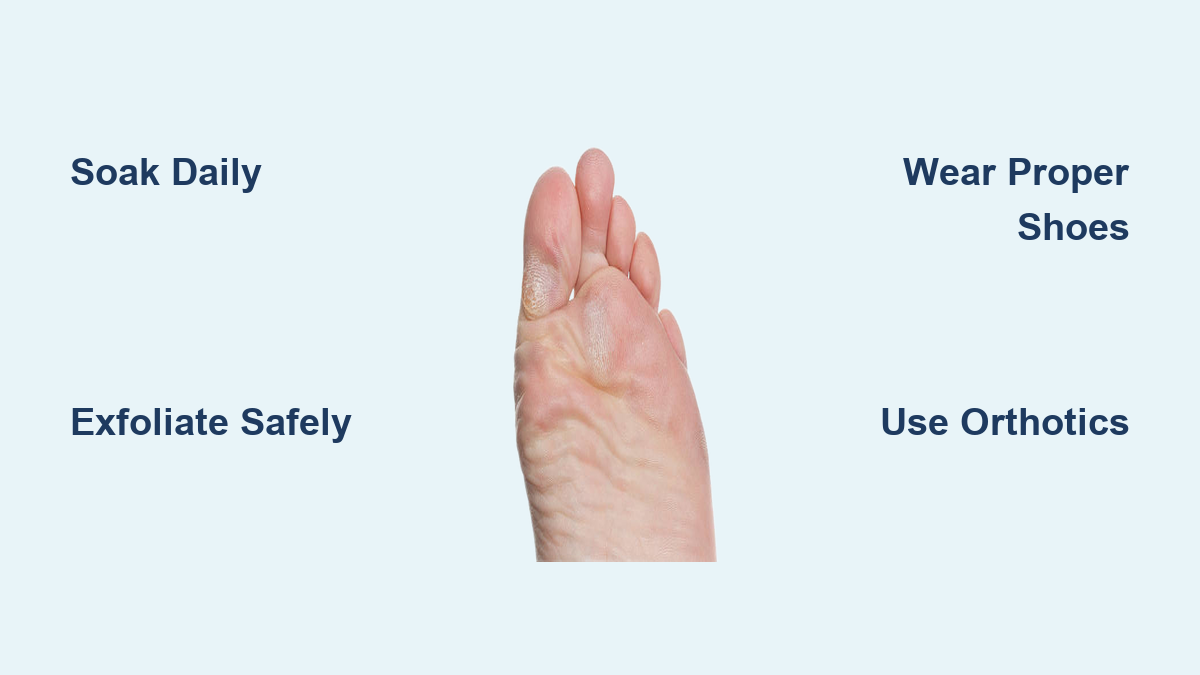
You’ve probably felt the rough, leathery patches forming under your feet—maybe beneath the ball, along the heel, or beside a toe. These are calluses, and while they start as your skin’s natural defense against pressure and friction, they rarely go away on their own. Many people try pumice stones, foot scrubs, or store-bought pads only to see the thickened skin return within weeks. The real answer to how to get rid of calluses on feet permanently isn’t a one-time scrub—it’s about stopping them from coming back by eliminating the root causes.
True permanence means more than just removing dead skin. It requires changing how pressure is distributed across your feet, upgrading your footwear, and adopting a consistent care routine. Whether you’re on your feet all day, wear tight shoes, or have structural foot issues like flat feet or bunions, this guide delivers science-backed strategies to eliminate calluses for good. You’ll learn how to safely exfoliate, deeply hydrate, and protect your skin—and when to seek professional help. From home care to custom orthotics and even surgery, we cover every step toward achieving smooth, pain-free feet for life.
Identify the Root Cause of Your Callus

Before treating a callus, you must understand why it formed. Without addressing the underlying cause, any removal method is only temporary.
Pressure and Friction Triggers
Calluses develop when your skin thickens in response to repeated stress. Common triggers include:
– Standing or walking for hours without proper cushioning
– Wearing high heels, which shift your weight forward onto the ball of the foot
– Ill-fitting shoes—tight ones squeeze toes, while loose ones cause sliding and rubbing
– Worn-out footwear with collapsed insoles that no longer absorb shock
If you’re a nurse, teacher, retail worker, or anyone on their feet most of the day, your risk increases significantly. The constant mechanical stress forces your skin to build up protective layers—leading to hard, yellowish calluses that only grow thicker over time.
Foot Structure Issues That Cause Chronic Calluses
Certain anatomical factors make some people prone to recurring calluses:
– Bone spurs or bony prominences pressing against the skin
– Hammertoes or bunions that alter toe alignment and increase pressure
– Flat feet or high arches that change how you walk and distribute weight
– Fat pad atrophy, especially in older adults, where natural heel or forefoot padding thins
These structural imbalances often lead to calluses forming in the same spot over and over. Even with daily care, the problem persists because the pressure point remains unchanged.
Medical Conditions That Increase Callus Risk
Some health conditions raise the stakes:
– Diabetes: Nerve damage (neuropathy) reduces sensation, so irritation goes unnoticed.
– Poor circulation: Slows healing and increases infection risk from cracked calluses.
– Arthritis: Stiff joints affect walking patterns, creating abnormal pressure zones.
If you have any of these conditions, avoid aggressive self-treatment and consult a podiatrist early. What seems like a simple callus could lead to ulcers or infections if not managed properly.
Soak and Soften Skin Daily
Softening is the foundation of any effective callus treatment. Hardened skin won’t respond to exfoliation unless properly hydrated.
Warm Water Soak Technique
Soak your feet in warm (not hot) water for 10–15 minutes daily. This loosens keratin—the protein that makes skin tough—and prepares it for safe removal.
- Use a basin large enough to submerge both feet.
- Add mild soap or Epsom salts to enhance softening (Epsom salt is FDA-approved for minor skin irritations).
- Avoid soaking longer than 15 minutes—overhydration can weaken skin.
Do this before bedtime or after a shower when pores are open. This simple step makes all follow-up treatments far more effective.
Post-Soak Moisturizing
After drying, apply a thick moisturizer immediately to lock in hydration.
- Petroleum jelly (Vaseline) works best overnight: slather it on, then wear cotton socks to boost absorption through occlusion.
- For daytime, use creams with 15–20% urea, glycerin, or ammonium lactate.
- Reapply after washing feet or if skin feels dry.
Consistent moisturizing prevents cracking and keeps calluses pliable for easier management.
Exfoliate Calluses Safely
Once softened, gently remove dead skin. Never cut or shave calluses yourself—this risks infection, especially if you have diabetes.
Use a Pumice Stone Correctly
A pumice stone is a natural volcanic rock ideal for smoothing calluses.
- Use after soaking, when skin is damp but not dripping.
- Rub in circular or back-and-forth motions with light pressure.
- Focus only on the thickened area; avoid healthy surrounding skin.
- Clean the stone with soap and water after each use, then air-dry.
Use 2–3 times per week. Overuse can irritate skin and worsen thickening.
Try Manual or Electric Foot Files
For faster results, use a foot rasp or electric file.
- Manual files have coarse and fine sides: start coarse, finish fine.
- Electric files use rotating rollers to buff away layers efficiently.
- Use on the lowest setting.
- Apply minimal pressure—let the tool do the work.
- Ideal for heels and forefoot calluses.
- Replace heads when dull.
Limit electric filing to once or twice weekly to prevent over-thinning.
Apply Keratolytic Treatments
Chemical exfoliants break down the tough keratin in calluses more effectively than physical scrubbing alone.
Urea Creams (10–40%)
Urea is a dual-action ingredient: it draws moisture into the skin and dissolves keratin bonds.
- 20–25% urea: Best for mild to moderate calluses.
- 40% urea: For severe, stubborn cases (available OTC or by prescription).
- Apply a thin layer only to the callus at night.
- Massage in for 1–2 minutes, then wear socks.
- Use every 2–3 nights, alternating with filing days.
Avoid on broken or infected skin.
Salicylic Acid Options
Salicylic acid peels away layers of thick skin over time.
- Available as patches (up to 40%), gels, or liquids.
- Apply to clean, dry callus.
- Protect surrounding skin with petroleum jelly.
- Replace patches as directed (usually every 1–2 days).
- Thin softened skin with a pumice stone before reapplying.
Not safe for diabetics or those with poor circulation due to risk of tissue damage.
Lactic and Glycolic Acid (AHAs)
Alpha hydroxy acids gently exfoliate and improve skin texture.
- Found in ammonium lactate lotions or glycolic acid creams.
- Ideal for sensitive skin or maintenance after initial reduction.
- Apply after soaking; optionally cover with socks.
- Use on alternate nights with other treatments.
Avoid combining with salicylic acid on the same day to prevent irritation.
Prevent Recurrence with Smart Footwear
The #1 reason calluses come back? Wearing the wrong shoes. Prevention starts with proper footwear.
Choose Shoes That Fit Right
Feet change size over time—get measured regularly.
- Look for a wide toe box so toes aren’t squeezed.
- Opt for low heels (under 1 inch) to reduce pressure on the forefoot.
- Ensure there’s half an inch between your longest toe and the shoe tip.
- Replace shoes every 6–12 months or when soles show wear.
Avoid pointy-toe pumps, flip-flops, or stiff boots that rub sensitive areas.
Use Cushioned Insoles and Inserts
Even good shoes may lack support. Add layers of protection:
- Gel insoles absorb shock and reduce pressure on heels and balls of feet.
- Metatarsal pads lift the forefoot and offload pressure from the ball of the foot.
- Donut-shaped pads create a protective ring around the callus, relieving direct pressure.
Place pads under socks or inside shoes depending on design.
Rotate Your Shoes
Wearing the same pair daily creates repetitive stress on identical spots.
- Alternate between 2–3 pairs of supportive shoes.
- This distributes pressure differently and gives each pair time to air out.
Great for office workers, runners, or anyone with a fixed daily routine.
Wear Protective Padding Daily
Padding acts as a physical barrier between your foot and the shoe, reducing friction and pressure.
Use Donut Pads for Targeted Relief
Foam or felt pads with a center hole work like a shield.
- Position the hole directly over the callus.
- The surrounding pad lifts pressure off the sore spot.
- Secure with tape or wear under socks.
Ideal for heel, ball-of-foot, or toe joint calluses.
Try Gel Toe Sleeves
Slip-on gel covers protect individual toes.
- Prevent rubbing in tight shoes.
- Reduce friction between toes (common site for soft corns).
- Reusable and easy to clean.
Best for side-of-toe calluses or corns caused by narrow footwear.
Apply Moleskin Strategically
Moleskin or adhesive felt builds up areas around the callus—not on top.
- Cut a U-shape or ring to encircle the callus.
- Stick it to the foot or inside the shoe.
- Creates a buffer zone that reduces direct pressure.
Use during long walks, work shifts, or travel.
Invest in Custom Orthotics

For long-term success, custom-molded orthotics are the gold standard in preventing callus recurrence.
How Orthotics Work
Custom orthotics are made from molds of your feet and designed to correct biomechanical imbalances.
- Distribute weight evenly across the foot, not just on high-pressure zones.
- Support arches, align joints, and improve gait.
- Reduce friction and pressure at common callus sites.
They’re especially effective for people with flat feet, high arches, or leg length discrepancies.
Custom vs. Over-the-Counter Insoles
| Feature | Custom Orthotics | OTC Insoles |
|---|---|---|
| Cost | $200–$600 (often covered by insurance) | $10–$50 |
| Fit | Precise to your foot shape | One-size-fits-most |
| Longevity | 3–5 years | 6–12 months |
| Effectiveness | High for structural issues | Moderate for mild cases |
While OTC inserts help temporarily, only custom orthotics address root biomechanical causes.
Getting Fitted for Orthotics
- Visit a podiatrist for evaluation.
- They’ll take a 3D scan or mold of your foot.
- May perform gait analysis using pressure-mapping technology.
- Devices are typically ready in 2–4 weeks.
Most patients report noticeable improvement in foot comfort and callus reduction within weeks.
Maintain a Daily Foot Care Routine
Permanence comes from consistency. A simple daily routine prevents buildup before it starts.
Daily Inspection and Cleaning
Check feet every day, especially if you have diabetes.
- Look for early signs of thickening, redness, or cracks.
- Wash with mild soap and dry thoroughly, including between toes.
Catching changes early allows for faster intervention.
Gentle Exfoliation Schedule
Don’t wait for calluses to become painful.
- Soak feet 2–3 times per week.
- Use a pumice stone or file after soaking.
- Follow with moisturizer.
This routine keeps skin smooth and prevents excessive buildup.
Proper Toenail Trimming
Cutting nails incorrectly can shift pressure to the forefoot.
- Trim straight across—no rounding corners.
- File sharp edges.
- Avoid cutting too short to prevent ingrown toenails.
Proper trimming helps maintain natural foot alignment and reduces callus risk.
Seek Professional Treatment When Needed
Home care works for mild cases, but persistent or painful calluses need expert intervention.
See a Podiatrist If You Have:
- Diabetes or neuropathy
- Cracked, bleeding, or infected calluses
- No improvement after 3 weeks of home care
- Recurrent calluses despite prevention
- Suspected wart, cyst, or bony deformity
Podiatrists can diagnose accurately and offer advanced treatments.
Professional Debridement
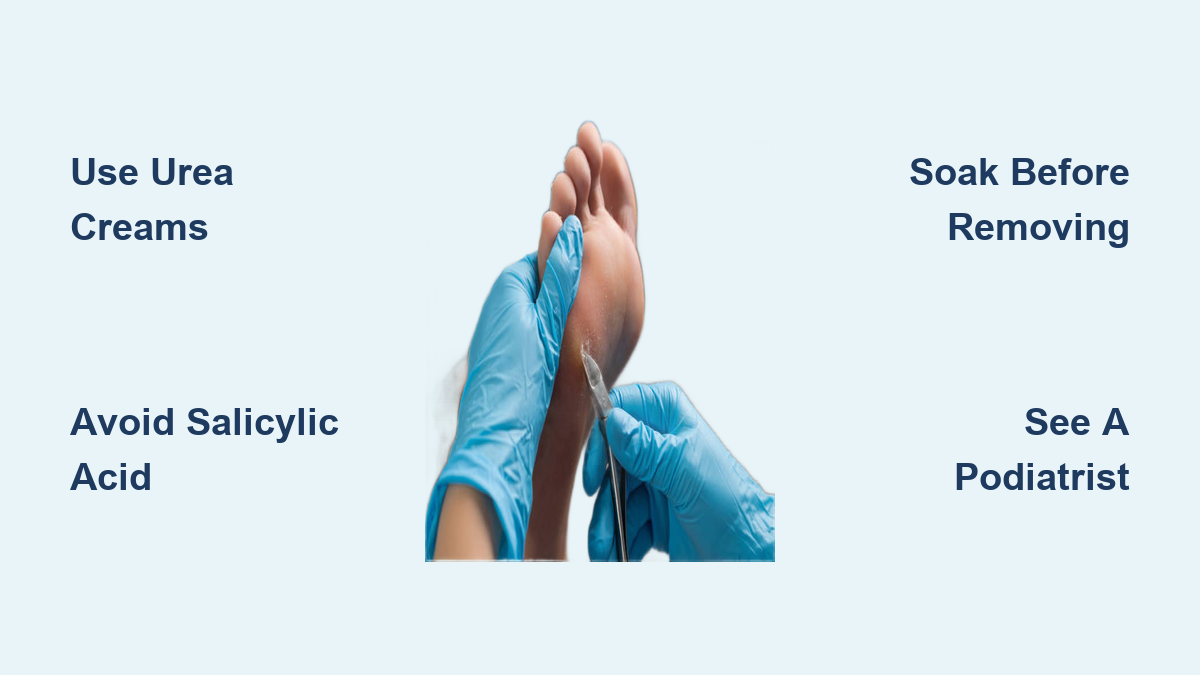
A podiatrist uses a sterile scalpel to safely pare down thick skin.
- Done in-office with no downtime.
- Provides immediate relief from pressure and pain.
- Safer than DIY cutting or scraping.
Recommended every few months for chronic sufferers.
Advanced Procedures
For severe or recurring cases, these options offer lasting results:
Cryotherapy with Liquid Nitrogen
- Freezes the callus tissue, forming a blister that sheds the dead skin.
- Effective for small, isolated lesions.
- May require multiple sessions.
Laser Treatment
- Targets deep tissue layers without cutting.
- Shrinks large calluses with minimal infection risk.
- Typically needs 1–3 treatments.
Surgical Correction
- For calluses caused by bone spurs, bunions, or hammertoes.
- Involves realigning or removing bone to eliminate pressure points.
- Outpatient procedure; recovery takes a few weeks.
- Considered only after conservative methods fail.
Surgery offers the closest thing to permanent removal when structural issues are the root cause.
Avoid Common Mistakes
Even well-intentioned efforts can backfire. Steer clear of these pitfalls:
Never Self-Cut Calluses
Using razors, scissors, or callus shavers at home is dangerous.
- High risk of cuts, infection, and scarring.
- Especially risky for diabetics—minor wounds can become ulcers.
Leave trimming to professionals.
Don’t Over-Exfoliate
Too much filing or chemical use damages healthy skin.
- Leads to inflammation, redness, and thicker regrowth.
- Stick to 2–3 exfoliation sessions per week.
Less is more when managing calluses.
Skip Harsh Home Remedies
Avoid unproven hacks like lemon juice, vinegar soaks, or duct tape.
- Can irritate or burn sensitive skin.
- Delay healing and increase infection risk.
Stick to evidence-based treatments like urea, salicylic acid, and pumice stones.
Final Note: Getting rid of calluses on feet permanently isn’t about one treatment—it’s about combining targeted exfoliation, daily moisturizing, proper footwear, and biomechanical correction. While home care manages symptoms, true permanence comes from addressing pressure points with orthotics, padding, or surgery when needed. By adopting a proactive foot care routine and knowing when to see a professional, you can achieve smooth, healthy feet for life.