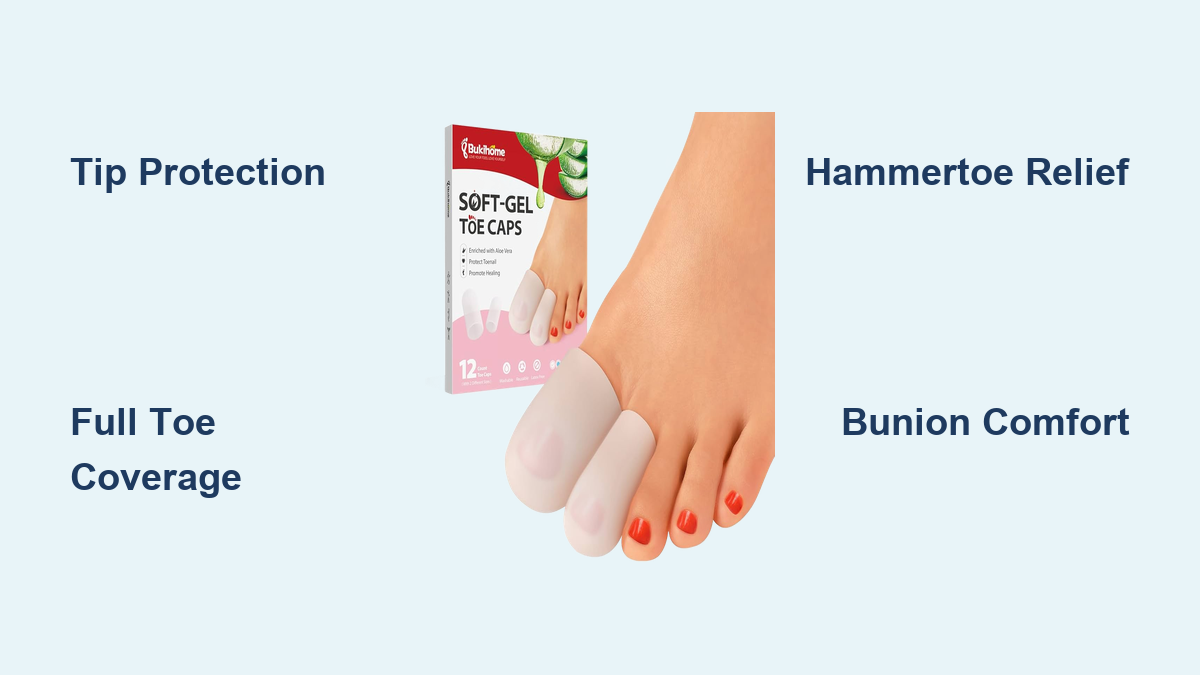
If you’ve ever winced while walking in your favorite pair of heels or felt a sharp sting from a corn on your toe, you’re not alone. Millions deal with toe pain caused by friction, pressure, and foot deformities. Enter toe caps and toe sleeves—small but powerful tools designed to protect your toes and bring relief. But what is a toe cap vs a toe sleeve, and how do you know which one you actually need?
Though they look similar and are often made from the same soft materials—like medical-grade gel, silicone, or foam—they serve very different purposes. A toe cap shields only the tip of the toe, making it ideal for nail pain or front-of-toe blisters. A toe sleeve, on the other hand, wraps the entire toe from base to tip, offering 360-degree protection against side friction, corns between toes, or hammertoe discomfort.
Choosing the wrong one could mean wasted money, continued pain, or even more irritation. This guide breaks down exactly how these devices differ, when to use each, and how to pick the right one based on your shoes, lifestyle, and foot condition. Whether you’re on your feet all day, wear tight footwear, or struggle with overlapping toes, you’ll learn how to protect your feet effectively—and walk comfortably again.
Toe Cap: Targeted Protection for the Toe Tip

A toe cap is a small, thimble-shaped cover designed to fit snugly over the end of a toe, shielding the nail and distal tip from pressure, impact, and friction. It’s engineered for pinpoint protection where you need it most.
Best Uses for Toe Caps
Toe caps are ideal when discomfort or damage is concentrated at the front of the toe. Common issues they help with include:
– Ingrown toenails or partially removed nails
– Blisters on the toe tip from shoe rubbing
– Distal corns or pressure sores caused by narrow footwear
– Healing after toenail surgery
Because they only cover the tip, toe caps are low-profile and discreet, making them perfect for wearing in pointed shoes, high heels, or open-toe sandals without adding bulk.
Popular models like the Hoogoo Gel Toe Cap (ASIN: B08TBV2VB6) are made from stretchable medical-grade silicone and feature ventilation holes to reduce sweating. Some can even be trimmed slightly for a custom fit.
How to Use a Toe Cap Correctly
- Wash and dry your foot thoroughly, especially around the affected toe.
- Slide the cap over the tip, ensuring the dome fully covers the nail and front edge.
- Adjust gently—it should feel secure but not tight or restrictive.
- Wear with socks and well-fitted shoes to avoid squeezing or dislodging.
Look for: Ventilation perforations, non-slip texture, and hypoallergenic materials to prevent irritation and overheating.
When to Choose a Toe Cap
✅ Use a toe cap if:
– Pain is localized at the toe end
– You’re recovering from toenail injury or surgery
– You wear tight, narrow, or open-toe shoes
– You need minimal coverage that won’t show
🚫 Avoid if:
– The pain wraps around the sides or base of the toe
– You have overlapping toes or hammertoes needing full protection
Toe Sleeve: Full-Toe Cushioning and Friction Control
A toe sleeve is a tubular, sock-like protector that slides over the entire length and circumference of the toe. It provides all-around cushioning, reducing friction not just at the tip, but along the top, sides, and base.
Best Uses for Toe Sleeves
Toe sleeves excel in managing conditions involving lateral pressure or toe-to-toe rubbing, such as:
– Hammertoes pressing against shoes
– Side corns or calluses from constant chafing
– Overlapping toes (common with bunions)
– Interdigital corns (between toes)
They also help maintain mild toe alignment by creating space between toes and reducing pressure points during walking or standing.
Made from elastic gel or silicone, toe sleeves conform tightly without cutting off circulation. Their snug fit makes them ideal for active use—running, hiking, or long shifts on your feet.
How to Use a Toe Sleeve Properly
- Clean and dry the toe completely.
- Gently stretch the sleeve and slide it on from base to tip.
- Ensure smooth, even coverage—no bunching or twisting.
- Pair with breathable socks and roomy footwear for best results.
Pro tip: If the gel feels sticky after washing, lightly dust with baby powder before putting it back on.
When to Choose a Toe Sleeve
✅ Use a toe sleeve if:
– You have corns or calluses on the side of the toe
– Your toes rub together or overlap
– You’re active and need all-day, full-toe protection
– You want continuous cushioning from shoe friction
🚫 Avoid if:
– You only need nail or tip protection
– Your shoes are extremely tight—sleeves add slight volume
Key Differences: Toe Cap vs Toe Sleeve

| Feature | Toe Cap | Toe Sleeve |
|---|---|---|
| Coverage | Tip only (nail and distal end) | Full toe (base to tip, all sides) |
| Best For | Ingrown toenails, tip blisters, healing nails | Side corns, hammertoes, toe friction |
| Shape | Dome-shaped, thimble-like | Tubular, sock-style |
| Bulk Level | Low – fits in tight shoes | Moderate – needs slight toe box space |
| Ventilation | Some have breathability holes | Often micro-perforated for airflow |
| Adjustability | Can be trimmed (select models) | Stretchable, not cuttable |
| Shoe Compatibility | Heels, narrow shoes, sandals | Sneakers, boots, wider footwear |
Bottom line: If your pain is at the front, go with a cap. If it’s around the sides or full length, choose a sleeve.
Who Should Use These Devices?
Both options are widely used by people facing daily foot stress. Ideal candidates include:
- Office workers in narrow dress shoes
- Healthcare professionals on their feet for 12+ hours
- Runners and hikers prone to blisters
- People with foot deformities like bunions or hammertoes
- Post-surgery patients healing from ingrown toenail removal
- Heel wearers with compressed toe boxes
Important: If you have diabetes, poor circulation, or neuropathy, consult a doctor before using. These devices can mask injuries or create pressure points if misused.
How to Apply for Maximum Comfort
Using either device incorrectly can cause more harm than good. Follow these steps:
- Prepare the foot: Wash and dry thoroughly, especially between toes.
- Trim nails straight to prevent snagging.
- Choose the right size: Caps and sleeves come in small, medium, large. Big toes often need larger sizes.
- Apply smoothly:
– Caps: Pull gently over the tip—never force.
– Sleeves: Roll on slowly to avoid tearing. - Test for comfort: Wear for 10–15 minutes first. Check for pinching or slipping.
- Wear in proper shoes: Avoid overly tight or wet footwear.
Care and Maintenance Tips
Both are reusable—but only if cleaned properly.
Cleaning Steps
- Hand wash with mild soap and lukewarm water.
- Rinse well to remove all soap residue.
- Air dry away from direct heat or sunlight.
Never: Machine wash, boil, or use alcohol-based cleaners—they degrade silicone.
Preventing Stickiness
Over time, gel can become tacky. Lightly dust with talcum or baby powder before reuse. Store in a cool, dry place—original packaging works best.
When to Replace
Replace when:
– Material loses elasticity or tears
– It won’t stay in place
– It becomes discolored or hard to clean
Most last 1–3 months with daily use.
Shared Benefits of Caps and Sleeves
Despite their differences, both offer:
– Drug-free pain relief from pressure and friction
– Protection for healing skin and sensitive areas
– Prevention of blisters, calluses, and corns
– Discreet wear under socks and most shoes
– No prescription needed—available over the counter
Real-world result: Many users report being able to “wear shoes again” or “walk without pain” after consistent use.
Limitations and Safety Warnings
These are protective aids, not cures. Know the limits:
Don’t Use If:
- Skin is broken, infected, or bleeding
- You feel numbness, tingling, or increased pain
- You have diabetes—seek medical advice first
Important Notes:
- They won’t fix structural issues like bunions or hammertoes.
- Recurring corns may need professional treatment.
- Ignoring foot pain can lead to ulcers or infection, especially in high-risk individuals.
When to See a Podiatrist
Use these devices as part of a foot care routine—not a substitute for medical care. See a podiatrist if:
– Corns or calluses are painful, bleeding, or recurring
– You notice redness, swelling, or pus
– You have diabetes or neuropathy
– Pain lasts more than 2–3 weeks despite protection
– You’re unsure if it’s a corn, wart, or lesion
A podiatrist can diagnose the cause and recommend orthotics, padding, or surgery if needed.
Product Insight: Hoogoo Gel Toe Caps

One of the top-rated options (ASIN: B08TBV2VB6), the Hoogoo Gel Toe Cap exemplifies quality design:
| Feature | Detail |
|---|---|
| Material | Medical-grade gel/silicone |
| Coverage | Tip-only (for medium toes) |
| Ventilation | Perforated for breathability |
| Fit | Stretchable, trimmable |
| Quantity | 10 per pack |
| Care | Hand wash, air dry |
| Rating | 4.0/5 stars (565+ reviews) |
Note: Designed for middle toes—big toe users should choose the larger version (ASIN: B084X7ZDLH).
Prevention Tips for Long-Term Foot Health
To avoid recurring issues:
– Wear wide-toe-box shoes to reduce pressure
– Avoid high heels or pointed toes regularly
– Use cushioned insoles or orthotics
– Keep feet clean, dry, and moisturized
– Rotate protective devices and give skin breaks
Final Verdict: Cap or Sleeve?
Choose a toe cap when:
– You need nail or front-of-toe protection
– You wear tight or open shoes
– Pain is localized at the tip
Choose a toe sleeve when:
– You have side or full-toe friction
– You suffer from hammertoes or overlapping toes
– You’re active and need all-day coverage
Both are affordable, reusable, and effective—if used correctly. The right choice depends on your specific pain location and footwear.
Remember: These are short-term solutions. For lasting relief, address the root cause—like poor shoe fit or gait issues—with proper footwear, orthotics, or medical care.
Protect your toes, walk comfortably, and keep moving—smart foot care starts with knowing the difference.