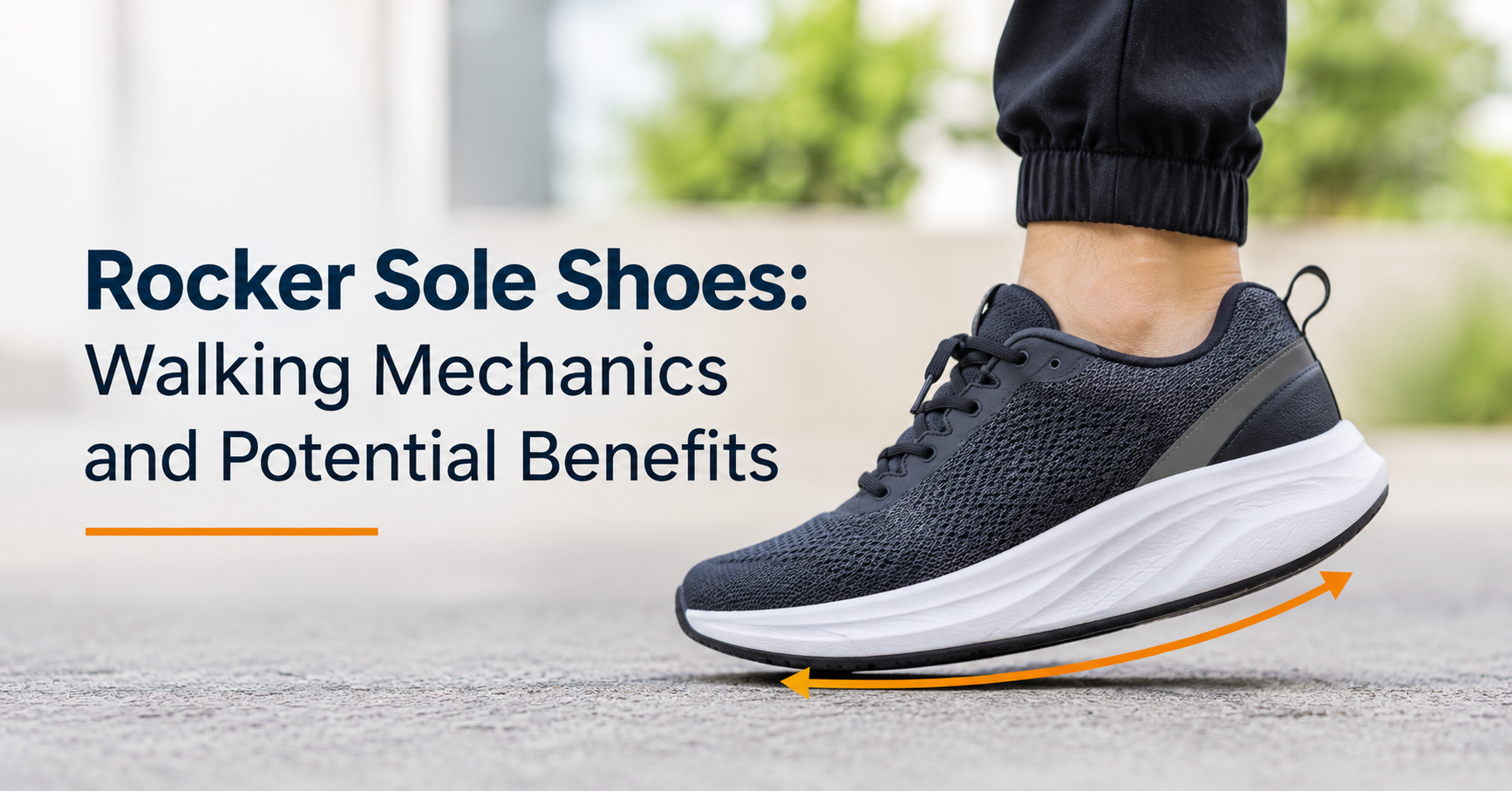
If you have ever stood in a shoe store and noticed a pair with a sole that curves up at the front like the bottom of a rocking chair, you were looking at a rocker sole shoe. These shoes have become some of the most talked-about footwear in recent years, from walking sneakers to running shoes to medical footwear. But what do they actually do, and are they right for you?
In this guide you will learn exactly how rocker sole shoes work, the biomechanics behind them, the different types available, who benefits most, and how to pick a good pair. By the end, you will know whether a rocker sole is worth trying for your own feet.
What Are Rocker Sole Shoes?
A rocker sole shoe has an outsole that is deliberately curved along its length instead of being completely flat. The curve is usually most noticeable at the toe, where the sole sweeps upward, and sometimes at the heel too. When you stand still, the shoe may feel slightly unstable, a bit like standing on a gentle seesaw. When you walk, that curve does something useful: it helps the shoe roll forward from heel to toe.
You may also see them called rocker bottom shoes, rolling sole shoes, or rocker shoes. The idea itself is not new. Clinicians have prescribed rocker soles for decades to take pressure off painful areas of the foot, and the technology has since moved into everyday walking and running footwear.
How Rocker Sole Shoes Work
To understand a rocker sole, it helps to first understand what your foot does during a normal step. Walking is a rolling motion. Your heel lands first, your body weight moves along the foot, and finally your toes bend and push you off the ground. This is often described as the three rockers of gait: the heel rocker, the ankle rocker and the forefoot rocker.
In a flat shoe, your foot and ankle do all of that rolling on their own. Your toe joints have to bend, your calf muscles have to work, and the ball of your foot takes a lot of pressure during push-off. A rocker sole takes over part of that job. Because the sole is curved, the shoe itself rolls forward, so your foot does not have to bend as much to move you along.

The Key Parts of a Rocker Sole
- The apex (rocker axis): This is the point where the sole stops being flat and begins to curve upward. Its position is the single most important design detail. In most walking shoes it sits just behind the ball of the foot, so the curve begins before your toes need to bend.
- The toe spring: This is the upward lift of the front of the shoe. A higher toe spring means a stronger rolling effect.
- The heel bevel: Many rocker shoes also round off the back of the heel so the foot can lower smoothly after heel strike instead of slapping down.
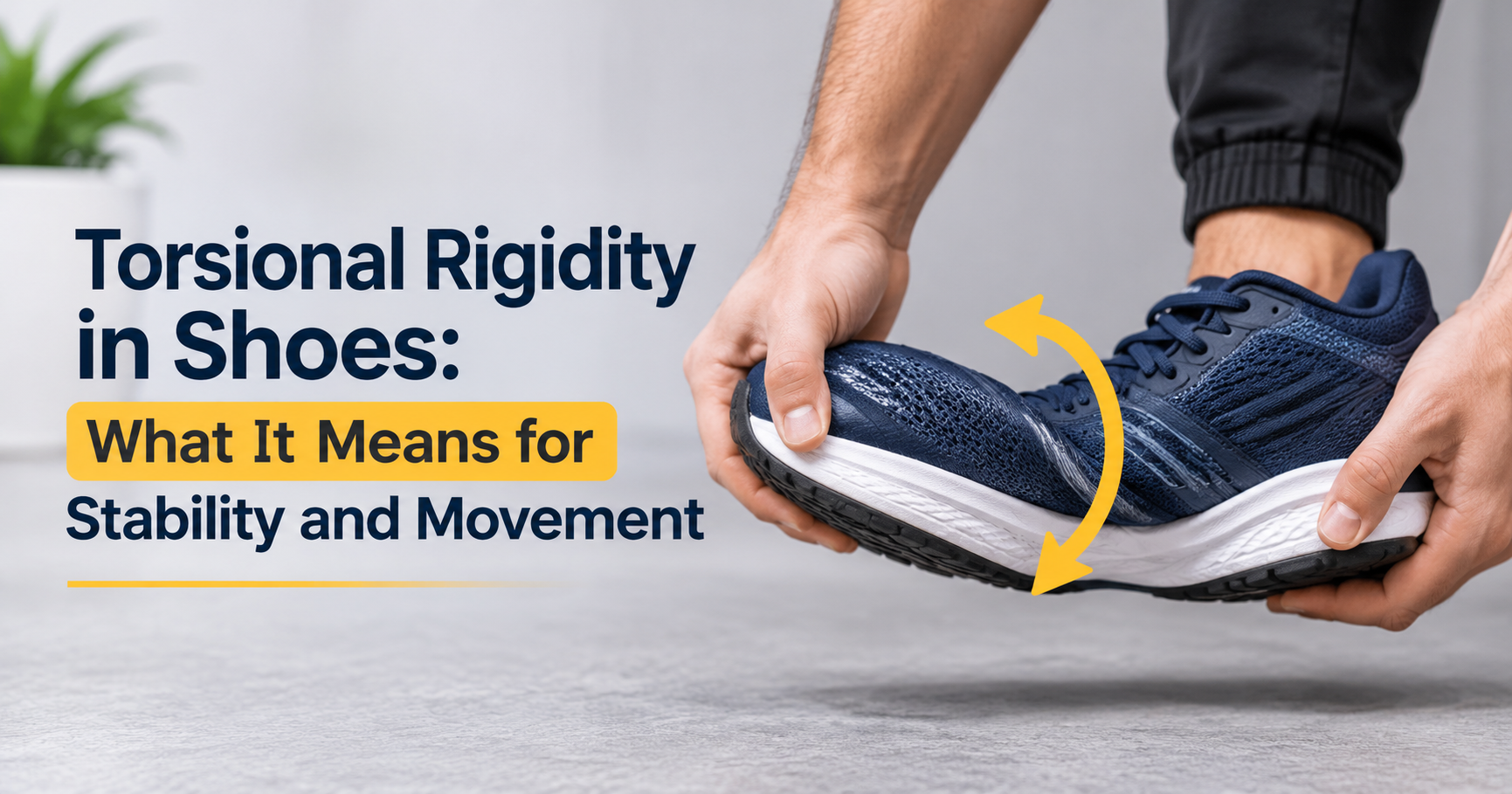
- A stiff or semi-stiff midsole: The shoe has to resist bending so that the curve can do its work. A floppy sole would simply fold and cancel the rocker effect.
- Cushioning: Soft foam in the midsole absorbs impact and makes the roll feel smooth and comfortable.
The Rocker Roll Step by Step
Here is what happens through one step when you wear a rocker sole shoe:
- Heel strike: The rounded heel contacts the ground and absorbs impact, then the shoe begins rolling forward instead of dropping flat.
- Midstance: Your body weight travels over the foot. The shoe rolls toward the apex, where the sole is at its flattest contact with the ground.
- Toe-off: As you pass the apex, the upward curve of the toe lets the shoe keep rolling forward. Your toes bend less and the push-off feels smoother.

Why the Curved Sole Matters: What It Does for Your Feet
The rolling motion changes how force moves through your foot and leg. Here are the main effects that people notice and that researchers and clinicians have studied.
Reduced Pressure on the Ball of the Foot
During push-off, a large share of your body weight is concentrated under the metatarsal heads, the bony area at the ball of the foot. A rocker sole shifts that load by guiding the foot through the roll sooner, which can lower peak pressure in the forefoot. This is why rocker soles are so common in footwear for people with ball-of-foot pain.

Less Toe Joint Bending
Because the shoe does part of the bending, the big toe joint does not have to flex as far. For people with a stiff or painful big toe joint, this can make each step far more comfortable.
Smoother Stride and Less Effort at Push-Off
The forward roll creates a smooth transition from one step to the next. Many wearers describe the feeling as being gently carried forward. Walking may feel easier over long distances, especially on hard surfaces, although the effect varies from person to person.
Lower Load on the Ankle and Calf
A rocker sole reduces the amount of ankle motion needed during the stride, which can reduce strain on the Achilles tendon and calf in some people. That is one reason these shoes are often suggested during recovery from certain lower-leg problems.
Better Shock Absorption
Rounded heels and thick, soft midsoles spread the impact of heel strike over a longer period of time. This can feel kinder to the heel, knees and lower back during long days on your feet.
Types of Rocker Sole Shoes
Not all rocker soles are the same. The shape of the curve and the position of the apex change how the shoe feels and who it suits. These are the most common types you will come across.

| Type | Where the curve is | Best for |
|---|---|---|
| Toe-only (front) rocker | Starts near the ball of the foot and lifts the toe area | Beginners, big toe stiffness, forefoot soreness |
| Heel-to-toe (double) rocker | Curves at both the heel and the toe, flat in the middle | Everyday walking, general comfort, long days on your feet |
| Mild rocker | Small, even curve along the whole sole | Casual wear, first-time users, light walking |
| Severe rocker | Steep, high curve with a firm sole | Clinical use under professional guidance |
Who Can Benefit From Rocker Sole Shoes?
Rocker soles are popular with a wide range of wearers. People commonly try them for these situations:
- Ball-of-foot pain (metatarsalgia): Reduced forefoot loading can ease the burning or bruised feeling under the ball of the foot.
- Big toe arthritis (hallux rigidus): Less toe bending means less irritation of a stiff joint.
- Plantar fasciitis: Many people with heel and arch pain find the cushioned, rolling design more comfortable. Results differ between individuals.
- Achilles tendon discomfort: The lower demand on the ankle can be gentler on a sore tendon.
- Foot problems related to diabetes: Rocker soles are often part of protective footwear that spreads pressure away from at-risk areas. This should be guided by a healthcare professional.
- People on their feet all day: Nurses, teachers, retail workers and others on hard floors often prefer the extra cushioning and smooth roll.
- Walkers and runners: Many modern running and walking shoes use rocker geometry to create a smoother ride and reduce fatigue.
Who Should Be Careful?
Rocker soles are not ideal for everyone. Because the sole is curved, it can feel less stable, particularly at first. Take extra care if any of these apply to you:
- You have balance problems or a history of falls.
- You have significant nerve damage or numbness in your feet.
- You have a serious foot condition or have recently had foot surgery.
- You enjoy activities that demand a very firm, grounded feel, such as heavy lifting.
This article is for general information only and is not medical advice. If you have persistent foot pain or a medical condition, speak with a doctor or podiatrist before choosing therapeutic footwear.
How to Choose the Right Rocker Sole Shoes
A good rocker shoe depends on more than the curve. Use the checklist below as you compare options.

- Check the apex position. For walking comfort, the apex should sit just behind the ball of the foot. If the curve starts too early or too late, the roll can feel awkward.
- Test the stiffness. Try bending the shoe in your hands. A good rocker sole resists bending in the forefoot so the curve can do the work.
- Look for balanced cushioning. The midsole should feel soft enough to absorb impact but supportive enough to stay stable under load.
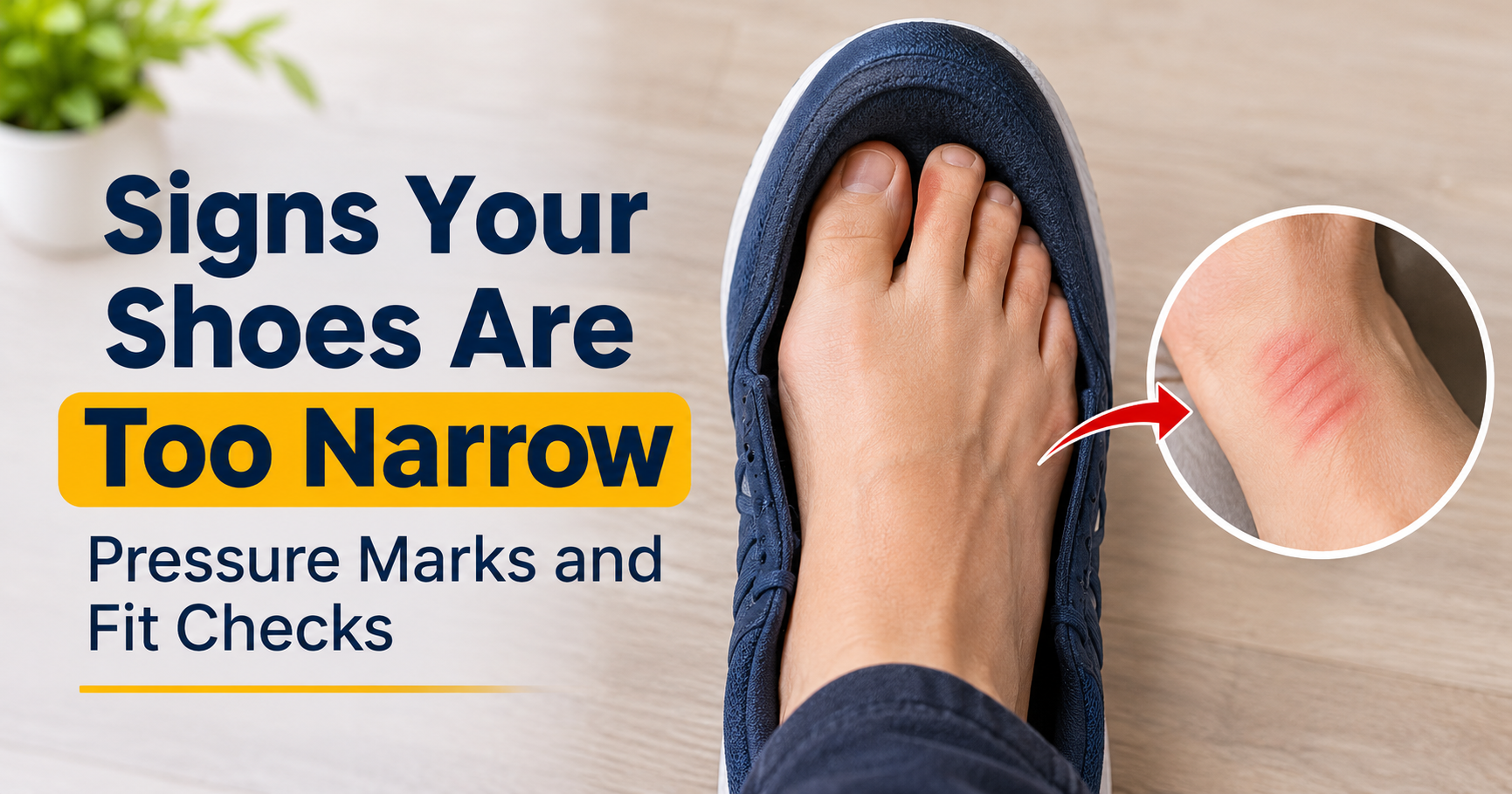
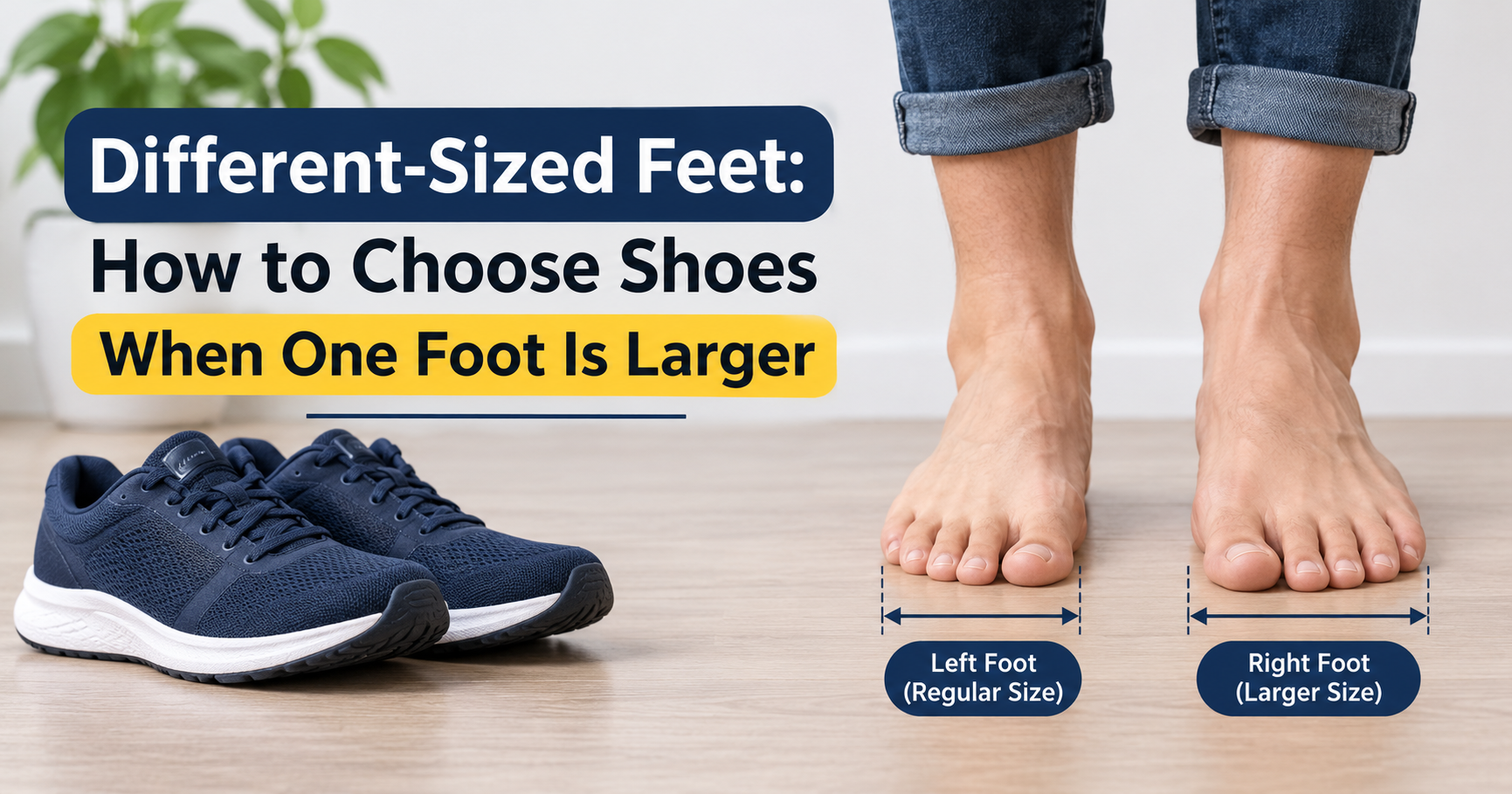
- Get the fit right. A snug heel, secure midfoot and generous toe box prevent your foot from sliding as the shoe rolls. Try shoes on in the afternoon when feet are slightly larger.
- Consider the weight. A lighter shoe feels more natural and is easier to roll through, especially for long walks.
- Look at the outsole grip. A rubber tread helps you stay steady on wet floors and uneven ground.
- Match the shoe to your purpose. Walking, running, standing at work and clinical use each call for a slightly different design.
Rocker Sole vs Flat Sole vs Minimalist Shoes
| Feature | Rocker sole | Flat sole | Minimalist |
|---|---|---|---|
| Forward roll | Built into the sole | Comes from your foot | Comes from your foot |
| Forefoot pressure | Often reduced | Standard | Can be higher |
| Toe joint bending | Lower | Normal | Full natural range |
| Cushioning | Usually thick and soft | Varies | Very thin |
| Stability feel | Can feel unsteady at first | Stable | Close to the ground |
| Adaptation time | About 1 to 2 weeks | None | Several weeks or more |
How to Get Used to Rocker Sole Shoes
The first time you wear a pair, the rolling sensation can feel strange. That is completely normal. Most people adapt within one to two weeks. Follow these tips for a smooth transition:
- Start slowly. Wear them for an hour or two at a time on the first few days, then increase gradually.
- Walk on flat, even ground first. Save hills, stairs and uneven paths until you feel confident.
- Stand tall and look ahead. Keeping your posture upright helps you find the natural rhythm of the roll.
- Take a slightly shorter, relaxed stride. Let the sole roll instead of forcing each step.
- Listen to your body. Mild muscle awareness in the calves or shins can be part of adjusting. Sharp or lasting pain is a reason to stop and seek advice.
Rocker Sole Myths and Facts
- Myth: Rocker soles weaken your feet. Fact: There is no strong evidence that they cause harm in healthy wearers. Mixing in flat shoes and barefoot time at home keeps your feet versatile.
- Myth: They are only for people with foot pain. Fact: Many healthy walkers and runners choose them for comfort and a smoother ride.
- Myth: A bigger curve is always better. Fact: The best curve is the one that suits your foot, your activity and your comfort level. Extreme curves are generally for clinical needs.
- Myth: They fix every foot problem. Fact: They can reduce pressure and strain, but they are one tool. Stretching, strength work and proper medical care still matter.
Caring for Your Rocker Sole Shoes
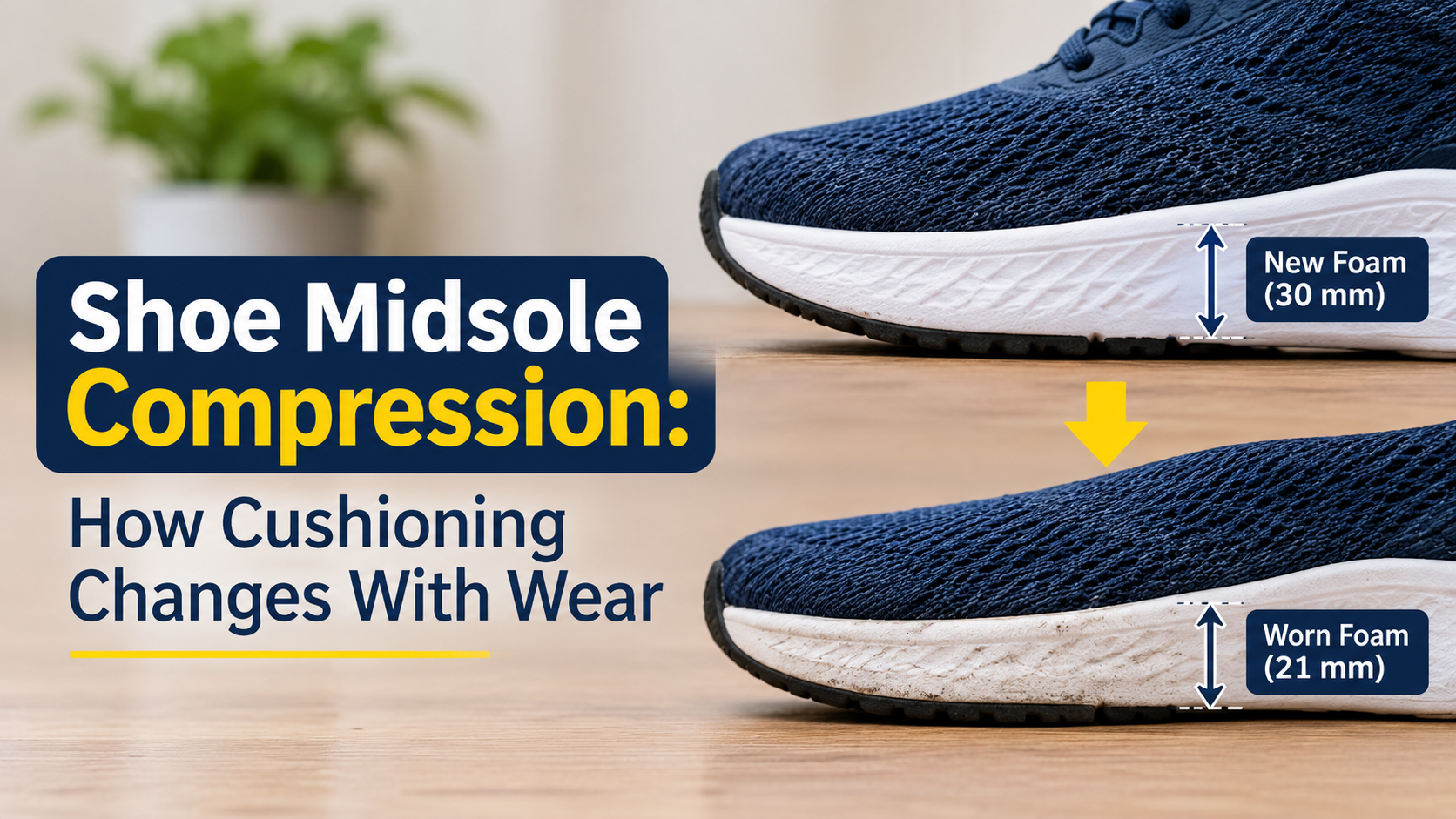
Because the geometry of the sole is what makes the shoe work, protecting it is important. Rotate between two pairs if you wear them daily, so the foam has time to recover. Clean the upper with a soft brush and mild soap, and let the shoes air dry away from direct heat. Check the outsole regularly: when the tread wears flat or the midsole compresses unevenly, the rocker effect fades and it is time for a replacement. Most pairs last roughly 300 to 500 miles of walking or running, depending on weight, surface and construction.
Frequently Asked Questions
Are rocker sole shoes good for walking?
Yes. The rolling motion makes walking feel smoother and can reduce effort at push-off, which is why they are popular for long walks and standing jobs.
Do rocker sole shoes help with plantar fasciitis?
Many people find them more comfortable because of the cushioning and reduced toe bending, but results vary. A podiatrist can tell you whether they suit your specific case.
Can you run in rocker sole shoes?
Absolutely. A large number of modern running shoes use rocker geometry to give a smooth, efficient ride. Start with shorter runs while your body adapts.
Do rocker sole shoes cause balance problems?
The curved sole can feel less stable at first, which is why people with balance issues should be careful. Healthy wearers typically adjust within a couple of weeks.
How should rocker sole shoes fit?
They should hold your heel firmly, leave roughly a thumb’s width of space at the toe and feel secure across the midfoot. A loose fit makes the shoe feel more unstable.
How long does it take to get used to them?
Most wearers adapt in about one to two weeks of gradual use.
Are rocker sole shoes worth it?
If you deal with forefoot soreness, a stiff big toe, or simply want a smoother, more cushioned ride, they are well worth trying. Choose a mild design first and build up wear time slowly.
Final Thoughts
Rocker sole shoes work by replacing part of your foot’s natural rolling motion with a curved sole. That simple idea reduces pressure on the ball of the foot, limits toe bending, softens heel impact and creates a smooth, rolling stride. Whether you are managing foot discomfort or just want a more comfortable pair for long days, understanding the apex, the curve and the fit will help you find the right shoe.
Start with a mild rocker, give your body a week or two to adapt, and pay attention to how your feet feel. With the right pair, every step can feel a little easier.