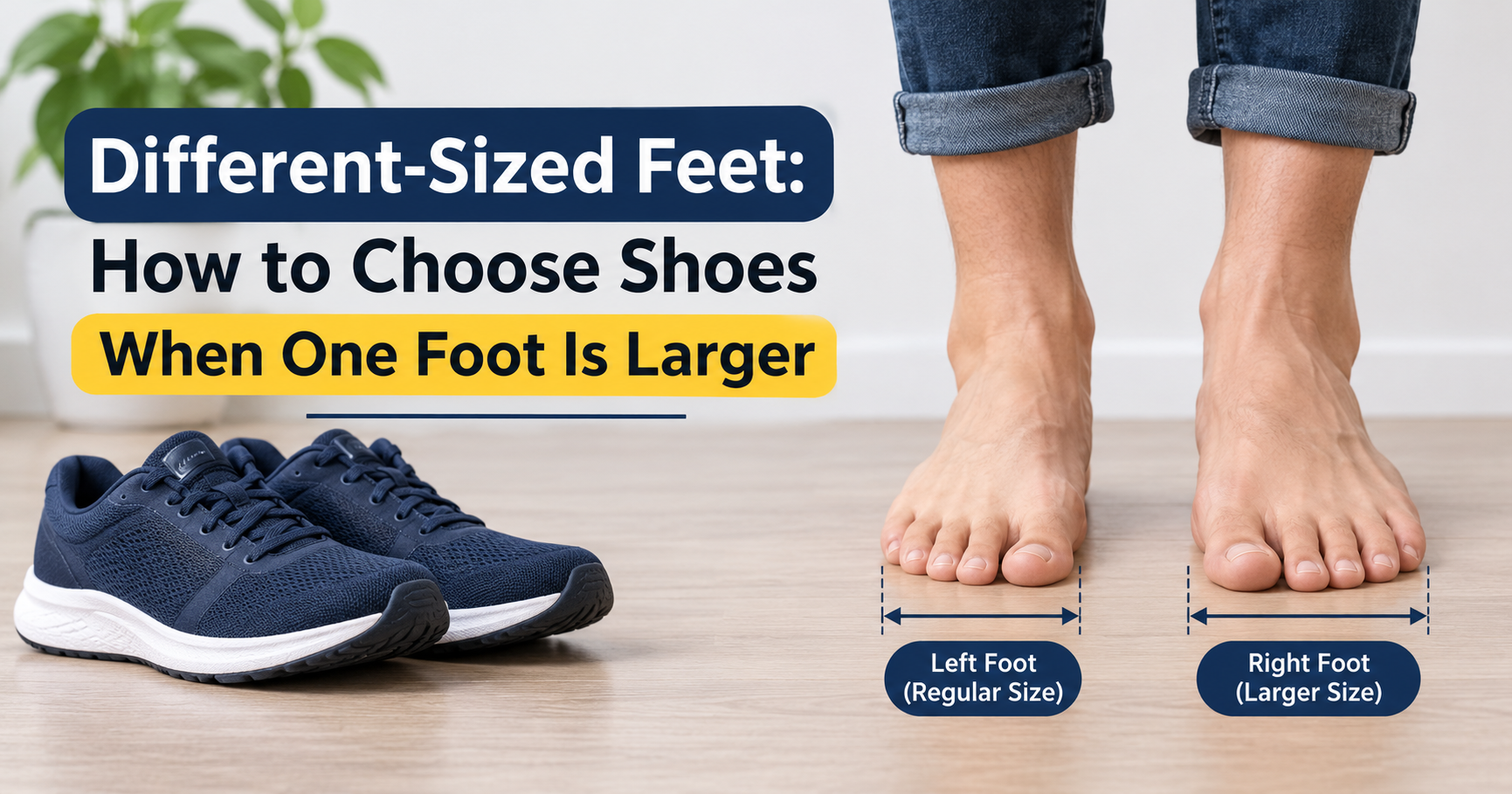
You have probably had this experience: two pairs of shoes, both labeled with the same size, and one feels perfect while the other pinches your toes or slips at the heel. The problem is rarely the label. Feet come in many shapes, and a single number simply cannot describe all of them. If you have wide feet, narrow feet, high arches, flat feet, or even one foot that is bigger than the other, shoe sizing for different sized feet takes a little more care than just grabbing your “usual size.”
This guide explains exactly how shoe sizing works, how to measure your feet accurately at home, how to read size and width charts, and how to choose the right fit for your foot type. Whether you shop in a store or online, you will finish with a clear method for getting the right pair the first time.
In this guide
- Why shoe size is more than one number
- How to measure your feet at home
- Shoe size conversion charts
- Understanding shoe width
- Fit advice for wide, narrow, high-arched and flat feet
- What to do when your feet are different sizes
- Sizing by shoe type and tips for buying online
- Common mistakes and FAQs
Why Shoe Size Is More Than One Number
A shoe size usually describes only the length of the shoe’s internal space. But comfort depends on at least four measurements working together:
- Length: the distance from your heel to your longest toe.
- Width: the measurement across the widest part of your forefoot, often called the ball of the foot.
- Arch height: how high or low the middle of your foot sits.
- Volume: the overall “thickness” of your foot, including the height of your instep (the top of the foot).
Two people can both wear a US men’s size 9 and need completely different shoes. One may have a slim, low-volume foot that slides around in a standard shoe. The other may have a broad, high-volume foot that feels crushed in the same pair. Understanding all four measurements is the real secret of shoe sizing for different sized feet.
How to Measure Your Feet at Home
You do not need a special device. A sheet of paper, a pen and a ruler are enough. Measure in the late afternoon or evening, because feet swell slightly through the day and are largest then. Wear the type of socks you plan to wear with the shoes.
Step-by-step measuring method
- Tape a sheet of paper to a hard floor with one short edge against a wall.
- Stand on the paper with your heel touching the wall and your weight evenly spread.
- Have someone mark the tip of your longest toe (it is not always the big toe), or lean down and mark it carefully yourself.
- Measure from the wall edge to the mark. This is your foot length.
- Mark the widest points on both sides of your forefoot and measure the distance between them. This is your foot width.
- Repeat for the other foot, because most people have a slight difference between the two.
Shoe Size Conversion Charts
Sizing systems differ between countries and brands. The charts below are general guides based on foot length. Always compare your own measurement with the specific size chart of the brand you are buying, because a half size of difference between brands is very common.
Men’s shoe size chart (approximate)
| US Men’s | UK | EU | Foot length (cm) | Foot length (inches) |
|---|---|---|---|---|
| 6 | 5 | 39 | 23.7 | 9 1/3 |
| 7 | 6 | 40 | 24.6 | 9 2/3 |
| 8 | 7 | 41 | 25.4 | 10 |
| 9 | 8 | 42 | 26.2 | 10 1/3 |
| 10 | 9 | 43 | 27.1 | 10 2/3 |
| 11 | 10 | 44.5 | 27.9 | 11 |
| 12 | 11 | 45.5 | 28.8 | 11 1/3 |
| 13 | 12 | 47 | 29.6 | 11 2/3 |
Women’s shoe size chart (approximate)
| US Women’s | UK | EU | Foot length (cm) | Foot length (inches) |
|---|---|---|---|---|
| 5 | 3 | 35.5 | 22.1 | 8 2/3 |
| 6 | 4 | 36.5 | 22.9 | 9 |
| 7 | 5 | 37.5 | 23.7 | 9 1/3 |
| 8 | 6 | 38.5 | 24.6 | 9 2/3 |
| 9 | 7 | 40 | 25.4 | 10 |
| 10 | 8 | 41 | 26.2 | 10 1/3 |
| 11 | 9 | 42 | 27.1 | 10 2/3 |
How to use the charts: find the row closest to your measured foot length. If you land between two sizes, choose the larger one, then adjust based on width and shoe type, which we cover below.
Understanding Shoe Width
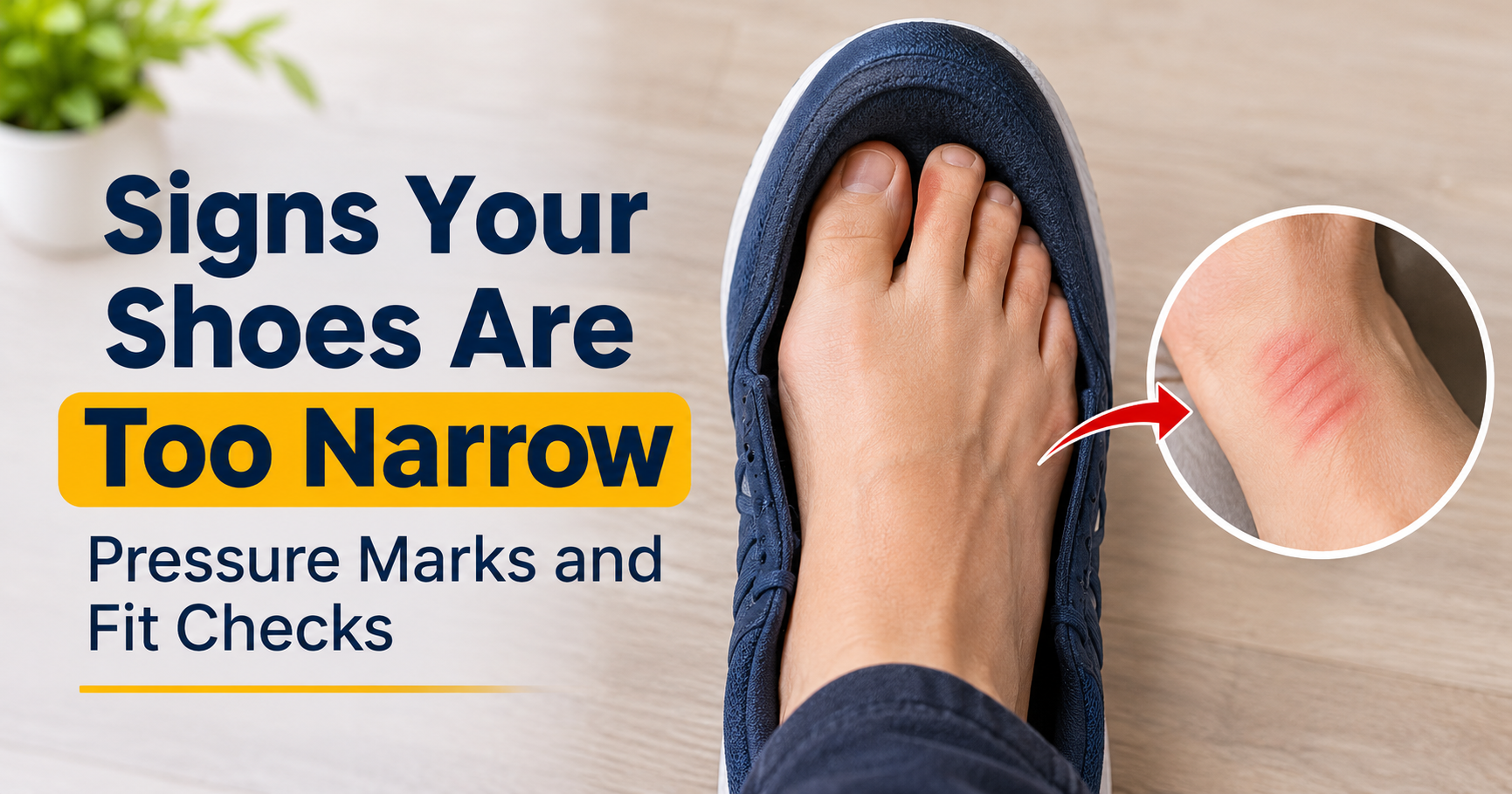
Width is the most overlooked part of shoe sizing. If your usual size feels tight across the sides even though your toes have room, the issue is almost certainly width. Most brands make a standard width and a smaller number of narrow, wide and extra-wide options.
| Width category | Men’s letter | Women’s letter | Typical feel |
|---|---|---|---|
| Narrow | B | 2A (AA) | Heel slips, shoe feels loose at the sides |
| Standard / medium | D | B | Fits most feet comfortably |
| Wide | 2E (EE) | D | Standard shoes feel tight across the ball |
| Extra wide | 4E (EEEE) | 2E (EE) | Needs a specially designed wide last |
Remember that width letters and numbers are not identical across all brands, and many European brands do not label width at all. In that case, read the product description and customer reviews for phrases such as “runs narrow” or “roomy toe box.”
Shoe Sizing for Wide Feet
Wide feet need more room across the ball and toes, not necessarily a longer shoe. A common mistake is buying a size up in a standard width. That adds length you do not need, which causes heel slippage and an awkward walking motion while still squeezing the sides of the foot.
What to look for
- A shoe offered in a true wide (or extra-wide) width instead of just a larger length.
- A roomy or foot-shaped toe box that lets the toes spread naturally.
- Soft, flexible upper materials such as knit, mesh or supple leather that stretch slightly with the foot.
- Removable insoles, so you can swap in a different insole if needed.
Rounded and square toe shapes usually suit wide feet better than pointed styles. If you love dress shoes with a tapered front, look for models made with a wider last, or consider a half size up combined with a thin insole to keep the heel secure.
Shoe Sizing for Narrow Feet
Narrow feet have the opposite challenge: standard shoes feel loose, the heel lifts when walking, and the sides of the foot slide around. This can cause blisters and a feeling of instability.
- Search for shoes sold in narrow widths (B for men, 2A for women).
- Choose styles with strong lacing systems or adjustable straps that pull the foot securely back into the heel.
- Try a heel grip or a thin cushioned insole to reduce empty space inside the shoe.
- Use the “heel lock” lacing technique (explained in the tips below) in athletic shoes.
Arch Height and Shoe Fit
Your arch affects how a shoe feels even when length and width are right. There are three general types: flat, neutral and high. A simple home test is the “wet footprint” test. Wet your foot, step on a piece of dark paper or a dry surface, and look at the print left behind.
Flat feet
A footprint with almost no curve on the inside edge suggests a low arch. Flat feet often need a little more room and firm midfoot support. Look for stable shoes with a supportive midsole and enough space to fit an arch-supporting insole if you use one.
Neutral arch
Most standard shoes are designed for a neutral arch, so these feet usually have the widest choice. Focus mainly on length, width and the purpose of the shoe.
High arches
High-arched feet often have a taller instep, which means the top of the foot feels pressure from laces and stiff tongues. Look for cushioned midsoles, generous instep room and soft tongues. Shoes with extra lace eyelets let you adjust tension in the middle without squeezing the top of the foot.
When One Foot Is Bigger Than the Other
It is completely normal for feet to differ slightly, often by up to half a size. Sometimes the difference is more noticeable because of past injuries, bunions, swelling or natural asymmetry. Here is how to handle it:
- Fit the larger foot. Always choose the size that comfortably fits your bigger foot.
- Fill the extra space in the smaller foot’s shoe. A thin insole, a heel grip or an extra-lace technique can make the smaller foot feel secure.
- Try both shoes on and walk. Never test only one shoe.
- Consider asking about split sizing. Some specialty stores will help you pair two different sizes, which is helpful for significant differences.
If the difference between your feet is large or has appeared suddenly, mention it to a podiatrist or doctor, since a sudden change can sometimes signal swelling or another medical issue.
Shoe Sizing for Large and Small Feet
Large feet (men’s 13 and above, women’s 11 and above)
Larger sizes are often made in smaller quantities, so stock can be limited. Make sure you check the brand’s full size range before you fall in love with a style. Larger shoes also tend to feel heavy, so look for lightweight materials and cushioned soles. Pay attention to width too: larger feet are often wider, and a wide option makes a big difference.
Small feet (women’s 5 and below, men’s 6 and below)
Small adult feet sometimes fall between adult and children’s ranges. Some brands offer petite or small sizes, and in some cases, youth sizes can work, but check that the shoe has the right support for adult use. Be careful about shoe styles designed for children, as the cushioning and arch support may not be suitable for all-day adult wear.
Special Fit Situations
Some conditions change how shoes should fit. This is general information and not medical advice, and a podiatrist can give personal guidance.
- Bunions: choose shoes with a wide toe box and soft, stretchy upper material at the side of the big toe joint. Avoid pointed or narrow shoes.
- Swollen feet: shop in the evening, choose adjustable closures such as laces or straps, and allow a little extra volume.
- Pregnancy: feet can increase in both length and width and may stay larger afterward. Re-measure your feet instead of relying on your old size.
- Sensitive or diabetic feet: look for seamless interiors, a deep toe box and good cushioning, and consult a healthcare professional about suitable footwear.
How Shoe Type Changes Your Size
The same person might wear different sizes in different types of shoes. Here is a quick guide to how fit expectations change:
| Shoe type | Sizing advice |
|---|---|
| Running shoes | Often need a thumb’s width of space at the front because feet swell during runs. Many runners go up half a size from their casual size. |
| Everyday sneakers | Usually true to size. Check width and toe box shape. |
| Dress shoes | Should fit more snugly at the heel and midfoot. Leather softens with wear, but should never cause pain. |
| Boots | Allow room for thicker socks and a secure heel. Hiking boots often need extra toe room for downhill walking. |
| Sandals | Heel should not hang over the edge, and toes should not hit the front. Straps must be adjustable. |
| Heels | Pressure moves toward the toes, so choose a lower heel, a rounded toe or a size with a little extra width for comfort. |
How a Shoe Should Fit: The Thumb Test
Once you have your size, you still need to check the fit. A well-fitting shoe has space at the front, a secure heel and a comfortable width across the ball of the foot.
Your fit checklist
- Toe space: about 1 to 1.2 cm (roughly a thumb’s width) between your longest toe and the end of the shoe.
- Toe wiggle: your toes should be able to spread and move freely.
- Heel grip: the heel should stay in place without sliding up and down when you walk.
- Ball of the foot: the widest part of your foot should sit in the widest part of the shoe, with no pressure on the sides.
- Instep: laces should close comfortably without pressing on the top of your foot.
- No break-in pain: shoes should feel comfortable from the first wear. Slight stiffness is normal, but pain is not.
Tips for Buying Shoes Online
Online shopping is convenient, but it takes a bit more planning to avoid sizing mistakes, especially when you have wide, narrow or uneven feet.
- Use your measurements, not your old size. Compare your length and width with the brand’s own size chart.
- Read reviews for fit comments. Look for words like “narrow,” “snug,” “runs large” and “roomy toe box.” Reviews from people with similar feet are the most useful.
- Check the available widths and the full size range before getting attached to a style.
- Understand the return policy. Free returns and exchanges make it much easier to try two sizes.
- Try shoes on indoors. Walk around on a clean carpet so you can return them if they do not fit.
- Order two sizes when uncertain, if the store allows easy returns, then send back the one that does not fit.
Common Shoe Sizing Mistakes to Avoid
- Assuming your size never changes. Feet can change in size and shape with age, weight changes, pregnancy and activity. Re-measure at least once a year.
- Buying shoes that need “breaking in” to be comfortable. A good shoe should feel comfortable straight away.
- Going up a size to fix a width problem. This adds length and still may not solve the tightness.
- Measuring only one foot. Measure both, and fit the larger one.
- Shopping in the morning. Feet are smaller before they swell during the day.
- Ignoring the sock thickness. Try shoes on with the socks you will actually wear.
Quick Note on Children’s Feet
Kids’ feet grow quickly, and shoes that are too small can affect comfort and walking. Measure children’s feet often, every two to three months for younger children, and leave about a thumb’s width of growing room. Avoid buying shoes that are much too large for “growing into,” because these can cause tripping and poor support.
Frequently Asked Questions
Should I size up if I have wide feet?
Usually no. Look for a wide width in your correct length first. Going up a size adds length and often leaves your heel loose. If wide options are not available, a half size up in a roomy style with a soft upper can sometimes work.
How much space should be in front of my toes?
About a thumb’s width, or roughly 1 to 1.2 cm. This gives your toes room to move, especially when you walk or run.
Why do my shoes fit differently in different brands?
Each brand uses its own lasts (the foot-shaped molds shoes are made on), materials and sizing standards. A size 9 in one brand can feel like an 8.5 or a 9.5 in another. Always check the brand’s chart and fit notes.
Is it normal for one foot to be bigger?
Yes. Many people have one foot slightly longer or wider than the other. Fit the larger foot, and use insoles or heel grips to improve the fit on the smaller side.
Can shoes stretch to fit wide feet?
Leather and some fabrics can stretch slightly over time, but you should not buy shoes that are painfully tight and expect them to stretch. A shoe repair shop can sometimes stretch leather shoes a little, but it is better to start with the right width.
How often should I measure my feet?
At least once a year, and any time you notice your usual size feels uncomfortable, or after pregnancy, major weight changes or injury.
Final Thoughts
The right shoe fit comes from understanding your own feet: their length, width, arch height and volume. Once you measure both feet, compare your numbers with real size charts and pay attention to the shoe type, you can stop guessing and start buying with confidence. Remember the key rules: fit your larger foot, leave a thumb’s width at the front, keep the heel secure, and never accept shoes that hurt from the start.
Take ten minutes to measure your feet this week and save the numbers on your phone. The next time you shop, you will know exactly what to look for, and your feet will thank you.