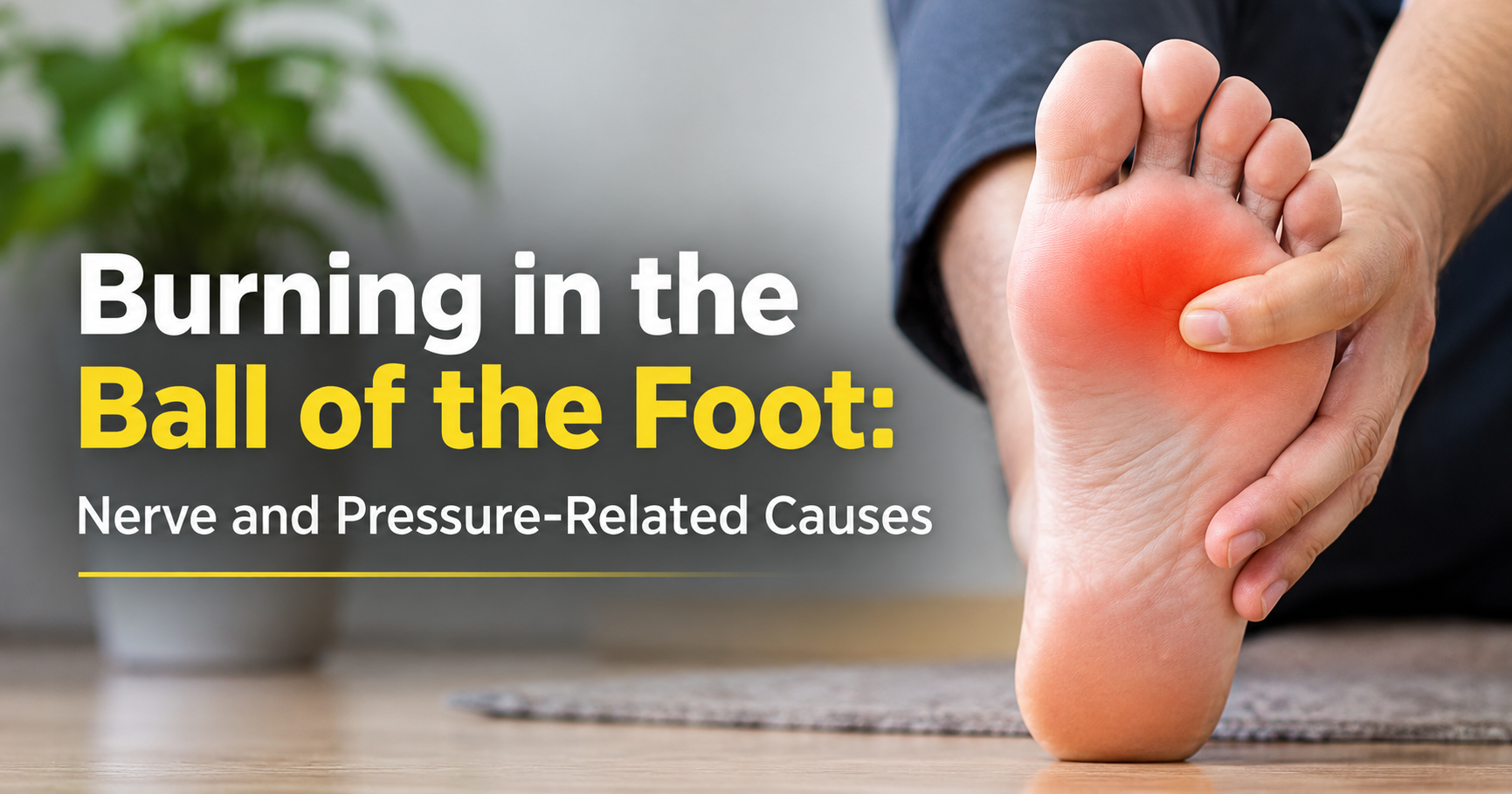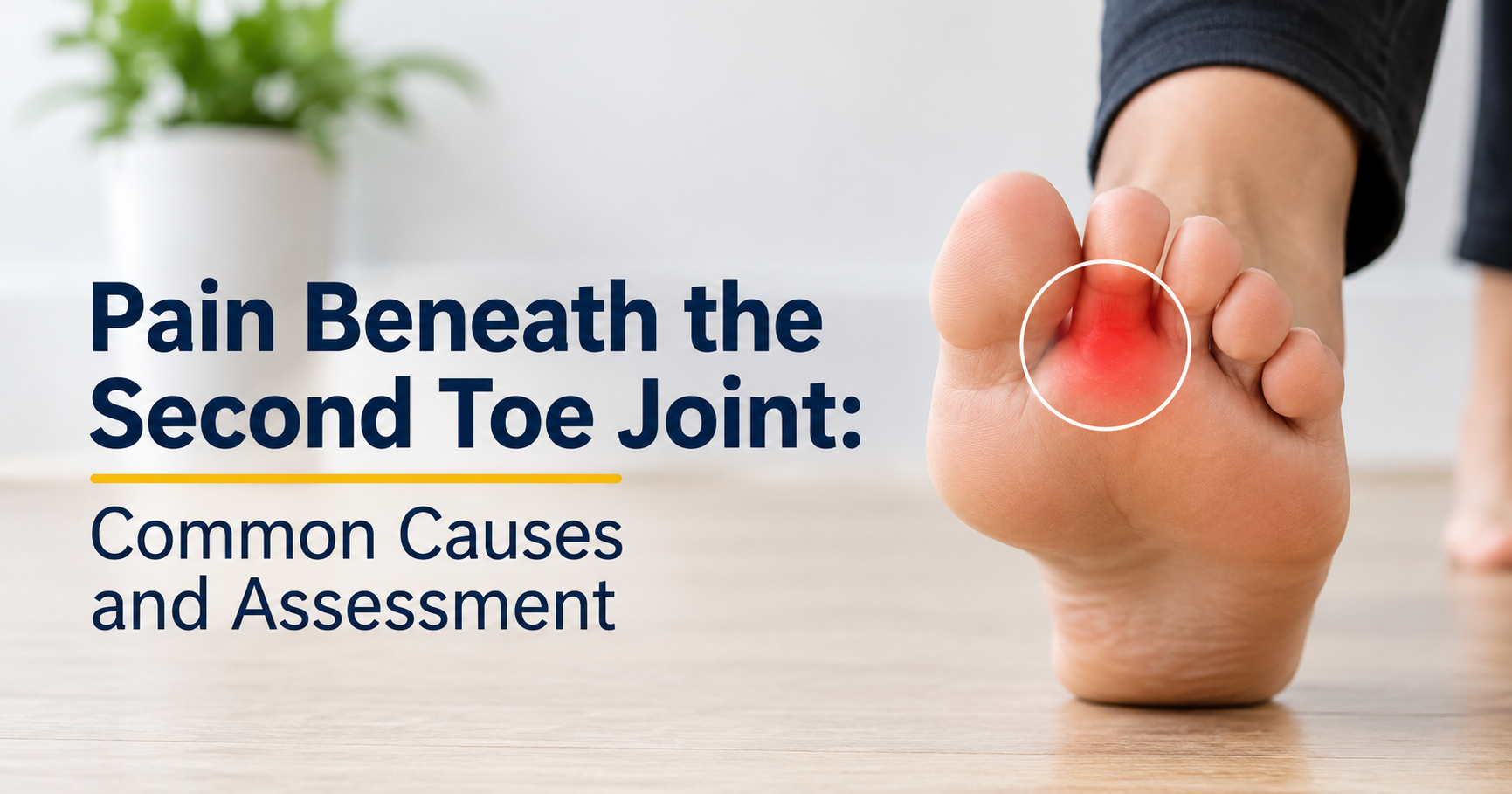
That sharp, burning or bruised feeling right under the base of your second toe can turn every step into a chore. You may notice it when you get out of bed, wear certain shoes, or finish a long walk. If this sounds familiar, you are not alone. Pain under the second toe joint is one of the most common complaints affecting the ball of the foot, and in most cases it has a clear cause and a clear solution.
In this guide, you will learn what is happening inside your foot, the main causes, the symptoms to watch for, practical home treatments, footwear choices, exercises, and the warning signs that mean it is time to see a professional.
Quick Summary
- Pain under the second toe joint usually comes from overload of the second metatarsal head.
- Common causes include metatarsalgia, capsulitis, plantar plate injury, Morton’s toe and stress fracture.
- Most mild cases improve with rest, ice, supportive shoes and a metatarsal pad.
- See a doctor if pain lasts more than 2 weeks, the toe drifts, or you cannot bear weight.
Understanding the Anatomy Behind the Pain
To understand why this area hurts, it helps to know what sits under it. Your second toe connects to the foot through the second metatarsophalangeal (MTP) joint. Directly beneath it is the head of the second metatarsal bone, a thick ligament called the plantar plate, and a protective fat pad.
The second metatarsal is long and sits in a relatively fixed position, which means it absorbs a huge amount of force each time your foot pushes off the ground. During walking, the ball of the foot can carry up to several times your body weight with each step during running. When anything disturbs this system, pain develops right under the joint.
Common Symptoms
Symptoms vary depending on the cause, but people most often describe:
- A deep ache, sharp pain or burning sensation under the ball of the foot behind the second toe
- A feeling of walking on a pebble, marble or bunched up sock
- Pain that worsens when you walk barefoot, stand for long periods or push off the toes
- Swelling or redness around the base of the second toe
- Stiffness when bending the toe upward
- A second toe that begins to drift sideways, curl or float above the ground
- Thickened skin or a callus under the joint
Main Causes of Pain Under the Second Toe Joint
1. Metatarsalgia
Metatarsalgia is a general term for pain in the ball of the foot. It develops when the metatarsal heads are overloaded, often from high-impact sport, a sudden increase in activity, excess body weight or poorly cushioned shoes. It typically feels like an aching or burning pain that worsens with standing and walking.
2. Capsulitis of the Second MTP Joint
Capsulitis means inflammation of the ligaments that surround the joint. It is often the first stage of a plantar plate problem. The classic sign is the sensation of a stone under the toe, along with swelling and tenderness at the base of the second toe.
3. Plantar Plate Tear
If capsulitis continues, the plantar plate can stretch or tear. This weakens the toe’s support, and the second toe may slowly drift toward the big toe or lift off the ground. Pain is often under the joint, and you may notice a visible gap between the second and third toes. Early treatment gives the best chance of avoiding a permanent deformity.
4. Morton’s Toe (Long Second Toe)
When the second toe is longer than the big toe, or the second metatarsal is relatively long, the joint takes more pressure during push-off. Morton’s toe is a foot shape, not a disease, but it is a well-known risk factor for chronic pain under the second toe joint.
5. Stress Fracture
Repetitive strain can create a tiny crack in the second metatarsal. Runners, dancers, military recruits and people who suddenly increase their walking distance are most at risk. Pain usually starts mild, grows during activity and eases with rest. Pressing on the bone is often very tender.
6. Freiberg’s Disease
This is a less common condition where the head of the second metatarsal loses part of its blood supply and changes shape. It most often appears in adolescents and young women, causing stiffness, swelling and pain in the joint.
7. Arthritis and Joint Wear
Osteoarthritis or inflammatory arthritis such as rheumatoid arthritis can affect the second MTP joint. Morning stiffness, a thickened joint and pain with bending are typical clues.
8. Footwear and Lifestyle Factors
- High heels that push body weight onto the ball of the foot
- Narrow, pointed shoes that squeeze the toes
- Thin, flat soles with little cushioning
- Standing on hard floors for long hours
- Tight calf muscles that increase forefoot pressure
- Weight gain, which increases load on every step
- Thinning of the natural fat pad with age
How to Tell the Causes Apart
Several conditions feel similar, which is why a professional exam is useful. This table gives you a general idea of how they differ.
| Condition | Typical feeling | Clue that points to it |
|---|---|---|
| Metatarsalgia | Aching or burning under the ball of the foot | Worse when walking barefoot or on hard floors |
| Plantar plate tear | Pain under the joint, toe drifting or floating | Swelling, a gap between toes, toe lifts |
| Capsulitis | Feels like a stone or folded sock under the toe | Early stage of plantar plate problems |
| Stress fracture | Pain that builds with activity, eases with rest | Tender to press on the bone, mild swelling |
| Morton’s neuroma | Burning, tingling or numbness between toes | Usually between the 3rd and 4th toes, sometimes the 2nd and 3rd |
| Arthritis | Stiffness, especially in the morning | Joint feels thick, limited bending |
When to See a Doctor
Seek medical advice if you notice:
- Pain that continues beyond 2 weeks despite rest and better shoes
- Sudden, severe pain after an injury or a popping sensation
- Visible swelling, bruising or a toe that is shifting position
- Numbness, tingling or color changes in the toes
- Difficulty putting weight on the foot
- Diabetes, poor circulation or nerve problems with any foot pain
- Signs of infection such as heat, redness spreading or fever
How Is It Diagnosed?
A foot specialist, podiatrist or orthopedic doctor will usually start with your history and a physical exam. They may test the stability of the joint with a gentle “drawer test,” press along the metatarsal bones, and watch how you walk. Imaging may include:
- X-ray: checks for fractures, arthritis and bone shape changes.
- Ultrasound: shows inflammation and plantar plate damage in real time.
- MRI: gives the clearest picture of ligament tears and early stress fractures.
Home Treatment for Pain Under the Second Toe Joint
For mild to moderate pain, these steps are often enough to bring real improvement.
Rest and Activity Changes
Reduce running, jumping and long standing for a few days. Switch to low-impact exercise such as cycling or swimming to maintain fitness without loading the joint.
Ice Therapy
Apply a cold pack wrapped in a thin cloth to the sore area for 10 to 15 minutes, two to three times a day. This calms swelling and soreness, especially after activity.
Cushioning and Metatarsal Pads
A small dome-shaped metatarsal pad redistributes pressure away from the painful joint. Placement is the key detail, as shown below.
Over-the-Counter Pain Relief
Anti-inflammatory medicines or topical gels may help short term for some people. Always follow the label and check with a pharmacist or doctor if you have stomach, kidney or heart conditions, or take other medication.
Taping
Some podiatrists teach a simple taping method that holds the second toe in a neutral position and eases strain on the plantar plate. Ask a professional to show you the correct technique first.
Choosing the Right Footwear
Shoes can make or break recovery. Look for these features:
- Wide toe box: toes should spread naturally without being squeezed.
- Thick, cushioned forefoot: absorbs shock under the ball of the foot.
- Rocker sole: a gently curved sole helps you roll through each step with less bending at the joint.
- Low heel: keep heels below about 1 inch (2.5 cm) when possible.
- Firm midsole: prevents excessive flexing at the sore joint.
- Secure fit: a snug heel and laces or straps that keep the foot from sliding forward.
Replace worn out sneakers. Most running shoes lose their cushioning after about 300 to 500 miles (500 to 800 km), and walking shoes break down with daily use too.
Insoles and Orthotics
Over-the-counter insoles with arch support and a built-in metatarsal pad suit many people with mild symptoms. If your pain keeps returning, a custom orthotic made by a podiatrist can correct foot mechanics and offload the second metatarsal more precisely. Some people with a plantar plate injury also use a stiff-soled shoe or walking boot for a short period.
Exercises and Stretches That Help
Gentle exercise improves flexibility and strength once the sharp pain settles. Stop any movement that increases pain.
- Calf stretch: stand facing a wall, one foot back with the heel down. Hold 30 seconds, repeat 3 times per side. Tight calves raise forefoot pressure.
- Toe spreads: sit and slowly spread your toes apart, hold for 5 seconds, repeat 10 times.
- Towel scrunches: place a towel on the floor and pull it toward you using only your toes. Do 3 sets of 10.
- Marble pick-up: lift small objects with your toes and place them in a cup to strengthen small foot muscles.
- Short foot exercise: sitting, draw the ball of the foot toward the heel without curling the toes. Hold 5 seconds, repeat 10 times.
- Plantar fascia stretch: pull the toes gently back toward the shin and hold 20 to 30 seconds, 3 repeats.
Medical Treatments for Persistent Pain
If home care is not enough, a specialist may suggest:
- Physical therapy to improve strength, flexibility and gait.
- Custom orthotics to offload the joint and improve alignment.
- Immobilization in a boot or stiff shoe for stress fractures and plantar plate injuries.
- Corticosteroid injection in selected cases, used carefully because repeated injections can weaken the plantar plate.
- Shockwave therapy for chronic inflammation in some clinics.
- Surgery in rare cases, such as repairing a torn plantar plate or shortening a long metatarsal when conservative treatment fails.
Prevention Tips
- Increase exercise gradually, by no more than about 10 percent per week.
- Rotate your shoes and replace them before they wear out.
- Save high heels and narrow shoes for short occasions.
- Maintain a healthy weight to reduce forefoot load.
- Stretch calves regularly.
- Avoid walking barefoot on hard surfaces if you are prone to ball of foot pain.
- Use cushioned insoles if you stand all day.
Helpful Foot Care Products to Consider
While no product replaces a proper diagnosis, these items are commonly used to manage pain under the second toe joint. Compare materials, sizing and user feedback before you choose:
- Metatarsal pads (gel or foam): offload the ball of the foot.
- Cushioned insoles with forefoot padding: add shock absorption to everyday shoes.
- Rocker-sole walking or running shoes: reduce bending at the joint.
- Wide toe box footwear: prevents squeezing and rubbing.
- Toe separators or spacers: help realign toes and relieve crowding.
- Gel toe sleeves or ball-of-foot cushions: reduce friction and pressure.
- Reusable cold packs: convenient for ice therapy after activity.
- Foot massage balls and resistance bands: support stretching and strengthening routines.
Frequently Asked Questions
Is pain under the second toe joint serious?
Most cases are mild overload problems that settle with rest and better footwear. It becomes more serious when pain lasts longer than 2 weeks, the toe starts drifting or lifting, or you cannot put weight on the foot. These signs suggest a ligament tear or fracture that needs a proper exam.
Why does it feel like I am walking on a pebble?
This is a classic description of capsulitis or metatarsalgia. The inflamed tissue under the joint feels like a hard lump or bunched sock, even when nothing is in your shoe.
Can high heels cause pain under the second toe?
Yes. A raised heel shifts your body weight forward onto the ball of the foot. The second metatarsal head takes a large share of that pressure, so regular high heel wear is one of the most common triggers.
How long does it take to heal?
Mild overload pain often improves in 2 to 6 weeks with the right changes. Plantar plate injuries and stress fractures can take 6 to 12 weeks or longer, depending on severity and how early you start treatment.
Should I walk barefoot?
Avoid barefoot walking on hard floors while the area is sore. Cushioned, supportive footwear indoors helps reduce load on the joint.
Do metatarsal pads really work?
For many people, yes. A correctly placed pad takes pressure off the sore joint. Placement matters, so position it just behind the painful spot and adjust until the pain eases.
Can this lead to a hammertoe?
If a plantar plate tear is ignored, the second toe can gradually curl or drift sideways. Early care lowers that risk.
Is running okay with this pain?
Switch to low-impact activity such as cycling or swimming until walking is pain free. Return to running slowly, with cushioned shoes and shorter distances.
Final Thoughts
Pain under the second toe joint is common, but you do not have to live with it. In most cases, it comes from too much pressure on the second metatarsal head, and the solution is to reduce that pressure through better footwear, cushioning, stretching and gradual activity. Pay attention to early warning signs such as a pebble-like feeling or a toe that starts to drift, because treating the problem early gives the best results and helps you avoid long-term deformity.
If your pain is severe, getting worse, or not improving after a couple of weeks, book an appointment with a podiatrist or orthopedic specialist for a precise diagnosis and a personalized plan.
Medical Disclaimer
This article is for general information only and does not replace professional medical advice, diagnosis or treatment. Always seek the guidance of a qualified healthcare provider with any questions about a medical condition. Some products mentioned may be part of affiliate programs, which means the site may earn a commission at no extra cost to you.