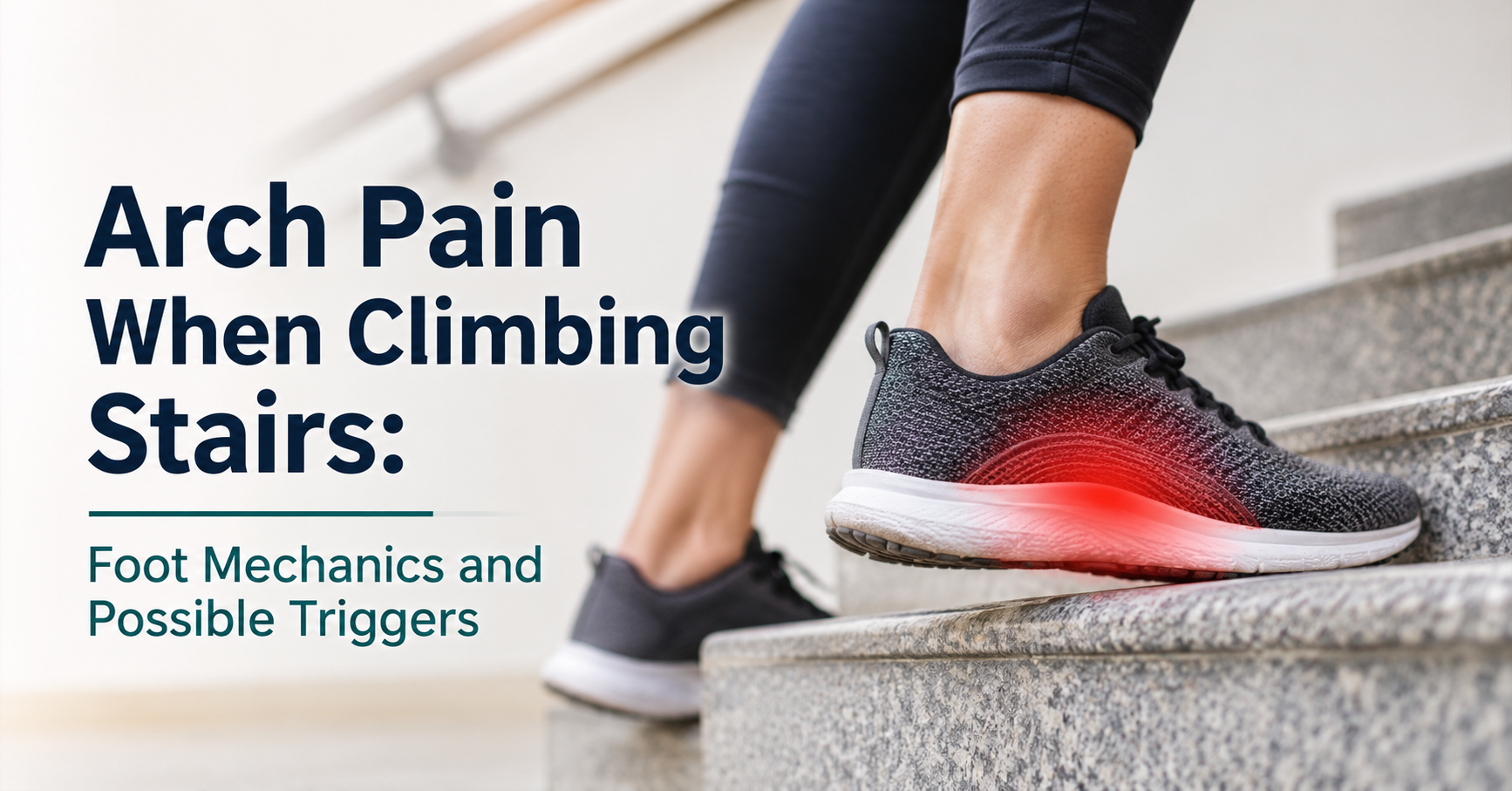
If you feel a pulling, aching or sharp pain along the inside of your foot every time you head up the stairs, you are not alone. Arch pain when climbing stairs is one of the most common foot complaints, and it often shows up first on stairs because every step asks your arch to carry your full body weight and then push you upward.
The good news is that most causes respond well to simple, consistent care. This guide explains why stairs hurt your arch, the most likely causes, what you can do at home, how to choose supportive footwear and insoles, and the warning signs that mean it is time to see a professional.
- The two most common culprits are plantar fasciitis and posterior tibial tendon problems.
- Stairs stretch and load the arch, which is why symptoms appear there first.
- Calf stretching, supportive shoes, arch support and a gradual return to activity help most people.
- Pain that persists, swelling, numbness or a visibly dropping arch needs a medical check.
Why Do Stairs Make Arch Pain Worse?
When your foot lands on a step, the arch flattens slightly to absorb the load. As you push off, the arch tightens and works like a spring. Climbing stairs also pushes your ankle upward and stretches the band of tissue under your foot more than flat walking does. If that tissue or the tendon supporting the arch is already irritated, stairs are often the first activity to make it complain.
How the Arch Works
Your arch is held up by bones, ligaments, muscles and two key structures:
- The plantar fascia is a thick band that runs along the sole from the heel to the base of the toes. It acts like a bowstring that keeps the arch from collapsing.
- The posterior tibial tendon starts in the calf, runs behind the inner ankle bone and attaches to the bones of the inner arch. It is one of the main stabilizers of the arch.
Overload or irritation of either structure is behind most cases of arch pain on stairs.
Common Causes of Arch Pain When Climbing Stairs
1. Plantar Fasciitis
Plantar fasciitis happens when the plantar fascia is overloaded and develops small irritated or torn areas. It is best known for heel pain, but many people feel it in the arch too. Typical signs are pain with the first steps after waking or after sitting for a long time, plus pain when climbing stairs or rising onto the toes, since both stretch the fascia. Heel spurs are often blamed, but they are not usually the cause of the pain.
2. Posterior Tibial Tendon Dysfunction
When the posterior tibial tendon becomes inflamed or weakened, it struggles to hold the arch up. Pain and swelling appear along the inner ankle and arch and usually worsen with walking, standing for long periods and stairs. A clue is difficulty rising onto the toes of one foot. Over time the arch may gradually flatten, so early attention matters.
3. Flat Feet and Overpronation
Flat or very flexible feet roll inward and let the arch collapse more than it should, which puts extra strain on the fascia and tendon. Many people with flat feet have no pain at all, but extra weight, long days on hard floors or worn shoes can tip the balance into soreness.
4. High Arches
A rigid high arch absorbs shock poorly, so the load concentrates on the heel and ball of the foot and strains the tissue under the arch.
5. Overuse, Stress Injuries and Joint Problems
Sudden increases in walking, hiking or exercise can overload the foot. A stress fracture usually causes a deep, localized ache that grows with activity and eases with rest. Arthritis in the midfoot can also cause stiffness and arch pain, especially with stairs.
Who Is Most at Risk?
- People who stand or walk on hard surfaces for long hours
- Those who are overweight or pregnant, which raises the load on the arch
- Anyone wearing flat, worn out or unsupportive shoes
- Runners, hikers and people who recently increased their activity
- Middle aged adults, especially women, for tendon related problems
- People with tight calf muscles or flat or high arches
Symptoms to Watch For
- Aching, burning or sharp pain along the inside of the foot
- Pain that is worse at the start of walking, on stairs or on tiptoe
- Swelling or tenderness on the inner ankle or arch
- An arch that looks lower than it used to, or shoes wearing on the inner edge
- Fatigue or cramping in the foot after standing
Home Remedies That Actually Help
Reduce the Load for a Short Time
Cut back on the activities that trigger pain, such as long walks, hills and repeated stairs, but keep moving gently. Use the handrail, take stairs one at a time and avoid walking barefoot on hard floors while symptoms are active.
Use Ice and Gentle Massage
Apply a cold pack wrapped in a cloth for 10 to 15 minutes after activity or at the end of the day. Rolling the arch gently over a bottle or a massage ball can ease tightness. Keep the pressure comfortable, never sharp.
Stretch Your Calves and Plantar Fascia
Tight calves pull on the heel and strain the fascia, so stretching is one of the most effective steps.
- Wall calf stretch: Stand facing a wall with one foot back and heel down. Lean forward until you feel a stretch. Hold 30 seconds, repeat 3 times per leg.
- Fascia stretch: Sit, cross the affected foot over the other knee, pull the toes back toward the shin and hold for 30 seconds. Repeat 3 times.
Strengthen the Arch
Once pain settles, add gentle strengthening.
- Towel scrunches: Pull a towel toward you with your toes, 2 sets of 10.
- Short foot exercise: Without curling the toes, draw the ball of the foot toward the heel to lift the arch. Hold 5 seconds, repeat 10 times.
- Calf raises: Rise slowly onto both toes and lower over three seconds. Progress to one leg only if it is pain free.
Take Care of the Basics
Maintaining a healthy weight lowers the load on your arches. Wear supportive shoes indoors too, and increase walking and stair use gradually. Pain relievers such as over-the-counter anti-inflammatory medicine may help some people, but check with a pharmacist or doctor first if you have other conditions or take other medicines.
Choosing Arch Support, Insoles and Shoes
Good footwear and support take pressure off the irritated tissue while it heals. Here is what to look for.
Arch Support Insoles
- Choose firm to semi-rigid support that matches your arch height, not a soft cushion alone.
- Look for a deep heel cup that holds the heel in place.
- Replace them when the foam flattens or the top layer wears through.
- Introduce them gradually, a few hours a day at first.
Supportive Shoes
- A firm heel counter that does not collapse when squeezed
- A sole that bends at the ball of the foot, not in the middle
- Enough toe room and a slight heel lift
- Replace running and walking shoes roughly every 500 miles or when the tread is worn
Other Helpful Items
- Night splints keep the fascia gently stretched while you sleep and are often used for plantar fasciitis.
- Arch support sleeves or compression socks add light support and warmth.
- Massage balls and ice rollers make daily self-care easier.
- Cushioned slippers with arch support protect you at home on hard floors.
If your arch is dropping or pain continues, custom orthotics prescribed by a foot specialist may be the better option over off-the-shelf products.
When to See a Doctor
- You cannot put weight on the foot, or the pain started after an injury
- Marked swelling, redness, warmth or fever
- Numbness, tingling or burning
- Pain at rest or at night
- An arch that is visibly flattening or an ankle rolling inward
- No improvement after two to three weeks of sensible self-care
- Diabetes or poor circulation with any new foot pain
A doctor or podiatrist can examine your feet and gait, order imaging if needed and recommend physical therapy, custom orthotics or other treatments. Many cases of plantar fasciitis improve with simple, consistent care over several months, so patience matters.
How to Prevent Arch Pain on Stairs
- Wear supportive shoes, even at home
- Stretch your calves daily
- Build up walking, hiking and exercise gradually
- Replace worn shoes and insoles on time
- Strengthen your feet and ankles twice a week
- Vary hard surfaces with softer ones and take standing breaks
Frequently Asked Questions
Why does my arch hurt only when I go upstairs?
Going up stairs stretches the fascia and loads the tendon that supports the arch more than flat walking. Mild irritation can stay hidden on level ground and show up on stairs first.
Is arch pain on stairs plantar fasciitis?
It can be, especially if the first steps in the morning are painful. A tendon problem is also common, particularly if the pain sits on the inner ankle and arch. A professional exam is the reliable way to tell them apart.
Can flat feet cause arch pain on stairs?
Yes, although many people with flat feet feel nothing. Pain appears when the arch is overloaded by activity, weight or poor footwear.
How long does it take to heal?
Mild strain may settle in a few weeks. Plantar fasciitis often takes a few months, though most people improve with simple treatment. Tendon problems need earlier attention.
Should I keep exercising?
Choose low-impact options such as swimming or cycling while the pain settles, and return to walking and stairs gradually.
Final Thoughts
Arch pain when climbing stairs is a signal that your foot is overloaded. Stretch regularly, wear supportive shoes, add the right arch support and rebuild activity gradually, and most people feel steady improvement. If pain lingers or your arch changes shape, do not wait: early treatment protects the foot and shortens recovery.
This article is for general information only and is not a substitute for professional medical advice, diagnosis or treatment. Consult a qualified healthcare provider about your symptoms.