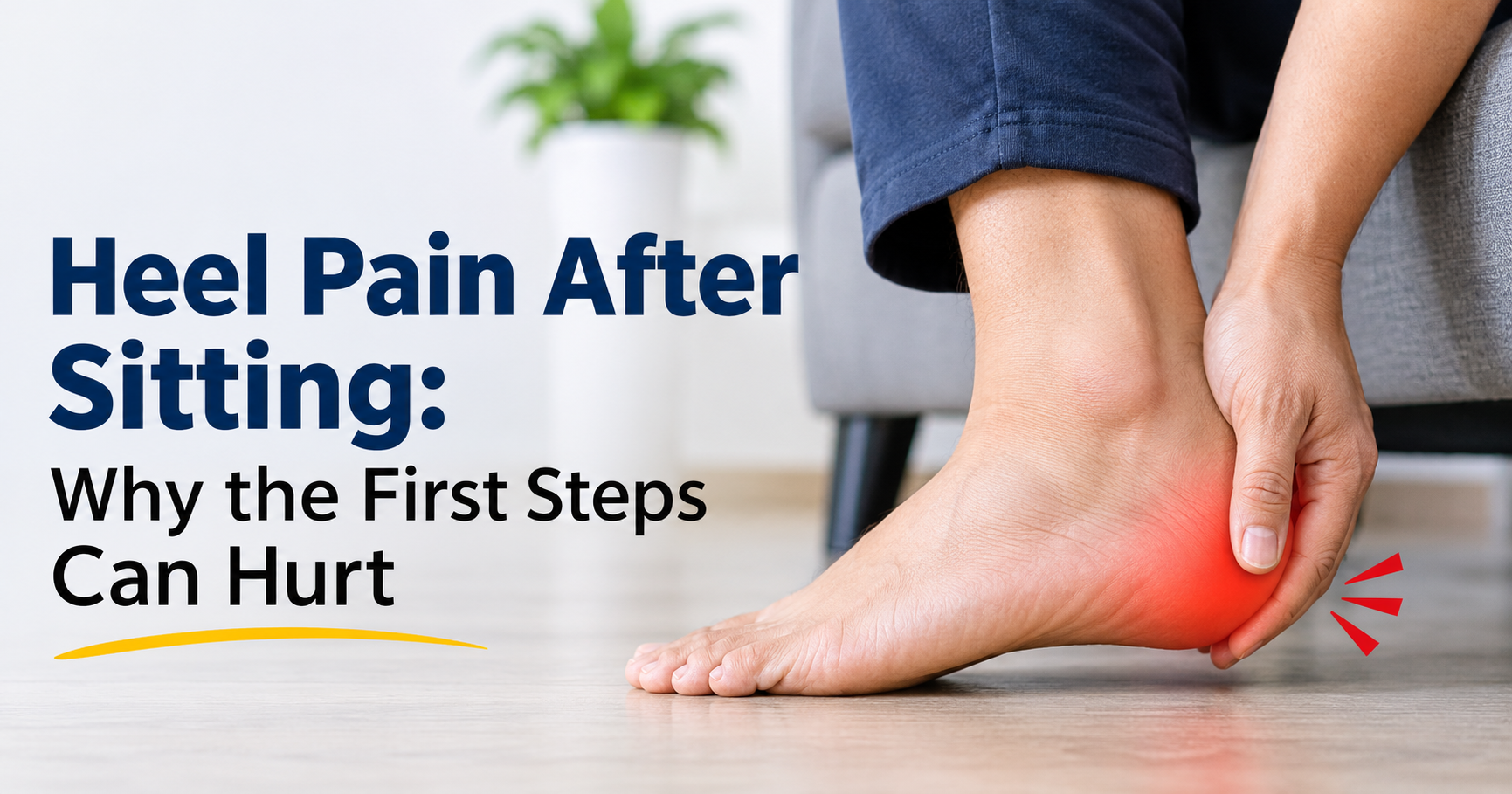
You sit through a long meeting, a long drive or a full day at your desk. Then you stand up and the first steps feel like walking on a bruise or a sharp stone. If this sounds familiar, you are not alone. Heel pain after sitting for long periods is one of the most common foot complaints among office workers, drivers, students and anyone who spends hours off their feet.
The good news is that in most cases it can be managed with simple, consistent changes. This guide explains why it happens, what conditions are behind it, which home remedies work, how to set up your seating area, what to look for in supportive footwear and accessories, and when it is time to see a professional.
Heel pain after sitting is most often caused by plantar fasciitis or a tight Achilles and calf complex. Stretching, supportive shoes, a better sitting setup and regular movement breaks help most people. Seek medical care if pain is severe, follows an injury, or comes with numbness or swelling.
Why Does Your Heel Hurt After Sitting?
Understanding the mechanics helps you choose the right fix. When you sit for a long time, your foot and calf rest in a relaxed, often slightly pointed position. The plantar fascia, a thick band of tissue running from your heel bone to your toes, and the Achilles tendon at the back of the heel both shorten and stiffen. Blood flow to the area also slows.
When you stand, your full body weight suddenly stretches these stiff tissues. If they are already irritated or have tiny tears, that sudden load triggers sharp pain. As you keep walking, the tissue warms up and the pain often eases, which is why this pattern is sometimes called start-up pain.
Common Causes of Heel Pain After Sitting
Several conditions can produce heel pain after inactivity. The table below summarizes the most common ones.
| Condition | Typical pattern |
|---|---|
| Plantar fasciitis | Stabbing pain in the heel bottom, worst with first steps after sitting or in the morning |
| Achilles tendinopathy | Pain and stiffness at the back of the heel, tender when pinched |
| Heel spur | Sharp or aching pain under the heel; often goes along with plantar fasciitis |
| Fat pad syndrome | Deep bruise-like ache in the center of the heel, worse on hard floors |
| Retrocalcaneal bursitis | Swelling and tenderness at the back of the heel, aggravated by tight shoes |
| Tarsal tunnel / nerve irritation | Burning, tingling or numbness along the inner ankle and heel |
| Stress fracture | Pain that builds with activity and does not settle with rest; needs medical review |
1. Plantar fasciitis
This is the leading cause. Repeated strain causes small tears and irritation in the plantar fascia near the heel. Pain is typically on the bottom of the heel, strongest with the first steps after rest, and may ease as you move, then return after long standing.
2. Achilles tendon tightness
A tight Achilles tendon and calf muscles pull on the heel bone. Long periods with the ankle in a flexed or relaxed position can increase stiffness and make the back of the heel sore when you stand.
3. Heel spurs
A heel spur is a small bony growth on the underside of the heel. Many people with spurs feel no pain, and the spur itself is often not the actual source of pain. Inflammation of nearby soft tissue is usually responsible.
4. Heel fat pad syndrome
The natural cushion under your heel can thin or become irritated with age, weight gain or repeated impact. This creates a deep, bruise-like ache that is worse on hard floors.
5. Nerve-related causes
Compression of a nerve near the inner ankle (tarsal tunnel syndrome) can cause burning, tingling or electric sensations in the heel. Sitting with the foot tucked or crossed may aggravate it.
Who Is at Higher Risk?
- People who sit or drive for many hours daily
- Those who are overweight, which increases load on the heel
- Adults between 40 and 60 years old
- People with flat feet or very high arches
- Runners and those who suddenly increase activity
- Anyone who frequently wears flat, thin or unsupportive shoes
- People with tight calf muscles or limited ankle movement
- Workers who stand on hard surfaces and then sit for long stretches
Home Remedies That Actually Help
Stretch before you stand up
Spend 30 seconds stretching before your first steps. Sit, place the affected foot on the opposite knee, and gently pull your toes back toward your shin until you feel a stretch in the arch. Hold for 15 to 20 seconds and repeat three times.
Calf and Achilles stretch
Stand facing a wall with the painful leg straight behind you and the heel on the floor. Lean forward until you feel a pull in the calf. Hold 30 seconds, repeat 3 times, and do it 2 to 3 times a day. Bend the back knee slightly to target the deeper calf muscle as well.
Roll the arch
Roll a frozen water bottle or a massage ball under the arch for 3 to 5 minutes. This combines gentle massage with cooling, which many people find soothing.
Ice and activity management
Apply a wrapped ice pack to the heel for 10 to 15 minutes after a long day. Reduce high-impact activity temporarily, but keep light walking, which supports healing better than complete rest.
Strengthen the foot and calf
Towel scrunches, toe curls and slow heel raises build strength in the muscles that support the arch. Aim for 2 to 3 sets of 10 to 15 repetitions, as comfort allows.
Keep a pair of supportive slippers or shoes next to your bed and desk. Walking barefoot on hard floors right after sitting or waking is a very common trigger for heel pain.
Set Up Your Seating Area to Protect Your Heels
Small ergonomic changes reduce strain on your feet. Aim for a position where your hips, knees and ankles form roughly 90-degree angles and both feet rest flat on the floor.
- Keep feet flat: use an adjustable footrest if your feet do not reach the floor comfortably.
- Avoid tucking feet under the chair: this holds the ankle in a shortened position and tightens the calf.
- Do not dangle feet: hanging feet can compress the back of the thigh and reduce circulation.
- Adjust chair height: the seat should let your thighs stay roughly parallel to the floor.
- Consider a sit-stand desk: alternating positions reduces long unbroken sitting.
- Use an anti-fatigue mat: if you stand part of the day, a cushioned mat lowers impact on the heels.
Move Often: The 30-Minute Rule
Even with perfect posture, long unbroken sitting is the real trigger. Every 30 minutes, stand up and walk for a minute or two. While seated, try ankle circles, heel raises and toe pulls. These tiny movements keep blood flowing and prevent the stiffness that makes the first steps so painful.
Choosing Supportive Footwear and Foot Care Products
Good footwear is one of the most effective long-term strategies. Look for these features when choosing shoes, and consider the supportive accessories listed below.
What to look for in shoes
- Firm heel counter that holds the heel steady
- Good arch support that matches your foot type
- Cushioned midsole that absorbs shock
- Slightly raised heel (about 1 to 2 cm) to reduce Achilles strain
- Enough toe room, with a shoe that bends at the ball of the foot rather than the middle
Accessories many people find helpful
- Orthotic insoles or arch supports for added structure and shock absorption
- Silicone or gel heel cups to cushion the heel pad
- Night splints that keep the foot gently flexed overnight to reduce morning stiffness
- Compression socks or sleeves for light support and circulation
- Massage balls or rollers for daily arch and calf release
- Adjustable footrest for the desk
- Supportive recovery sandals for use at home
Choose items that fit your foot size and condition. What works for one person may not suit another, so introduce one change at a time and watch how your heel responds.
When to See a Doctor
Self-care is appropriate for mild to moderate pain, but you should seek medical advice if you notice any of the following:
- Severe pain or sudden pain after an injury
- Heel pain that lasts longer than 2 to 3 weeks despite home care
- Swelling, redness or warmth around the heel
- Numbness, tingling or burning in the foot
- Pain at night or while resting
- Inability to bear weight on the foot
- Diabetes, circulation problems or other conditions that affect foot health
A doctor, physiotherapist or podiatrist may recommend targeted physiotherapy, taping, custom orthotics, shockwave therapy or other treatments depending on the diagnosis.
Daily Prevention Checklist
- Stretch calves and arches morning and evening
- Get up and move every 30 minutes
- Never take your first steps barefoot on hard floors
- Wear supportive shoes indoors and outdoors
- Maintain a healthy body weight
- Increase exercise gradually
- Replace worn-out shoes regularly
- Keep your sitting posture neutral with feet flat
Frequently Asked Questions
While you sit, the plantar fascia and calf muscles stay in a shortened, relaxed position. When you stand, they are suddenly stretched under body weight, which irritates inflamed tissue and causes a sharp first-step pain.
No. It is the most common cause, but Achilles problems, fat pad irritation, nerve compression and bursitis can feel similar. A clinician can tell them apart with an exam.
Many people improve within 6 to 12 weeks of consistent stretching, supportive footwear and load management, but stubborn cases can take several months.
Yes. Tucking your feet under the chair, keeping toes pointed, or letting feet dangle can keep the calf and fascia tight or under strain.
Complete rest is usually not helpful. Reduce aggravating activity, but keep gentle movement and stretching going.
Final Thoughts
Heel pain after sitting for long periods is frustrating, but it is rarely a sign of something permanent. By understanding why the first steps hurt, stretching before you stand, improving your seating setup, moving regularly and wearing supportive footwear, you give your heel the best chance to heal and stay pain-free.
Be patient and consistent. Most people see real improvement within weeks. If your pain is severe, persistent or accompanied by unusual symptoms, get a professional assessment rather than guessing.
This article is for general information only and is not a substitute for professional medical advice, diagnosis or treatment. Always consult a qualified healthcare provider about your condition.