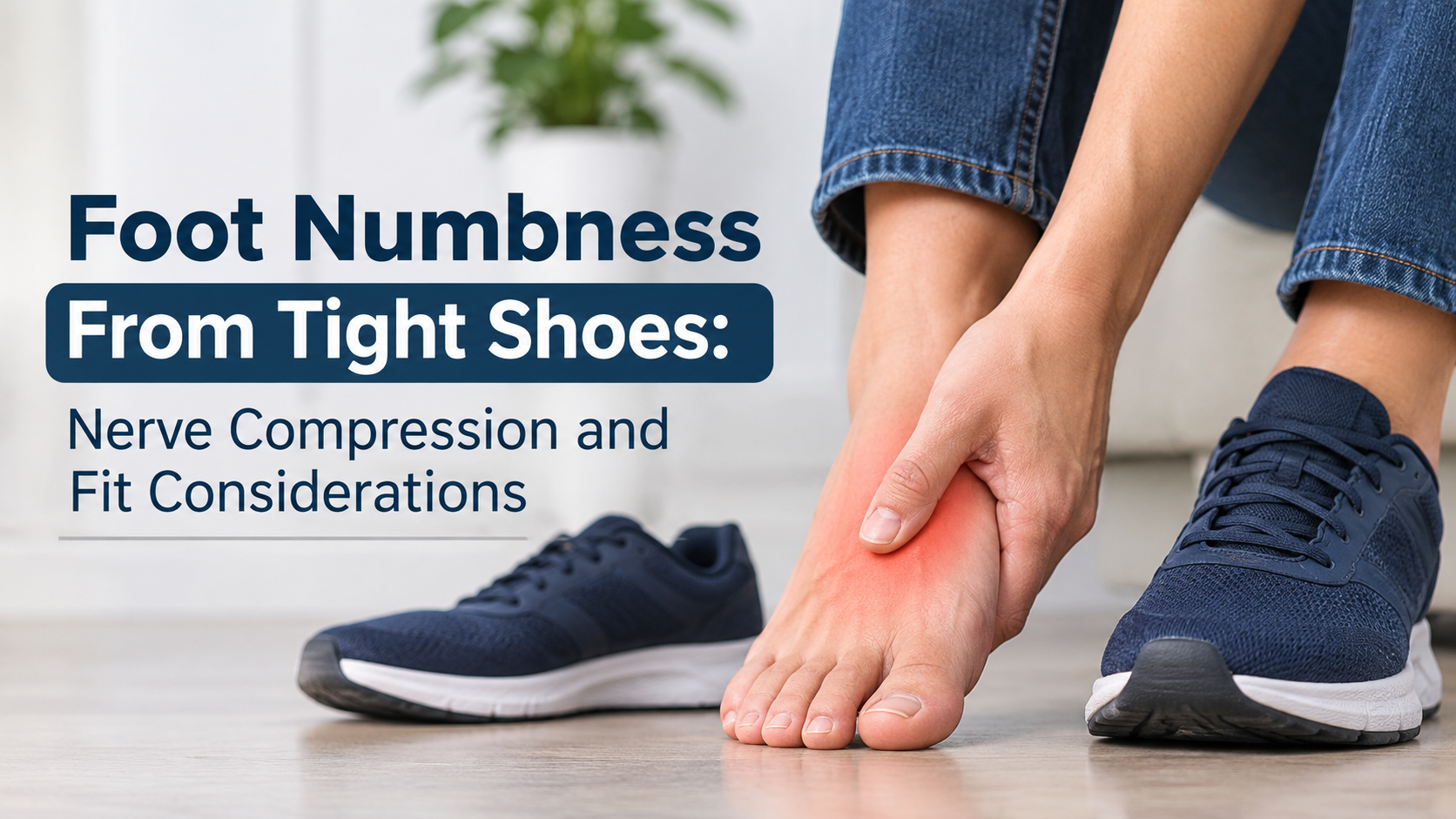
You slip off your shoes after a long day and your toes feel like they belong to someone else. They tingle, burn, or simply feel dead. If this sounds familiar, you are far from alone. Foot numbness from tight shoes is one of the most common foot complaints, and in most cases it is a sign that your footwear is pressing on nerves and restricting blood flow.
The good news is that shoe-related numbness is usually reversible when you act early. The less comfortable news is that numbness can also be an early warning of problems that have nothing to do with your shoes. This guide explains why tight shoes make your feet go numb, how to tell a harmless cause from a serious one, what you can do right now, and how to choose footwear that keeps your feet comfortable all day.
Quick answer
- Tight shoes squeeze nerves and blood vessels in the foot, which causes tingling, burning, or numbness.
- Numbness that fades within minutes of taking your shoes off is usually shoe-related.
- Numbness that lasts for days, affects both feet, or comes with weakness or color changes needs a medical check.
- The most effective fix is a shoe with a wide, rounded toe box and about 1 cm (3/8 inch) of space beyond your longest toe.
Why Tight Shoes Make Your Feet Go Numb
Your feet contain a dense network of small nerves and blood vessels packed into a tight space between bone, tendon, and skin. When a shoe is too narrow, too short, or laced too firmly, it presses this network from the outside. Two things happen at once.
1. Nerve compression
Nerves send touch and position signals from your skin to your brain. When a nerve is squeezed, it cannot transmit those signals normally. The result is pins and needles, a burning sensation, or a complete loss of feeling. This is the same reason your leg “falls asleep” when you sit in an awkward position, except here the pressure comes from a shoe that you may wear for eight hours or more.
2. Reduced blood flow
Nerves need a steady supply of oxygen. Tight footwear can restrict circulation, particularly when your feet swell during the day. Less oxygen reaching the nerve makes it more irritable and more likely to misfire, which you feel as tingling or numbness.
3. Swelling that makes the problem worse
Feet naturally swell as the day goes on, especially after long periods of standing, walking, or sitting. A shoe that felt acceptable in the morning can become a squeeze by the afternoon. This is why numbness often builds up toward the end of the day.

Common Conditions Linked to Tight Shoes
Tight shoes do not only cause temporary tingling. Over time, constant pressure can contribute to specific foot problems.
Morton’s neuroma
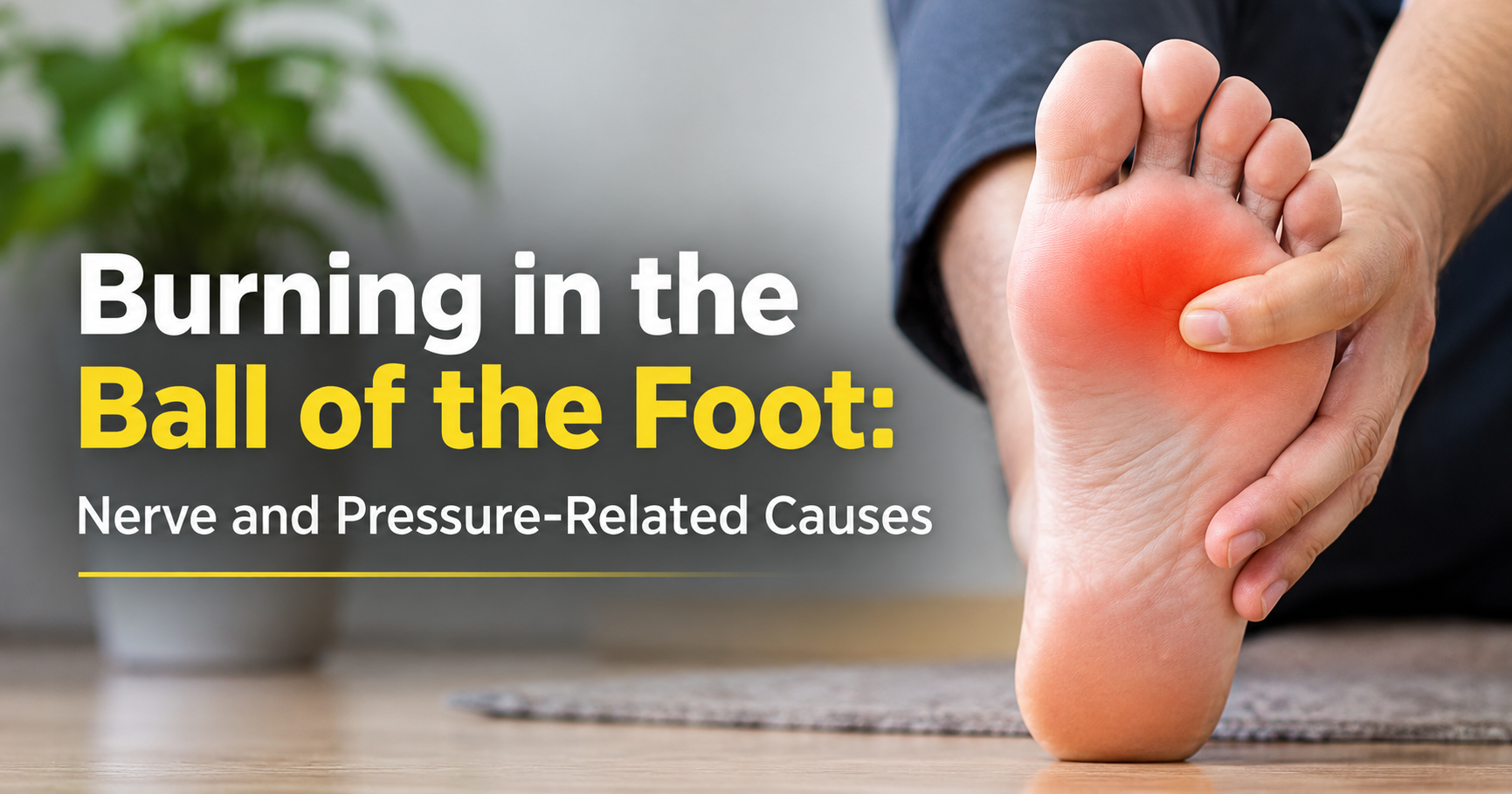
This is a thickening of tissue around a nerve in the ball of the foot, most often between the third and fourth toes. People describe it as burning pain, tingling, or the feeling of standing on a pebble or a bunched-up sock. Narrow shoes and high heels are well-known contributors because they squeeze the front of the foot together.
Compression of nerves on top of the foot
Laces pulled too tight, stiff tongues, and rigid boots can press on the nerves that run across the top of the foot. This often causes numbness or burning that spreads toward the toes and may worsen when you tighten your laces.
Tarsal tunnel irritation
The tarsal tunnel is a narrow passage on the inside of the ankle that carries a major nerve to the sole of the foot. Swelling, flat feet, or tight boots and ankle straps can aggravate it, leading to tingling in the sole and toes.
Bunions, hammertoes, and crowded toes
Ill-fitting shoes can contribute to bunions and hammertoes, which push toes out of their natural position. Crowded toes rub against each other and against the shoe, increasing pressure on small nerves and making numbness more likely.
High heels and forefoot overload
The higher the heel, the more your body weight shifts onto the ball of the foot and into the narrowest part of the shoe. Heels above roughly 5 cm (2 inches) are a frequent trigger for forefoot numbness and burning.
Signs Your Shoes Are the Problem
Shoe-related nerve irritation tends to follow a recognizable pattern. You may notice:
- Tingling or “pins and needles” in your toes after wearing certain pairs
- Numbness that appears during walking or toward the end of the day
- A burning feeling in the ball of the foot
- The sensation of a pebble or folded sock under your foot
- Toes that look squeezed, with red marks, indentations, or blisters
- Relief within minutes of taking your shoes off and wiggling your toes
If your symptoms match this pattern and disappear when you wear roomier footwear, your shoes are almost certainly involved.
When Numbness Is Not Caused by Your Shoes
It is important not to blame your footwear automatically. Several medical conditions cause foot numbness, and tight shoes can simply make existing symptoms more noticeable. Possible causes include:
- Diabetes: High blood sugar can damage nerves over time (peripheral neuropathy), usually starting in the toes and affecting both feet. Because reduced feeling makes it easy to miss blisters and pressure sores, people with diabetes should be especially careful with shoe fit.
- Vitamin B12 deficiency: Low B12 can cause tingling and numbness in the hands and feet.
- Pinched nerve in the lower back: Problems in the spine, such as sciatica, can send numbness down the leg into the foot.
- Peripheral artery disease: Narrowed arteries reduce blood flow and can cause coldness, pain, and numbness in the feet.
- Other causes: Heavy alcohol use, certain medications, thyroid problems, and some autoimmune conditions can also affect nerves.

Seek urgent medical help if you notice:
Sudden numbness along with weakness, a drooping face, confusion, trouble speaking, or a severe headache. Also get prompt care for a foot that turns cold, pale, or blue, or for sores that do not heal. These signs are not caused by shoes and should never be ignored.
What to Do Right Now When Your Feet Go Numb
If your toes are numb at this moment and you suspect your shoes are responsible, try these steps:
- Take your shoes and socks off. Removing the pressure is the single most important step.
- Wiggle and spread your toes. Gentle movement helps restore circulation.
- Massage your feet. Use light, steady pressure from the toes toward the arch and ankle.
- Elevate your feet. Resting them above heart level for 10 to 15 minutes helps reduce swelling.
- Avoid direct heat while the feeling is reduced. Numb skin can burn without you noticing, so skip heating pads and very hot water.
- Switch to roomier footwear. Choose soft, wide shoes or sandals until symptoms settle.
Feeling usually returns within minutes to a few hours. If it does not, or if it keeps coming back, it is time to look more closely at your shoes and, if needed, speak to a doctor or podiatrist.
How to Choose Shoes That Prevent Numbness
Prevention comes down to fit. Most people wear shoes that are too narrow for their feet, and many have never had their feet measured properly. Use the checklist below every time you try on a pair.

Look for a wide, rounded toe box
The front of the shoe should match the natural shape of your foot, which is widest at the toes. Shoes that taper to a point squeeze the toes together. A roomy, rounded or square toe box lets your toes spread when you walk and takes pressure off the nerves between them.
Check the length while standing
Your feet lengthen and widen when you put weight on them. Always test the fit standing up, with about a thumb’s width of space beyond your longest toe. Remember that the longest toe is not always the big toe.
Prioritize soft, flexible uppers
Stiff leather or rigid synthetic materials do not adapt to your foot. Breathable knit or soft leather uppers flex with movement and put less pressure on the top of the foot.
Choose a supportive but not tight midfoot
A good shoe holds your heel and midfoot securely without clamping down on the instep. If you feel numbness on top of the foot, the problem is often a tongue or lacing that is too tight rather than the toe box.
Mind the heel height
For everyday wear, keep heels low. If you wear heels for work or events, choose a block heel with a wider toe box and limit how long you wear them.
Rotate your pairs
Wearing the same pair every day lets pressure fall on the same spots. Alternating between two or three well-fitting pairs spreads the load and lets materials recover.
Lacing Tricks That Relieve Pressure
Sometimes the shoe is the right size but the lacing creates pressure points. Try these simple adjustments:
- Skip an eyelet: Leave out the eyelet directly over the sore or numb area so the laces do not press on it.
- Use window lacing: Run the lace straight up the sides at the painful spot instead of crossing over it.
- Loosen the forefoot, secure the ankle: Keep the top of the shoe snug for heel hold, but loosen the laces across the front of the foot.
- Try elastic laces: Stretchy laces adjust as your feet swell during the day.
Foot Care Products That Can Help
The right accessories can make a good shoe even better and reduce pressure on sensitive areas. When shopping, these are the product types worth considering and what to look for in each.
| Product type | How it helps | What to look for |
|---|---|---|
| Wide toe box shoes | Lets toes spread naturally and reduces nerve pressure | Rounded toe shape, soft upper, multiple width options |
| Cushioned insoles | Absorbs impact and spreads pressure across the sole | Thin enough to keep room in the shoe, firm arch support, removable design |
| Metatarsal pads | Lifts and spreads the bones in the ball of the foot to ease pressure on nerves | Soft gel or foam, adhesive backing, correct placement behind the ball of the foot |
| Toe spacers | Separates crowded toes and reduces rubbing | Medical-grade silicone, easy to clean, comfortable for daily use |
| Elastic or no-tie laces | Adjust automatically as feet swell | Durable stretch, secure lock, easy installation |
| Seamless moisture-wicking socks | Reduces friction and keeps skin dry | Flat toe seams, non-restrictive cuffs, breathable fabric |
| Shoe stretcher | Gently widens leather shoes that are slightly snug | Adjustable width, bunion plugs, suitable for your shoe material |
Keep in mind that accessories cannot fix a shoe that is fundamentally too small. If your toes are already cramped, adding an insole can make the fit even tighter. Choose the right shoe first, then add support where you need it.
Simple Exercises for Healthier Feet
Strong, flexible feet cope better with everyday pressure. Spend five minutes on these exercises each day, preferably barefoot and sitting or standing comfortably.
- Toe spreads: Spread your toes as wide as you can, hold for five seconds, then relax. Repeat 10 times.
- Big toe lifts: Keep your foot flat and lift only the big toe, then lift the other four while the big toe stays down. Repeat 10 times.
- Towel scrunches: Place a small towel on the floor and pull it toward you using only your toes. Repeat 10 times.
- Ball roll: Roll the sole of your foot over a tennis ball or massage ball for one to two minutes per foot.
- Calf stretch: Tight calves increase forefoot pressure. Stretch against a wall for 30 seconds per leg.
- Ankle circles: Rotate each ankle slowly in both directions to keep circulation moving.
Everyday Habits to Prevent Numbness
- Break in new shoes gradually. Wear them for short periods before committing to a full day.
- Take shoe breaks. If you stand or sit for long hours, slip your shoes off when possible and move your toes.
- Re-measure your feet every year. Foot size and width change with age, weight, pregnancy, and activity.
- Do not cross your legs for long periods. This can press on nerves and reduce circulation in the lower leg and foot.
- Check your feet regularly. Look for redness, blisters, and marks, especially if you have diabetes or reduced sensation.
- Retire worn-out shoes. Collapsed cushioning and warped soles stop protecting your feet.
Frequently Asked Questions
How long does it take for numbness from tight shoes to go away?
In most cases the feeling returns within minutes to a few hours after you remove your shoes and rest your feet. If numbness lasts longer than a day or keeps returning, speak to a healthcare professional.
Can tight shoes cause permanent nerve damage?
Occasional tingling is usually temporary. However, years of constant pressure can contribute to conditions such as Morton’s neuroma, and ignoring repeated symptoms may lead to lasting irritation. Addressing the cause early gives your nerves the best chance to recover.
Why do my toes go numb when I wear heels?
Heels shift your body weight onto the ball of the foot and push the toes into the narrow front of the shoe. This increases pressure on the nerves between the toes. Lower heels, a wider toe box, and shorter wearing time can all help.
Should I buy a bigger size to stop foot numbness?
Sometimes, but length alone is not always the issue. Many people need a wider shoe rather than a longer one. Try the same size in a wide fit or a model with a more generous toe box before moving up a full size.
Do insoles help with numbness?
They can, particularly cushioned insoles and metatarsal pads that redistribute pressure. They work best in shoes that already have enough room. If an insole makes the shoe feel tighter, remove it or choose a thinner option.
Is it safe to wear compression socks if my feet go numb?
Compression socks are designed for specific medical and circulation needs and are not a general fix for shoe-related numbness. If you have numbness, circulation problems, or diabetes, ask a healthcare professional before using them.
Final Thoughts
Foot numbness from tight shoes is your body’s way of telling you that something is pressing where it should not. Listen to that signal early. Remove the pressure, choose shoes with a wide toe box and proper length, adjust your lacing, and add supportive products only after the basic fit is right. For most people, these simple changes bring relief within days or weeks.
At the same time, do not dismiss numbness that persists, affects both feet, or comes with other symptoms. A quick visit to a doctor or podiatrist can rule out underlying conditions and give you peace of mind. Your feet carry you through every day, so give them the room and care they deserve.
Medical disclaimer: This article is for general information only and is not a substitute for professional medical advice, diagnosis, or treatment. If you have persistent or worsening numbness, or any symptoms that concern you, consult a qualified healthcare provider.