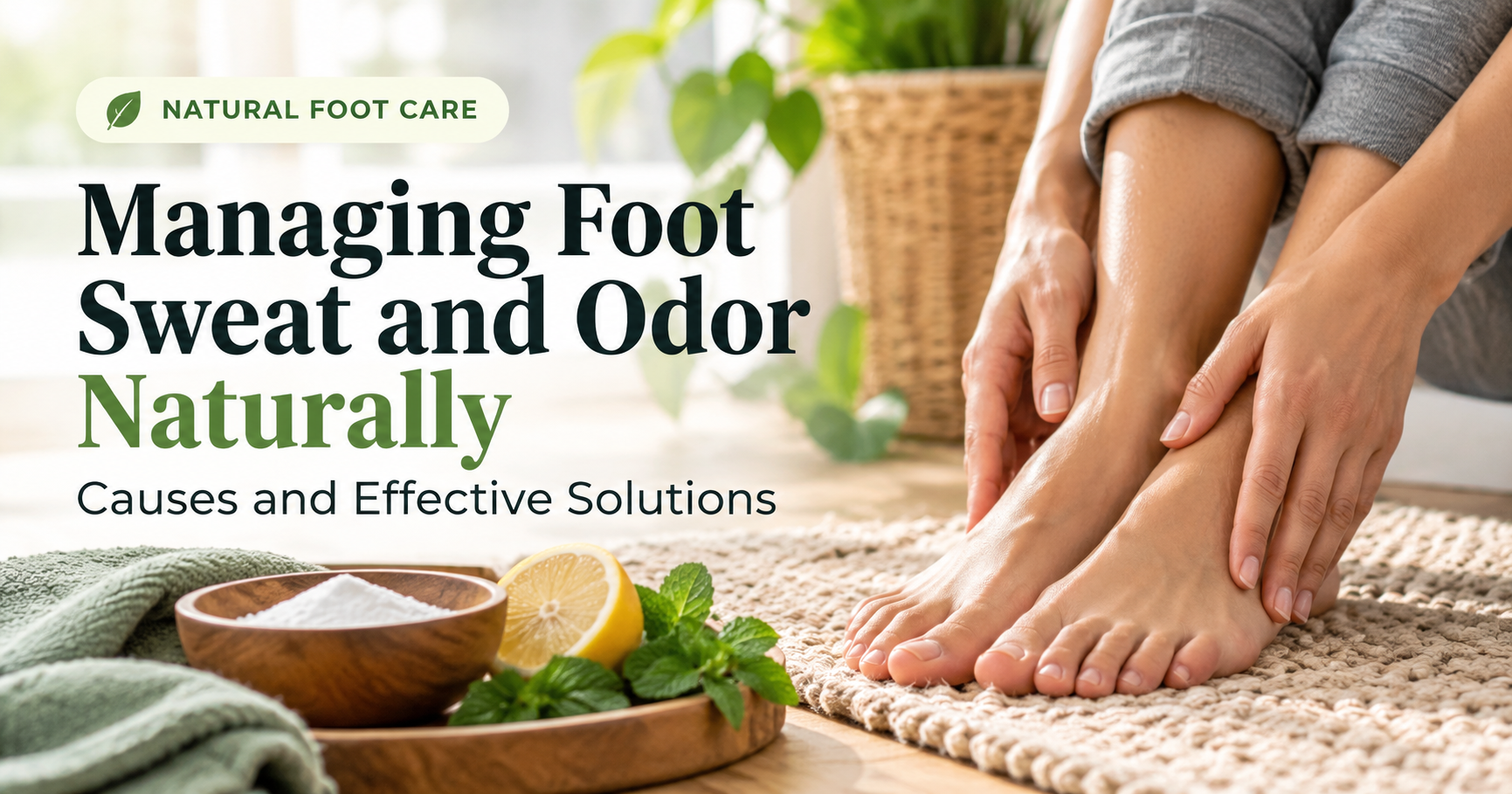

Sweaty, smelly feet are one of the most common foot concerns, and also one of the least discussed. They can make you uncomfortable in closed shoes, self-conscious at home or in the office, and hesitant to take your shoes off around other people. The good news is that in most cases foot perspiration and odor can be managed effectively with simple, natural habits.
This guide explains why feet sweat, why that sweat can smell, and how to bring both under control using daily hygiene, natural foot soaks, smart sock and shoe choices, and lifestyle adjustments. You will also learn when it is time to see a professional.
Table of Contents
- Why Feet Sweat So Much
- What Actually Causes Foot Odor
- Daily Hygiene Habits That Make the Biggest Difference
- Natural Foot Soaks and Home Remedies
- Choosing the Right Socks
- Choosing and Caring for Shoes
- Lifestyle and Diet Factors
- Natural Foot Powders and Moisture Control
- Common Mistakes to Avoid
- When to See a Doctor
- Frequently Asked Questions
Why Feet Sweat So Much
Each foot contains roughly 125,000 sweat glands, which is more per square inch than almost any other part of the body. Unlike the glands in your armpits, the glands in your feet are active all day long, constantly releasing small amounts of moisture to regulate temperature and keep the skin supple.
Several factors can push this normal process into excess:
- Heat and humidity: Warm weather and heated indoor spaces increase sweat output.
- Stress and anxiety: Emotional stress activates the sweat glands on the palms and soles more strongly than elsewhere.
- Hormonal changes: Puberty, pregnancy and menopause can all increase sweating.
- Footwear and socks: Non-breathable shoes and synthetic socks trap moisture against the skin.
- Genetics: Some people simply have more active sweat glands, and it often runs in families.
- Physical activity: Sports and long days on your feet naturally increase perspiration.

What Actually Causes Foot Odor
Here is something many people do not realize: sweat itself is almost odorless. The smell comes afterward. Your skin is home to many harmless bacteria, and when sweat soaks into socks and shoes, it creates a warm, damp environment where those bacteria multiply rapidly. As they break down sweat and dead skin cells, they release compounds that produce the sharp, cheesy or sour smell people associate with foot odor.
This explains why odor management has two parts: reducing the amount of moisture, and reducing the bacteria that feed on it. The most effective natural approaches work on both.
Daily Hygiene Habits That Make the Biggest Difference
Before trying any remedy, get the basics right. These everyday habits do most of the work.
1. Wash your feet every day
Use mild soap and warm water, and gently clean between the toes and around the nails. Spend about a minute on each foot. A soft brush can help remove dead skin where bacteria collect.
2. Dry thoroughly
This step is where many people fall short. Use a clean towel and dry every part of the foot, especially the spaces between the toes. Damp skin is the ideal home for bacteria and fungus. If you are short on time, a few extra seconds with a towel is worth more than any product.
3. Keep toenails trimmed and clean
Long or thick nails can hold sweat, dirt and bacteria. Trim nails straight across and keep them clean.
4. Exfoliate gently once or twice a week
Dead, thickened skin absorbs sweat and holds odor. A pumice stone or soft foot file used gently on damp skin keeps the surface smooth and less hospitable to bacteria. Avoid aggressive scrubbing, which can irritate the skin.
5. Change socks at least once a day
If your feet sweat heavily, carry a spare pair and change midday. Fresh dry socks make an immediate difference.

Natural Foot Soaks and Home Remedies
Natural soaks are among the most popular ways to manage sweaty feet. They are inexpensive, easy to prepare and generally gentle when used correctly. Always use comfortably warm water, never hot, and dry your feet completely afterward.
Black tea soak
Black tea contains tannic acid, a natural astringent that can temporarily tighten the skin and reduce sweat gland activity. Steep two to three tea bags in a basin of hot water for 10 to 15 minutes, add cool water until it is comfortably warm, then soak your feet for 20 to 30 minutes. Many people use this daily for a week or two and then reduce to a few times weekly.
Apple cider vinegar soak
The mild acidity of vinegar creates an environment that makes it harder for odor-causing bacteria to thrive. Mix about half a cup of apple cider vinegar with two quarts of warm water and soak for 15 to 20 minutes, two or three times a week. If you have cuts, cracks or sensitive skin, skip this one or dilute it further.
Baking soda soak
Baking soda helps neutralize odor and softens rough skin. Dissolve two to three tablespoons in a basin of warm water and soak for 15 to 20 minutes. It pairs well with exfoliation afterward.
Epsom salt soak
Epsom salt will not stop sweating by itself, but a relaxing soak can soften the skin, ease tired feet and make it easier to clean thoroughly. Use about half a cup in warm water for 15 minutes.
Sage or witch hazel
Both have a natural astringent effect. Sage tea can be used as a soak in the same way as black tea, while alcohol-free witch hazel can be dabbed on clean, dry feet with a cotton pad to help reduce surface moisture.

Important: Natural does not always mean risk-free. Stop using any remedy that causes redness, itching, stinging or burning, and avoid soaking feet with open sores or infections.
Choosing the Right Socks
Your socks sit directly against your skin all day, so they matter enormously. Look for fabrics that pull moisture away from the skin and let it evaporate:
- Merino wool: Naturally moisture-wicking, temperature-regulating and resistant to odor. It works well in both warm and cold weather.
- Cotton blends with moisture-wicking fibers: Plain cotton absorbs sweat but dries slowly, so choose blends designed for dryness.
- Bamboo fiber: Soft, breathable and good at absorbing and releasing moisture.
- Technical athletic fabrics: Designed to move sweat away from the foot, ideal for exercise.
Avoid thick, non-breathable synthetic socks for everyday wear, and make sure socks fit properly. Socks that are too tight restrict airflow, while loose socks bunch up and cause friction. Wash socks after every wear and dry them fully before storing.
Choosing and Caring for Shoes
Shoes are often the hidden source of persistent odor. Even if your feet are clean, bacteria and moisture can build up inside shoes and re-contaminate fresh socks.
- Rotate your shoes: Avoid wearing the same pair two days in a row. Shoes need at least 24 hours to dry out completely.
- Choose breathable materials: Leather, canvas and mesh allow better airflow than plastic or rubber.
- Remove insoles to dry: Take insoles out after wearing so moisture can escape. Replace worn insoles regularly, as they absorb sweat over time.
- Use odor-absorbing aids: Cedar shoe inserts, activated charcoal pouches or a sprinkle of baking soda overnight can help absorb moisture and odor.
- Wash when possible: Many canvas and athletic shoes can be washed according to the manufacturer’s instructions. Let them air dry completely away from direct heat.
- Go barefoot or wear open shoes at home: Giving your feet time to breathe helps them stay dry.
Lifestyle and Diet Factors
What you do beyond foot care can influence how much you sweat.
- Manage stress: Relaxation techniques such as deep breathing, walking, stretching or meditation can reduce stress-related sweating.
- Stay hydrated: Drinking enough water helps your body regulate temperature efficiently.
- Watch certain foods and drinks: Some people notice more sweating after spicy foods, caffeine or alcohol. Pay attention to your own triggers rather than assuming.
- Maintain a healthy routine: Balanced meals, regular activity and good sleep support overall wellbeing, including skin health.
Natural Foot Powders and Moisture Control
After drying your feet, a light dusting of powder can absorb moisture throughout the day. Simple options include:
- Cornstarch: Absorbs moisture and feels smooth on the skin.
- Arrowroot powder: A gentle, plant-based alternative.
- Cosmetic clay such as kaolin: Absorbs oil and moisture and has a calming effect on skin.
- Baking soda: Helps neutralize odor, though it may be drying for sensitive skin.
Apply a thin layer between the toes and on the soles, and shake out any excess. Too much powder can clump when it gets wet, so less is more.
Common Mistakes to Avoid
- Wearing the same shoes every day
- Putting socks on before feet are fully dry
- Wearing non-breathable shoes for long hours
- Washing feet only occasionally
- Using hot water soaks, which can dry and irritate the skin
- Using strongly scented products that mask odor without addressing its cause
- Ignoring persistent changes in skin or nails
When to See a Doctor
Most cases of foot sweat and odor improve with the steps above. However, consult a doctor or podiatrist if:
- Your feet sweat excessively even in cool conditions or at rest
- Sweating started suddenly or interferes with daily life
- You notice peeling, cracking, redness, blisters or itching, which may signal a fungal infection such as athlete’s foot
- The odor stays strong despite consistent care
- You have diabetes or circulation problems and notice any skin changes
Medical options exist for stubborn cases, and a professional can identify whether an underlying condition is involved.
Frequently Asked Questions
Is it normal for feet to sweat a lot?
Yes. Feet have a high concentration of sweat glands, and a certain amount of sweating is completely normal. It becomes a concern when it is excessive, constant or accompanied by skin problems.
How long do natural remedies take to work?
Many people notice some improvement within one to two weeks of consistent use, though results vary. Combining remedies with good hygiene and proper footwear gives the best results.
Can I use more than one remedy at the same time?
Yes, but introduce them one at a time so you can tell what works and avoid irritating your skin.
Why do my shoes still smell even though I wash my feet?
Bacteria and moisture build up inside shoes and insoles. Rotating shoes, airing them out and replacing worn insoles usually solves this.
Does foot odor mean I have an infection?
Not necessarily. Odor is usually caused by bacteria on the skin. But if you also notice itching, scaling or redness, a fungal infection may be present and should be checked.
Final Thoughts
Managing foot perspiration and odor naturally comes down to consistency. Keep your feet clean and dry, choose breathable socks and shoes, rotate your footwear, and use gentle soaks and natural powders to support your routine. Give each change a couple of weeks to show results, and do not hesitate to seek professional advice if the problem persists. With a little attention each day, fresh, dry and comfortable feet are well within reach.
Disclaimer: This article is for general informational purposes only and is not a substitute for professional medical advice. If you have a medical condition or persistent symptoms, consult a qualified healthcare professional.