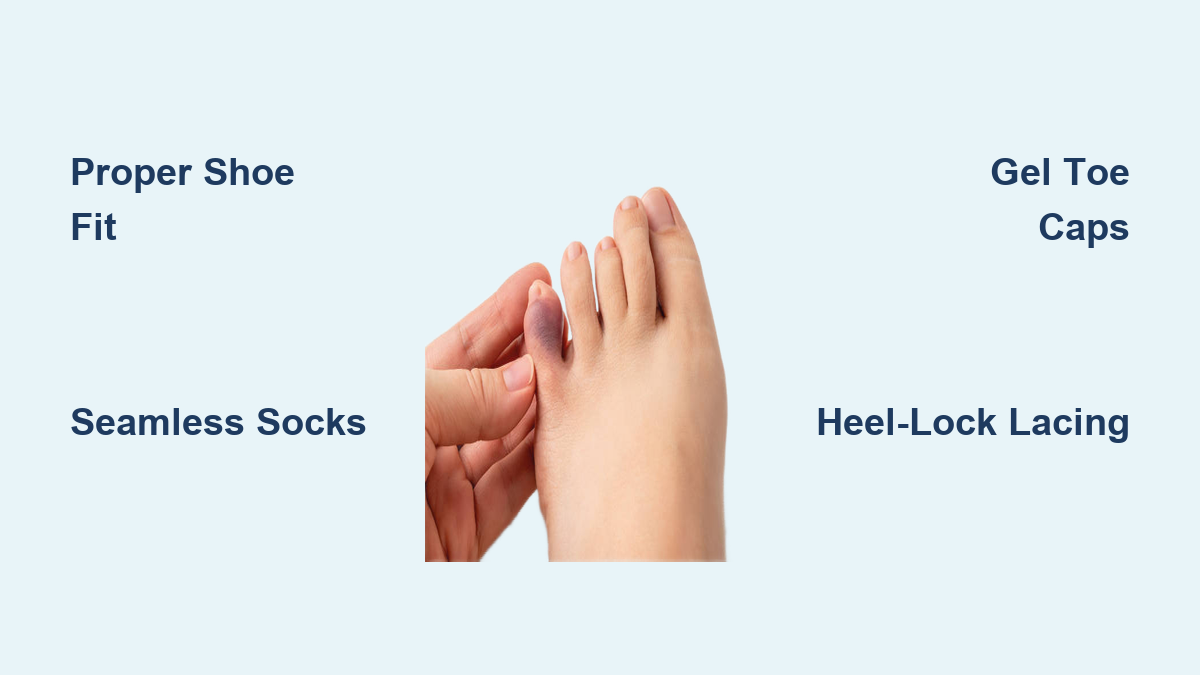
If your pinky toe burns, stings, or develops blisters every time you slip on your favorite shoes, you’re not alone. Pinky toe rubbing against shoes is one of the most common—and often overlooked—foot problems, especially during walking, running, or long days on your feet. The constant friction doesn’t just cause discomfort; it can lead to painful blisters, thick calluses, corns, and even long-term deformities like curly toes or tailor’s bunions. The root cause is rarely just “bad shoes”—it’s a mix of shoe fit, foot shape, sock choice, and movement mechanics. The good news? You can stop the rubbing for good. This guide delivers immediate fixes, preventive tools, and long-term solutions so you can wear any shoe without wincing in pain.
Fix Your Shoe Fit First
Poor fit is the #1 reason your pinky toe rubs. Even expensive, high-performance shoes can cause damage if they don’t match your foot’s natural shape.
Choose the Right Length and Width
Your shoe should leave ½ to 1 inch (1.5–2.5 cm) of space between your longest toe and the front of the shoe—about the width of your thumbnail. But here’s the catch: many people assume their big toe is longest, but for some, the pinky toe extends farther, especially with splay feet or adductovarus deformity.
- Too short? Your pinky toe smashes into the front with every step, causing bruising and blisters.
- Too narrow? The toe box squeezes your fifth toe sideways, pressing it into the shoe’s outer wall.
- Too wide or long? Your foot slides side-to-side (“pistoning”), making the pinky toe repeatedly rub against the inner material.
Pro tip: Try on shoes late in the day when your feet are naturally swollen. Always wear the same socks you’d use during activity—this ensures a real-world fit.
Lock Your Heel in Place with Heel-Lock Lacing
A slipping heel forces your foot forward, jamming your toes into the front. Use the heel-lock lacing technique (also called “lace lock”) to secure your heel:
- Lace your shoe normally until the last two sets of eyelets.
- Skip the top eyelets and instead loop each lace diagonally up through the uppermost hooks or loops.
- Cross the laces and thread them down through the top eyelets.
- Pull tight and tie as usual.
This simple trick pulls the heel snug, reducing forward slide—and cutting pinky toe pressure by up to 40%.
Pick Toe-Friendly Shoes

Not all shoes are created equal. Some are designed with narrow toe boxes that punish natural foot anatomy.
Look for These Shoe Features
- Wide toe box: Allows toes to splay naturally. Brands like Altra, Topo Athletic, Hoka, and New Balance (wide widths) offer roomy forefeet.
- Knit or engineered mesh uppers: Stretch to fit your foot’s shape instead of forcing your foot into a rigid mold.
- Minimal internal seams over the fifth toe: Seams act like sandpaper on delicate skin.
- Flexible lateral side: The outer edge should bend easily with toe movement.
Avoid: Narrow dress shoes, stiff hiking boots, or sneakers with rigid side panels unless they’ve been stretched.
Best Shoe Types for Sensitive Pinky Toes
| Shoe Type | Why It Helps |
|---|---|
| Zero-drop trail runners | Promote natural foot alignment and wide splay |
| Soft mesh running shoes | Stretchy, lightweight, and seam-minimized |
| Wide-width casual sneakers | Offer extra room without modifications |
| Custom orthopedic shoes | Ideal for severe anatomical issues like bunions or curly toes |
Wear the Right Socks
Your socks are your first line of defense. The wrong pair can turn a comfortable shoe into a blister factory.
Choose Seamless, Moisture-Wicking Socks
- Seams over the pinky toe create hot spots. Opt for flat-seam or seamless socks.
- Cotton socks retain sweat, softening skin and increasing blister risk. Use merino wool or synthetic blends (e.g., CoolMax, Olefin) instead.
- Targeted cushioning on high-friction zones adds protection.
Top Brands:
– Smartwool: Breathable, odor-resistant, seamless
– Feetures: Anatomical fit, blister-resistant fabric
– Darn Tough: Durable, lifetime warranty, moisture-wicking
– Injinji: Toe socks eliminate inter-toe friction entirely
Never wear cotton socks for running, hiking, or all-day wear—moisture is the enemy of blister-free feet.
Use Protective Foot Products

Add physical barriers to stop friction before it starts.
Apply Gel Toe Caps
Silipos Gel Toe Caps are soft, medical-grade sleeves filled with mineral oil gel. They:
- Cushion the pinky toe
- Reduce pressure and shear
- Help heal corns or early blisters
- Are reusable and washable
Tip: Cut to size for a perfect fit. Wear under socks—no one will know.
Try Digit Gel Pads for Light Protection
Silipos Digit Gel Pads are smaller, less bulky versions. Ideal if you want:
- Minimal bulk
- Targeted coverage
- Discreet wear under dress shoes
Slip over the toe with the gel side facing the rubbing area.
Use Tailor’s Bunion Cushions for Bony Bumps
If you have a bunionette (tailor’s bunion), the joint at the base of your pinky toe sticks out and rubs hard. The Silipos All Gel Tailor’s Bunion Cushion:
- Wraps the bump in soft gel
- Contains antimicrobial agents (kills 99.9% of bacteria)
- Reduces odor and sweat buildup
Wear daily to prevent calluses and inflammation.
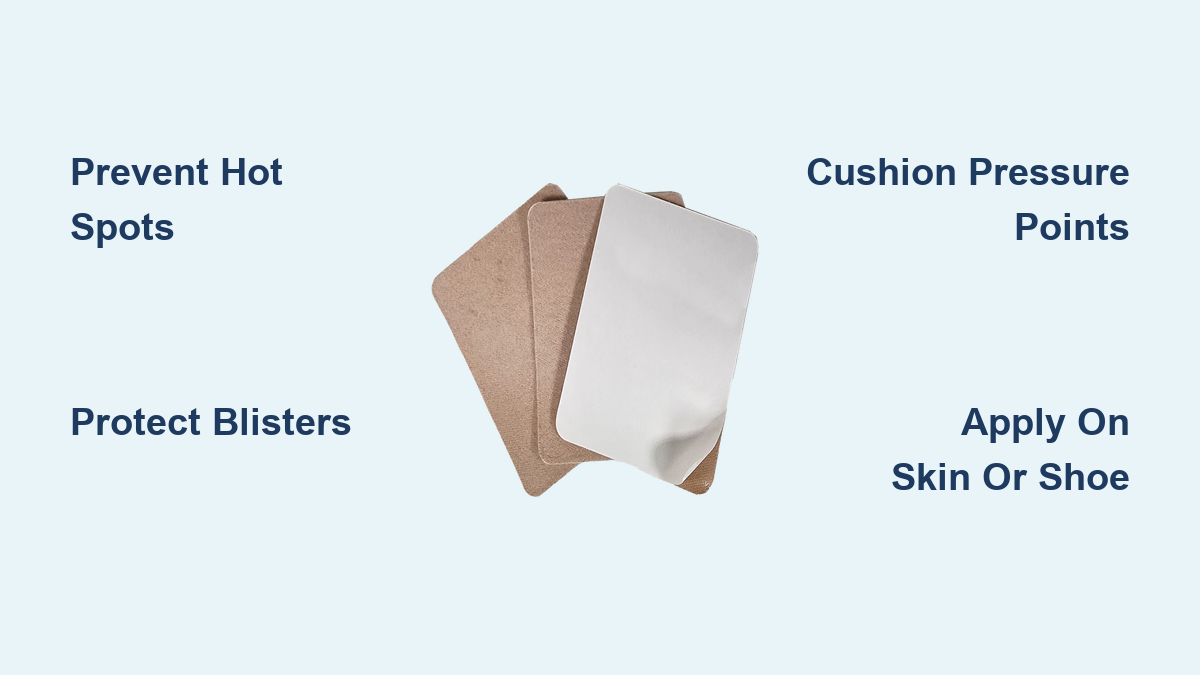
Apply Blister Prevention Patches
Stop friction at the skin or shoe level.
Skin-Level Patches
- Leukotape, Compeed, 2Toms BLM: Stick directly to the pinky toe.
- Create a “second skin” that resists shear.
- Stay on during sweat, rain, or long hikes.
Best for: Existing hot spots or high-risk zones.
In-Shoe ENGO Patches
ENGO Blister Patch goes inside the shoe, not on your foot.
- Made of ultra-low-friction material
- Reduces shear at the source
- Lasts 6+ months per patch
How to Apply:
1. Remove laces.
2. Clean and dry the inner shoe wall where the pinky toe rubs.
3. Apply oval patch directly to the friction zone.
4. Let adhesive set for 24 hours before wearing.
Note: Less effective in wet or mesh shoes—adhesive may weaken.
Reduce Friction with Anti-Chafe Products
Create a slippery barrier to stop rubbing.
Use Anti-Chafe Balms
- Body Glide, Gold Bond Friction Defense, 2Toms Blister Shield
- Apply to pinky toe before putting on socks
- Non-greasy, long-lasting, waterproof
Why it works: Reduces skin-to-sock or sock-to-shoe friction.
Try Powder for On-the-Go Protection
2Toms Blister Prevention Powder:
– Repels moisture
– Creates low-friction surface
– Comes in travel-sized packets
Use when switching shoes or after removing socks mid-hike.
Modify Your Shoes for Better Fit
Sometimes, you need to alter the shoe—not your foot.
Stretch the Toe Box
Relieve pressure with targeted stretching.
Freeze Method (for mesh or leather)
- Fill a zip-top bag with water.
- Place it inside the shoe near the pinky toe.
- Freeze overnight—the expanding ice stretches the material.
Repeat as needed until pressure eases.
Alcohol-Water Spray + Heat (leather only)
- Mix 50% water, 50% rubbing alcohol.
- Spray inside the tight area.
- Wear the shoe with thick socks.
- Use a hairdryer to heat the spot for 2–3 minutes.
- Walk around for 10 minutes to mold the shoe.
Caution: Don’t overheat—can damage glue or sole.
Flatten Rough Seams
If an internal seam is rubbing:
– Use a shoe stretcher with a lateral knob to push out the area.
– Or place moleskin or felt padding inside over the seam.
Tape Your Pinky Toe for Support

Stabilize movement and protect skin.
Buddy Tape to the Fourth Toe
- Use kinesiology tape or Fixomull Stretch.
- Gently tape pinky toe to the ring toe.
- Reduces independent motion and friction.
Warning: Do not tape if the toe is dislocated or deformed—could worsen the condition.
Pre-Tape the Skin
For short-term protection:
– Apply moleskin, island dressing (Band-Aid), or Leukotape directly to the pinky toe.
– Covers hot spots before they blister.
– Best for light activity or new shoes.
Treat Blisters Early
Catch problems before they get worse.
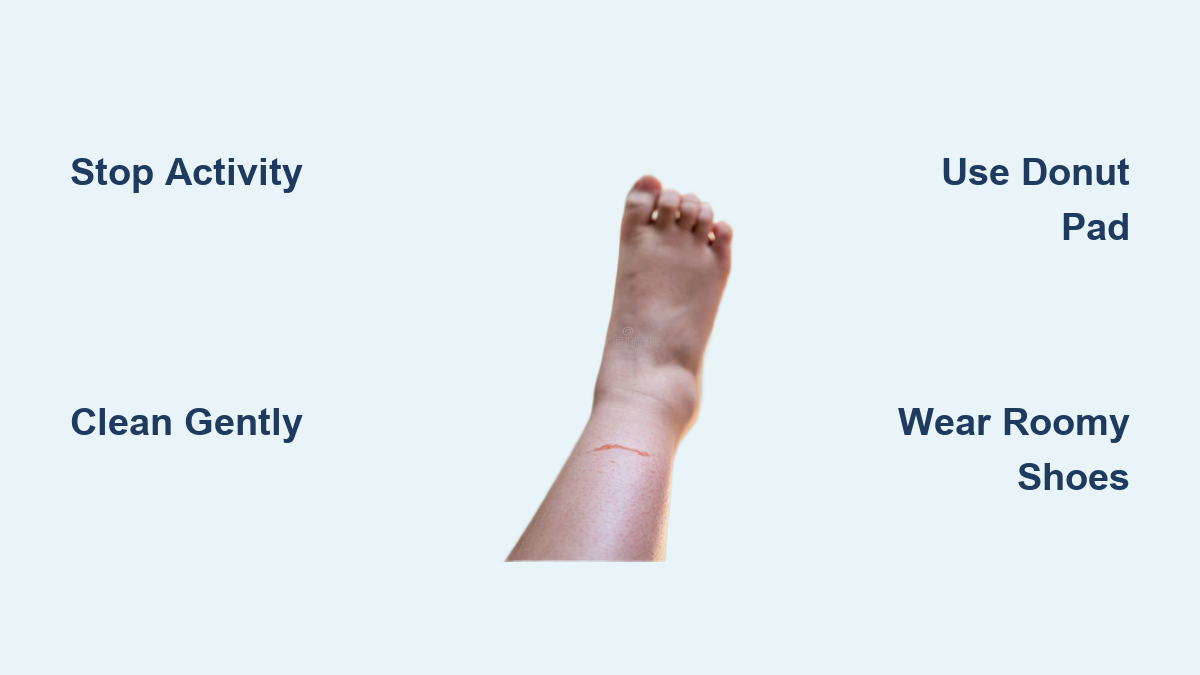
Hot Spot (Red, Tender Skin)
- No blister yet—just irritation.
- Action: Apply 2Toms powder or Body Glide.
- Cover with moleskin or Leukotape.
- Stop activity if pain increases.
Intact Blister (Fluid-Filled)
- Do not pop.
- Use Silipos Gel Toe Cap to cushion and protect.
- Keep clean, dry, and covered.
- Let it heal naturally—roof acts as a natural barrier.
Broken Blister
- Wash with mild soap and water.
- Apply alcohol-free antiseptic wipe.
- Cover with non-stick pad or hydrocolloid dressing (e.g., Compeed).
- Change daily.
Signs of Infection? See a Doctor
Seek medical help if you notice:
– Increasing redness, swelling, warmth
– Pus or foul odor
– Fever or spreading red streaks
Untreated infections can lead to cellulitis or sepsis—don’t ignore.
Long-Term Solutions for Chronic Rubbing
If nothing works, it may be anatomical.
See a Podiatrist
Consult a foot specialist if you have:
– Fifth toe adductovarus (toe curls sideways)
– Tailor’s bunion (bony bump on outer foot)
– Chronic blisters despite prevention
They can:
– Prescribe custom orthotics to realign your foot
– Recommend shoe modifications
– Offer night splints for curly toes
Consider Surgery (Last Resort)
Surgery is rare but effective for severe cases.
Procedures include:
– Tendon release: Straightens a curled pinky toe
– Osteotomy: Cuts and realigns the bone
– Joint fusion: Stabilizes a dislocated joint
Success rate: Over 90% for pain and blister reduction when indicated.
Not for everyone—only if anatomy limits your mobility or shoe options.
Best Products at a Glance
| Product | Best For | Why It Works |
|---|---|---|
| Silipos Gel Toe Caps | Blisters, corns, protection | Cushions, moisturizes, reusable |
| ENGO Blister Patch | Shoe-level friction | Reduces shear, long-lasting |
| Merino wool socks | Daily wear, hiking | Wicks moisture, seamless |
| 2Toms Blister Shield | Prevention, hot spots | Non-greasy, travel-friendly |
| Tailor’s Bunion Cushion | Bony bumps | Soft gel, antimicrobial |
| Heel-lock lacing | Foot slide | Stops toe jamming |
| Freeze stretching | Tight shoes | Expands material overnight |
Final Tips to Prevent Pinky Toe Rubbing
- Break in new shoes slowly: Wear 1–2 hours at a time for the first week.
- Carry a blister kit: Include gel caps, tape, and powder.
- Inspect shoes regularly: Feel for stiff seams or worn lining.
- Replace shoes every 300–500 miles (running shoes lose cushioning).
- Layer your defenses: Combine good socks + gel cap + ENGO patch for maximum protection.
Painful pinky toe rubbing doesn’t have to be normal. Start with proper shoe fit, add moisture-wicking socks, and use gel caps or patches as needed. For stubborn cases, stretch your shoes, tape your toe, or see a podiatrist. With the right approach, you can walk, run, and live blister-free—no matter your foot shape.