If your feet throb after a short walk, your shoes wear out on one side, or you suffer from unexplained knee and back pain, the root cause may lie in your arches. The right arch support can transform how you move by aligning your body from the ground up. Without proper support, your feet can’t absorb shock efficiently, leading to instability, fatigue, and pain that spreads from your soles to your spine. Whether you have flat feet, high arches, or a neutral profile, choosing the correct arch support starts with understanding your unique foot type.
Most everyday shoes lack the structure needed to support your natural biomechanics. Even people with ideal foot alignment benefit from added support—especially during prolonged standing, walking, or athletic activity. Over time, poor support leads to overpronation (inward rolling) or supination (outward rolling), both of which disrupt your gait and strain joints. This guide will show you how to identify your arch type, recognize warning signs of inadequate support, and select the best insoles and shoes to match your needs—so you can move with comfort, stability, and confidence.
Identify Your Foot Arch Type
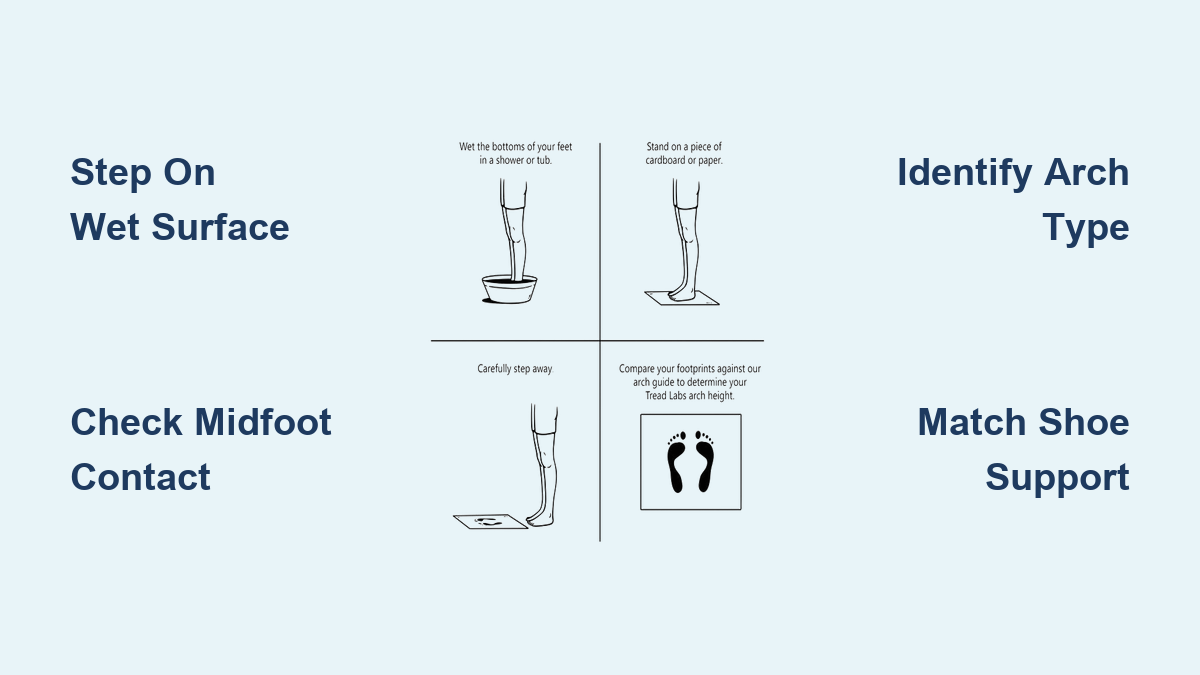
Use the Wet Foot Test
The easiest way to determine your arch type is the wet foot test, which reveals your footprint’s shape:
- Wet the sole of your foot in a shallow pan of water.
- Step onto a paper bag, cardboard, or thick towel.
- Examine the imprint left behind.
- Nearly full footprint with no inward curve? You likely have low arches (flat feet).
- About half of the arch filled in? You have a neutral arch.
- Only a thin strip connecting heel and toes? You have high arches.
This visual clue helps you understand how your foot distributes weight and whether you need stabilizing or cushioning support.
Try the Pencil Test
For a quick physical assessment:
- Stand barefoot on a hard floor.
- Slide a pencil horizontally under the highest point of your arch.
- Observe how much fits underneath:
- Eraser only fits: Low arches
- Eraser and metal band (ferrule) fit: Medium (neutral) arches
- Pencil shaft extends beyond ferrule: High arches
This simple method estimates arch height and confirms results from the wet test.
Check Your Shoe Wear Patterns
Inspect the outsoles of your most-worn shoes:
- Inner edge worn down? You overpronate—common with flat feet.
- Outer edge worn out? You supinate—typical of high arches.
- Even wear under heel and ball? You likely have neutral arches.
Wear patterns act as a record of your gait, showing where pressure builds and guiding your support choices.
Assess Balance and Stability
Stand barefoot on a firm surface and close your eyes for 10 seconds.
- Do you wobble or lose balance quickly?
- Does your foot collapse inward or feel unstable?
Poor balance often signals weak arch support and inefficient foot mechanics. If you struggle, targeted insoles can improve stability and reduce fatigue.
Know the 3 Main Arch Types

Low Arches (Flat Feet)
With low arches, the foot collapses inward under weight, causing overpronation. This misalignment overworks tendons and joints, leading to pain not just in your feet but in your ankles, knees, hips, and back.
Flexible flat feet show an arch when sitting but flatten when standing. Rigid flat feet stay flat regardless of position. Both types benefit from structured support, but rigid cases need lower-profile inserts to avoid discomfort.
Common issues include:
– Plantar fasciitis
– Shin splints
– Bunions and hammertoes
– Heel spurs
– Knee and lower back pain
Without correction, overpronation can worsen and cause long-term joint damage.
Neutral Arches
Neutral arches distribute weight evenly, allowing mild, natural pronation for shock absorption without excessive motion. Though biomechanically ideal, these feet still fatigue during long walks, runs, or standing shifts.
Support helps maintain alignment and prevents future problems like arch collapse due to aging or weight gain.
Best uses:
– Daily comfort
– Running and cycling
– Preventing overuse injuries
Even with neutral arches, supportive insoles boost endurance and protect your joints.
High Arches
High arches reduce ground contact, concentrating pressure on the heel and ball of the foot. This rigid structure absorbs less shock, increasing injury risk during impact activities.
Feet with high arches often supinate (roll outward), reducing ankle stability and raising the chance of sprains. They also make it harder to fit into standard shoes due to a narrow midfoot and high instep.
Common problems:
– Metatarsalgia (ball-of-foot pain)
– Stress fractures
– Plantar fasciitis
– Fat pad atrophy
– Calluses and corns
Because high-arched feet lack natural cushioning, shock-absorbing insoles are essential for comfort and protection.
Signs You Need Arch Support

Foot Pain or Fatigue
If your feet hurt or tire after 10–15 minutes of walking or standing, you likely lack proper support. Chronic fatigue, especially in the arch or heel, means your muscles and ligaments are overworking.
Morning heel pain that eases after moving is a classic sign of plantar fasciitis, often linked to poor arch support.
Knee, Hip, or Back Pain
Pain above the feet may stem from foot misalignment. Overpronation or supination alters your gait, forcing knees and hips to compensate. This imbalance leads to joint strain and recurring discomfort.
If imaging shows no local injury but pain persists, check your footwear and arch support.
Frequent Ankle Sprains
Supination in high-arched feet reduces ankle stability. If you twist your ankle often, especially on uneven ground, better support and cushioning can help prevent future injuries.
Visible Foot Changes
Bunions, hammertoes, or flat-looking feet that weren’t there before suggest structural changes. These deformities often develop due to long-term biomechanical stress that proper arch support could prevent or slow.
Uneven Shoe Wear
Inner or outer sole wear indicates abnormal gait mechanics. Addressing the root cause with corrective insoles extends shoe life and improves movement efficiency.
Match Support to Your Arch Type
For Flat Feet: Stabilize and Control
Goal: Stop overpronation and support the collapsed arch.
Choose:
– Motion control or stability shoes
– Firm midsoles and structured heel counters
– Straight or semi-straight lasts
– Low to medium arch insoles (avoid overly high inserts)
– Semi-rigid or rigid orthotics for long-term correction
Flexible flat feet respond well to medium arch supports that guide the foot into alignment. Rigid flat feet need low-profile support to avoid pressure points.
Avoid: Extra-high arch insoles—they can feel like standing on a golf ball.
For Neutral Arches: Maintain and Protect
Goal: Preserve natural alignment and prevent deterioration.
Choose:
– Moderate arch insoles that mirror your foot’s shape
– Cushioned yet firm support
– Semi-curved shoe lasts
– Removable contoured insoles for customization
Active individuals should use performance insoles to handle repetitive impact from running, hiking, or gym workouts.
Tip: Even if your feet feel fine, supportive inserts prevent future issues as you age.
For High Arches: Cushion and Absorb
Goal: Improve shock absorption and reduce pressure on heel and forefoot.
Choose:
– Curved-last shoes with roomy toe boxes
– High or extra-high arch insoles
– Flexible soles to match rigid foot structure
– Deep heel cups for stability
– Extra padding in heel and ball-of-foot areas
Gel, memory foam, or air-filled insoles work best for comfort and adaptability.
Warning: Hard or flat insoles worsen pain by increasing impact transmission.
Compare Arch Support Insole Types

| Type | Best For | Key Benefit |
|---|---|---|
| Gel Supports | High arches, standing jobs | Soft, moldable shock absorption |
| Foam Insoles | Office wear, casual shoes | Lightweight, breathable comfort |
| Air-Filled Inserts | Hiking, travel | Adjustable cushioning |
| Rigid Plastic Supports | Flat feet, overpronation | Strong biomechanical control |
| Spring-Loaded Orthotics | Runners, athletes | Energy return, reduced fatigue |
| Heel Cups/Wedges | Plantar fasciitis, heel spurs | Stabilize heel alignment |
| Ball-of-Foot Pads | Metatarsalgia, high arches | Relieve forefoot pressure |
| Custom-Made Orthotics | Chronic pain, diabetes | Personalized, maximum support |
Choose the Right Arch Height
Pick by Your Arch Profile
- Low arch insoles: Flat design for flat feet
- Medium arch insoles: Balanced support for neutral or flexible flat feet
- High arch insoles: Tall lift for high arches
- Extra high arch insoles: Maximum support for extreme arch height
When in doubt, start with a medium arch or universal memory foam insert that adapts to your foot.
Ensure Proper Fit and Comfort
- Feel the support: It should lift the arch comfortably—not painfully.
- Check shoe space: Remove the original insole to avoid overcrowding.
- Break in gradually: Wear new insoles 1–2 hours per day for the first week.
- Test in real conditions: Walk, stand, and move before deciding.
Discomfort beyond the first few days means the insole may be too high, too rigid, or poorly matched.
Upgrade Your Footwear
Look for These Shoe Features
- Removable insoles: Allows room for custom orthotics
- Firm heel counter: Stabilizes the rearfoot
- Appropriate last shape:
- Straight: For flat feet
- Semi-curved: For neutral arches
- Curved: For high arches
- Flexible sole: Especially important for high arches
- Motion control: Built-in stability for overpronators
Replace Worn-Out Shoes
Replace athletic shoes every 300–500 miles or when the sole shows visible wear. Old shoes undermine even the best insoles—pair new support with supportive footwear.
Know When to See a Podiatrist
Seek Help If You Have:
- Persistent foot or heel pain
- Numbness, tingling, or burning in the feet
- Visible changes in foot shape
- Difficulty walking or balancing
- Diabetes or neuropathy
- Recurring injuries like ankle sprains or stress fractures
A podiatrist can perform gait analysis, pressure mapping, and custom casting to create orthotics tailored to your needs.
Benefits of Professional Care
- Accurate diagnosis of foot type and gait issues
- Custom orthotics for maximum correction
- Early detection of conditions like posterior tibial tendon dysfunction
- Guidance on shoe selection and long-term foot health
Custom orthotics are worth the investment if OTC solutions fail or you have complex biomechanics.
Maintain Long-Term Foot Health
Arches change over time due to aging, weight gain, pregnancy, and injury. Proactive use of arch support helps:
– Delay arch collapse
– Prevent secondary joint pain
– Improve balance and mobility
– Reduce fatigue during daily tasks
Even if you’re pain-free, consider supportive insoles if you:
– Stand for long hours
– Walk or run regularly
– Have a family history of foot problems
– Wear unsupportive footwear (e.g., flats, flip-flops)
Small changes today can prevent chronic pain tomorrow.
Final Tips for Choosing Arch Support
- Confirm Your Arch Type First using the wet test, pencil test, and shoe wear check.
- Match Support to Your Needs: Firm for flat feet, moderate for neutral, cushioned for high arches.
- Prioritize Comfort and Fit—the best insole is one you’ll actually wear.
- Consider Your Activity Level—running demands more support than walking.
- Invest in Quality Footwear with removable insoles and proper structure.
- Upgrade to Custom Orthotics When Necessary for persistent pain or medical conditions.
Proper arch support isn’t just about comfort—it’s about function. By matching your insoles to your foot type, you protect your entire body from the ground up. Start with a simple wet test, choose the right insole, and step into better foot health today.