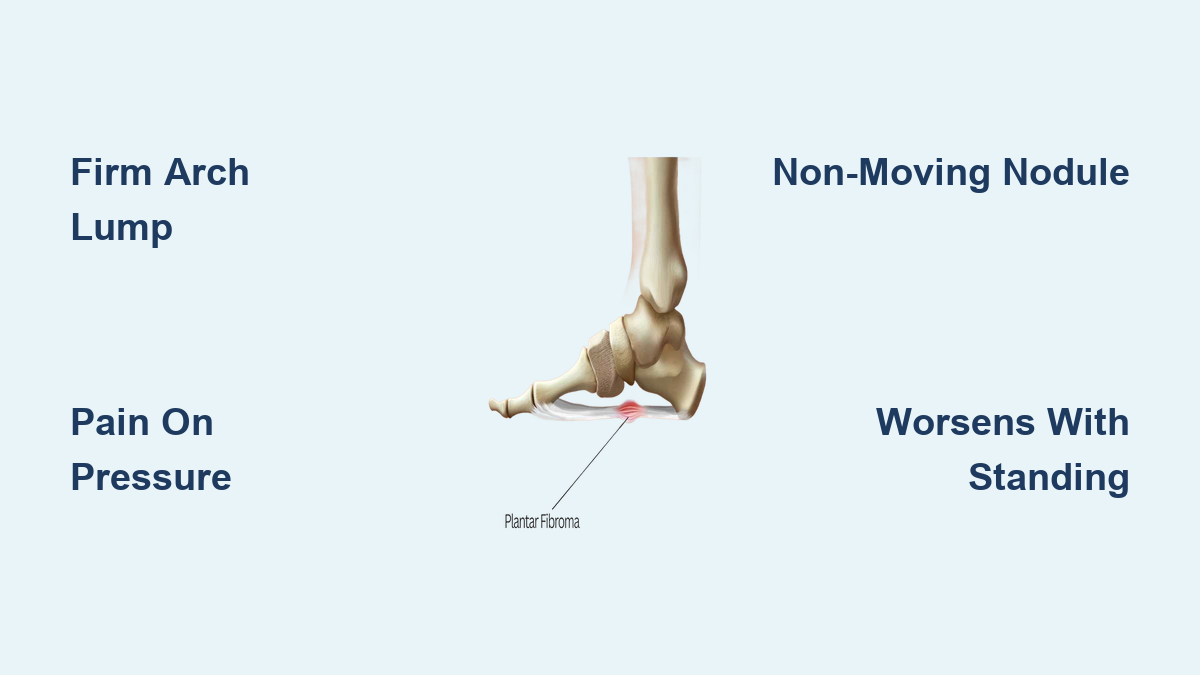
If you’ve noticed a firm, unyielding lump in the arch of your foot that feels like you’re walking on a pebble, you may be experiencing a plantar fibroma. This non-cancerous growth develops within the plantar fascia—the thick band of connective tissue that runs along the sole from heel to toes. Unlike plantar fasciitis, which causes heel pain due to inflammation, a plantar fibroma is a solid, persistent nodule embedded deep in the foot’s structure. While it won’t spread or turn malignant, it also won’t disappear on its own and can become increasingly painful over time.
Plantar fibromas often begin as small, painless bumps—sometimes no larger than a pea—but can slowly grow and interfere with daily activities. When multiple nodules develop, the condition is known as plantar fibromatosis or Ledderhose disease, a more progressive form linked to genetic and systemic factors. Early recognition of symptoms—like a fixed lump in the arch or unexplained foot pain—can help you explore treatment options before discomfort worsens or gait changes lead to secondary foot problems.
This guide breaks down what plantar fibroma is, its key symptoms, who’s most at risk, how it’s diagnosed, and how it differs from other foot conditions—so you can take control of your foot health with confidence.
How to Identify a Plantar Fibroma in Your Foot

The hallmark of plantar fibroma is a firm, deep-seated lump in the arch that doesn’t move when pressed. Unlike surface-level bumps or blisters, this nodule lies within the plantar fascia, making it feel hard and anchored in place.
Firm, Fixed Nodule in the Arch
You’ll typically feel a rubbery or stone-like mass under the middle of your foot. It’s usually less than 1 inch (2.5 cm) in diameter but can grow larger over months or years. The lump stays in one spot and doesn’t shift when you press or roll your foot. This immobility helps distinguish it from softer growths like lipomas or fluid-filled cysts.
Visible Only When Not Bearing Weight
When standing, the lump may be flattened by pressure and not visibly apparent. However, when you sit or lie down, a subtle bulge may appear in the sole—especially as the fibroma enlarges. Some people only notice it during a foot massage or while examining their feet closely.
Confirmed Through Physical Examination
A podiatrist diagnoses plantar fibroma primarily through palpation—firmly pressing along the arch to assess the lump’s texture, size, and tenderness. If the mass is non-mobile, deeply embedded, and causes localized pain, it strongly suggests a fibroma. If it moves easily or feels soft, other conditions like ganglion cysts or lipomas are more likely.
Common Symptoms of Plantar Fibroma
While the lump itself is the main sign, symptoms vary widely. Some people live with a plantar fibroma for years without pain, while others experience significant discomfort that affects walking and shoe wear.
Pain During Walking or Standing
As the fibroma grows, it bears direct pressure with every step, especially on hard surfaces like tile or concrete. Many describe the sensation as “walking on a marble”—a sharp, pinpoint ache in the arch. The pain tends to worsen with prolonged standing or in thin-soled shoes and may improve when barefoot on soft ground.
Tenderness Under Direct Pressure
Pressing on the nodule with your thumb often triggers focused pain. Some also report radiating discomfort toward the toes, possibly due to irritation of nearby nerves. This makes foot rubs or deep tissue massage painful in that specific area.
Discomfort From Footwear
Tight shoes, rigid soles, or high-arched insoles can compress the fibroma, increasing pain. Even custom orthotics may aggravate symptoms if they press directly on the nodule. Many patients find relief by switching to soft, flexible shoes with a wide toe box and cushioned insoles.
Functional Limitations and Gait Changes
To avoid pain, you might unconsciously shift your weight to the heel or outer edge of the foot. Over time, this altered gait can lead to secondary issues like flatfoot strain, hammertoes, or knee pain due to imbalanced mechanics. Larger or multiple fibromas are more likely to cause these long-term complications.
What Does a Plantar Fibroma Feel Like?
Understanding the sensory experience helps differentiate plantar fibroma from other foot problems.
Hard Mass Beneath the Arch
It’s not a vague ache—it’s a distinct, unyielding spot you can point to with one finger. Many compare it to having a pebble stuck in your shoe, even when barefoot. The sensation is constant when weight-bearing and disappears only when off your feet.
Sharp Pain With Direct Impact
Stepping directly onto the nodule—like going barefoot on hardwood—can cause a sudden, stabbing pain. This differs from the dull, morning stiffness of plantar fasciitis, which usually improves with movement.
Relief on Soft Surfaces
Walking barefoot on carpet, grass, or sand often reduces discomfort, confirming the mechanical nature of the pain. In contrast, thin-soled shoes or standing on tile intensifies the sensation due to lack of cushioning.
Who’s Most Likely to Develop a Plantar Fibroma?
While the exact cause is unknown, certain factors increase your risk.
Genetic and Family History Links
There’s strong evidence of hereditary predisposition. If you have a relative with Dupuytren’s contracture (hand nodules), Peyronie’s disease, or plantar fibromatosis, your risk is higher. These conditions fall under fibromatoses—a group of disorders involving abnormal fibrous tissue growth. It’s more common in people of Northern European descent and rare in Asian populations.
Age and Gender Patterns
Most cases occur in adults aged 40–60, with men affected twice as often as women. The reason for this gender disparity isn’t fully understood but may involve hormonal or biomechanical differences.
Associated Medical Conditions
Plantar fibromas are linked to several systemic health issues:
– Diabetes mellitus (especially long-term)
– Epilepsy (particularly in patients on phenytoin)
– Liver disease
– Thyroid disorders
While these don’t directly cause fibromas, they may contribute to abnormal collagen production or tissue repair.
Medications That May Trigger Growth
Certain drugs are associated with fibromatosis development:
– Phenytoin (an anti-seizure medication)
– Beta-blockers (used for high blood pressure)
– Glucocorticoids (paradoxically, despite being anti-inflammatory)
If you’re on long-term medication and notice a foot lump, discuss it with your doctor.
Biomechanical and Lifestyle Factors
- Flat feet (pes planus) or high arches (pes cavus) alter foot mechanics, increasing strain on the plantar fascia.
- Obesity adds extra load, potentially triggering abnormal healing.
- Jobs requiring prolonged standing or walking may contribute, though trauma isn’t proven as a direct cause.
How Is Plantar Fibroma Diagnosed?
Accurate diagnosis is crucial because several conditions mimic plantar fibroma.
Physical Examination and Palpation
A podiatrist will:
– Press on the arch to locate the firm, fixed nodule
– Check for tenderness, size, and mobility
– Assess your gait, foot alignment, and range of motion
A non-mobile, rubbery mass in the mid-arch with normal skin strongly suggests fibroma.
Imaging to Confirm the Diagnosis

Ultrasound: First-Line Test
Ultrasound is non-invasive and cost-effective, showing a hypoechoic (dark), well-defined nodule within the plantar fascia. It helps rule out cysts, lipomas, or tumors.
MRI for Detailed Assessment
If surgery is being considered, an MRI provides detailed soft tissue imaging. It shows the extent, depth, and relationship to surrounding structures, which is vital for treatment planning.
X-Ray to Rule Out Bone Issues
X-rays can’t see soft tissue nodules, but they help exclude heel spurs, fractures, or bone tumors.
Biopsy: Rarely Needed
A biopsy is only performed if cancer is suspected—for example, if the mass grows rapidly, has irregular borders, or causes pain at rest. Histology reveals dense collagen and spindle-shaped fibroblasts, confirming benign fibromatosis.
Conditions That Mimic Plantar Fibroma

Several foot problems cause lumps or arch pain and must be ruled out.
Plantar Fasciitis: Inflammation vs. Mass
Plantar fasciitis causes heel pain, especially in the morning. There’s no lump—just tenderness along the fascia. Pain improves with activity, unlike fibroma pain, which worsens with pressure.
Ganglion Cyst: Fluid-Filled and Mobile
Ganglion cysts are soft, compressible, and may fluctuate in size. They can transilluminate (glow when light is shined through). Unlike fibromas, they’re not fixed in the fascia and may disappear spontaneously.
Lipoma: Soft and Fatty
Lipomas are soft, movable, fatty tumors. They feel doughy and are usually painless unless pressed. A lipoma in the sole is rare but possible.
Morton’s Neuroma: Nerve Pain Between Toes
This affects the ball of the foot, causing burning, tingling, or numbness between the third and fourth toes. It’s related to nerve compression, not a structural nodule in the arch.
Foreign Body Reaction: History of Injury
If you’ve had a puncture wound (like stepping on glass), a granuloma may form. These are often painful, inflamed, or draining, with a clear history of trauma.
Soft Tissue Sarcoma: Rare but Serious
Cancerous tumors are rare but must be ruled out if the mass is deep, fast-growing, or painful at rest. Imaging and biopsy are essential in such cases.
When to See a Doctor
Don’t ignore a new lump in your foot. Early evaluation can prevent complications.
Seek Care If You Notice:
- A new, firm bump in the arch
- Pain when walking or standing
- Enlargement of the nodule
- Difficulty wearing shoes
- Failure of rest, cushioned insoles, or activity modification to help
High-Risk Groups Should Be Proactive
If you have:
– A family history of fibromatosis
– Diabetes, epilepsy, or liver disease
– Are taking phenytoin or beta-blockers
…then any new foot change warrants medical attention.
Key Takeaways and Next Steps
Plantar fibroma is a benign but persistent lump in the arch that can cause significant discomfort. While it doesn’t go away on its own, early diagnosis allows for conservative management—like custom orthotics, footwear changes, or injections—that may delay or avoid surgery.
Remember:
- It’s a firm, fixed nodule, not a cyst or fatty tumor.
- Pain varies—some feel nothing at first, others struggle to walk.
- Imaging confirms diagnosis; biopsy is rare.
- It’s linked to genetics, certain diseases, and medications.
- Don’t confuse it with plantar fasciitis—different cause, location, and treatment.
If you suspect a plantar fibroma, see a podiatrist. With proper care, you can manage symptoms, maintain mobility, and protect your foot health long-term.