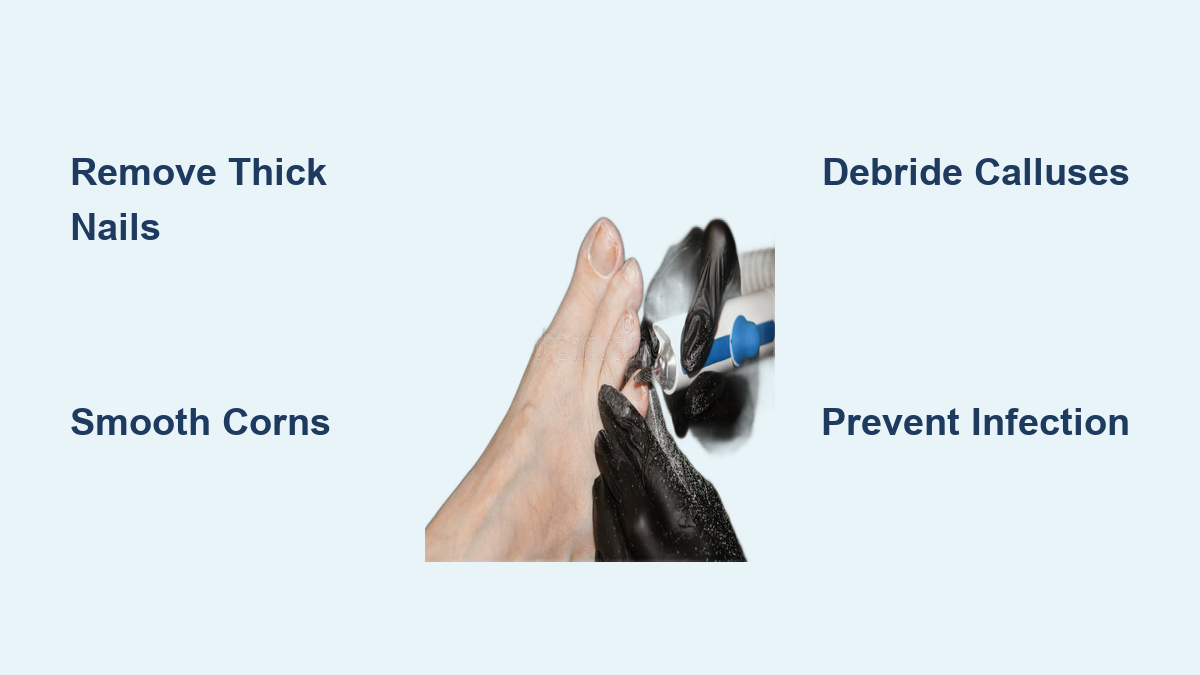
If you’ve ever struggled with thick, yellowed toenails or painful corns that make walking uncomfortable, a podiatry drill might be the solution behind the relief. This specialized electric tool is a cornerstone of professional foot care, used by podiatrists and chiropodists to safely reduce and reshape hardened nails, calluses, and corns. Unlike household rotary tools, a podiatry drill delivers precision, control, and infection-safe operation—critical for treating sensitive or high-risk patients, including those with diabetes or circulatory issues.
Used in clinics, hospitals, and home visits, the podiatry drill doesn’t cut or bore like a traditional drill. Instead, it uses rotating abrasive bits—called burrs—to gently grind down hyperkeratotic (excessively thickened) tissue. This mechanical debridement improves mobility, reduces pain, and enhances the effectiveness of treatments like antifungal applications. With types ranging from dust-extraction models to portable battery-powered units, these drills are tailored to different clinical needs, patient sensitivities, and safety standards. Whether smoothing a ram’s horn nail or enucleating a deep corn, the right drill and technique make all the difference.
Remove Thickened Nail Tissue with Precision
Why Onychauxis Requires Professional Debridement
Onychauxis, the abnormal thickening of toenails, is commonly caused by aging, repeated trauma, or ill-fitting footwear. As the nail plate becomes denser and more brittle, standard nail clippers often fail—leading to jagged edges, ingrown nails, or even ulceration. A podiatry drill allows practitioners to gradually thin the nail using carbide burrs, reducing bulk without damaging the underlying nail bed. This controlled reduction not only eases discomfort but also prevents future complications by allowing the nail to lie flat and grow naturally.
How the Drill Improves Nail Management
By thinning thickened nails, the drill makes trimming easier and safer. It also creates space within footwear, reducing pressure that can lead to pain or secondary infections. For elderly or immobile patients who struggle with self-care, this intervention is often life-changing. The process is typically painless, as the drill only removes the hardened keratin layer, avoiding living tissue when used correctly.
Smooth Onychogryphosis Deformities for Better Function
Treating Ram’s Horn Nails Effectively
Onychogryphosis—often called “ram’s horn nail”—results in severely curved, claw-like nails that can pierce the surrounding skin. After initial bulk reduction with clippers, the remaining distorted portion is contoured using a cone-shaped carbide burr. This step-by-step reshaping restores a more natural nail profile, improving both appearance and function.
Preventing Skin Trauma and Infection
Left untreated, onychogryphosis can cause chronic skin damage, ulceration, and secondary bacterial infections. The precision of a podiatry drill allows clinicians to smooth sharp edges and reduce pressure points, especially in patients with limited mobility or sensory deficits. Regular maintenance with the drill helps prevent recurrence and supports long-term foot health.
Enhance Onychomycosis Treatment Outcomes
Boosting Antifungal Penetration with Mechanical Debridement
While a podiatry drill does not cure fungal nail infections (onychomycosis), it plays a vital supporting role. Thick, infected nails act as a barrier, preventing topical antifungals from reaching the infection site. By mechanically removing layers of infected keratin, the drill increases surface area exposure and reduces fungal load. This significantly improves the effectiveness of medicated treatments and speeds up recovery time.
Improving Cosmetic and Functional Appearance
Patients often feel self-conscious about discolored, crumbling nails. Debridement with a drill instantly improves the nail’s appearance, boosting confidence and compliance with ongoing treatment. Combined with oral or topical antifungals, regular drilling offers a comprehensive approach to managing onychomycosis.
Debride Calluses and Corns Without Cutting

Safe Removal of Hyperkeratotic Skin
Calluses and corns form due to friction or pressure, commonly affecting weight-bearing areas or toes. Rather than using a scalpel, which carries risks of cuts or infection, podiatrists use the drill to gently sand down these lesions. The rotating burr removes only the dead, hardened tissue, preserving healthy skin underneath.
Ideal for High-Risk Patients
For individuals with diabetes or poor circulation, even minor wounds can lead to serious complications. The non-invasive nature of drill debridement makes it a safer alternative to surgical methods. Practitioners can precisely control depth and pressure, minimizing risk while delivering effective results.
Enucleate Deep Corns Safely with Spray Drills
Complete Removal of Neurovascular Corns
Enucleation—the full removal of a corn down to healthy tissue—is one of the most effective treatments for recurring corns, especially neurovascular types that develop their own blood supply. Spray drills are particularly effective here, using a fine mist of distilled water and alcohol to cool the area and suppress dust. The cooling effect prevents overheating, allowing longer treatment with minimal discomfort.
Why Wet Drills Reduce Patient Anxiety
The nearly silent operation and lack of vibration make spray drills ideal for anxious or sensitive patients. The mist binds debris into a sludge that’s wiped away, eliminating airborne particles. This not only improves hygiene but also enhances the overall patient experience.
Choose the Right Drill: Dust Extraction vs. Spray vs. Portable

Why Dust Extraction Drills Are Clinic Standards
Vacuum-equipped drills are the gold standard in clinical settings. As the burr grinds tissue, a suction system pulls debris through the handpiece into a replaceable dust bag. This prevents the spread of fungal spores and bacteria—essential for infection control. Models like the Micro Air Elite and Hadewe Suction Drill offer suction power up to 160 litres per minute, ensuring clean air and safer environments.
Key Features for Infection Control
- Autoclavable handpieces
- Replaceable dust bags with full indicators
- Reversible rotation for left- or right-handed use
- Speed range of 6,000–40,000 rpm (10,000 rpm ideal for nails)
Pro Tip: Always replace the dust bag after each patient. A full bag reduces suction efficiency and increases contamination risk.
When to Use Spray (Wet) Drills
Spray drills excel in patient comfort and thermal management. The cooling mist prevents tissue overheating, making them perfect for delicate procedures like corn enucleation. However, they are not designed for nail work—their strength lies in soft tissue debridement.
Maintenance Essentials
- Use only distilled water
- Clean nozzles regularly
- Check tubing for blockages
- Not suitable for autoclaving due to internal moisture
Portable Drills for Home Visits
Battery-powered units like the Medicool Pro Power FLEX or Hadewe Xantos are essential for domiciliary care. Lightweight and cordless, they allow mobile podiatrists to treat patients in their homes. However, they lack dust control, so practitioners must wear masks and ensure good ventilation.
Limitations to Consider
- No suction or spray
- Limited battery life (60–90 minutes)
- Not for high-volume use
- Higher infection risk without proper PPE
Select the Correct Burr for Every Task

Carbide Burrs for Heavy-Duty Work
Carbide bits are ideal for thick nails and hard calluses. Cone-shaped burrs contour nails, while barrel-shaped ones cover large areas like heel calluses. Titanium-coated versions last longer, making them cost-effective for busy clinics.
Diamond and Ruby Burrs for Finishing Touches
After aggressive reduction, diamond burrs provide a smooth, polished finish. They dissipate heat well and are perfect for sensitive areas. Ruby-coated burrs offer similar performance at a lower cost—ideal for budget-conscious practices.
Disposable Emery Bits for Infection Control
Pre-sterilized and single-use, emery bits eliminate cross-contamination risks. Use them when treating fungal infections or working with immunocompromised patients.
Follow Best Practices for Safety and Efficiency
Prevent Thermal Injury
Overheating is the biggest risk. Use light, tapping motions and pause if the patient feels warmth. Spray drills naturally manage heat, but vacuum and portable models require extra caution.
Match Speed to the Task
- 6,000–10,000 rpm: Best for nails and delicate tissue
- 20,000–30,000 rpm: Ideal for rapid callus reduction
- Avoid max speed unless necessary
Use Proper Handpiece Technique
Hold the handpiece like a pen, maintain a 45-degree angle, and move in small, overlapping passes. This ensures even removal and prevents gouging.
Maintain Strict Infection Control
Autoclavable Handpieces Are Non-Negotiable
Any part that contacts tissue must be heat-sterilizable. Brands like Berchtold and Hadewe offer fully autoclavable models that withstand repeated cycles.
Wear Protective Gear
Even with suction or spray systems, wear an N95 or surgical mask and eye protection. Microscopic particles can still become airborne during high-speed drilling.
Avoid Consumer Tools Like Dremel
Why Dremel Isn’t Suitable for Clinical Use
While Dremel tools resemble podiatry drills, they lack:
– Dust extraction
– Autoclavable handpieces
– High torque for dense tissue
– Precision speed control
They’re not built for daily clinical use or sterilization, increasing risks of infection and equipment failure.
Top Podiatry Drill Brands You Can Trust

Berchtold – Built to Last
Known for durability and autoclavable handpieces, the S35 and S14 are NHS favorites.
Hadewe – Innovation Meets Quality
Offers both suction and portable models with German engineering and high suction power.
FiltAir Pure – Best Dust Extraction
With up to 150 lpm suction, it’s ideal for high-volume clinics.
Medicool – Affordable Mobility
The Pro Power FLEX delivers strong performance for mobile practitioners.
Final Note: The right podiatry drill—paired with skilled technique and strict hygiene—transforms foot care from painful to painless. Whether you’re treating a thickened nail or enucleating a stubborn corn, precision, safety, and patient comfort start with the right tool in hand.