If you’ve ever winced with pain the moment your feet hit the floor in the morning—like stepping on a nail or broken glass—you may be dealing with plantar fasciitis, one of the most common causes of heel pain. Affecting up to 10% of people during their lifetime, this condition stems from inflammation and micro-tears in the plantar fascia, a thick band of tissue that supports the arch of your foot. One of the most effective non-surgical treatments? A night splint for plantar fasciitis.
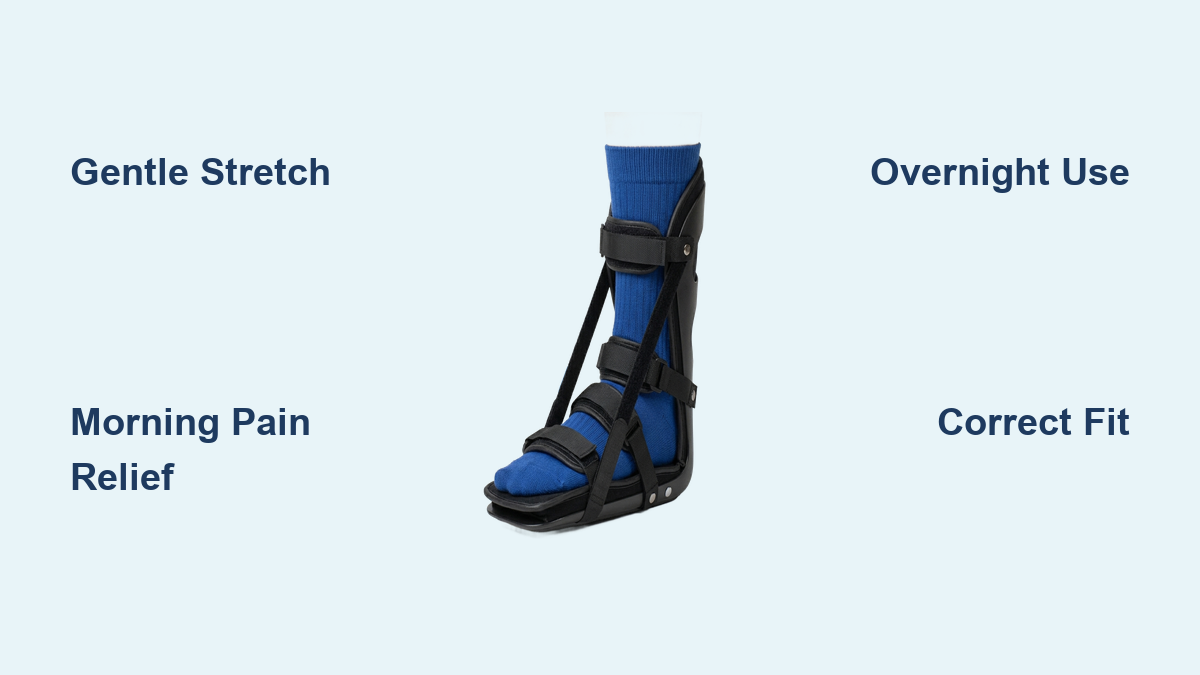
Unlike temporary fixes, night splints target the root cause: the overnight tightening of the plantar fascia and Achilles tendon. Worn while you sleep, these devices keep your foot in a gentle stretch—ankle at 90 degrees, toes pointing upward—preventing the tissue from shortening. This means less shock and strain when you stand, dramatically reducing that agonizing first-step pain. Supported by clinical research and widely recommended by podiatrists, night splints are a cornerstone of conservative treatment, especially for those who haven’t found relief from daytime stretches or insoles.
In this guide, you’ll learn how night splints work, the different types available, how to use them properly, and how to combine them with other treatments for faster healing.
How Night Splints Stop Morning Heel Pain
The sharp pain of plantar fasciitis is often worst in the morning because your foot spends hours in a plantarflexed position—toes pointing down—while you sleep. This allows the plantar fascia and calf muscles to shorten. When you finally stand, the tissue is suddenly stretched, causing micro-tears and intense discomfort.
Night splints break this cycle by holding your foot in dorsiflexion, maintaining a continuous, gentle stretch throughout the night.
Why Overnight Stretching Is More Effective
- Prevents tissue shortening: Keeps the plantar fascia and Achilles tendon elongated
- Reduces micro-tears: Minimizes trauma from sudden stretching at first step
- Boosts blood flow: Encourages healing and reduces inflammation
- Promotes long-term flexibility: Facilitates structural remodeling of the tissue
Unlike quick daytime stretches that offer fleeting relief, night splints deliver 6–8 hours of passive stretching. Clinical studies show this sustained approach leads to faster pain reduction and lower recurrence rates. In one study, 68% of users reported significant improvement after just 8 weeks of nightly use.
Dorsal vs. Boot-Style Night Splints: Which One Should You Use?

Not all night splints are the same. The two main types—dorsal and boot-style (plantar)—offer different benefits based on your symptoms and comfort needs.
Dorsal Night Splints: Best for Comfort and Mild Pain
Dorsal splints are lightweight and ideal for first-time users or those with mild to moderate symptoms.
- Design: Open-heel with straps over the top of the foot and shin
- Positioning: Holds the ankle at 90 degrees with slight dorsiflexion
- Best for: Side or back sleepers, heat-sensitive individuals
Pros:
– Breathable and less bulky
– Easier to adjust and tolerate
– Better for active sleepers
Cons:
– May allow minor foot movement
– Less rigid support than boot models
Top Pick: Active Innovations Dorsal Night Splint—rated 9/10 for comfort
Boot-Style Splints: Maximum Support for Severe Pain
For chronic or stubborn plantar fasciitis, boot-style splints deliver stronger, more consistent results.
- Design: Full-encasement boot with a rigid frame
- Positioning: Fixed 90-degree dorsiflexion
- Best for: Long-standing pain, non-responders to other treatments
Pros:
– Superior control over foot position
– Delivers uninterrupted stretch
– Higher success rate in clinical trials
Cons:
– Bulkier and may disrupt sleep
– Takes longer to get used to
Top Pick: Corflex Padded 90 Degree Night Splint—rated 9/10 for effectiveness
Adjustable vs. Fixed-Angle Models
- Adjustable: Let you customize the stretch angle; great for gradual therapy
- Fixed-angle: Provide consistent stretch; better for long-term compliance
Materials and Comfort Features
- Soft liners: Neoprene, terry cloth, or foam reduce irritation
- Rigid shells: Lightweight plastic ensures stability without excess weight
How to Use a Night Splint for Best Results
Using a night splint correctly is critical to success. Many people quit too soon due to discomfort, but gradual adaptation improves long-term use.
Step-by-Step Application
- Start slow: Wear for 2–3 hours the first few nights
- Increase gradually: Add 1 hour every 2–3 nights until reaching 6–8 hours
- Position correctly: Ankle at ~90 degrees, toes pointing up
- Secure straps: Snug but not tight—circulation must not be restricted
- Check toe movement: Toes should wiggle freely
Sizing and Fit Guidelines
Use manufacturer charts based on shoe size:
- Small: Men ≤6 / Women ≤7
- Medium: Men 6.5–8.5 / Women 7.5–9.5
- Large: Men 9–11.5 / Women 10–12.5
- X-Large: Men 12+ / Women 13+
Try adjusting the straps while seated before bed to avoid nighttime readjustment.
Sleep Tips for Comfort
- Sleep on your back or side to reduce strain
- Use a pillow to support the splinted leg
- Set a 1–2 AM alarm if you tend to remove the splint during sleep
Cleaning and Maintaining Your Night Splint
Proper care ensures your splint lasts and stays hygienic.
- Remove padding: Wash in cool water with mild soap
- Wipe down shell: Use antibacterial wipes or a damp cloth
- Dry completely: Air dry before reassembling to prevent mold
- Inspect regularly: Check for worn straps or cracks
Fixing Common Night Splint Problems

Most issues are easily resolved with simple adjustments.
| Problem | Cause | Solution |
|---|---|---|
| Numbness or tingling | Tight straps or pressure points | Loosen straps; remove toe wedge if present |
| Pain or cramping | Over-tightening or wrong angle | Recheck fit; reduce wear time temporarily |
| Heel slippage | Foot sliding out | Place a small washcloth under heel straps |
| Skin irritation | Friction or moisture | Wear thin cotton socks; dry thoroughly |
| Sleep disruption | Bulk or discomfort | Try a dorsal model; start with shorter wear |
Warning: Never use a splint that causes pain, numbness, or skin damage. It should stretch, not compress.
Can You Walk in a Night Splint?
Most night splints are not designed for walking.
- Dorsal models: Non-weight-bearing—do not walk in them
- Boot-style models: Some allow limited bathroom trips, but not recommended
- ProCare Splint: Officially labeled not for ambulation (~0.5 lb)
Walking in a splint can:
– Disrupt alignment
– Increase fall risk
– Reduce effectiveness
Best practice: Remove the splint before standing. Keep supportive slippers beside your bed.
Who Benefits Most from Night Splints?
Research shows certain factors increase success:
- Age over 45: Higher compliance and lower activity levels
- Symptoms under 6 months: Early use improves outcomes
- Consistent users: Wearing 6+ hours nightly is critical
Clinical Evidence
- 2007 Study (53 feet): 68% reported significant pain reduction after 8 weeks
- 1999 RCT (116 patients): Splint users had 13.6% recurrence vs. 29% in control group
Key Insight: Success depends more on consistency than splint type.
Combine with Daytime Treatments for Faster Healing
Night splints work best as part of a full recovery plan.
1. Daytime Arch Support
- Orthotic insoles and heel cups reduce strain
- Many find OTC options as effective as custom ones
2. Morning Stretches (Do Before Getting Out of Bed)
- Towel stretch: Pull toes toward shin
- Calf stretch: Hands on wall, back heel down
- Frozen bottle roll: Massage and cool the arch
3. Supportive Footwear
- Wear cushioned, supportive shoes with a 1–2 inch heel
- Avoid barefoot walking
- Use supportive slippers immediately upon waking
4. Ice Therapy
- Apply ice for 15–20 minutes morning and night
5. Low-Impact Exercise
- Replace running with swimming, cycling, or elliptical
6. Physical Therapy
- Corrects gait, strengthens muscles, and provides manual therapy
Benefits of Using a Night Splint
- Reduces morning pain in 2–4 weeks
- Accelerates healing with sustained stretch
- Non-invasive and drug-free
- Lowers recurrence risk
- Helps Achilles tendinitis and mild foot drop
Potential Drawbacks
- Initial discomfort: Common for first 3–5 nights
- Sleep disruption: Especially with boot models
- Compliance challenge: Requires nightly use
- Not for everyone: Diabetics or those with neuropathy should consult a doctor
When to See a Doctor
Consult a healthcare provider if:
– You have diabetes or vascular disease
– Experience redness, swelling, or skin breakdown
– Pain persists after 2–3 months of use
– Need help with treatment integration
Your doctor may recommend injections, PRP therapy, custom orthotics, or advanced PT.
Top Recommended Night Splints

| Product | Type | Comfort | Effectiveness | Price | Best For |
|---|---|---|---|---|---|
| Active Innovations Dorsal | Dorsal | 9/10 | 8/10 | $35–45 | Comfort seekers, beginners |
| Corflex Padded 90 Degree | Boot-style | 7/10 | 9/10 | $45–60 | Severe or chronic cases |
| FUTURO Plantar Support | Adjustable | 8/10 | 8/10 | $25–35 | Budget-friendly, adjustable |
| ProCare Night Splint | Rigid + terry liner | 8/10 | 8.5/10 | $92 | Durable, includes toe wedge |
ProCare Highlights: Adjustable, padded, fits left or right, includes toe wedge for extra stretch.
Frequently Asked Questions
How long should I wear it each night?
6–8 hours is ideal. Start with 2–3 hours and build up.
How soon will I feel better?
Most notice improvement in 2–4 weeks; significant relief takes 2–3 months.
Can I walk in it?
Not recommended. Most models increase fall risk.
Are they safe for diabetics?
Consult your doctor first. Reduced sensation increases injury risk.
Do they help Achilles tendinitis?
Yes. The same stretch benefits both conditions.
Can kids use them?
Yes, under supervision. Helps with Sever’s disease in active children.
Final Note: A night splint for plantar fasciitis is a powerful, science-backed tool that targets the root cause of morning heel pain. While adjustment takes time, consistent use—paired with proper footwear, stretching, and support—can deliver lasting relief. Choose a model that fits your comfort and severity level, and consult a professional if you have underlying health concerns. With patience and persistence, most users regain pain-free mornings within weeks.