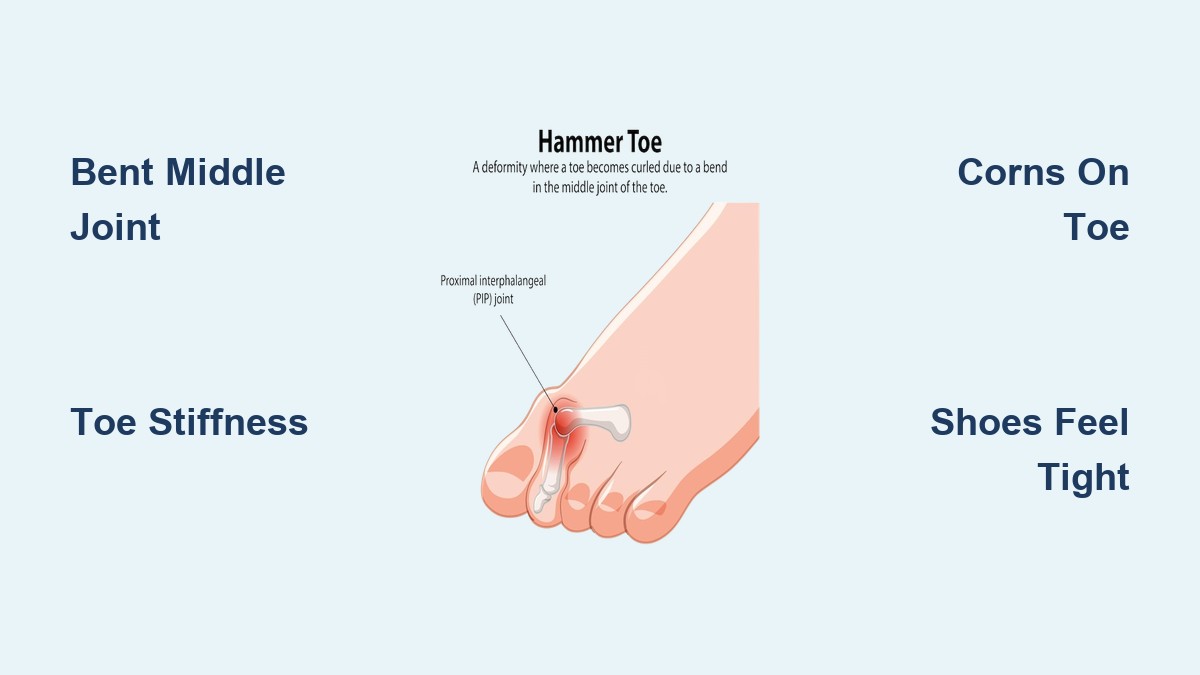
If you’ve noticed one of your toes—especially the second, third, or fourth—starting to curl upward at the middle joint while the tip points down, you may be developing a hammertoe. This common foot deformity gets its name from the hammer-like appearance of the bent toe. It begins subtly, often without pain, but over time can lead to discomfort, corns, and difficulty wearing shoes. The proximal interphalangeal (PIP) joint, located in the middle of the toe, becomes stuck in a bent position due to muscle or tendon imbalance.
Hammertoes affect up to 20% of foot and ankle cases, with women being more prone due to frequent use of narrow-toed or high-heeled footwear. Left untreated, a flexible hammertoe can progress into a rigid, immovable joint that may require surgery. But here’s the good news: early signs are often reversible with simple lifestyle changes and non-invasive care. Recognizing the warning signals—like stiffness, corns, or a toe that won’t lie flat—can make all the difference. This article will help you understand what a hammertoe is, how it develops, and the key early signs to watch for before it worsens.
How a Hammertoe Develops: Muscle Imbalance and Joint Stress

A hammertoe isn’t just a cosmetic issue—it’s a structural change caused by an imbalance in the muscles and tendons that control your toes. Normally, flexor and extensor tendons work together to keep your toes straight. But when one group becomes tighter or weaker than the other, the toe can’t maintain its natural alignment. The flexor tendon, which pulls the toe downward, may overpower the extensor, forcing the middle joint to rise and the tip to point down.
This misalignment is often triggered by how your foot bears weight. People with high arches tend to push their toes into the shoe to maintain balance, causing them to “claw.” Those with flat feet or overpronation shift pressure unevenly across the ball of the foot, straining the tendons. A long second toe (Morton’s toe) is especially vulnerable, as it’s more likely to rub against the shoe and bend under pressure.
Common Triggers of Hammertoe Formation
- Tight or high-heeled shoes: Narrow toe boxes force toes into a cramped position, increasing joint pressure.
- Bunions: A bunion on the big toe can push the second toe upward, leading to deformity.
- Toe injuries: Stubbing, breaking, or jamming a toe can damage tendons and joints.
- Arthritis: Conditions like rheumatoid or osteoarthritis cause inflammation and joint instability.
- Neuromuscular conditions: Diabetes, stroke, or nerve damage can disrupt muscle control in the foot.
These factors don’t cause hammertoe overnight. Instead, they create repeated stress over months or years, gradually tightening tendons until the joint becomes fixed.
Flexible vs. Rigid Hammertoes: Why the Stage Matters

Not all hammertoes are the same. The condition progresses through stages, and treatment depends heavily on whether the toe is still flexible or has become rigid.
Flexible Hammertoe: The Reversible Stage
In the early flexible stage, the toe still moves at the joint and can be manually straightened with your fingers. You might notice a slight curl when standing or wearing shoes, but the toe lies flat when barefoot. This is the best time to intervene—non-surgical treatments like padding, orthotics, and toe exercises can often correct the imbalance and prevent progression.
Rigid Hammertoe: When the Joint Locks
As the tendons tighten and the joint stiffens, the toe loses flexibility. A rigid hammertoe cannot be straightened by hand and is “frozen” in a bent position. At this stage, conservative treatments may relieve symptoms but won’t fix the deformity. Surgery—such as joint resection or fusion—is usually needed to restore alignment and function.
Early Signs of Hammertoe: What to Watch For

Catching a hammertoe early can prevent pain and surgery. These are the first warning signs you shouldn’t ignore.
A Bent or Elevated Middle Joint
The most obvious clue is a curling or lifting of the middle joint of the toe. The deformity may only appear when standing or wearing shoes, disappearing when you’re barefoot. If you can still straighten the toe with your fingers, it’s likely in the flexible stage—a strong signal to take action now.
Stiffness and Reduced Toe Movement
If your toe feels tight or hard to bend, it’s a red flag. You might notice resistance when trying to wiggle your toes or during walking. Early stiffness means the tendons are starting to contract, reducing your range of motion.
Pain When Wearing Shoes
Pain isn’t always present early on, but when it is, it’s usually triggered by footwear. You’ll feel pressure or aching on the top of the bent joint where it rubs against the shoe. The ball of the foot beneath the toe may also hurt due to shifted weight. While switching to wider shoes may help temporarily, it doesn’t fix the root issue.
Corns and Calluses on the Toe
Friction from shoes causes thickened skin to form over the bent joint. A corn is a small, circular patch of hard skin with a painful core. Calluses are broader areas of thickened skin, often under the ball of the foot. These aren’t just cosmetic—they’re signs of abnormal pressure and should prompt a foot check.
Swelling and Redness Around the Joint
Inflammation may develop after prolonged standing or activity. The joint becomes red, warm, or tender to the touch. While swelling may come and go at first, it becomes more persistent as the hammertoe progresses—often a sign of joint stress or early arthritis.
Shoes Suddenly Feel Too Tight
If your usual shoes now feel pinched or uncomfortable in the toe box, it could be due to the rising joint. You might find yourself going up a size or switching to open-toed sandals just to relieve pressure. This change in fit is often one of the first practical signs that something’s wrong.
Altered Walking Pattern
To avoid pain, you may start shifting weight to the outer edge of your foot or the heel. This changes your gait, which can lead to knee, hip, or lower back pain over time. You might also notice you’re walking more slowly or avoiding certain activities.
Who’s at Risk? Key Factors That Increase Your Chances
While anyone can develop a hammertoe, certain factors make it more likely.
- Foot structure: High arches, flat feet, or a long second toe increase pressure on the toes.
- Footwear: High heels and narrow shoes are major contributors.
- Age and gender: Risk increases with age, and women are more affected due to shoe choices.
- Medical conditions: Diabetes, arthritis, and obesity raise the risk due to nerve damage, joint instability, and added foot stress.
How a Podiatrist Diagnoses Hammertoe
You don’t need to guess—podiatrists can confirm a hammertoe with a simple exam.
Physical Foot Exam
A podiatrist will:
– Inspect your foot while standing and walking.
– Palpate the affected toe for tenderness or swelling.
– Test joint mobility by trying to straighten the toe.
– Assess your gait and foot alignment.
– Ask about shoe habits, pain patterns, and medical history.
X-Ray Imaging
An X-ray helps:
– Confirm the degree of joint misalignment.
– Rule out fractures or arthritis.
– Determine if the hammertoe is flexible or rigid.
– Guide surgical planning if needed.
When to See a Doctor
Don’t wait for pain or surgery. See a podiatrist if you notice:
– Any visible bend in a toe, even if it’s still flexible.
– Corns, calluses, or skin breakdown on the top or tip of a toe.
– Stiffness or difficulty moving a toe.
– Persistent discomfort in the ball of the foot.
– Changes in how your shoes fit.
Early treatment can prevent progression and help you avoid surgery.
Treatment Options Based on Stage
For Flexible Hammertoes
- Wear proper footwear: Choose shoes with a wide, deep toe box and low heels.
- Use padding: Apply non-medicated hammertoe pads or gel sleeves to reduce friction.
- Try orthotics: Custom inserts correct imbalances and reduce pressure.
- Tape or splint the toe: Helps maintain alignment.
- Do toe exercises: Towel scrunches, marble pickups, and manual stretching improve flexibility.
- Use pain relief: NSAIDs or corticosteroid injections can reduce inflammation.
For Rigid Hammertoes
- Surgery is often required, including:
- Resection arthroplasty: Removing part of the joint.
- Joint fusion: Pinning the toe straight.
- Tendon release: Rebalancing the tendons.
- Most procedures are outpatient, with 4–6 weeks of recovery.
How to Prevent Hammertoe
- Choose foot-friendly shoes with roomy toe boxes.
- Wear supportive footwear and replace worn-out shoes.
- Do daily toe exercises to maintain strength and flexibility.
- Inspect your feet regularly, especially if you have diabetes.
Complications of Untreated Hammertoes
Ignoring a hammertoe can lead to:
– Chronic pain and walking difficulties.
– Permanent joint stiffness.
– Skin ulcers or infections, especially in diabetics.
– Secondary foot problems like bunions or plantar fasciitis.
– Increased fall risk due to unstable gait.
Hammertoe vs. Mallet Toe vs. Claw Toe

| Condition | Joint Affected | Appearance | Key Difference |
|---|---|---|---|
| Hammertoe | Middle (PIP) joint | Bent up in middle, tip down | Affects second to fifth toes |
| Mallet Toe | Tip (DIP) joint | Tip bends downward | Involves joint near toenail |
| Claw Toe | All three joints | Base up, middle and tip down | Often affects multiple toes |
Final Outlook: Early Action Prevents Surgery
The good news? Flexible hammertoes respond well to early treatment. With proper footwear, padding, exercises, and orthotics, many people avoid surgery and maintain normal foot function. Even rigid cases can be corrected surgically with high success rates.
But the key is early detection. If you notice any toe curling, stiffness, corns, or shoe discomfort, don’t ignore it. See a podiatrist. Simple changes today can prevent pain, deformity, and long-term foot problems tomorrow.
Takeaway: A hammertoe starts small—but grows worse without care. Know the signs, act early, and protect your feet.