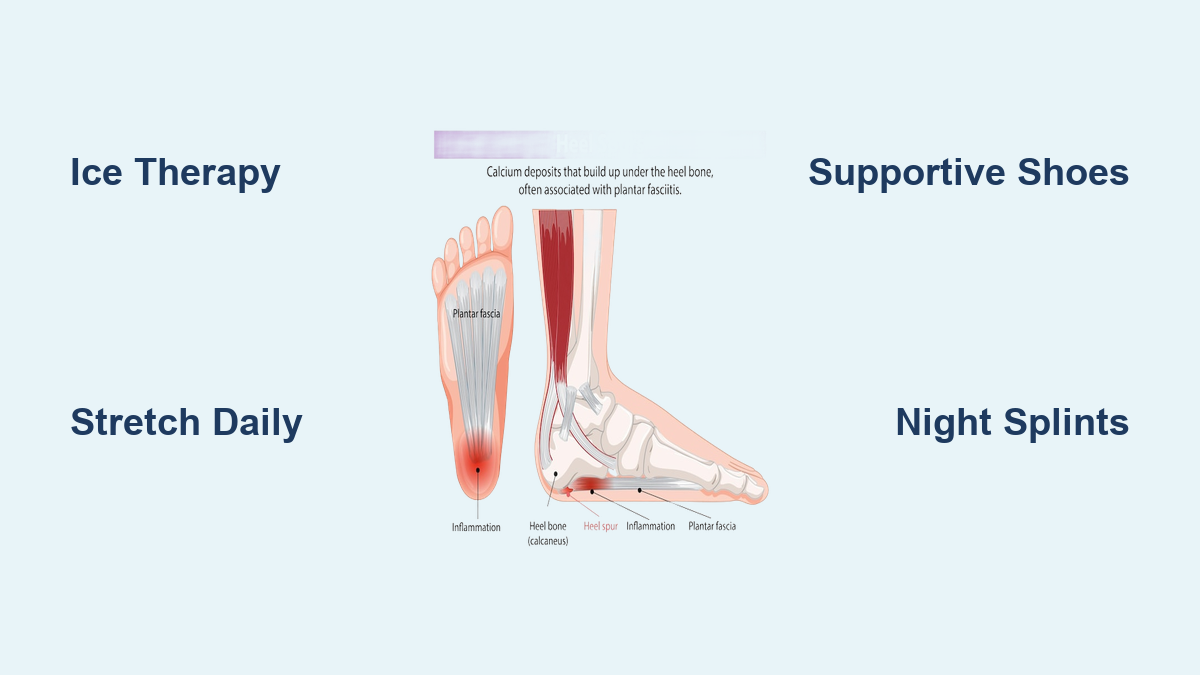
If you’ve ever taken your first step in the morning and felt a sharp, stabbing pain in your heel, you might worry it’s a heel spur. But here’s the surprising truth: most heel spurs are not painful. In fact, about 95% of people with heel spurs feel no symptoms at all—they’re often discovered by accident on an X-ray taken for another reason. A heel spur is a bony growth that develops on the heel bone (calcaneus) over time, usually in response to long-term stress on the ligaments and tendons that attach to the heel.
The real source of heel pain is typically plantar fasciitis, an inflammation of the thick band of tissue (plantar fascia) that runs along the bottom of your foot. While heel spurs and plantar fasciitis frequently occur together, the bony spur itself is rarely the culprit. Instead, it’s a marker of chronic strain, not the cause of pain. This distinction is critical because effective treatment focuses on reducing soft tissue inflammation and correcting foot mechanics—not removing the spur. With proper care, up to 90% of heel pain cases resolve without surgery. Understanding what heel spurs really are—and what they aren’t—can help you avoid unnecessary worry and get on the path to recovery faster.
Types of Heel Spurs: Location Determines Symptoms

Heel spurs are classified based on where they form on the heel bone. The two main types are linked to different structures and cause distinct symptoms.
Plantar Heel Spurs: Under the Heel
This is the most common type, forming on the bottom (plantar surface) of the heel where the plantar fascia attaches. It’s strongly associated with plantar fasciitis, and while it can grow up to half an inch, size doesn’t predict pain. Many people have large spurs with no discomfort, while others with small spurs experience significant pain.
You’re more likely to develop a plantar heel spur if you have flat feet, high arches, or spend long hours standing. Runners, people who are overweight, or those who wear unsupportive shoes are also at higher risk. Pain, when present, is usually under the heel and worst with the first steps after waking or sitting for a while. The discomfort often improves with movement but returns after rest or prolonged standing.
Posterior Heel Spurs: At the Back of the Heel
Also known as a “pump bump,” this type forms at the back of the heel where the Achilles tendon inserts. It’s commonly linked to Achilles tendonitis and can be irritated by stiff-backed shoes like high heels or dress shoes. Unlike plantar spurs, posterior spurs may cause a visible bump, swelling, or redness.
People with tight calf muscles or who engage in activities involving repetitive ankle motion—like sprinting or jumping—are more prone to this type. Pain increases when pushing off the toes or flexing the ankle and may be accompanied by warmth or tenderness. The term “pump bump” comes from how frequently it affects women who wear pumps, which rub against the back of the heel.
Heel Spurs vs. Plantar Fasciitis: Clearing the Confusion

Despite being often used interchangeably, heel spurs and plantar fasciitis are not the same—though they frequently coexist.
Heel Spurs Are Structural, Not Necessarily Painful
A heel spur is a bony outgrowth visible on an X-ray. It forms gradually—sometimes over years—as the body deposits calcium in response to chronic pulling of the plantar fascia or Achilles tendon. Once formed, it remains unless surgically removed. But only about 5% of heel spurs cause pain. The presence of a spur on imaging doesn’t mean it’s responsible for your discomfort.
Plantar Fasciitis Causes the Pain
Plantar fasciitis is the inflammation of the plantar fascia, a thick ligament that supports the arch of your foot. It causes sharp, stabbing pain under the heel, especially in the morning or after periods of inactivity. This condition results from overuse, microtears, or strain—common in runners, people who stand all day, or those with poor foot mechanics.
Why the Mix-Up Happens
Because both conditions share similar risk factors—like obesity, poor footwear, and repetitive impact—they often occur together. When an X-ray reveals a heel spur, it’s easy to assume it’s the source of pain. But in reality, the inflamed tissue around the spur—not the bone itself—is what hurts. Treating plantar fasciitis with stretching, orthotics, and anti-inflammatory care usually resolves the pain, even if the spur remains.
What Causes Heel Spurs? It’s About Long-Term Stress
Heel spurs aren’t caused by sudden injury—they develop slowly due to chronic mechanical stress on the heel.
How Bone Spurs Form
When the plantar fascia or Achilles tendon is repeatedly strained, the body responds by reinforcing the attachment point with calcium deposits. Over time, this leads to a bony protrusion. It’s not a flaw—it’s the body’s attempt to stabilize a stressed area, much like a callus forms on the skin.
This process is triggered by repetitive microtrauma, not a single event. Common causes include:
– Chronic plantar fasciitis or Achilles tendonitis
– High-impact activities like running or jumping
– Prolonged standing on hard surfaces like concrete
Who’s Most at Risk?
Several factors increase your chances of developing heel spurs:
- Flat feet or high arches: Both alter foot mechanics, increasing strain on the plantar fascia.
- Tight calf muscles: Limit ankle flexibility, placing extra tension on the heel.
- Obesity: Every extra pound increases pressure on the heel with each step.
- Aging: After 70, the heel’s fat pad thins and tissues lose elasticity, making spurs more common.
- Poor footwear: Shoes without arch support, cushioning, or a firm heel counter fail to absorb shock.
- Arthritis or gout: These inflammatory conditions can promote bone spur formation.
Do Heel Spurs Hurt? Signs and Symptoms Explained
Most heel spurs cause no symptoms, but when pain occurs, it’s usually due to inflamed soft tissues, not the bone.
Common Pain Patterns
Symptomatic heel spurs may cause:
– Sharp, stabbing pain under or behind the heel with first steps
– A dull ache that worsens after standing or walking
– Pain that improves with movement but returns after rest
– Tenderness when pressing on the heel
– Swelling, redness, or warmth in the area
This pain is not from the spur itself, but from the irritated plantar fascia, bursa, or tendon surrounding it.
When Nerve Involvement Occurs
In rare cases, a spur may press on a nerve, leading to:
– Burning
– Tingling
– Numbness in the heel or sole
These symptoms suggest nerve compression and require medical evaluation to rule out conditions like tarsal tunnel syndrome.
How Are Heel Spurs Diagnosed?

Diagnosis begins with a physical exam and often includes imaging.
Clinical Evaluation
Your doctor will:
– Ask about your pain pattern, activity level, and footwear
– Check for tenderness, swelling, and foot alignment
– Test calf flexibility and ankle motion
– Observe your gait and foot mechanics
They’re looking for signs of plantar fasciitis, tendonitis, or other mimics.
Imaging Confirms the Spur
An X-ray (usually from the side) clearly shows the bony spur. But finding a spur doesn’t mean it’s causing pain—many people have spurs with no symptoms. Additional tests may include:
– MRI: To assess soft tissue damage
– Ultrasound: To detect inflammation or guide injections
Ruling Out Other Conditions
Other causes of heel pain include:
– Stress fracture
– Fat pad atrophy
– Tarsal tunnel syndrome
– Gout or arthritis
A thorough evaluation ensures accurate diagnosis and proper treatment.
Non-Surgical Treatments That Work
Most heel pain resolves with conservative care—no surgery required.
Rest and Activity Modification
- Avoid running, jumping, or prolonged standing
- Switch to low-impact exercises like swimming or cycling
- Gradually return to activity as pain improves
Ice for Inflammation
- Apply ice for 15–20 minutes, 3–4 times daily
- Use a frozen water bottle and roll it under your foot to cool and stretch the fascia
Medications
- Ibuprofen or naproxen reduce inflammation
- Acetaminophen relieves pain (but not swelling)
- Corticosteroid injections may be used sparingly (2–3 per year max)
Orthotics and Supportive Shoes
- Custom or OTC insoles with arch support
- Heel cups to cushion and slightly elevate the heel
- Night splints to keep the fascia stretched while sleeping
- Wear shoes with cushioned soles, firm heel counters, and slight heel lift
Physical Therapy
A therapist can guide you through:
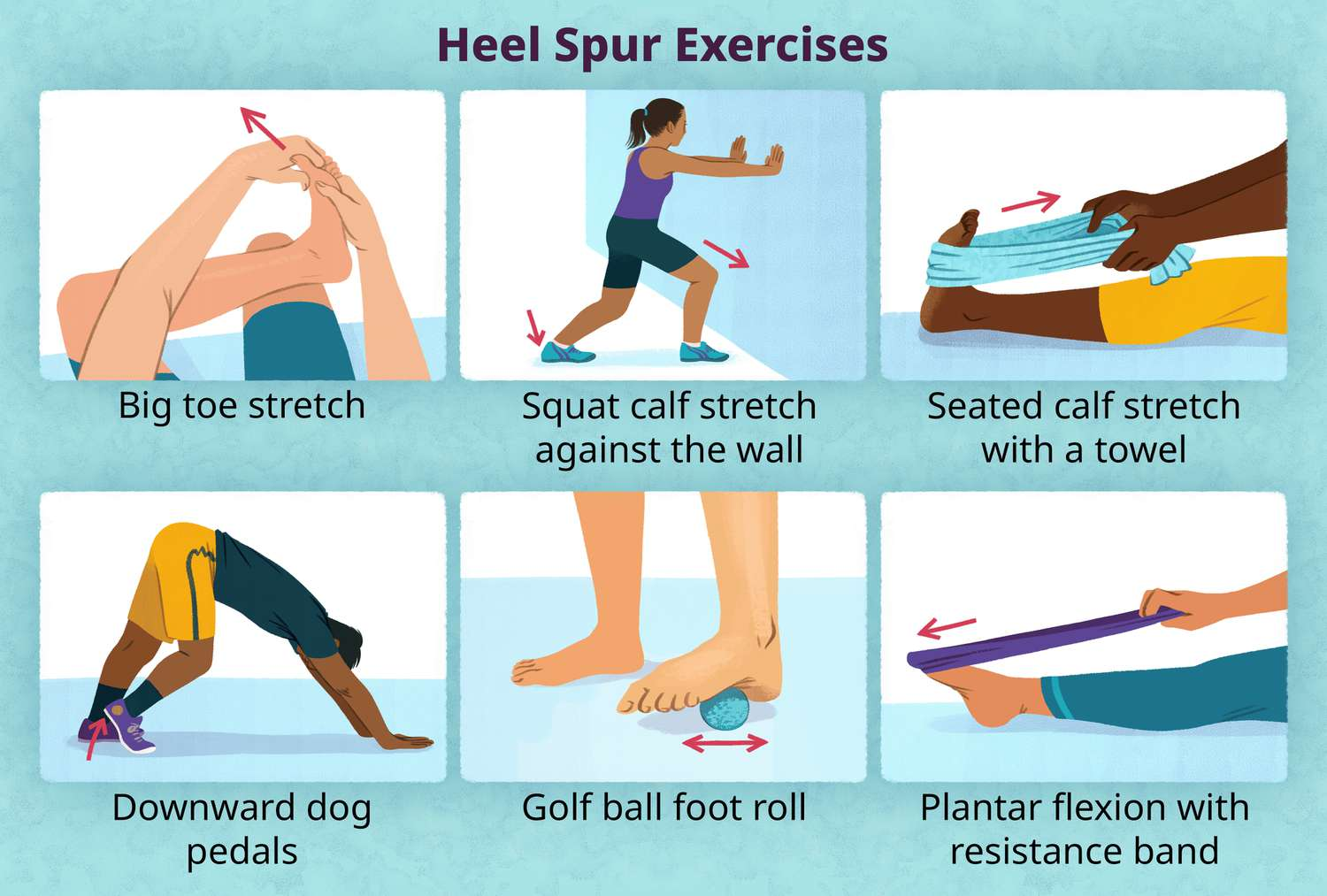
– Calf and plantar fascia stretches
– Foot strengthening exercises
– Manual therapy like massage
– Shockwave therapy (ESWT) for chronic cases
When Surgery Might Be Needed
Surgery is rare, required in less than 1% of cases.
When It’s Considered
Surgery may be an option if:
– Pain lasts 6–12 months despite conservative care
– Daily function is severely limited
– Imaging confirms structural issues
Common Procedures
- Plantar fascia release: Reduces tension by partially cutting the ligament
- Exostectomy: Removes the bony spur
- Often done together
Recovery and Risks
- Recovery: 6 weeks to 6 months
- Risks: Nerve injury, infection, arch collapse
- Surgery is a last resort, not a quick fix
How to Prevent Heel Spurs
You can’t always prevent spurs, but you can reduce your risk.
- Wear supportive, well-fitting shoes
- Replace worn-out shoes every 300–500 miles
- Stretch calf and plantar fascia daily
- Maintain a healthy weight
- Avoid prolonged standing on hard floors
- Warm up before activity and listen to your body
Long-Term Outlook: Can You Live Pain-Free?
Yes—most people do, even with a heel spur.
- The spur is permanent unless removed, but pain often resolves
- Up to 90% improve within 4–8 weeks with non-surgical care
- Chronic cases may take 3–6 months, but full recovery is likely
- Recurrence is possible if risk factors aren’t managed
With consistent care—stretching, supportive shoes, and early action—you can stay active and pain-free for years. The key is treating the real cause of pain: inflamed soft tissue, not the bone.