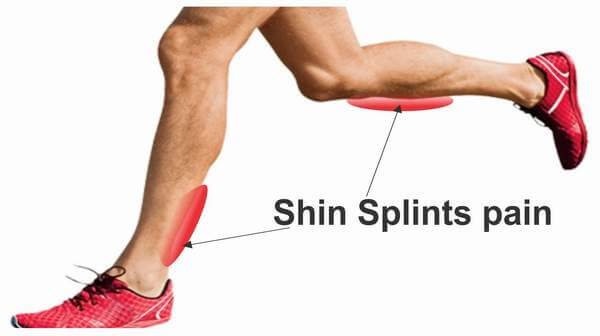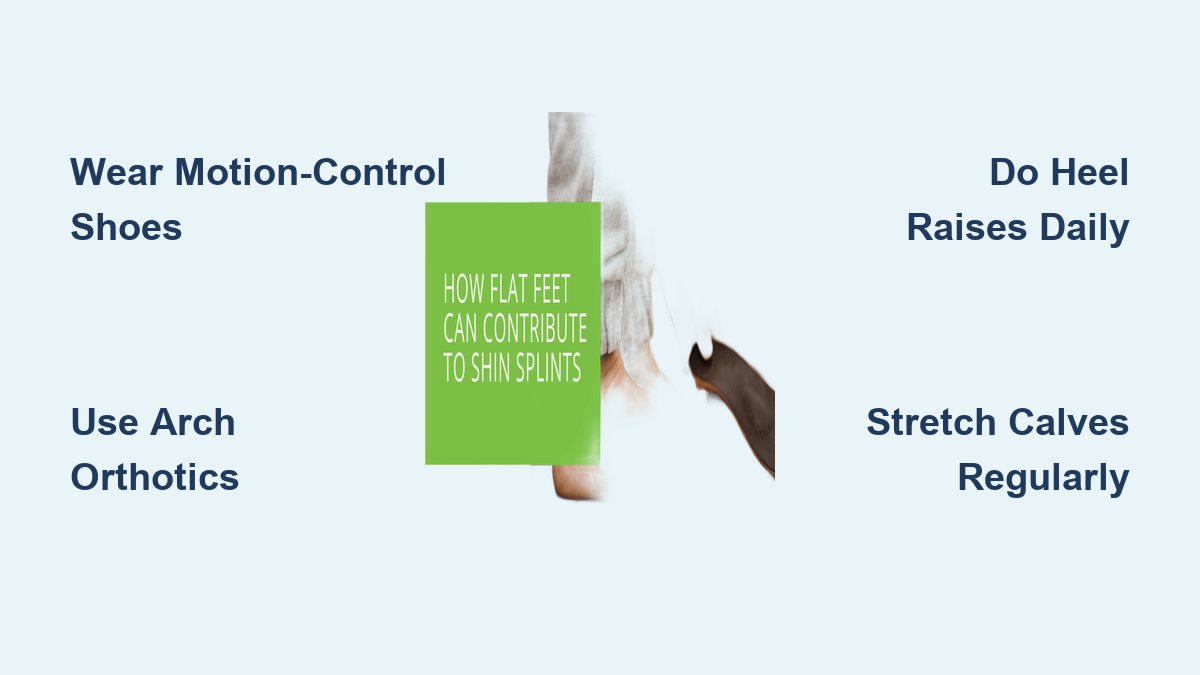
If you’ve ever laced up your running shoes only to be greeted by a sharp, throbbing ache along the inside of your shin after just a few minutes, you’re not alone—especially if you have flat feet. That pain is shin splints, medically known as medial tibial stress syndrome (MTSS), and it’s not just a minor discomfort. For people with flat feet, the lack of a natural arch means every step transmits more shock up the leg, overloading muscles and straining the tibia. This repetitive stress leads to inflammation, microtears, and persistent pain that can sideline even the most dedicated athletes.
The good news? Shin splints caused by flat feet are both treatable and preventable. You don’t have to give up running, dancing, or fitness. With the right mix of supportive footwear, targeted strengthening, and smart training habits, you can stop shin pain at its source. In this guide, you’ll learn how to correct the biomechanical imbalances behind your pain, relieve discomfort fast, and build stronger, more resilient legs—so you can stay active without fear of flare-ups.
Fix Flat Feet Biomechanics First

Shin splints don’t start in the shin—they start in the foot. When your arch collapses during walking or running (overpronation), your ankle rolls inward excessively. This misalignment forces the tibialis posterior muscle to work overtime to stabilize your foot. Over time, this leads to fatigue, strain, and inflammation along the shinbone.
To stop shin splints long-term, you must correct the root cause: poor foot mechanics due to flat feet.
Choose Motion-Control Running Shoes
Standard athletic shoes aren’t designed for flat feet. You need stability or motion-control shoes that actively resist overpronation.
Look for:
– Firm heel counters to stabilize the rearfoot
– Dual-density midsoles with firmer foam on the inner side
– Medial post support to prevent excessive inward rolling
– Adequate cushioning in the heel and forefoot to absorb impact
Replace your shoes every 300–500 miles or when the inner sole shows visible wear. Worn-out shoes lose their structural support, making overpronation worse and increasing your risk of shin pain.
Pro Tip: Visit a specialty running store for a gait analysis. Many offer video assessments to match you with shoes that support your foot type and running style.
Use Arch-Supporting Orthotics
Orthotics are the most effective way to correct flat foot mechanics and reduce shin strain.
Custom Orthotics for Severe Overpronation
If you have chronic shin pain or your flat feet are rigid or painful during daily walking, custom orthotics prescribed by a podiatrist are the gold standard. These are molded to your exact foot shape using 3D scanning or foam impressions and can:
– Restore proper arch alignment
– Reduce tibial stress by up to 30%
– Improve shock absorption
– Prevent recurrence in over 80% of chronic cases
They’re especially effective when combined with physical therapy and proper footwear.
Over-the-Counter Inserts for Mild Cases
For mild flat feet, high-quality OTC inserts like PowerStep, Superfeet, or Spenco can provide significant relief. Choose ones with:
– Firm longitudinal arch support
– Deep heel cups for stability
– Shock-absorbing materials like EVA foam
Warning: Avoid soft, gel-based insoles. While they may feel comfortable, they offer little biomechanical correction and won’t help stop shin splints.
Immediate Pain Relief Strategies

When shin pain flares up, act quickly to reduce inflammation and prevent worsening injury.
Apply the PRICE Protocol
Use this five-step method within the first 48–72 hours of pain onset:
- Protect: Stop running, jumping, or high-impact activities.
- Rest: Avoid weight-bearing exercise for 3–7 days, depending on severity.
- Ice: Apply ice packs for 15–20 minutes every 2–3 hours. Always use a towel to protect your skin.
- Compression: Wear a compression sleeve or use an elastic wrap to reduce swelling and support overstressed muscles.
- Elevation: Prop your leg above heart level when resting to help drain excess fluid.
This protocol helps reduce inflammation and speeds up recovery—especially when started early.
Use NSAIDs Sparingly
Over-the-counter pain relievers like ibuprofen or naproxen can help reduce pain and inflammation. Use them for short-term relief only (3–5 days) to avoid masking pain that could lead to overuse.
Note: Medication should never replace biomechanical correction. Combine NSAIDs with orthotics, rest, and proper footwear for best results.
Strengthen Weak Lower Leg Muscles
Flat feet overload the tibialis posterior, the key muscle that supports the arch. When it weakens, shin splints follow. Strengthening this and related muscles restores balance and reduces strain.
Perform Daily Towel Curls
This simple exercise activates the foot’s intrinsic muscles and tibialis posterior.
How to do it:
1. Sit barefoot with a towel on the floor.
2. Place one foot on the towel.
3. Use your toes to scrunch the towel toward you.
4. Repeat 3 sets of 15 reps per foot.
Progression: Add a small weight (like a soup can) on the towel for extra resistance.
Do Eccentric Heel Raises
Eccentric calf raises target the tibialis posterior during the lowering phase, building tendon strength.
How to do it:
1. Stand on a step with heels hanging off.
2. Rise onto both toes.
3. Slowly lower one heel below the step over 3–5 seconds.
4. Use the other foot to return to the top.
5. Do 3 sets of 10–15 reps per leg.
Why it works: Eccentric loading increases tendon resilience and is proven to reduce MTSS recurrence.
Add Resisted Inversion Exercises
Use a resistance band to strengthen arch-supporting muscles.
How to do it:
1. Sit with legs extended.
2. Loop a resistance band around the ball of one foot.
3. Anchor the other end to a fixed object.
4. Turn your foot inward against the band’s pull.
5. Perform 3 sets of 12 reps per foot.
Stretch Tight Calf and Foot Tissues
Tight calf muscles pull on the shin, increasing strain. Regular stretching improves flexibility and reduces MTSS risk.
Stretch Gastrocnemius and Soleus
Both muscles attach to the Achilles and influence shin mechanics.
Standing Calf Stretch:
1. Face a wall, one foot forward, one back.
2. Keep the back leg straight, heel down.
3. Lean forward until you feel a stretch in the upper calf.
4. Hold 30 seconds, 3 reps per leg.
Soleus Stretch:
– Same position, but bend the back knee slightly to target the deeper soleus.
Perform Plantar Fascia Stretch
Tight plantar fascia worsens arch collapse.
Seated Stretch:
1. Sit with one leg crossed over the other.
2. Pull toes upward toward the shin.
3. Hold 30 seconds, repeat 3 times.
4. Use a towel if needed.
When to stretch: Do these daily, especially before getting out of bed and after activity.
Correct Training Habits That Trigger Shin Splints

Even with perfect support, poor training habits can bring shin pain back.
Follow the 10% Rule
Sudden increases in mileage or intensity are the #1 trigger.
- Never increase weekly distance, time, or intensity by more than 10%.
- Example: If you ran 10 miles this week, next week max is 11 miles.
This allows tissues to adapt gradually.
Cross-Train with Low-Impact Activities
Give your shins a break while staying fit.
Replace 1–2 running days per week with:
– Swimming
– Cycling
– Elliptical training
– Rowing
These maintain fitness without pounding your legs.
Warm Up and Cool Down Properly
Skipping warm-ups increases injury risk.
Before activity:
– 5–10 minutes of brisk walking or light jogging
– Dynamic stretches: leg swings, walking lunges, high knees
After activity:
– Static stretches (calf, plantar fascia)
– Foam roll calves and shins for 1–2 minutes
Get Professional Help When Needed
Some cases require expert intervention.
See a Podiatrist for Gait Analysis
A podiatrist can:
– Assess your foot structure and walking/running pattern
– Prescribe custom orthotics
– Identify subtle biomechanical flaws
Many clinics use pressure-mapping insoles or video gait analysis to pinpoint overpronation.
Start Physical Therapy for Chronic Pain
If pain lasts 2–3 weeks, physical therapy accelerates recovery.
A therapist may include:
– Manual soft tissue release
– Gait retraining
– Core and hip strengthening
– Proprioception drills (balance exercises)
Typical program: 6–8 weeks, 2 sessions per week, plus home exercises.
Rule Out Stress Fractures
Persistent, localized pain could be a tibial stress fracture.
Warning signs:
– Sharp, pinpoint pain that worsens at rest
– Pain during normal walking or at night
– No improvement after 2 weeks of rest
If suspected, get an X-ray or MRI. Stress fractures require longer rest (6–8 weeks).
Prevent Future Shin Splints Long-Term
Once pain is gone, focus on maintenance.
Replace Shoes and Orthotics Regularly
- Running shoes: Every 300–500 miles or 6–12 months
- Orthotics: Every 1–2 years or when cracked/worn
Inspect shoes for uneven inner sole wear—a sign of overpronation.
Schedule Biomechanical Checkups
See a podiatrist or sports therapist once a year for:
– Foot and gait evaluation
– Muscle strength testing
– Shoe and orthotic assessment
Catch small issues before they become injuries.
Maintain Strength and Flexibility
Continue key exercises 2–3 times per week:
– Heel raises
– Towel curls
– Calf and plantar fascia stretches
Consistency prevents relapse.
When to Seek Immediate Medical Care
Don’t wait if:
– Pain lasts more than 2 weeks despite rest
– Swelling increases or becomes constant
– You feel sharp, localized pain that doesn’t improve
– You can’t walk without pain
These could indicate a stress fracture or compartment syndrome, requiring medical imaging and treatment.
Final Note: Shin splints caused by flat feet are not something you have to live with. By addressing overpronation with proper footwear, orthotics, and targeted exercises, you can stop the pain at its source. Combine that with smart training habits and professional support, and you’ll not only heal but build stronger, more resilient legs. Stay consistent, listen to your body, and keep moving—pain-free.