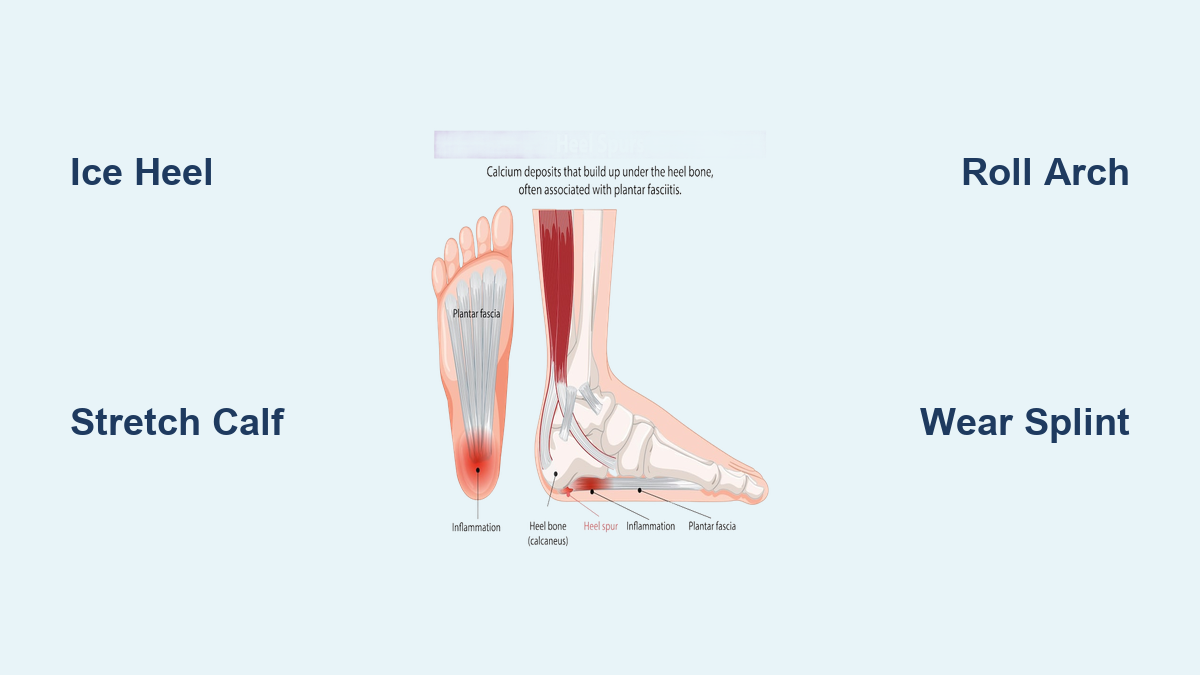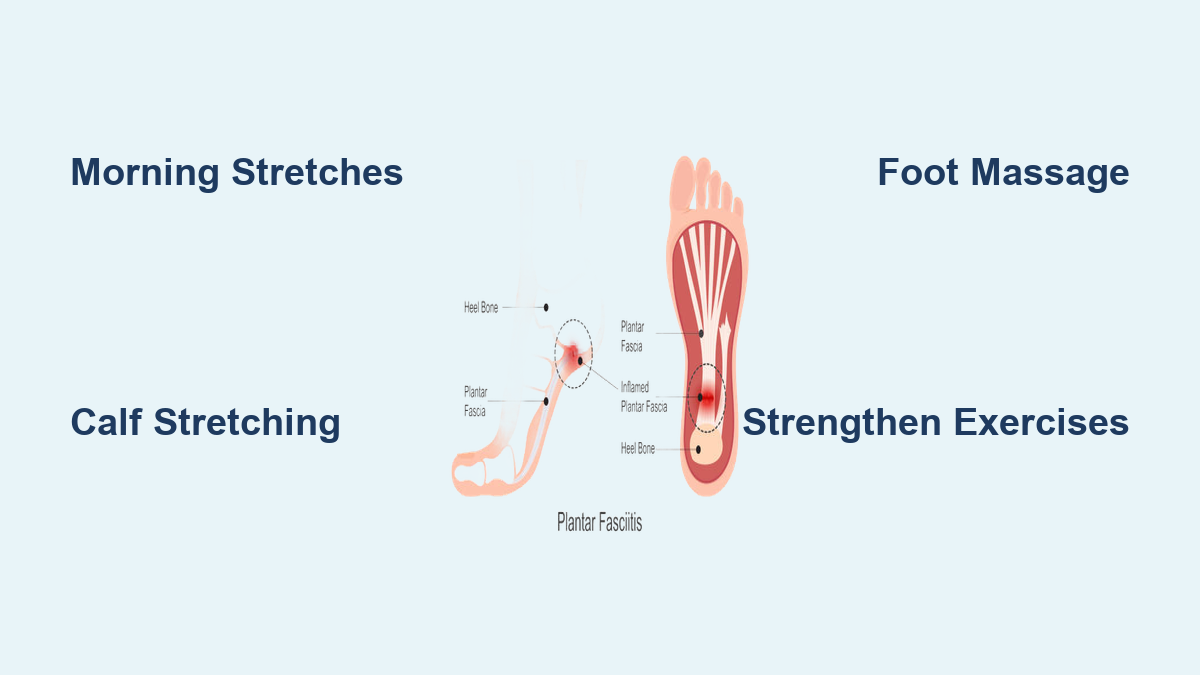
Waking up to stabbing heel pain with your first steps? You’re not alone. Tension in the plantar fascia is the root cause of plantar fasciitis, a condition affecting over 2 million people annually. This thick, fibrous band runs along the bottom of your foot, connecting your heel to your toes and supporting the arch. When overstretched, stiff, or inflamed from overuse, poor footwear, or tight calves, it becomes a source of persistent discomfort—especially after rest. The good news: most cases improve significantly with consistent, targeted care. Relieving tension isn’t about quick fixes; it’s about combining stretching, myofascial release, strengthening, and smart daily habits to restore flexibility and reduce strain. In this guide, you’ll learn proven, science-backed techniques—from pre-standing stretches to foot-strengthening drills—that ease pain, improve function, and prevent recurrence. Whether you’re on your feet all day or just starting to feel that nagging ache, these strategies will help you take control—starting today.
Morning Stretches to Prevent First-Step Pain
After hours of rest, your plantar fascia shortens, making it vulnerable to microtears when you take those first steps. Doing targeted stretches before your feet touch the ground can dramatically reduce morning heel pain by gently lengthening the tissue.
Seated Big Toe Pull Stretch
This is one of the most effective ways to directly target the plantar fascia first thing in the morning.
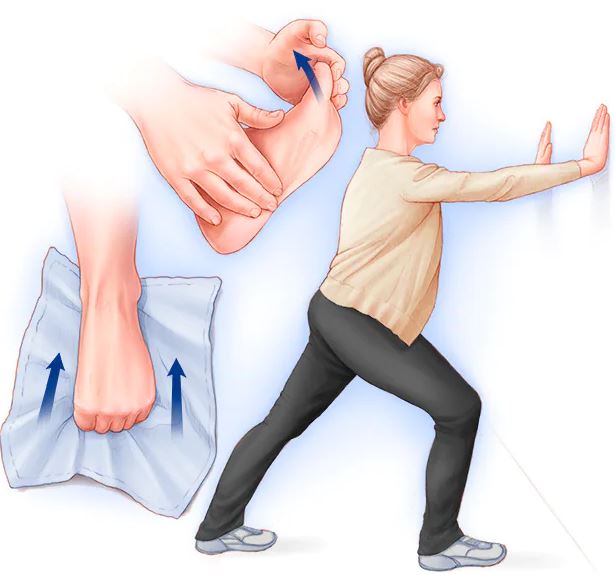
Sit on the edge of your bed with one leg crossed over the opposite knee. Grasp your big toe and gently pull it upward toward your shin, keeping the rest of your foot relaxed. Use your other hand to massage the arch or gently press the heel forward to deepen the stretch. You should feel a strong pull along the bottom of your foot and into the heel—not in your toes or ankle.
Hold for 20–30 seconds and repeat 3 times per foot.
Do this immediately upon waking, before standing.
Pro Tip: Follow this with a frozen water bottle roll for dual-action relief—stretching followed by cooling and massaging.
Towel Stretch Before Rising
This seated stretch targets both the plantar fascia and tight calf muscles, two major contributors to foot tension.
Lie back in bed or sit on the floor with your leg extended straight. Loop a towel or resistance band around the ball of your foot. Gently pull the towel toward your chest, keeping your knee straight and foot pointed upward. Avoid shrugging your shoulders—keep your upper body relaxed.
Hold 30 seconds, repeat 2–3 times per foot.
Perform this before getting out of bed to minimize strain during first steps.
Why it works: Tight calves increase tension on the Achilles tendon, which pulls directly on the plantar fascia. This stretch reduces that load at its source.
Calf Stretches to Reduce Foot Strain
Tight calf muscles (gastrocnemius and soleus) limit ankle flexibility, forcing the plantar fascia to absorb more stress with every step. Stretching these muscles is essential for long-term relief.
Wall Calf Stretch (Gastrocnemius)
This targets the upper calf muscle, which connects directly to the Achilles tendon.
Stand facing a wall, hands at shoulder height. Step the affected foot back, keeping the heel flat and knee straight. Lean forward, bending the front knee, until you feel a stretch in the upper calf. Keep your back straight and avoid letting the back foot roll outward.
Hold 30 seconds, repeat 3 times per leg.
Do 4–6 times daily, especially before and after walking or exercise.
Expert Note: If your heel lifts, you’re likely too far from the wall—step forward slightly.
Bent-Knee Calf Stretch (Soleus)
This focuses on the deeper calf muscle, which plays a key role in sustained standing and walking.
In the same wall position, bend the back knee while keeping the heel down. You’ll feel the stretch lower in the calf, near the Achilles.
Hold 30 seconds, repeat 3 times.
Perform daily, ideally after the straight-knee stretch.
Key Insight: The soleus is active during walking. Keeping it flexible reduces strain on the plantar fascia over time.
Stair Heel Drop Stretch
This provides a deeper stretch than flat-ground methods by increasing ankle dorsiflexion.
Stand on a step with the ball of your foot on the edge, heel hanging off. Hold a railing for balance. Slowly lower your heel below step level until you feel a stretch in the calf and Achilles. For soleus focus, slightly bend the knee during the drop.
Hold 30 seconds, repeat 2–3 times per foot.
Do once or twice daily, preferably barefoot for better control.
Caution: Start gently—this stretch is more intense and can aggravate symptoms if done too aggressively.
Self-Massage Techniques for Immediate Relief

Massaging the plantar fascia breaks up stiffness, improves blood flow, and reduces pain. It’s especially effective when combined with cold therapy.
Frozen Water Bottle Roll
A dual-action remedy: rolling provides massage, while cold reduces inflammation.
Fill a water bottle halfway and freeze it. Sit in a chair and place it under your arch. Roll slowly from heel to ball of the foot, applying gentle pressure. Pause for 10–15 seconds on tender spots.
Roll for 3–5 minutes, 2–3 times daily.
Ideal after activity or when foot feels stiff.
Why it works: Cold reduces swelling; rolling improves tissue elasticity and disrupts adhesions.
Golf or Lacrosse Ball Massage
Delivers focused pressure to tight areas along the arch.
Sit with a golf ball or lacrosse ball under your foot. Roll in small circles, concentrating on the inner heel and arch—common pain zones. Adjust pressure by shifting body weight.
Massage 1–3 minutes per foot, 1–2 times daily.
Best done barefoot on a hard floor.
Pro Tip: Use a lacrosse ball for broader pressure, a golf ball for pinpoint work.
Rolling Pin or Foam Roller Method
A gentler option for sensitive feet or acute flare-ups.
Place a rolling pin or foam roller on the floor. Sit and roll your foot back and forth over it. Keep movements slow and controlled.
Roll 2–3 minutes per foot.
Use daily as part of a maintenance routine.
Benefit: Even pressure distribution helps relax the entire plantar surface.
Strengthen Exercises to Support the Arch
Stretching relieves tension, but strengthening intrinsic foot muscles builds long-term resilience. Stronger muscles mean less load on the plantar fascia.
Towel Scrunches for Arch Strength
Activates the small muscles under your foot that support the arch.
Place a small towel (12–18 inches) on a hard floor. Sit barefoot and use your toes to scrunch the towel toward your heel. Keep your heel planted and avoid lifting your foot.
Do 10–15 reps, 1–2 sets per foot, once or twice daily.
Progression: Add a coin or marble on the towel to increase challenge.
Marble Pickups for Foot Control
Improves fine motor strength and coordination in the toes and arch.
Scatter 10–20 marbles on the floor. Use your toes to pick up each marble and drop it into a cup. Keep your heel down and move slowly.
Complete 10–15 pickups, 2 sets per foot, daily.
Bonus: This mimics natural foot gripping during walking—essential for healthy mechanics.
Short-Foot Exercise (No Toe Curling)
Trains your foot to activate the arch without gripping, promoting natural support.
Sit or stand with feet flat. Slide the ball of your foot toward your heel, shortening the foot. This should lift the arch without curling your toes. Hold, then relax.
Hold 5 seconds, repeat 10–15 times, once daily.
Expert Tip: Place your thumb under the arch to feel the muscle engagement.
Eccentric Heel Raises
One of the most evidence-backed exercises for chronic plantar fascia pain.
Stand on a step with heels hanging off. Rise onto both toes, then shift weight to the affected leg. Slowly lower the heel below step level over 3–5 seconds. Use your other foot to assist lifting back up.
Do 10–15 reps, 2–3 sets, once daily.
Why it works: Eccentric loading strengthens the calf and Achilles, improving shock absorption and reducing fascia strain.
Supportive Therapies for Faster Healing
Beyond exercises, integrating supportive habits accelerates recovery and prevents setbacks.
Ice Massage After Activity
Combines cold therapy with light massage to reduce inflammation.
Freeze water in a paper cup, peel back the top. Massage the heel and arch in small circles for 3–5 minutes. Avoid prolonged exposure—stop if skin becomes numb or overly sensitive.
Use 2–3 times daily, especially after walking or standing.
Alternative: Use a frozen juice can for a larger surface area.
Wear Supportive Footwear Immediately
Never walk barefoot—even at home. Unsupported steps reinforce poor mechanics.
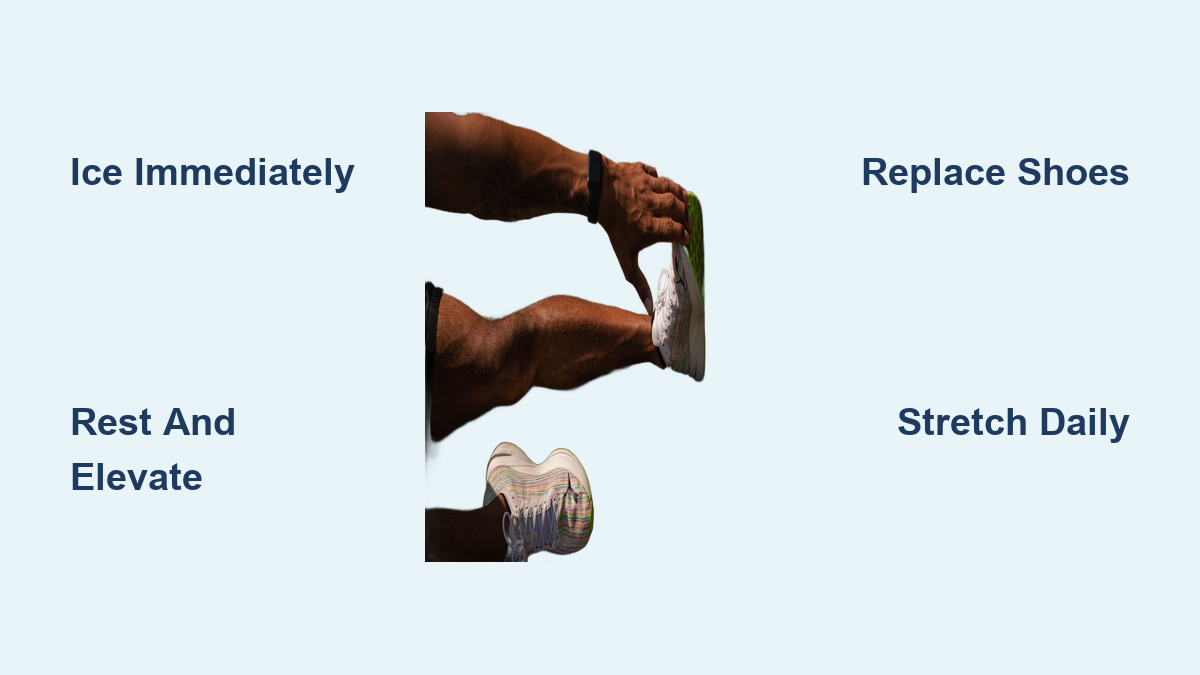
Choose shoes with firm arch support and cushioned heel. Use orthotics or insoles if you have flat feet or high arches. Replace worn-out shoes every 300–500 miles.
Quick Fix: Keep supportive slippers by your bed to wear right after morning stretches.
Consider Night Splints for Chronic Pain
If morning pain persists, a night splint keeps the plantar fascia stretched while you sleep.
Worn like a boot, it holds your foot at 90 degrees. Prevents overnight shortening of the tissue.
Use nightly for 4–6 weeks if conservative methods aren’t enough.
Note: Can be uncomfortable at first—start with short durations.
When to Seek Medical Help
Most cases improve within 6–12 weeks with home care. But if pain persists or worsens, professional intervention may be needed.
Signs You Need a Doctor
- Pain lasts more than 3 months despite daily stretching and care.
- Difficulty walking or bearing weight.
- Swelling, redness, or warmth in the heel.
- No improvement after consistent effort.
Advanced Treatments
- Physical Therapy: Custom program, gait analysis, manual therapy.
- Custom Orthotics: Tailored inserts for your foot shape and gait.
- Shockwave Therapy (ESWT): Non-invasive treatment to stimulate healing.
- Corticosteroid Injections: Short-term relief, but risk of tissue damage with repeated use.
- Surgery: Rare, only after 6–12 months of failed conservative care.
Golden Rule: Early action prevents chronic issues. Don’t wait months to act.
Prevent Recurrence With Daily Habits
Plantar fasciitis often returns—up to 30% of people experience it again. But smart habits drastically reduce risk.
Maintain a Stretching Routine
Even after pain fades, stretch calves and feet daily.
Do one round of towel stretch and heel drops each morning. Roll a ball under your foot 2–3 times per week.
Pro Tip: Link stretches to a habit—like brushing your teeth—to stay consistent.
Strengthen Feet Regularly
Continue towel scrunches, marble pickups, and heel raises 3–4 times weekly.
Strong feet = less reliance on the plantar fascia for support.
Watch Your Weight and Activity
Excess body weight increases load on the feet by 3–4 times with each step.
Maintain a healthy weight to reduce mechanical stress. Avoid sudden increases in walking, running, or standing.
Rule of thumb: Increase activity by no more than 10% per week.
Choose the Right Shoes
Avoid flip-flops, flat shoes, or worn-out sneakers.
Look for motion control, arch support, and heel cushioning. Replace every 6–12 months, depending on use.
Travel Tip: Pack orthotics or supportive shoes for long days on your feet.
Final Note
Relieving tension in the plantar fascia isn’t a one-time fix—it’s a daily commitment. The most effective strategy combines morning stretches, consistent massage, foot strengthening, and proper footwear. Start today: stretch before you stand, roll your foot with a frozen bottle, and build strength with simple toe exercises. Most people see improvement within weeks, but consistency is key. Stick with it, listen to your body, and don’t ignore early warning signs. With the right routine, you can not only relieve pain but also build a stronger, more resilient foot—so you can move freely, step after step.