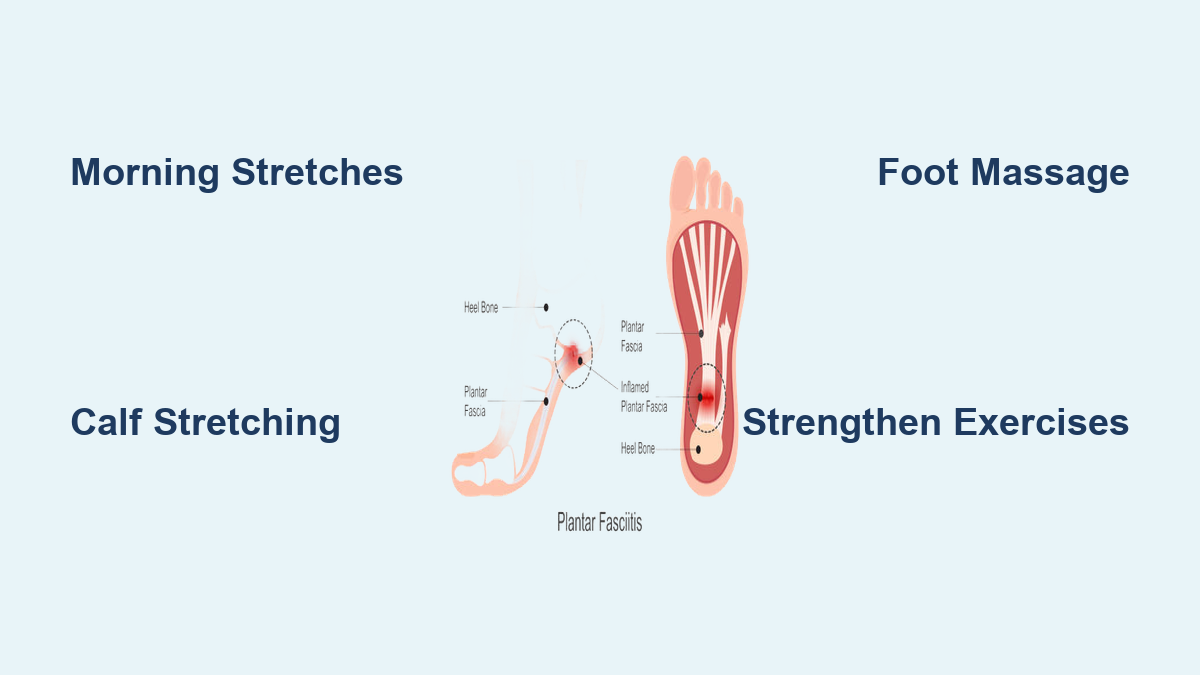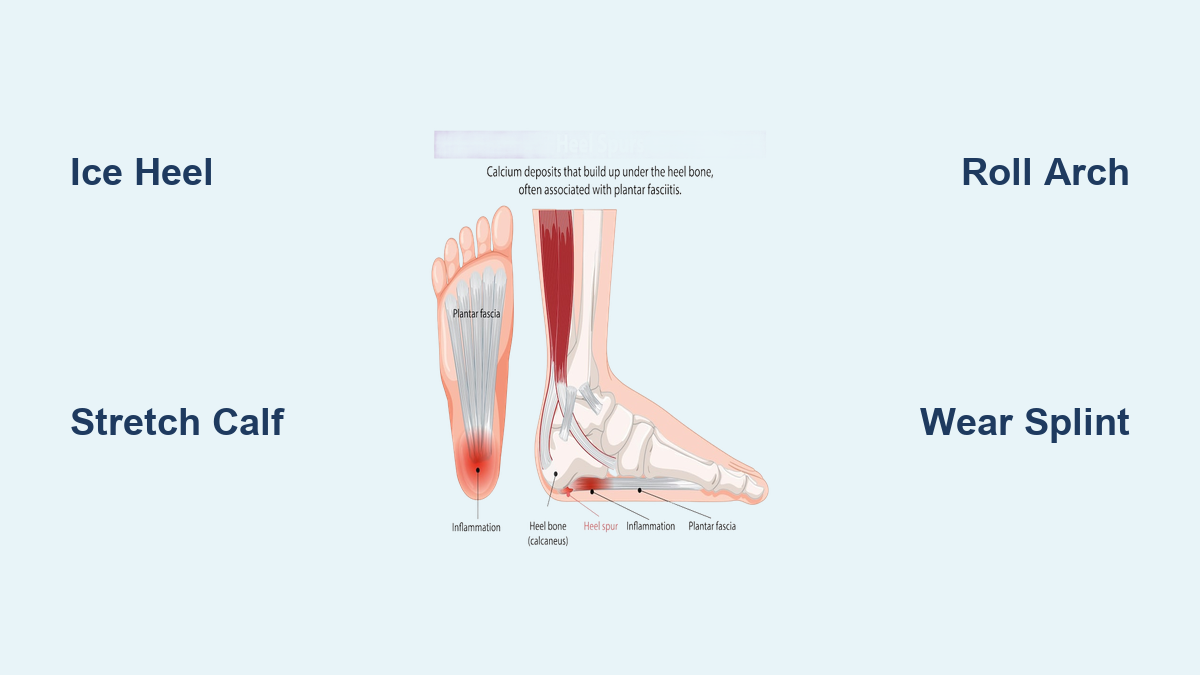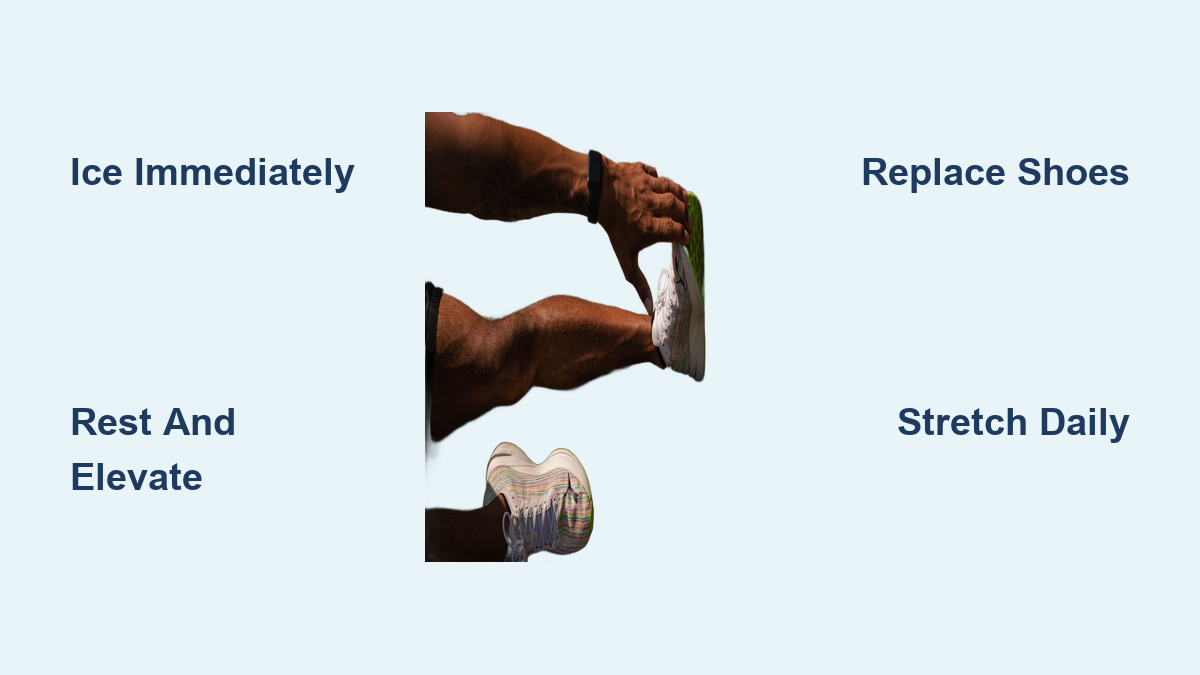
If you’ve ever stepped out of your running shoes only to feel a sharp ache or dull throb along the inner curve of your foot, you’re not alone. Arch pain after running is one of the most common complaints among runners, from beginners to seasoned athletes. Whether it stems from a sudden mileage spike, worn-out shoes, or an underlying biomechanical issue, ignoring it can lead to chronic conditions like plantar fasciopathy or posterior tibial tendon dysfunction. The good news? Most cases respond well to early, targeted care. This guide delivers proven strategies to relieve arch pain after running, so you can get back on the road—faster, stronger, and pain-free.
Apply Ice and Compression Immediately
When arch pain flares up post-run, your first move should be to reduce inflammation and soothe irritated tissues. Icing the foot for 15–20 minutes helps constrict blood vessels, decreasing swelling and numbing pain. Wrap an ice pack in a thin towel or, even better, roll a frozen water bottle under your arch. This dual approach cools the area while gently massaging the plantar fascia, helping break up tension. Repeat 2–4 times daily, especially within the first 48 hours of pain onset.
Pair icing with graduated compression socks to support circulation and minimize fluid buildup. These snug-fitting sleeves apply gentle pressure from ankle to calf, reducing swelling without restricting movement. Avoid direct skin contact with ice to prevent frostbite, and never ice for longer than 20 minutes at a time.
Stop Running and Elevate Your Foot
Continuing to run through arch pain can turn a minor strain into a long-term injury. If your stride feels altered or you’re favoring one foot, stop running and rest. Swap high-impact runs for low-impact cross-training like swimming, cycling, or pool running—activities that maintain fitness without stressing your arch.
When resting, elevate your feet above heart level for 15–20 minutes twice a day. This simple step encourages fluid drainage, reducing inflammation and speeding recovery. Use pillows to prop up your legs while lying down, especially after a long day on your feet.
Use NSAIDs Only When Necessary
Over-the-counter pain relievers like ibuprofen or naproxen can help manage pain and inflammation in the short term. However, don’t rely on NSAIDs long-term. If your pain persists beyond 3–5 days, the issue is likely degenerative (like plantar fasciopathy) rather than inflammatory. Chronic NSAID use increases the risk of stomach ulcers, kidney damage, and delayed tissue healing. Use them sparingly and discontinue if symptoms don’t improve.
Replace Running Shoes Every 300–500 Miles

Your shoes are the foundation of your run—and worn-out soles are a top cause of arch pain. Most running shoes lose their cushioning and stability after 300–500 miles, or about six months of regular use. Check for warning signs:
– Flattened midsoles
– Creased or collapsed heel counters
– Uneven tread wear, especially on the inner edge
Replace shoes proactively, not reactively. Rotating between two pairs extends their life and reduces repetitive stress on your arch.
Match Shoes to Your Foot Type

Not all feet are the same—neither should your shoes be. Wearing the wrong type increases strain on the arch.
- Flat feet or overpronation: Choose stability or motion-control shoes that limit inward rolling (e.g., Brooks Adrenaline, Saucony Guide).
- High arches: Opt for cushioned, flexible shoes that absorb impact (e.g., Hoka Clifton, Brooks Ghost).
- Neutral feet: Lightweight neutral shoes work best.
Get fitted at a specialty running store with gait analysis to ensure the right match. Brands like Altra offer wide toe boxes for natural foot splay and alignment.
Add Arch Support with Insoles
Even good shoes may lack sufficient arch support. Over-the-counter insoles like Powerstep, Superfeet, or Spenco provide immediate relief by redistributing pressure and supporting the medial arch. For persistent pain, consider custom orthotics. Affordable online options like FitMyFoot or Sooley use foot scans to create personalized supports—ideal for flat feet, high arches, or biomechanical imbalances.
Avoid walking barefoot at home or wearing flip-flops—they offer zero support and strain the plantar fascia.
Stretch Tight Calves and the Plantar Fascia Daily
Tight calf muscles pull on the heel, increasing tension in the plantar fascia—a major contributor to arch pain.
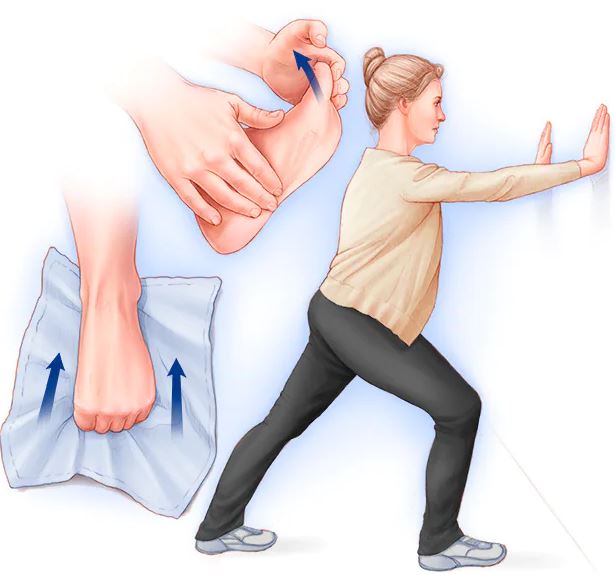
Wall calf stretch:
1. Stand facing a wall, hands on it.
2. Step one leg back, keeping the heel down.
3. Lean forward until you feel a stretch in the calf.
4. Hold 30 seconds, repeat 3 times per leg.
Follow with the bent-knee stretch to target the deeper soleus muscle.
Also try the seated big toe stretch: Sit with one leg crossed, gently pull the big toe back, and hold for 10 seconds. Repeat 10 times. Do these stretches daily, especially before your first steps in the morning.
Mobilize Intrinsic Foot Muscles
The small muscles inside your foot—like the abductor hallucis and flexor digitorum brevis—dynamically support the arch. Keep them flexible with:
Toe webbing stretch:
1. Interlace fingers between toes.
2. Twist the foot like wringing a towel (10 reps).
3. Follow with a “toe wave” (curl and extend toes).
Toe yoga:
– Lift toes, then lower them one at a time.
– Spread toes wide, then squeeze together.
Perform these barefoot on a mat for best results.
Strengthen with Progressive Loading Exercises
Stretching alone won’t fix arch pain. You need progressive strengthening to rebuild tissue resilience.
Skip low-load exercises like towel scrunches—they generate only 1–2x body weight, far below the 6x body weight per step during running.
Instead, do:
Heel raises:
– Start with double-leg (3 sets of 15).
– Progress to single-leg and eccentric lowering (3 seconds down).
Towel curls with resistance:
– Loop a resistance band around your toes and curl against it (3 sets of 12).
Single-leg balance:
– Stand on one foot, progress to eyes closed or a pillow.
These build foot stability and neuromuscular control.
Try Barefoot Walking on Safe Surfaces
Walking barefoot on grass, sand, or smooth floors activates intrinsic foot muscles. Start with 5–10 minutes daily. Avoid concrete or uneven terrain to prevent re-injury.
Use Low-Dye Taping for Arch Support

Low-Dye taping supports the arch without restricting motion. It redistributes pressure away from the plantar fascia during walking.
How to apply:
1. Anchor tape around the ball of the foot.
2. Run strips diagonally under the arch to the heel.
3. Overlap slightly for firm support.
Use kinesiology or zinc oxide tape. Apply before standing in the morning.
Wear a Night Splint to Prevent Morning Pain
Morning pain occurs because the plantar fascia shortens overnight. A night splint keeps your foot at a 90-degree angle, maintaining a gentle stretch.
- Wear for 4–6 hours during sleep.
- Use for 4–8 weeks.
- Start with shorter durations if uncomfortable.
This prevents the painful “first step” and accelerates healing.
Fix Your Running Form with Gait Analysis
Poor biomechanics—like overstriding or overpronation—place excessive stress on the arch. A 2D or 3D gait analysis at a running store or physical therapy clinic reveals imbalances using video and pressure sensors.
Common fixes:
– Shorten your stride: Land with your foot under your body.
– Increase cadence: Aim for 170–180 steps per minute.
– Land midfoot: Avoid heavy heel striking.
Use a metronome app to practice.
Try RehaWalk® Gait Retraining for Chronic Pain
For persistent arch pain, RehaWalk® uses pressure-sensor treadmills with real-time visual feedback to correct gait imbalances. It’s especially effective for runners with asymmetry or inefficient foot loading.
See a Doctor If Pain Lasts More Than 2–3 Weeks
Most arch pain improves with self-care. But see a podiatrist or sports medicine specialist if:
– Pain persists beyond 2–3 weeks.
– You limp or avoid weight-bearing.
– There’s swelling, redness, bruising, or deformity.
– Pain wakes you at night.
– You have diabetes or neuropathy.
You may need imaging (X-ray or MRI) or physical therapy.
Consider Shock Wave Therapy for Chronic Pain
If conservative care fails, extracorporeal shock wave therapy (ESWT) delivers high-energy sound waves to stimulate healing in chronic plantar fasciopathy. Studies show a 60–80% success rate after 3–5 sessions. It’s FDA-approved but not always covered by insurance.
Avoid Corticosteroid Injections
While they offer short-term relief, corticosteroid injections risk plantar fascia rupture and fat pad atrophy. Experts call them a “Band-Aid” that masks the problem. Reserve for rare, severe cases.
Prevent Arch Pain with Smart Habits
Prevention beats treatment. Follow the 10% rule: increase weekly mileage by no more than 10%. Choose softer surfaces—grass, trails, tracks—over concrete. Avoid cambered roads. Maintain a healthy weight: every extra pound adds 3–6 times that force to your arch with each step.
Make foot care routine:
– Stretch calves daily.
– Do heel raises while brushing teeth.
– Wear supportive slippers at home.
– Use anti-fatigue mats if you stand often.
Know the Recovery Timeline
Healing takes time:
– Plantar fasciopathy: 6–18 weeks; up to 12 months if chronic.
– Posterior tibial tendon dysfunction: 3–6 months of rehab.
– Surgery recovery: Up to 1 year.
– Orthotics: May be needed long-term.
Early action leads to faster recovery.
Final Note: Arch pain after running is treatable—but it requires more than rest. Combine immediate relief, targeted rehab, and long-term prevention to heal and stay strong. If pain lingers, don’t wait—see a specialist. With the right plan, you can return to running pain-free.