If your shoes wear down faster on one side—or one shoe looks noticeably more battered than the other—it’s not just a sign of cheap footwear. Uneven shoe wear patterns are a direct reflection of how your body moves. They expose hidden imbalances in gait, posture, and joint alignment that, if ignored, can lead to foot pain, knee strain, hip dysfunction, and chronic back issues. The good news? These patterns aren’t random, and they’re fixable. By learning to “read” your soles, you can identify the root cause of your asymmetry and take targeted steps to correct it. This guide gives you a clear, actionable plan to diagnose and fix uneven wear—so you walk more efficiently, last longer in your shoes, and protect your body from long-term damage.
Identify Your Wear Pattern
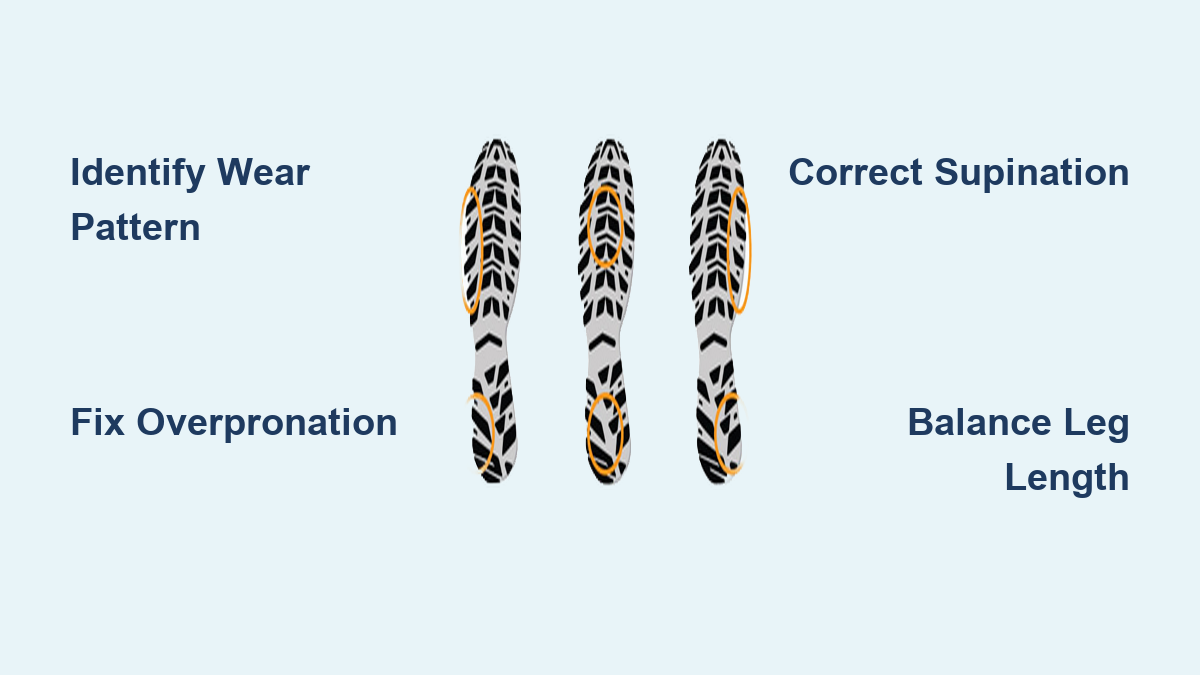
Before you can fix uneven wear, you need to understand what your shoes are trying to tell you. Start by removing your shoes and examining the soles closely. Look for depth differences, directional grooves, and asymmetries between left and right. These clues reveal how force is distributed with every step.
Check for Common Wear Locations
- Diagonal outer heel wear: A slanted groove from the back outer edge toward the front indicates you’re landing with your foot too far ahead of your body, often combined with supination (outward roll).
- Inner sole wear (medial side): Excessive wear from the arch to the big toe is a hallmark of overpronation—when the foot rolls inward too much.
- One shoe more worn than the other: This asymmetry may point to a leg length discrepancy or a postural tilt causing uneven weight distribution.
- Circular or spinning wear spots: A curved or concentrated spot suggests rotational forces—your leg or pelvis is twisting during stance.
- Holes or thinning near the big toe: Premature wear in the upper material means one foot is pushing off too early, often due to instability on that side.
Pro Tip: Place both shoes side by side on a flat surface. If they tilt at different angles, that’s a visual confirmation of asymmetry—your body is compensating with every step.
Match Pattern to Likely Cause
Use this quick-reference chart to decode what your shoes are signaling:
| Wear Pattern | Likely Cause |
|---|---|
| Diagonal outer heel wear | Landing ahead of center, supination, poor shock absorption |
| Medial arch-to-toe wear | Overpronation, flat feet, weak arch support |
| One heel more worn than the other | Leg length discrepancy or functional imbalance |
| Circular wear spot | Pelvic or torso rotation during gait |
| Forefoot wear near big toe | Early push-off, instability, or favoring one leg |
This pattern-matching approach turns your worn-out shoes into a diagnostic tool—no special equipment needed.
Fix Overpronation (Inner Sole Wear)

If your shoes show heavy wear along the inside edge—from heel to big toe—you’re likely overpronating. This inward rolling places excessive stress on the arch, ankle, and knee, accelerating shoe wear and increasing injury risk.
Choose Stability Shoes
Switch to stability or motion-control running shoes designed to limit excessive inward roll. Look for models with:
– A medial post (a firmer foam insert on the inner side)
– A structured midsole for arch support
– Brands like Brooks Adrenaline GTS, ASICS GT-2000, or Saucony Guide are top performers.
Avoid neutral or highly flexible shoes if you overpronate—they lack the support needed to correct the imbalance.
Use Medial Support Insoles
Over-the-counter pronation-correcting insoles can make a dramatic difference. Options like Rehband QD or Superfeet Green provide firm arch reinforcement, preventing the foot from collapsing inward.
Replace insoles every 6–12 months or when they lose shape. For severe overpronation or flat feet, consult a podiatrist about custom orthotics for precise correction.
Strengthen Arch and Calf Muscles
Weak intrinsic foot and lower leg muscles contribute to overpronation. Build strength with these simple daily exercises:
– Towel scrunches: Place a towel on the floor and use your toes to pull it toward you (3 sets of 15).
– Heel raises: Rise onto your toes slowly, focusing on balance (3 sets of 12 per leg).
– Short foot exercise: Flatten your foot while lifting the arch—without curling your toes (hold 10 seconds, 10 reps).
Warning: Insoles help, but without muscle retraining, the problem often returns.
Correct Supination (Outer Sole Wear)

Supination—also called underpronation—means your foot rolls outward, concentrating impact on the outer edge. It’s common in people with high arches and rigid feet, leading to poor shock absorption and faster wear on the lateral side.
Wear Cushioned, Flexible Shoes
Choose neutral, well-cushioned shoes that absorb impact and encourage natural foot motion. Top picks include:
– Hoka Clifton (plush cushioning)
– Nike Pegasus (balanced flexibility)
– New Balance 1080 (soft, responsive foam)
Avoid stiff or motion-control shoes—they can worsen rigidity in supinators.
Add Lateral Support Insoles
Products like Pedag Correct Heel Pads or Pro11 Heel Cups help redistribute pressure. Place a lateral heel wedge on the outer side of the insole to gently guide the foot inward and level the heel.
These inserts reduce strain on the ankle and knee while promoting even wear.
Improve Ankle Mobility and Shock Absorption
Tight calves and stiff ankles limit foot flexibility. Incorporate daily mobility work:
– Calf stretches: Hold each for 30 seconds, 3 reps per leg.
– Ankle circles: Rotate each ankle 10 times clockwise and counterclockwise.
– Barefoot balance drills: Stand on one leg, eyes closed, for 30 seconds to boost proprioception.
Key Insight: Supinators need cushioning and mobility—not more stability.
Address Leg Length Discrepancy
Even a 5mm difference between legs can cause one shoe to wear faster. The longer leg often overpronates; the shorter side bears less weight, leading to uneven wear.
Confirm the Discrepancy
Lie flat on your back and have someone check if one leg appears shorter. Look for:
– Pelvic tilt (one hip higher)
– Asymmetrical shoe wear
– One heel more compressed
Remember: functional discrepancies (from muscle tightness or posture) are more common than anatomical ones.
Use Heel Lifts or Custom Orthotics
For differences under 6mm, insert a heel lift into the shoe of the shorter leg. For larger gaps, seek custom orthotics with built-in lifts.
Avoid stacking multiple insoles—they can destabilize your foot and cause new problems.
Correct Pelvic Rotation
Tight hip flexors—especially the psoas muscle—pull the pelvis forward, mimicking a short leg. Fix this with:
– Hip flexor stretches: Kneel in a lunge, tuck your pelvis, and lean forward (30 seconds, 3 reps).
– Glute bridges: Lie on your back, lift hips, and squeeze glutes (3 sets of 15).
Drill: Walk with your hands on your hips. If your pelvis sways side to side, you’re compensating for imbalance.
Fix Rotational Wear Patterns
A circular or curved wear spot means your leg is rotating during stance—often from pelvic or torso twist. This creates torque that destabilizes the foot and accelerates wear.
Stabilize Your Torso
Upper body rotation creates forces that travel down to your feet. Prevent this by:
– Engaging your core: Keep your lower ribs down and abs slightly tight.
– Keeping elbows facing forward: Prevents shoulder swing from triggering hip rotation.
Align Knees and Feet Forward
Think of your knees as headlights—point them straight ahead. Avoid letting them cave inward (valgus) or flare outward (varus). Practice walking in front of a mirror to monitor alignment.
Activate Gluteus Maximus
Weak glutes allow the femur to rotate, destabilizing the foot. Cue: “Push hips back” with each step, as if sitting into a chair. Strengthen with:
– Clamshells: 3 sets of 15 per side
– Single-leg glute bridges: 3 sets of 10
Test: Film yourself walking from behind. If your pelvis rotates or knees wobble, glute weakness is likely the culprit.
Improve Gait Alignment and Foot Strike

How your foot lands determines wear. Landing too far ahead (overstriding) creates braking forces that wear down the outer heel.
Land Under Your Hip
Let your foot land under your hip, not ahead of it. This reduces lateral stress and promotes efficient, balanced movement.
Use a Midfoot Strike (If Running)
Runners should shift from heel-first to midfoot or forefoot striking:
– Shorten your stride
– Increase cadence (aim for 170–180 steps per minute)
– Practice on a treadmill with video feedback
Fall Forward, Don’t Lunge
Lean slightly from the ankles, not the waist. Let your chest lead—this promotes forward momentum without overstriding.
Visual Cue: If your shadow shows your head behind your feet, you’re landing too far ahead.
Choose the Right Footwear
Even perfect form fails in the wrong shoes. Match your footwear to your biomechanics:
| Foot Type | Shoe Type | Key Features |
|---|---|---|
| Flat feet | Stability/Motion Control | Medial post, firm midsole |
| High arches | Neutral/Cushioned | Soft, flexible sole |
| Neutral arch | Balanced support | Moderate cushioning |
Replace shoes regularly:
– Running shoes: Every 300–500 miles
– Walking shoes: Every 500–800 hours
– Signs to replace: Creased midsole, tilted heels, loss of bounce
Rotate Between 2–3 Pairs
Rotating shoes allows foam to re-expand, maintaining cushioning and reducing wear. Ideal for runners or those on their feet all day.
Use Corrective Insoles and Heel Pads
Supportive inserts can correct alignment and extend shoe life. Top options:
– Rehband QD Wedge Insoles: Correct pronation/supination with medial or lateral placement
– Pro11 Heel Cups: Realign heel bone, reduce rotational forces
– Pedag Correct Heel Pads: Adjustable cushioning for supinators or overpronators
User Feedback: “These insoles realigned my feet—I forgot they were there, and my shoes lasted twice as long.” — Tracey (★★★★★)
Use them in daily or athletic shoes, and swap between pairs during rotation.
Retrain Your Movement Habits
Fixing shoe wear isn’t just about gear—it’s about retraining movement.
Practice Postural Awareness
Stand in front of a mirror: Are shoulders level? Hips even? Avoid leaning on one leg or carrying bags on one side. Set phone reminders to check posture every 2 hours.
Walk with Intention
Focus on symmetrical steps, not speed. Keep:
– Head over spine
– Spine over pelvis
– Pelvis over feet
Breathe rhythmically—tension in breath often mirrors tension in gait.
Do Gait Drills Daily
- Heel-to-toe walk: 30 seconds, straight line
- Single-leg balance: 30 seconds per side
- Walk with hands on hips: Ensures level pelvis
Pro Tip: Record yourself walking every few weeks to track progress.
Prevent Future Wear With Smart Habits
Once you’ve corrected the imbalance, maintain it.
Vary Your Walking Surfaces
Roads slope (camber) to drain water—running on the same side causes uneven wear. Alternate sides of the street or use flat trails.
Get a Gait Analysis
Visit a running store, physical therapist, or sports clinic for video analysis and pressure plate testing. Get personalized shoe and insole recommendations.
Schedule Foot Checkups
Inspect shoes and feet every 6–12 months. Look for:
– New wear patterns
– Calluses or corns
– Pain in feet, knees, or back
Early detection prevents long-term damage.
Final Note: You’re not just fixing shoes—you’re fixing your body. Uneven wear is a warning sign, not a fashion flaw. By addressing overpronation, supination, leg imbalances, and poor posture, you’ll extend shoe life, reduce injury risk, and walk with greater ease. Start with a shoe inspection, choose the right support, and retrain your movement. Your feet—and your joints—will thank you, one balanced step at a time.