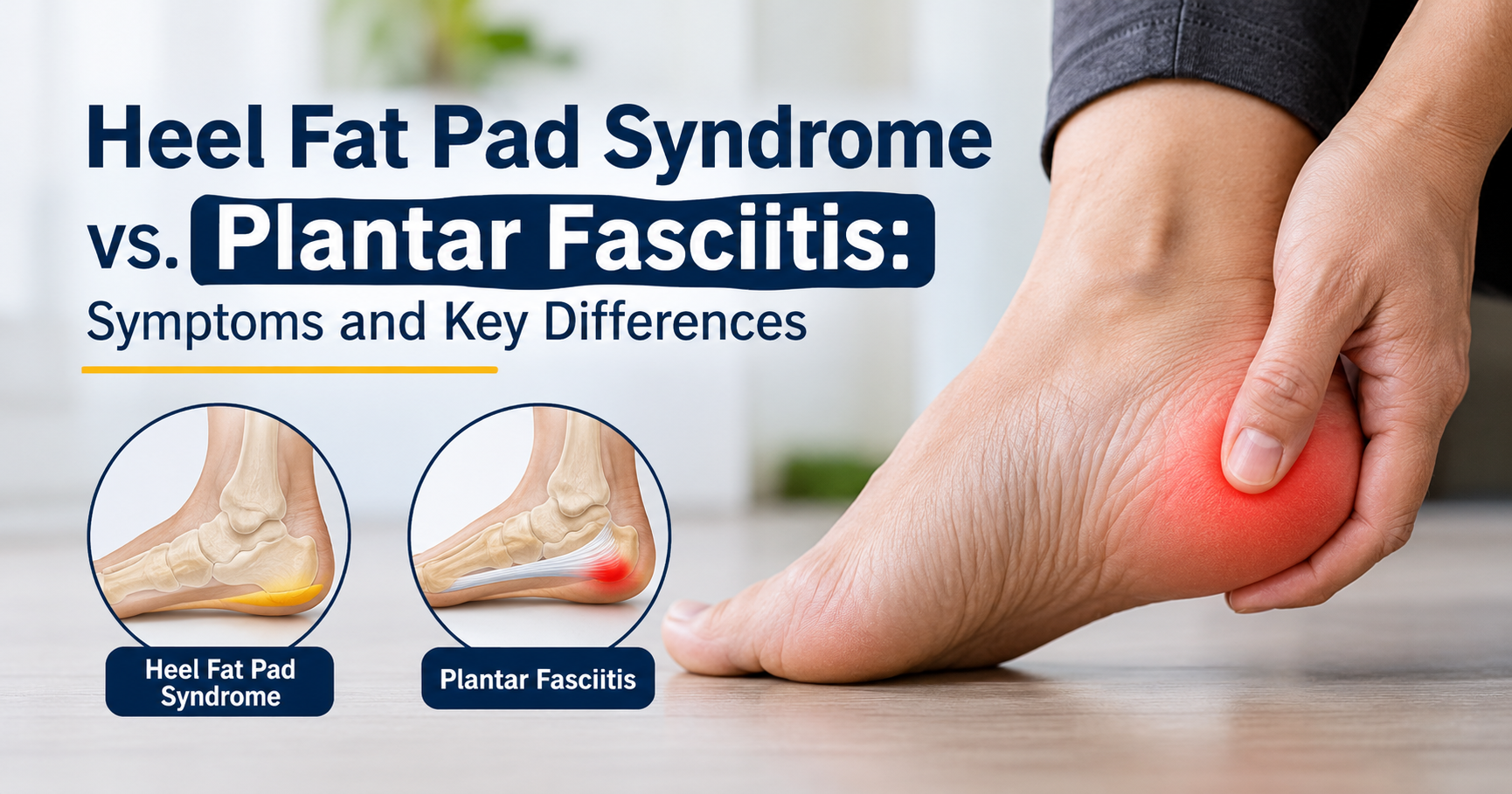
Heel pain is one of the most common foot complaints, yet two very different problems are often mixed up: heel fat pad syndrome and plantar fasciitis. They feel similar, but they come from different tissues, respond to different treatments, and a wrong guess can leave you in pain for months. This guide explains what each condition is, how to tell them apart, and what actually helps.
What Is Heel Fat Pad Syndrome?
Under your heel bone sits a thick cushion of fat held in tight compartments by fibrous walls. It works like a built-in shock absorber, spreading the force of every step. In heel fat pad syndrome (also called heel pad atrophy or fat pad contusion), this cushion becomes thinner, less elastic, or bruised, so the heel bone is no longer protected properly.
Common causes
- Aging: the pad naturally loses fat and elasticity over time.
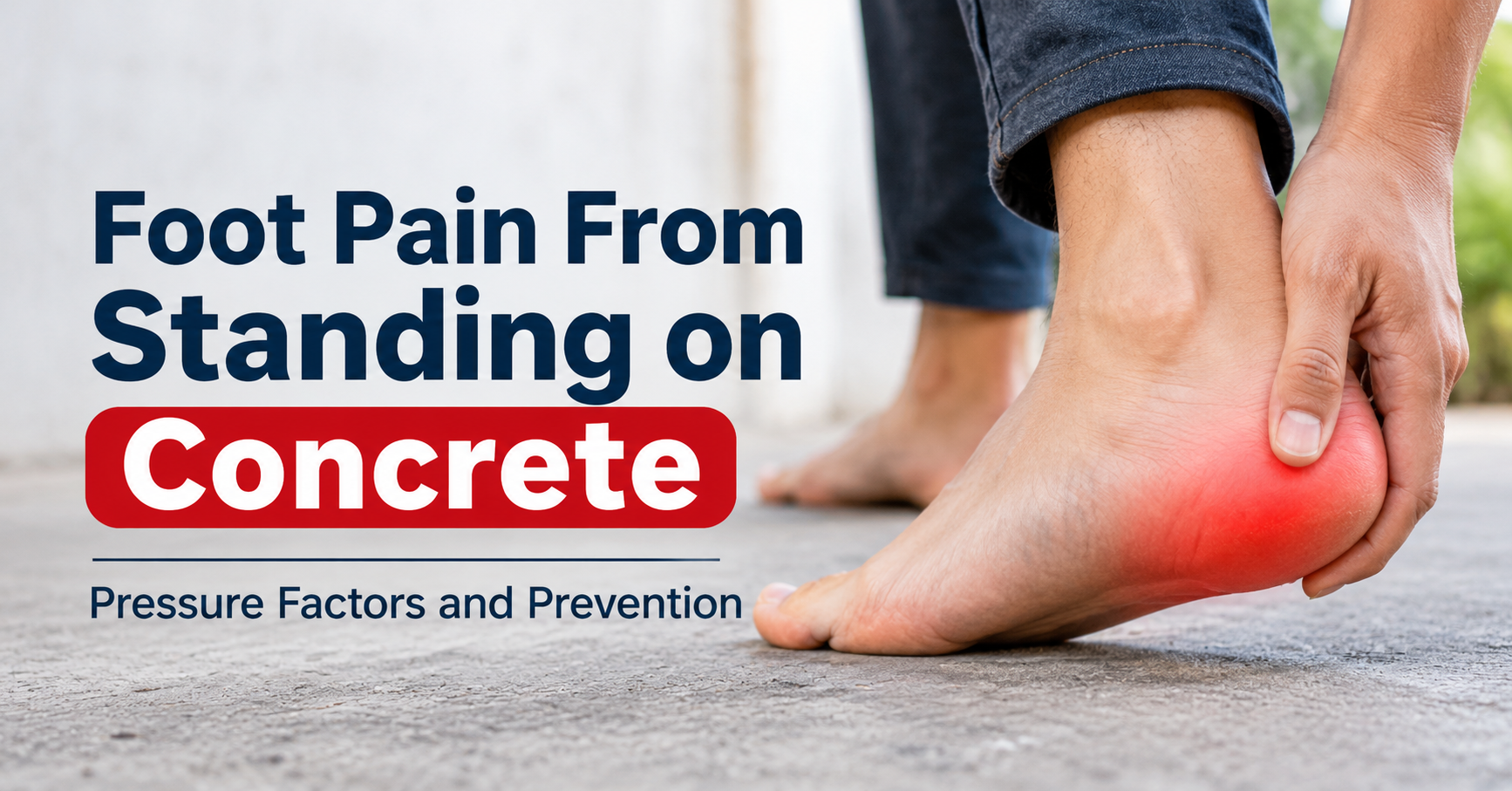
- Repeated hard impact: running on pavement, jumping, or standing for hours on concrete.
- Heavy heel strike: landing hard on the heel, or a sudden hard fall onto the foot.
- Excess body weight: more load on the same small area.
- Corticosteroid injections near the heel, which can thin the pad.
- Thin or worn-out shoes, and walking barefoot on hard surfaces.
Typical symptoms
- Deep, dull, bruise-like ache in the middle of the heel
- Pain that builds as the day goes on, especially on hard floors
- Tenderness when pressing the center of the heel
- Pain mostly with heel strike, often less when you walk on your toes
What Is Plantar Fasciitis?
The plantar fascia is a thick band of tissue running from the heel bone along the arch to the base of the toes. It supports the arch and acts like a spring. Plantar fasciitis happens when overload causes small tears and degeneration where the band attaches to the heel bone. (Many specialists now call it plantar fasciopathy, because it is more a wear-and-strain problem than simple inflammation.)
Common causes
- Tight calf muscles or a stiff Achilles tendon
- Sudden increase in running, walking, or standing time
- Flat feet or very high arches
- Unsupportive or worn shoes
- Excess weight and jobs that require long hours on your feet
Typical symptoms
- Sharp, stabbing pain at the front-inner part of the heel
- Worst with the first steps in the morning or after sitting for a while
- Pain eases after a few minutes of walking, then may return later in the day
- Tenderness along the arch; pulling the toes upward often hurts
Heel Fat Pad Syndrome vs Plantar Fasciitis: Side-by-Side
| Feature | Heel Fat Pad Syndrome | Plantar Fasciitis |
|---|---|---|
| Pain location | Center of the heel | Front-inner heel, may spread along the arch |
| Pain feels like | Deep bruise, stone under the heel | Sharp, stabbing, pulling |
| Worst time | Gets worse through the day on hard surfaces | First steps in the morning or after rest |
| Walking it off | Does not ease; stays or worsens | Eases after a few minutes |
| Barefoot on hard floor | Very painful | Painful, but less specific |
| Arch pain / calf tightness | Uncommon | Common |
| Key treatment focus | Cushioning and shock absorption | Stretching, arch support, load management |
How Is Each Condition Diagnosed?
A clinician usually diagnoses both with a physical exam. They press on the heel to find the exact tender spot, check how tight your calf and arch are, and watch you walk. If the picture is unclear, an ultrasound or MRI can measure fat pad thickness or show thickening of the plantar fascia. Imaging also helps rule out a heel stress fracture, nerve entrapment, or Achilles problems, which can mimic both conditions.
Treatment for Heel Fat Pad Syndrome
- Cushion the heel: silicone or gel heel cups and heel cushions help absorb impact and keep the remaining fat compressed in place.
- Choose shock-absorbing shoes: thick, soft midsoles with a firm heel counter that cups the heel. Avoid thin flats and flip-flops.
- Never walk barefoot on hard floors, even at home. Use cushioned slippers or recovery sandals.
- Heel taping or strapping can temporarily support the pad.
- Reduce impact: swap running for cycling or swimming while it settles; land softly if you run.
- Manage body weight, since it directly lowers heel load.
- Anti-fatigue mats help if you stand all day at work.
Most people improve within weeks to a few months once the heel is consistently protected.
Treatment for Plantar Fasciitis
- Calf and plantar fascia stretching: do it several times daily, especially before getting out of bed.
- Strengthening: slow heel raises and towel curls build tolerance in the fascia and foot muscles.
- Arch support insoles or orthotics reduce strain on the band.
- Night splints hold the foot gently flexed to prevent morning tightness.
- Supportive shoes with good arch support and a slight heel rise.
- Activity modification: reduce running volume rather than stopping entirely, and avoid sudden jumps in training.
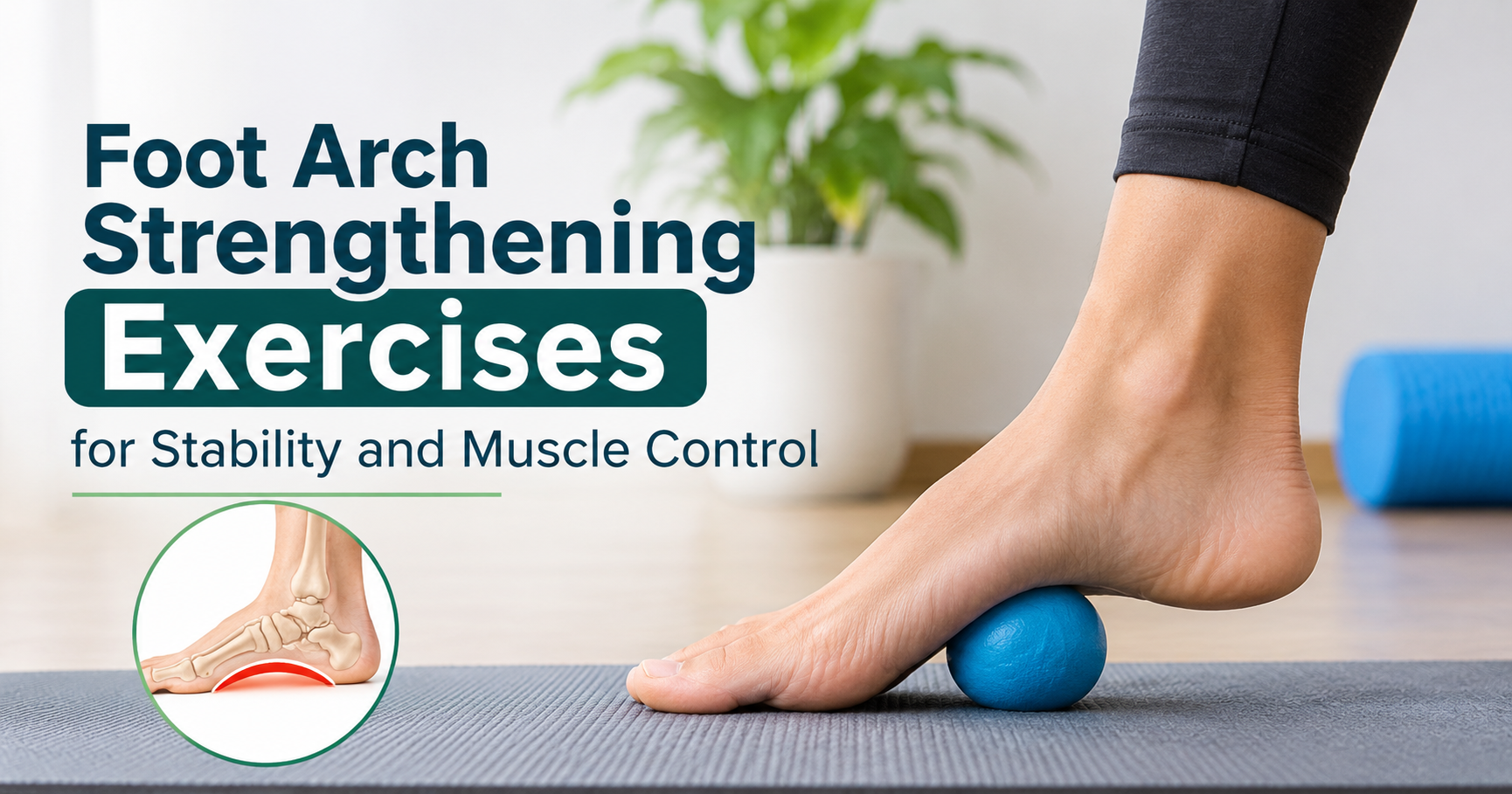
- Massage with a ball or bottle along the arch can relieve tension.
- Medical options: shockwave therapy, physiotherapy, or in stubborn cases, injections. Discuss these with a doctor.
Can You Have Both at the Same Time?
Yes. The two conditions can overlap, particularly in older or heavier people and in runners. A person may have central heel bruise-type pain from a thin pad together with morning arch pain from the fascia. In that case the best plan combines cushioning (heel cups, soft midsole) with stretching and arch support. If one treatment helps only partly, the other condition may be the missing piece.
Choosing Helpful Footwear and Support Products
When shopping for heel pain relief, focus on features rather than brands:
- Gel or silicone heel cups: best for fat pad syndrome.
- Orthotic arch support insoles: best for plantar fasciitis and flat feet.
- Cushioned running or walking shoes: look for a thick midsole, firm heel cup, and good rocker shape.
- Night splint or stretching strap: useful for morning plantar fasciitis pain.
- Recovery slippers or sandals: useful at home on tile and wood floors.
- Massage ball or foam roller: for arch and calf tension.
Whatever you choose, check the sizing, replace worn-out insoles every few months, and give any new support a week or two to feel natural.
When to See a Doctor
- Pain lasts more than 2 to 3 weeks despite home care
- Severe pain after an injury or a fall onto the heel
- Swelling, redness, or warmth in the heel
- Numbness, tingling, or burning in the foot
- You have diabetes or poor circulation
Frequently Asked Questions
Is heel fat pad syndrome serious?
It is not dangerous, but it can limit daily activity. It usually improves with proper cushioning and reduced impact.
Can heel fat pad syndrome heal on its own?
Mild bruising often settles with rest and protection. Age-related thinning does not regrow, but symptoms can be managed very well with cushioning.
How long does plantar fasciitis take to heal?
Many people improve within 3 to 6 months with consistent stretching and support; some cases take longer.
Are heel spurs the cause?
Not usually. Many people have heel spurs with no pain, and many with plantar fasciitis have none.
Which shoes are best for heel pain?
Cushioned shoes with a firm heel counter for fat pad syndrome, and supportive shoes with arch support for plantar fasciitis.
Final Thoughts
Heel fat pad syndrome and plantar fasciitis share a location but not a cause. Center-heel bruise pain that worsens on hard floors suggests the cushion is the problem; sharp front-inner heel pain that is worst in the morning suggests the fascia. Match your care to the right condition, protect your heels daily, and see a professional if the pain does not improve.
Disclaimer: This article is for general information and does not replace professional medical advice, diagnosis, or treatment. Consult a qualified healthcare provider about your symptoms.