If your feet sweat during a hike, feel damp at work, or get clammy in winter boots, you’re not alone—millions struggle with moisture buildup that leads to blisters, odor, and discomfort. But there’s a natural solution trusted by hikers, athletes, and outdoor professionals: wool socks. Specifically, Merino wool socks outperform cotton and most synthetics in managing moisture, keeping feet dry, warm, and healthy—no matter the conditions.
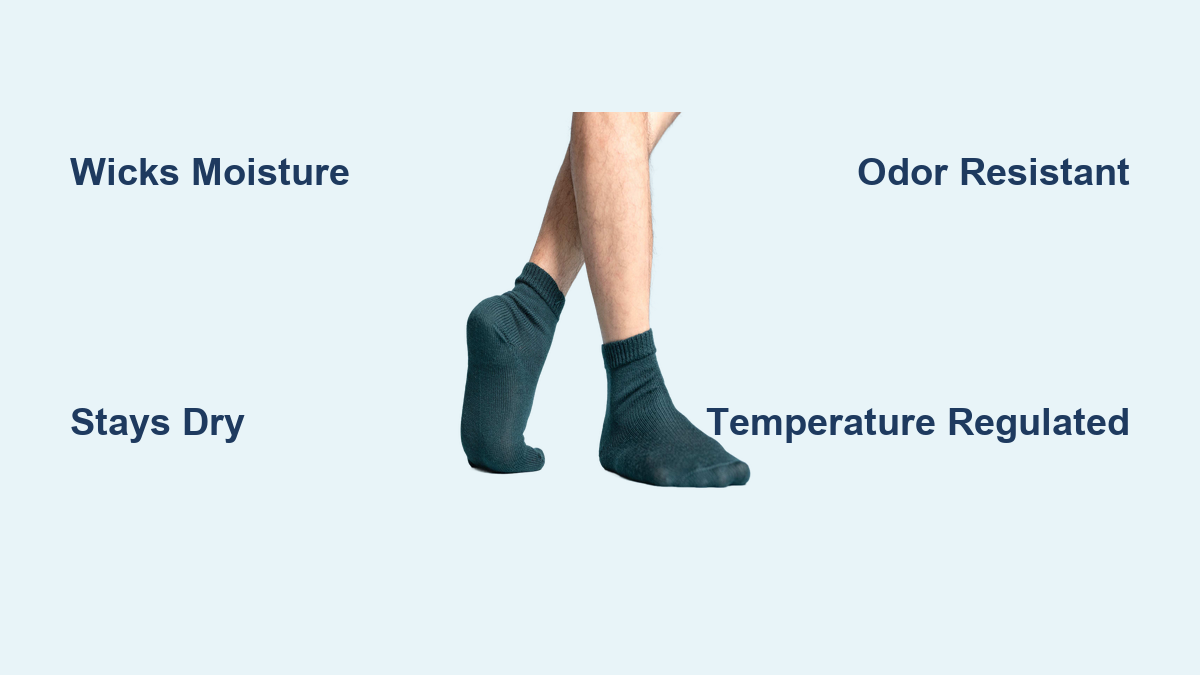
Unlike materials that trap sweat or feel soggy when wet, wool actively pulls moisture away from the skin, absorbs it into the fiber, and releases it for evaporation—all while staying dry to the touch. This isn’t marketing hype; it’s science. Wool fibers can absorb up to 30–35% of their weight in moisture before feeling damp, far surpassing cotton (7–8%) and most synthetic fabrics. That means even during intense activity, your feet stay in a dry microclimate, reducing friction, preventing blisters, and minimizing odor.
In this guide, you’ll learn exactly how wool manages moisture so effectively, why it outperforms other fabrics, and how to choose the right wool socks for your lifestyle—whether you’re on a multi-day backpacking trip or standing on your feet all day at work.
How Wool Wicks Moisture from Skin

Wool’s moisture control starts at the fiber level. Its unique structure combines water-absorbing and water-repelling properties in a single strand, making it a self-regulating fabric for foot comfort.
Dual-Layer Fiber Design
The secret lies in wool’s hydrophilic core and hydrophobic outer layer:
- The inner cortex of the fiber pulls in moisture vapor directly from sweat before it turns into liquid.
- The outer cuticle resists liquid water, helping push moisture outward where it can evaporate.
This dual-action system means wool wicks moisture at the vapor stage, not after your foot is already wet. As a result, the sock surface stays dry, even as it manages sweat beneath.
Merino’s Fine Fiber Advantage
Merino wool takes this further with ultra-fine fibers (17–22 microns) that are soft, porous, and highly absorbent. These tiny fibers increase surface area, allowing faster moisture uptake and more efficient transport. Plus, they’re itch-free—unlike traditional coarse wool—making them ideal for next-to-skin wear.
Because Merino acts early in the sweating process, it prevents that sticky, clammy feeling common with cotton or polyester. You stay dry, even when your body heats up.
Wool Absorbs More Moisture Than Any Common Sock Material

When comparing fabrics, wool stands out for its unmatched capacity to hold moisture without feeling wet.
Up to 35% Moisture by Weight
- Merino wool: Holds 30–35% of its dry weight in moisture before feeling damp.
- Cotton: Feels wet at just 7–8% moisture absorption.
- Polyester/Nylon: Typically absorb less than 1%, relying on surface wicking instead.
This means wool can manage far more sweat over time, especially during long hikes or extended wear. While cotton soaks up moisture and holds it against your skin, wool locks it inside the fiber, keeping the outer sock layer dry.
Why This Matters for Foot Health
High absorption prevents:
– Skin softening (maceration), which increases blister risk
– Friction buildup from wet fabric rubbing against skin
– Cold conduction when damp socks chill the foot
By managing moisture before it pools, wool reduces the three biggest threats to foot comfort: blisters, cold, and irritation.
How Wool Keeps Feet Dry During Activity
Even when you’re sweating heavily, wool maintains a dry-feeling environment next to your skin—thanks to its smart moisture-handling system.
Prevents Saturation at the Skin Level
Unlike cotton, which becomes saturated and stays wet, wool traps moisture within the fiber core. This creates a dry microclimate against your foot, so you don’t feel dampness even during prolonged exertion.
Hikers report wearing Merino socks for 8–12 hours on rugged trails and still feeling dry. That’s because the moisture is being continuously absorbed and slowly released, not sitting on the surface.
Supports Evaporative Cooling
As wool absorbs moisture, a slight exothermic reaction occurs—releasing small amounts of heat. This warms the foot slightly in cold weather.
But when temperatures rise, the reverse happens: stored moisture evaporates, creating a natural cooling effect. This helps regulate foot temperature during stop-and-go activity, like hiking or trail running.
This dual thermoregulation makes wool effective in both winter and summer conditions.
Wool Performs Better Than Cotton and Synthetics When Wet

Even when soaked, wool retains key performance advantages that other materials lose.
Retains Insulation When Wet
| Material | Insulation When Wet |
|---|---|
| Wool | ✅ Stays warm |
| Cotton | ❌ Becomes cold conductor |
| Synthetics | ⚠️ Varies; many lose warmth |
Wet Merino wool still traps air in its crimped fibers, maintaining up to 80% of its insulating ability. This is critical in cold environments where wet cotton can contribute to hypothermia.
In contrast, cotton loses loft and conducts heat away from the body—earning the outdoor community’s warning: “cotton kills.”
Dries Faster Than Cotton, Resists Odor
While some synthetics dry faster than wool, wool wins in long-term wear due to:
- Natural odor resistance (lanolin and acidic pH inhibit bacteria)
- Gradual drying without stiffness or discomfort
- Shape retention—won’t sag like cotton when wet
Users regularly wear Merino socks for multiple days without washing, especially on backpacking trips, with minimal smell.
Wool Enhances Breathability Through Natural Airflow
Breathability isn’t just about fabric thickness—it’s about how well air and vapor move through the material. Wool excels here thanks to its natural structure.
Crimped Fibers Create Air Pockets
Wool fibers have a natural crimp (wave) that forms tiny air pockets within the sock. These pockets:
- Promote air circulation
- Help carry away heat and humidity
- Improve cushioning and comfort
Even in tight-fitting shoes, these micro-channels allow vapor to escape, reducing sweat buildup.
Fine Merino Allows Dense, Breathable Knits
Because Merino fibers are so fine, manufacturers can knit tighter, more durable fabrics without sacrificing breathability. The small gaps between fibers let moisture vapor pass through while blocking external water.
Lab studies show wool maintains a stable microclimate around the foot, preventing sudden spikes in temperature or humidity that trigger excessive sweating.
Wool Naturally Fights Odor and Bacteria
One of the biggest advantages of wool socks? You can wear them longer without stink.
Lanolin and pH Block Microbial Growth
Two natural defenses make wool odor-resistant:
- Lanolin: A waxy substance in sheep’s wool with antibacterial and antifungal properties.
- Slightly acidic fiber surface (pH 4.5–5.5): Inhibits bacterial growth that causes foot odor.
These traits mean fewer odor-causing microbes take hold—even after hours of sweating.
Traps Smell Until Washed
Wool doesn’t just resist bacteria—it also binds odor molecules within the fiber. Instead of releasing smells into the air, it holds them until washing, keeping your socks smelling fresh between uses.
Many travelers and thru-hikers wear the same pair for 3–5 days with no noticeable odor, unlike synthetics that often retain smells permanently due to oil absorption.
Why Cotton and Synthetics Fall Short
Not all sock materials are built for moisture control. Here’s how common alternatives compare.
Cotton: Absorbs but Doesn’t Release
Cotton feels soft and breathable when dry—but fails under sweat:
- Acts like a sponge, soaking up moisture and holding it
- Loses insulation and becomes cold, heavy, and clammy
- Increases blister risk due to wet fabric friction
- Dries slowly, especially in boots
For these reasons, cotton is discouraged in outdoor and athletic settings.
Synthetics: Fast Drying but Odor-Prone
Polyester, nylon, and Coolmax rely on capillary action to move moisture to the surface for evaporation.
Pros:
– Dry quickly
– Lightweight and stretchy
Cons:
– Don’t absorb moisture—only spread it
– Often trap odors in hydrophobic fibers
– Can feel sticky or clammy during heavy sweating
– Lack wool’s natural thermoregulation
While great for short workouts, synthetics fall short for extended wear or variable conditions.
Wool Blends Offer Durability Without Sacrificing Performance
Pure Merino is soft and effective, but adding synthetic fibers enhances longevity—without losing moisture benefits.
Common Blends: Merino + Nylon or Elastane
Typical performance sock blends:
– 70–90% Merino wool
– 10–30% nylon or Lycra
Benefits:
– Nylon adds abrasion resistance for high-wear areas (heel, toe)
– Elastane improves fit and stretch retention
– Maintains high breathability and wicking when wool dominates
These blends are ideal for hiking, running, and work socks where durability matters.
Avoid Low-Wool Socks
Blends with less than 60% wool lose much of the moisture-handling advantage. Look for high-Merino content to ensure performance.
Real-World Uses: Where Wool Socks Shine

Wool’s moisture management makes it ideal for specific activities and environments.
Hiking and Backpacking
Long-distance hikers rely on Merino wool because:
– Wicks sweat during climbs
– Stays warm if feet get wet from rain or stream crossings
– Resists odor on multi-day trips
– Prevents blisters from damp friction
Thru-hikers often pack only 1–2 pairs for weeks on the trail.
Running and Gym Workouts
Lightweight Merino running socks (no-show or low-cut) offer:
– Ultra-fine wicking during high-intensity efforts
– Temperature stability during warm-ups and cool-downs
– Reduced hot spots compared to synthetic liners
Many runners switch to Merino to eliminate sweaty, smelly socks.
Work and Everyday Wear
For jobs requiring long hours on your feet:
– Keeps feet drier in non-breathable footwear (rubber boots, steel toes)
– Reduces fatigue from damp, cold feet
– Mesh zones in work socks enhance airflow
Nurses, construction workers, and delivery drivers report fewer foot issues with wool.
Cold-Weather Activities (Skiing, Snowshoeing)
Wool outperforms in freezing temps:
– Insulates even when damp
– Prevents frostbite risk from wet socks
– Balances warmth during activity and rest
Unlike cotton, which becomes dangerous when wet, wool remains protective.
Wool Regulates Temperature in Hot and Cold Climates
One fiber, year-round performance. Wool adapts to your environment.
In Cold Weather: Traps Warm Air
- Crimped fibers create insulating air pockets
- Absorbed moisture releases slight heat (heat of sorption)
- Stays warm even when damp
Perfect for winter hikes, shoveling, or walking in snow.
In Hot Weather: Enables Cooling
- Wicks sweat for evaporative cooling
- Releases moisture slowly to prevent sudden chills
- Breathable knit allows airflow
Lightweight Merino socks are used in desert treks and summer runs—proof it’s not just for winter.
Scientific Proof: Studies Confirm Wool’s Superiority
Independent research backs wool’s performance claims.
North Carolina State University Study
Tested base layers (wool, cotton, polyester, viscose) during stop-go activity:
– Wool provided best thermal comfort during exertion and rest
– Buffered moisture changes more effectively
– Maintained stable skin microclimate
Conclusion: Wool outperformed synthetics in real-world conditions.
Woolmark Company & Outdoor Life Tests
- Confirmed dynamic breathability of Merino
- Found it superior in high-sweat scenarios
- Alpaca dries faster, but Merino handles more moisture
These findings support wool as the top choice for moisture-intensive use.
User Feedback: What Wearers Really Say
Real-world experiences confirm lab results—with some important caveats.
Positive Experiences
- Mildymoldew: “My Darn Tough Merino socks wick beautifully—feet stay dry, socks get wet.”
- Ballandabiscuit: “They keep my feet dry and comfortable during long runs.”
Many users praise all-day dryness, reduced odor, and fewer blisters.
Common Complaints and Fixes
Some report:
– Feeling cold or damp in office settings
– Overheating in warm environments
But these issues often stem from:
– Poor shoe breathability trapping moisture
– Too-thick socks for the climate
– Improper layering
Optimization Tips
To get the most from wool socks:
– Wear with breathable shoes (mesh, leather)
– Choose thin Merino pairs for warm offices
– Use synthetic liners under wool in extreme wet/cold
– Avoid overdressing feet—let wool do its job
Wool Socks Last Longer and Maintain Performance
Durability matters—especially if you’re investing in high-quality socks.
Naturally Resilient Fibers
- Merino is six times more durable than cotton
- Elastic fibers return to shape after stretching
- Resists pilling and thinning with proper care
With regular washing, Merino socks can last 1–3 years of frequent use.
Blends Boost Longevity
Adding nylon or spandex:
– Reinforces heel and toe
– Prevents stretching out
– Withstands abrasion from boots and insoles
High-performance brands like Darn Tough and Smartwool back this with lifetime warranties.
Choose the Right Wool for Your Needs
Not all wool is the same. Different types offer unique moisture benefits.
Merino Wool: Best All-Around
- Highest moisture uptake (~30%)
- Finest fibers—soft and non-itchy
- Ideal for active wear and temperature swings
Best for hiking, running, daily wear.
Alpaca Wool: Faster Drying
- Hollow fibers enhance breathability
- More hydrophobic—repels water better
- Dries faster than Merino
Great for wet climates or fast-drying needs.
Angora and Cashmere: Soft Blends
- Angora: Smooth, good wicking, lanolin-free
- Cashmere: Luxuriously soft, blends well for dress socks
Often mixed with Merino for comfort in everyday wear.
Blends: Best of Both Worlds
Look for:
– High wool content (70%+)
– Nylon/elastane for durability
– Reinforced heels/toes for wear zones
Avoid socks where synthetics dominate—moisture performance drops sharply.
Final Note: Wool socks—especially Merino—are unmatched for moisture management. They absorb more sweat, keep feet drier, resist odor, and maintain comfort in all conditions. Backed by science, proven in the field, and trusted by millions, they’re the smart choice for anyone serious about foot health. Whether you’re hiking a mountain or standing at a job site, switching to wool means drier feet, fewer blisters, and fresher-smelling socks—all day, every day.