Disclosure: This article contains affiliate links. If you buy through them, we may earn a small commission at no extra cost to you. This content is for education only and does not replace advice from your doctor.

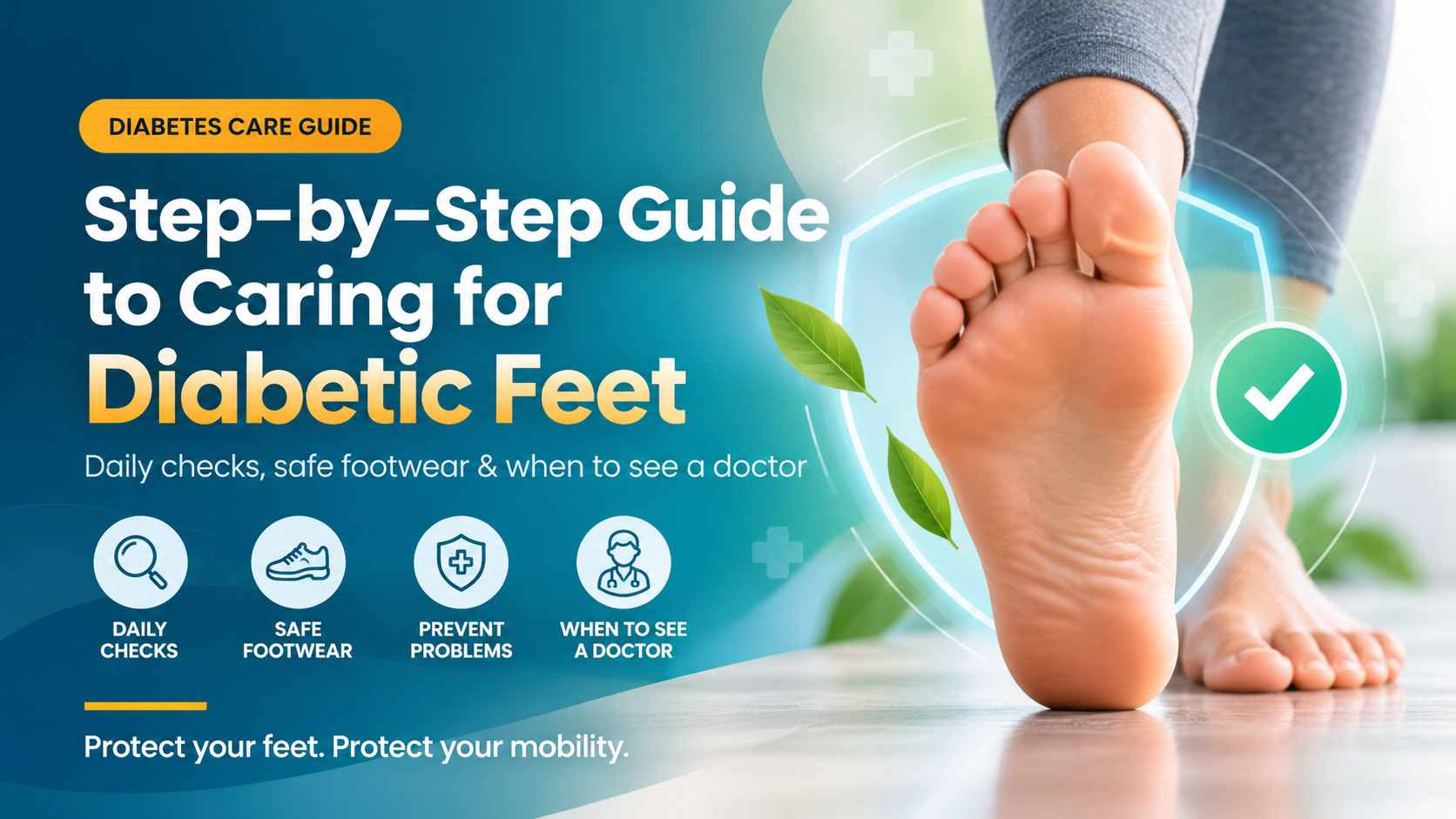
If you live with diabetes, your feet deserve a few minutes of attention every single day. High blood sugar over time can damage nerves and narrow blood vessels, which means a small blister or cut can go unnoticed and turn into a serious wound. The good news is that most diabetic foot complications are preventable with steady habits and regular checkups.
This step by step guide to caring for diabetic feet walks you through a complete routine: what to check, how to wash and moisturize, how to trim your nails safely, how to choose shoes and socks, and the warning signs that mean it is time to call your healthcare provider.
In This Guide
- Why foot care matters when you have diabetes
- Step 1: Inspect your feet every day
- Step 2: Wash your feet the right way
- Step 3: Dry carefully, especially between the toes
- Step 4: Moisturize (but not between the toes)
- Step 5: Trim and care for your nails safely
- Step 6: Wear the right socks and shoes
- Step 7: Protect your feet from heat, cold and injury
- Step 8: Keep your blood flowing and blood sugar in range
- Step 9: Get regular professional foot exams
- Warning signs: when to call your doctor
- Frequently asked questions
Why Foot Care Matters When You Have Diabetes
Two main problems put people with diabetes at higher risk of foot trouble:
- Diabetic neuropathy (nerve damage): The nerves in the feet are the longest in the body and are often affected first. When feeling is reduced, you may not notice a stone in your shoe, a blister, or a cut until it has become infected.
- Poor circulation (peripheral artery disease): Narrowed blood vessels reduce blood flow to the feet. Less blood means less oxygen and fewer healing cells, so even minor wounds heal slowly.
Together, these problems can lead to foot ulcers (open sores), infections and, in severe cases, amputation. Daily prevention is far easier, cheaper and safer than treating a serious wound later.

Step 1: Inspect Your Feet Every Day
Make a foot check part of your daily routine, ideally at the same time each day, such as before bed or after a shower. Look carefully at:
- The tops and sides of both feet
- The soles and heels (use an unbreakable mirror or your phone camera, or ask a family member to help)
- Between and under the toes
- Around and under the toenails
You are looking for cuts, scratches, blisters, bruises, redness, swelling, warm spots, cracked skin, calluses, corns, ingrown nails, or any change in color or shape. Run your hands over the skin to feel for lumps or hot areas too. If you have trouble seeing or reaching your feet, ask someone you trust to check them for you.
Step 2: Wash Your Feet the Right Way
- Wash your feet daily with lukewarm (not hot) water and a mild soap.
- Test the water first with your elbow or a bath thermometer. Reduced feeling in the feet can hide dangerous temperatures and cause burns without you noticing.
- Do not soak your feet for long periods. Soaking can dry out and weaken the skin.
- Wash gently with your hand or a soft cloth. Avoid harsh scrubbing or rough brushes.
Step 3: Dry Carefully, Especially Between the Toes
Pat your feet dry with a soft towel rather than rubbing. Pay special attention to the spaces between the toes. Leftover moisture there encourages fungal infections such as athlete’s foot, which can crack the skin and let bacteria in.
Step 4: Moisturize (But Not Between the Toes)
Dry skin cracks easily, and cracks are an open door for infection. Apply a thin layer of a fragrance-free moisturizer or a cream made for diabetic skin to the tops and soles of your feet, your heels and your ankles.
- Do not apply lotion between your toes. Extra moisture there can lead to fungal growth.
- Choose gentle, alcohol-free and fragrance-free products to reduce irritation.
- Look for creams with ingredients such as urea or glycerin if your skin is very dry. Ask your provider which one suits you.
Recommended product type: Diabetic foot cream or moisturizer. Check current prices and reviews here.
Step 5: Trim and Care for Your Nails Safely
- Trim toenails straight across after washing, when they are soft, and lightly smooth sharp edges with an emery board.
- Do not cut into the corners or round the nail, since this raises the risk of ingrown nails.
- If your nails are thick, discolored, ingrown or hard to reach, or if your vision is poor, ask a podiatrist (foot specialist) to trim them.
Never Treat Corns and Calluses Yourself
Do not cut corns or calluses with a razor or blade, and avoid over-the-counter chemical corn removers or medicated pads. These can injure or burn skin you cannot fully feel. A podiatrist can remove them safely.
Step 6: Wear the Right Socks and Shoes
Well-fitting footwear is one of the most powerful protections you have. Poorly fitting shoes are a very common cause of diabetic foot wounds.

How to Choose Diabetic Socks
- Seamless or flat-seam design to avoid rubbing and pressure points
- Non-binding tops that do not squeeze your calves or ankles and restrict blood flow
- Moisture-wicking fabrics (such as bamboo, merino wool or performance blends) to keep feet dry
- Light colors that make it easier to notice any drainage or blood
- Change socks daily, and more often if your feet sweat or the socks get damp
Recommended product type: Seamless, non-binding diabetic socks. See top-rated options here.
How to Choose Safe Shoes
- Get measured and shop in the afternoon, when feet are slightly swollen, and have both feet measured since sizes can differ.
- Choose a roomy toe box with a firm heel counter and good cushioning and support.
- Avoid high heels, pointed toes, flip-flops, thong sandals and shoes that rub or pinch.
- Break in new shoes slowly, wearing them for an hour or two at a time at first and checking your feet afterward.
- Check inside every shoe before putting it on for stones, rough seams or torn lining.
- Ask your provider about therapeutic or custom diabetic shoes and insoles if you have deformities, nerve damage or a history of foot sores. Some insurance plans may help cover them.
Recommended product type: Extra-depth diabetic shoes and cushioned insoles. Compare diabetic shoes here.
Never go barefoot, not even at home, on the beach or on the way to the bathroom at night. Wear protective slippers or house shoes with a closed toe and a sturdy sole.
Step 7: Protect Your Feet From Heat, Cold and Injury
- Do not use heating pads, electric blankets, hot water bottles or foot warmers on your feet. If you have lost sensation, you can burn yourself without feeling it.
- Avoid hot sand, pavement and tiles in summer.
- In cold weather, wear warm, dry, loose socks and insulated shoes, and avoid sitting too close to heaters or fireplaces.
- Apply sunscreen to the tops of your feet if they are exposed to the sun.
- Treat even small cuts promptly: wash with mild soap and water, cover with a clean dry dressing, and watch closely over the next few days.
Step 8: Keep Your Blood Flowing and Blood Sugar in Range
Daily foot care works best alongside good overall diabetes management, because steady blood sugar helps protect both nerves and blood vessels.
- Stay active. Walking and other doctor-approved exercise improve circulation. Always wear proper shoes and check your feet afterward.
- Improve circulation at rest. Put your feet up when sitting and wiggle your toes and move your ankles several times a day. Avoid crossing your legs for long periods.
- Do not smoke. Smoking narrows blood vessels and significantly reduces blood flow to the feet. Ask your provider for help quitting if you need it.
- Follow your treatment plan, including monitoring blood sugar and taking medication as prescribed, and keep up with your A1C checks.
Step 9: Get Regular Professional Foot Exams
Home care is essential, but it cannot replace professional checkups. Health organizations such as the American Diabetes Association and the CDC recommend that:
- You have a comprehensive foot exam at least once a year, including testing for sensation and circulation. You may need exams more often if you have nerve damage, poor circulation, foot deformities or a past foot ulcer.
- You ask your healthcare provider to look at your feet at every visit. Take off your shoes and socks as soon as you enter the exam room.
- You see a podiatrist if you have calluses, thick nails, deformities, or trouble finding shoes that fit.
Warning Signs: When to Call Your Doctor
Do not wait and hope a foot problem will go away on its own. Contact your healthcare provider promptly if you notice:

- A cut, blister or sore that does not start to heal within a few days
- Redness, swelling or warmth in one area, or a foot that looks swollen or changed in shape
- Pus, drainage, or a bad smell from a wound
- New or worsening numbness, tingling, burning or pain
- An ingrown toenail, or a corn or callus with bleeding or dark discoloration
- Skin that turns pale, blue, black or unusually cold
Seek urgent medical care if you have a foot wound together with fever or chills, spreading redness, or if a foot suddenly becomes red, hot and swollen. These can be signs of a serious infection or other emergency.
Quick Daily Foot Care Checklist
- ☐ Inspect both feet, including soles and between toes
- ☐ Wash with lukewarm water and mild soap (test the temperature first)
- ☐ Dry thoroughly, especially between the toes
- ☐ Moisturize tops and soles, not between the toes
- ☐ Put on clean, dry, seamless socks
- ☐ Check inside shoes before putting them on
- ☐ Never walk barefoot
Frequently Asked Questions
How often should I check my feet if I have diabetes?
Check your feet every day. Daily inspection helps you catch small problems early, before they become serious.
Is it safe to soak my feet in warm water?
Long foot soaks are not recommended, since they can dry out and soften the skin. Wash briefly in lukewarm water, check the temperature with your elbow first, and dry well.
Can I cut my own toenails?
Many people can, if they have good vision, feeling and flexibility. Cut straight across and file sharp edges. If your nails are thick, ingrown, fungal or hard to reach, have a podiatrist do it.
Are diabetic socks really necessary?
They are not mandatory for everyone, but seamless, non-binding, moisture-wicking socks reduce friction, pressure and dampness, which can help protect sensitive feet, especially if you have neuropathy or poor circulation.
What type of moisturizer is best for diabetic feet?
Choose a gentle, fragrance-free cream and apply it to the tops and soles of your feet, but not between your toes. Your provider or podiatrist can recommend products with ingredients like urea for very dry skin.
Can diabetic foot problems be prevented?
Yes, most serious complications are preventable. Daily foot checks, proper footwear, good blood sugar control, not smoking and regular professional exams greatly reduce your risk.
Final Thoughts
Caring for diabetic feet does not need to be complicated or time-consuming. Check your feet daily, wash and dry them gently, moisturize the right areas, protect them with proper socks and shoes, and see your healthcare team regularly. These small steps, repeated every day, can help you stay active, independent and ulcer-free.
If you found this guide useful, share it with a friend or family member who has diabetes, and consider the recommended product types above to make your daily routine easier and safer.
Medical disclaimer: This article is for general information only and is not medical advice, diagnosis or treatment. Always talk to your doctor, endocrinologist or podiatrist about your own foot health and before changing your care routine. If you think you have a medical emergency, contact your local emergency services immediately.
Sources and further reading: American Diabetes Association (Standards of Care in Diabetes); Centers for Disease Control and Prevention (Diabetes and Your Feet).