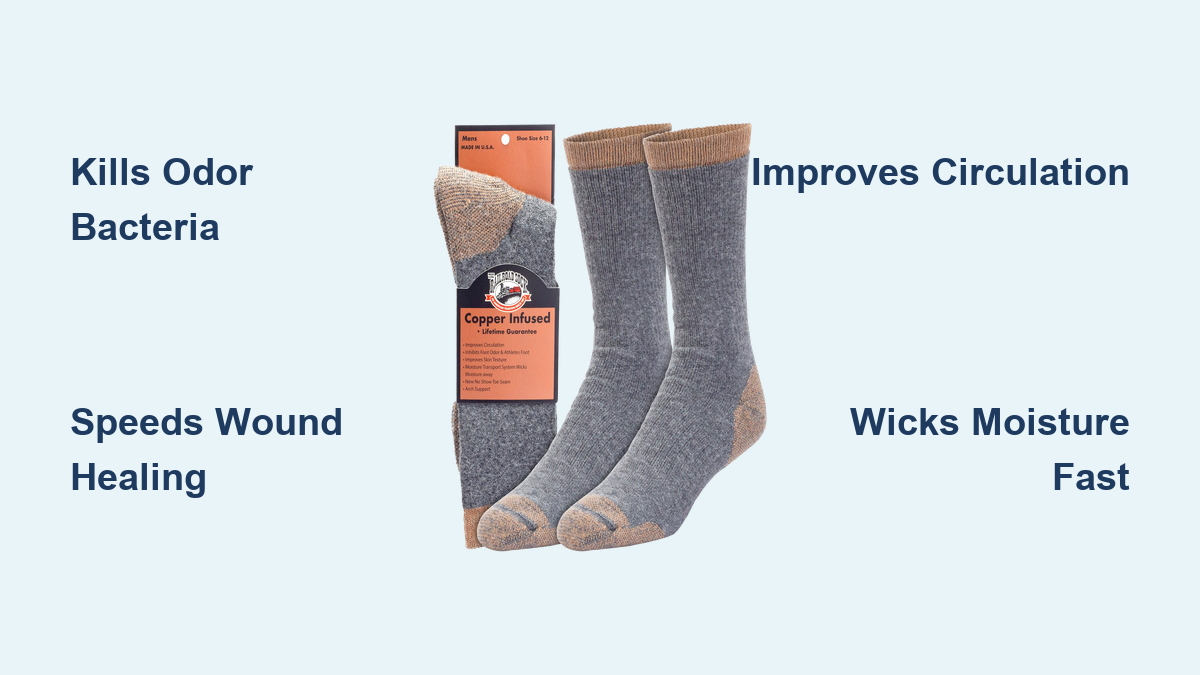
If your feet are constantly battling odor, moisture, or irritation—especially after long days on your feet or intense workouts—copper infused fabric in socks might be the upgrade you’ve been missing. Combining ancient healing wisdom with cutting-edge textile science, copper-infused socks deliver real, measurable benefits that go far beyond basic comfort. From killing odor-causing bacteria on contact to supporting circulation and wound healing, these high-performance socks are gaining popularity among athletes, diabetics, travelers, and anyone serious about foot health.
Backed by EPA recognition and clinical studies, copper’s antimicrobial power is not marketing hype—it’s proven biology. When woven into sock fibers, copper ions remain active through repeated wear and washing, offering continuous protection. This article breaks down exactly how copper-infused socks work, who benefits most, and what to look for when choosing a quality pair—all based on scientific evidence and real-world results.
Antimicrobial Action Explained
Copper kills microbes on contact—a phenomenon known as contact killing. Unlike chemical treatments that wear off, copper integrated into fabric delivers sustained protection by disrupting pathogens at the cellular level.
How Copper Destroys Microbes
Copper attacks microorganisms through three simultaneous mechanisms:
– Breaks cell walls: Copper ions rupture bacterial and fungal membranes.
– Generates free radicals: Reactive oxygen species (ROS) destroy proteins and enzymes inside cells.
– Damages DNA/RNA: Prevents replication, ensuring microbes can’t survive or develop resistance.
This multi-pronged approach makes it nearly impossible for bacteria or fungi to adapt—unlike antibiotics, where resistance is a growing concern.
Targets Common Foot Pathogens
Copper-infused fabric has been shown to eliminate:
– Trichophyton – the fungus behind athlete’s foot
– Staphylococcus aureus – a frequent cause of skin infections
– Brevibacterium – responsible for strong foot odor
Even in dirty, sweaty conditions, copper remains effective, making it ideal for daily wear and athletic use.
Odor Control That Lasts
Foot odor isn’t just embarrassing—it’s a sign of bacterial overgrowth. Copper socks tackle the root cause, not just the symptom.
Eliminates Smell at the Source
Unlike perfumed insoles or deodorants that mask odor, copper destroys the bacteria that break down sweat into smelly compounds. Users report noticeably fresher feet, even after extended wear.
Clinical Insight: A study found participants wearing copper socks experienced 40% less odor intensity compared to cotton socks after 90 minutes of exercise.
Reduces Washing Frequency
Thanks to their self-sanitizing properties, copper socks stay hygienic longer between washes. While regular laundering is still recommended, they resist microbial buildup better than standard fabrics.
Pro Tip: Avoid fabric softeners—they create a barrier that reduces copper-to-skin contact and diminishes antimicrobial effectiveness.
Wound Healing and Skin Health

Copper plays a vital biological role in tissue repair, making these socks especially valuable for people with slow-healing skin conditions.
Boosts Collagen Production
Copper is a necessary cofactor for lysyl oxidase, the enzyme that cross-links collagen and elastin fibers. This strengthens skin structure and improves elasticity—critical for preventing cracks and fissures, especially in dry or diabetic feet.
Accelerates Tissue Regeneration
In clinical trials, patients with athlete’s foot symptoms (itching, scaling, blisters) showed visible improvement within 9 days of wearing copper-infused socks. Enhanced angiogenesis—the formation of new blood vessels—helps deliver oxygen and nutrients to damaged tissue, speeding recovery.
Note: Moisture enhances ion release, so copper’s healing effects are strongest when feet are slightly damp (not soaked).
Moisture-Wicking and Comfort
Dry feet are healthy feet. Copper socks are typically blended with performance fibers to manage sweat and maintain comfort.
Fast-Drying Fabric Technology
A study using TransDRY® technology showed copper-infused socks:
– Evaporated moisture 50% faster than cotton
– Reduced sweat-related discomfort by 40%
– Kept feet cooler during high-intensity activity
The combination of moisture-wicking synthetics (like nylon and polyester) with copper creates an environment hostile to fungi and bacteria—without sacrificing breathability.
Prevents Maceration
Prolonged dampness softens skin, leading to maceration—a risk factor for infection and ulcers. Copper socks help maintain an optimal moisture balance, protecting vulnerable skin, especially in diabetics and older adults.
Improves Circulation with Compression
Many copper socks include graduated compression, offering dual benefits: better blood flow and antimicrobial protection.
How Compression Works

Graduated compression applies gentle pressure—tightest at the ankle, decreasing up the calf. This helps:
– Push blood back toward the heart
– Reduce swelling and leg fatigue
– Prevent blood pooling and DVT
| Compression Level | Use Case |
|---|---|
| 8–15 mmHg | Daily wear, mild swelling |
| 15–20 mmHg | Athletes, travelers, early varicose veins |
| 20–30 mmHg | Medical support, pronounced edema |
Copper Enhances Vascular Health
Copper supports nitric oxide production, a key molecule for blood vessel dilation. While socks alone won’t cure circulatory disease, they contribute to better microcirculation in the feet—especially when combined with compression.
Warning: Do not wear high-compression socks (>30 mmHg) without medical advice. Remove immediately if you experience numbness or discoloration.
Reduces Inflammation and Joint Pain
Copper’s anti-inflammatory effects are subtle but meaningful—particularly for those with arthritis or exercise-induced soreness.
Neutralizes Free Radicals
Copper is a cofactor for superoxide dismutase (SOD), one of the body’s most powerful antioxidant enzymes. SOD neutralizes free radicals that drive inflammation in joints and soft tissues.
May Ease Foot and Ankle Discomfort
While clinical trials show mixed results, many users report reduced stiffness and pain, especially when wearing copper socks overnight or post-workout. Though placebo may play a role, the low risk makes them a safe complementary option.
Reality Check: Copper socks are not a cure for arthritis, but they may help manage symptoms alongside standard treatment.
Ideal for Diabetic Foot Care

For people with diabetes, foot health isn’t just about comfort—it’s a matter of prevention and safety.
Prevents Infections
Neuropathy and poor circulation increase infection risk. Copper socks reduce microbial load, lowering the chance of:
– Foot ulcers
– Fungal nail infections
– Secondary bacterial complications
Promotes Healing
Enhanced collagen synthesis and angiogenesis support faster recovery from minor cuts or blisters—critical when healing is naturally slower.
Designed for Safety
Quality diabetic copper socks feature:
– Seamless toes to prevent friction
– Non-binding tops to avoid restricting blood flow
– Extra cushioning in high-pressure zones
Expert Advice: Use copper socks as part of a full foot care routine. See a podiatrist regularly and do not rely on them as a sole medical intervention.
Speeds Athletic Recovery
Athletes push their bodies hard—copper-infused compression socks help them bounce back faster.
Reduces Muscle Soreness
Wearing copper socks post-exercise may:
– Improve circulation and lactate clearance
– Decrease delayed onset muscle soreness (DOMS)
– Support recovery during multi-day events
Keeps Gear Fresh
Copper’s odor control is a game-changer for athletes who train daily or travel frequently. No more smelly gear after back-to-back workouts.
Usage Tip: Some athletes wear copper socks overnight after intense training to maximize recovery benefits—safe with low-to-moderate compression (≤20 mmHg).
Protects During Travel
Long flights or car rides increase risks like swelling, stiffness, and DVT. Copper compression socks offer a smart defense.
Prevents Swelling and Clots
Sitting for hours slows circulation. Compression socks counteract this by:
– Supporting venous return
– Reducing fluid buildup (edema)
– Lowering DVT risk—especially in high-risk individuals
Stays Hygienic in Tight Spaces
Shared planes and hotels harbor germs. Copper’s antimicrobial action helps keep feet clean and infection-free, even when hygiene access is limited.
Travel Tip: Wear copper compression socks during flights longer than 4 hours. Combine with walking breaks for best results.
Supports Post-Surgery and Injury Recovery
After foot trauma or surgery, keeping the area clean and supported is crucial.
Prevents Secondary Infections
Limited mobility increases infection risk. Copper socks provide continuous protection, especially when regular cleaning is difficult.
Aids Tissue Repair
By promoting collagen formation and reducing inflammation, copper supports healing after:
– Skin grafts
– Ulcers
– Fractures
– Amputations
Use under medical guidance, especially if open wounds are present.
Built to Last: Durability and Care
Copper socks vary in longevity—how they’re made and how you care for them matters.
Manufacturing Methods Matter

| Method | Lifespan | Best For |
|---|---|---|
| Fiber Coating | 15–20 washes | Budget buyers |
| Fiber Embedding | 50–100 washes | Most users |
| Chemical Bonding | 100+ washes | Premium performance |
Look for copper oxide (CuO)—the most stable and widely used form.
Maximize Longevity With Proper Care
- Wash in cold water to preserve copper bonds
- Use gentle, pH-neutral detergent
- Skip fabric softeners—they block copper’s action
- Air dry or use low heat
- Rotate pairs to reduce wear
Replace compression socks every 3–6 months with regular use, as elasticity degrades over time.
Spotting Quality vs. Marketing Hype
Not all copper socks deliver on their promises. Know what to look for.
Evidence-Based Claims
✅ Proven: Kills bacteria/fungi, reduces odor, supports wound healing
✅ Likely: Improves circulation (with compression), reduces inflammation
❌ Unproven: “Detoxifies the body,” “cures arthritis,” “boosts immunity”
Red Flags to Avoid
- Vague claims like “supports wellness” with no data
- No mention of copper content or integration method
- Before-and-after photos without controls
- Compression socks without mmHg ratings
What to Demand
- Third-party testing for antimicrobial efficacy
- Clear copper form (e.g., CuO)
- Compression level listed in mmHg
- Seamless design for sensitive skin
Final Note: Copper-infused socks are more than a wellness trend—they’re a science-backed tool for healthier feet. Whether you’re an athlete, diabetic, frequent traveler, or just tired of smelly socks, they offer real benefits: odor control, infection prevention, faster recovery, and improved comfort. While not a substitute for medical treatment, they’re a low-risk, high-reward addition to your daily routine. Choose quality, follow care instructions, and let copper do the work—your feet will thank you.