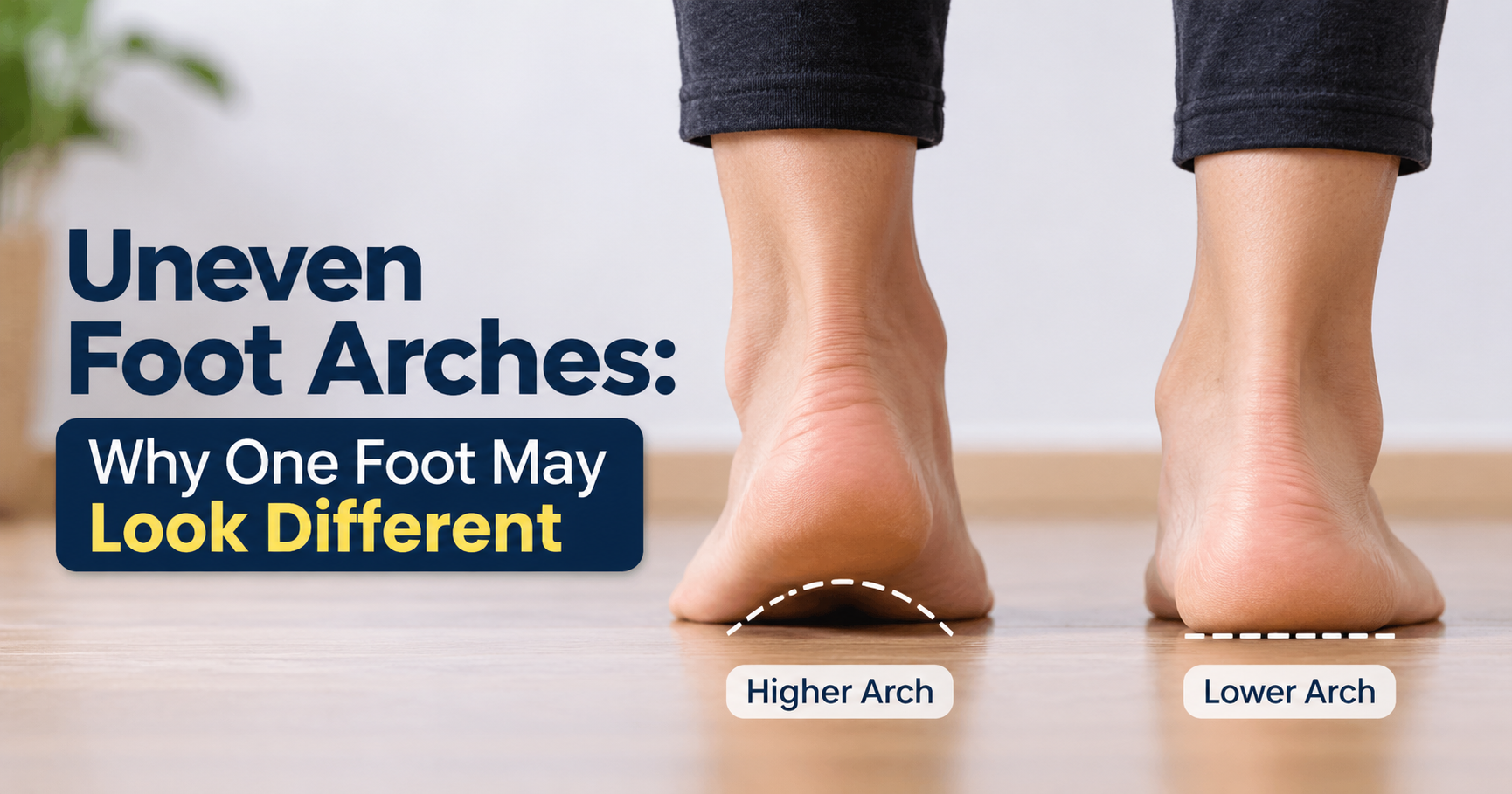
You slip off your shoes, look down, and notice something odd: one foot arch is higher than the other. Maybe the left foot looks almost flat while the right one has a clear, curved gap underneath. Maybe a friend, a shoe fitter or a physiotherapist pointed it out. Or maybe you only noticed because one side of your body started to ache after long walks.
The good news is that uneven arches are far more common than most people think. The human body is rarely perfectly symmetrical, and the feet are no exception. The less comfortable news is that, in some cases, a difference between the two arches is a sign that something else is going on, such as a tendon problem, an old injury, a leg length difference or a change in how you walk. This guide explains why it happens, how to check your own feet at home, when to get professional advice, and what you can do to feel more balanced and comfortable.
Quick Answer: Key Takeaways
- Mild arch differences between the two feet are common and often harmless.
- Typical causes include a leg length difference, an old injury, tendon weakness, posture or pelvic tilt, nerve or muscle problems, and everyday habits such as always favouring one leg.
- A simple wet footprint test and a side-view mirror check can show you how different your arches really are.
- Supportive shoes, well chosen insoles and foot strengthening exercises help many people feel better.
- A change that appears suddenly, or comes with pain, swelling, numbness or weakness, deserves a professional check.
Is It Normal for One Foot Arch to Be Higher Than the Other?
Yes, a small difference is normal. Most people have a dominant side, they put slightly more weight on one leg, and their bones, tendons and ligaments develop with tiny variations. As a result, it is common for one arch to look a little higher, flatter or more flexible than the other.
Where it becomes worth paying attention is when the difference is obvious, when it has appeared recently, or when it causes symptoms. An arch that has always been a bit different usually causes no trouble. An arch that has changed over a few months, or a single foot that has become noticeably flatter or more curved, is a different story and is worth investigating.
Understanding Foot Arches: The Basics
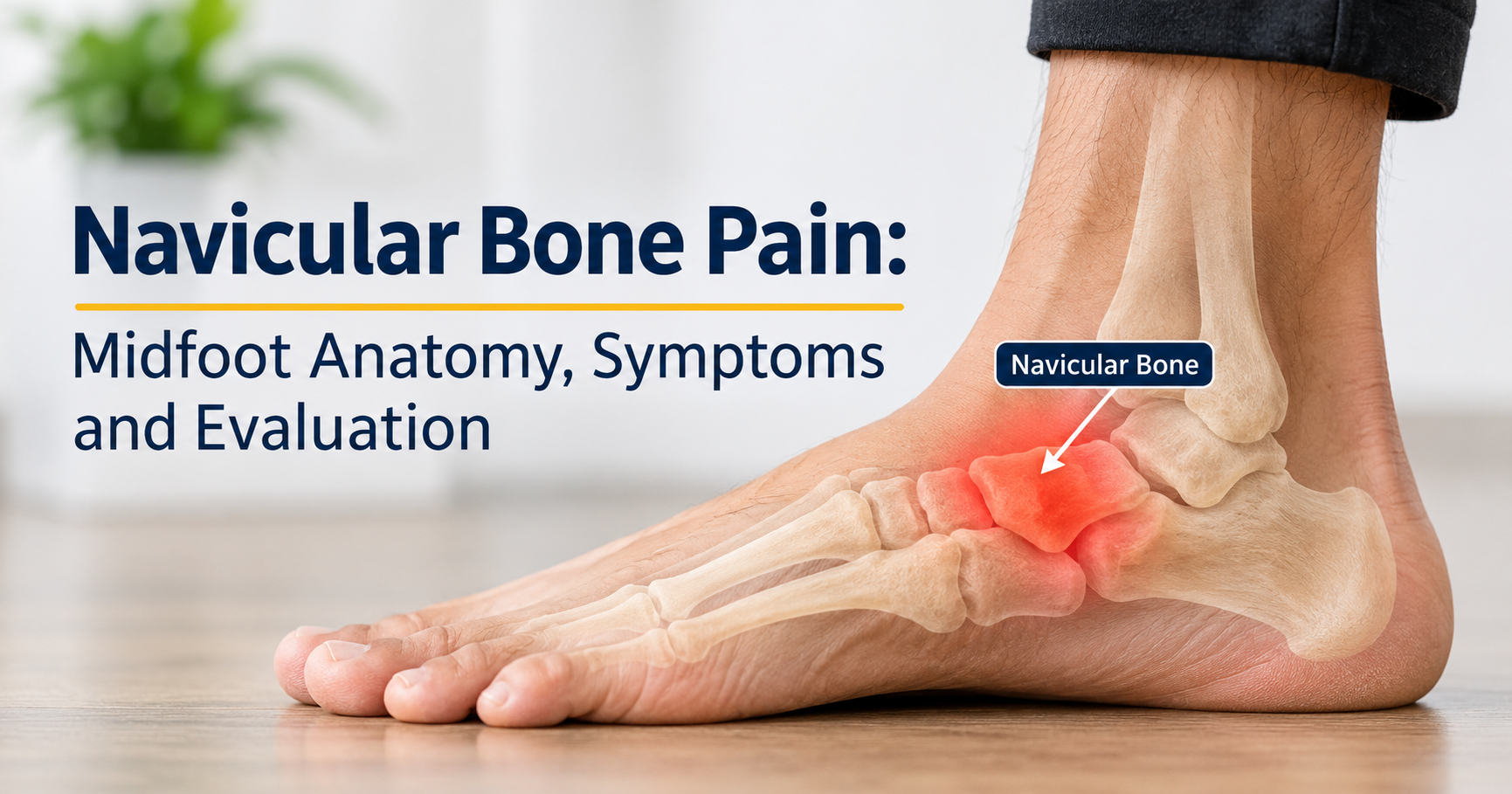
Your foot has three arches working together: the inner (medial) arch that most people mean when they say “arch”, the outer (lateral) arch and the front (transverse) arch across the ball of the foot. Together they act like a spring. They absorb shock when your heel lands, spread the load across the foot and then stiffen to push you forward.
The inner arch is held up by the shape of the bones, strong ligaments (especially the plantar fascia under the foot) and muscles and tendons, notably the posterior tibial tendon that runs behind the inside of your ankle. If any of these structures behave differently on one side, the arch height can change on that side.

The three main arch types
- Low or flat arch (pes planus): most of the sole touches the ground. The foot often rolls inward (overpronation), which can strain the inside of the ankle, the arch and sometimes the knee.
- Normal arch: a moderate curve that flattens a little under load and springs back when you lift the weight.
- High arch (pes cavus): a pronounced curve with less of the sole touching the ground. Pressure concentrates on the heel and the ball of the foot, and the foot can be stiffer and less able to absorb shock.
Some people have a normal arch on one side and a flat or high arch on the other. Others have two different abnormal arches. In every case the aim is the same: understand why, and keep both feet comfortable and well supported.
Common Causes of Uneven Arches

1. A leg length difference
If one leg is slightly longer than the other, the body adapts. The foot on the longer side often rolls inward more to “shorten” the leg, which tends to flatten that arch, while the foot on the shorter side may stay more rigid and look higher-arched. A small difference of a few millimetres is very common, and a clinician can measure it properly.
2. A past injury, fracture or surgery
Ankle sprains, fractures of the foot or ankle, ligament injuries and surgery can change the way the bones and soft tissues share the load. Even years later, the injured foot may sit lower or higher than the other, and you may have developed habits such as walking on the outside edge of that foot.
3. Tendon weakness or dysfunction
The posterior tibial tendon is the main supporter of the inner arch. When it becomes inflamed, stretched or weakened, the arch on that side can gradually collapse. This is one of the most frequent reasons an adult develops a flatter arch in one foot only. It is more common in people over 40, in people with excess body weight and in those who spend long hours on their feet.
4. Pelvic tilt, posture or scoliosis
The feet are the foundation of the body, but they respond to everything above them. A tilted pelvis, a curved spine or tight hip muscles can load one leg more than the other, and the foot underneath adjusts. Sometimes the foot difference is the effect rather than the cause.
5. Nerve or muscle conditions
Weakness or imbalance in the small muscles of the foot and lower leg can pull the arch higher on one side. A high arch that appears in only one foot, particularly in an adult with no clear explanation, should be assessed by a doctor, because nerve, spinal or neuromuscular conditions are occasionally involved.
6. Habits, footwear and activity
Always standing on one leg, carrying a bag on the same shoulder, kicking a ball with the same foot, wearing shoes that are worn unevenly or exercising on a slanted surface can all nudge the feet in different directions over the years.
Other possible contributors
- Inherited foot shape: arch shape often runs in families.
- Tarsal coalition: a condition present from birth in which foot bones are joined together, usually causing a stiff, flat foot that shows up in the teenage years.
- Arthritis: joint changes in the midfoot or ankle can alter arch height.
- Pregnancy and weight changes: ligaments loosen and loads increase, and the change is not always equal on both sides.
- Diabetes-related nerve damage: in rare cases it can lead to arch collapse, which needs prompt medical attention.
Signs and Symptoms That Often Come With Uneven Arches
Many people with different arches feel nothing at all. Others notice one or more of the following, usually on the side with the more extreme arch:
- Aching or burning in the arch, heel or ball of the foot after standing or walking
- Pain along the inside of the ankle (common with a collapsing arch)
- Pain on the outside of the foot or ankle (more common with a high arch)
- Shoes wearing out unevenly, with one shoe leaning inward or outward
- Frequent ankle rolling, particularly with high arches
- Calluses in different places on the two feet
- Knee, hip or lower back discomfort on one side
- One foot feeling tired sooner than the other
How to Check Your Arches at Home
You do not need special equipment to get a useful picture of your arches. Try these simple checks, and repeat them on both feet so you can compare.

Test 1: The wet footprint test
- Wet the sole of one foot, then step onto a dark piece of paper, a flat paper bag or a dry concrete surface.
- Stand naturally with your weight evenly spread, then step off carefully.
- Look at the print. A band connecting the heel and the ball that is roughly half the width of the foot suggests a normal arch. A nearly full print suggests a flat arch. A print with a very thin band or none at all suggests a high arch.
- Repeat with the other foot and compare the two prints side by side.
Test 2: The side-view mirror check
Stand barefoot in front of a mirror, or ask someone to take a photo of each foot from the inside while you stand relaxed with your weight on both feet. Compare the height of the gap between the floor and the inner edge of each foot. Pay attention to whether the heel tilts in or out when you look from behind.
Test 3: The tiptoe test
Stand on tiptoe on both feet. In a flexible flat foot, an arch usually appears when you rise up. If a foot stays flat even on tiptoe, the foot may be rigid, and that is worth discussing with a professional.
Test 4: The shoe wear check
Look at the soles and heels of your most used pair of shoes. Heavy wear on the inner edge often goes with a lower arch. Heavy wear on the outer edge often goes with a higher arch. If your two shoes wear differently, that is useful information.
When to See a Doctor or Podiatrist
Book a professional assessment if you notice any of the following:
- A sudden change in one arch, or a foot that has become noticeably flatter or higher over weeks or months
- Persistent pain in the foot, ankle, knee, hip or back that does not settle with rest
- Swelling, warmth or redness in the foot, especially if you have diabetes or reduced sensation
- Numbness, tingling, weakness, or the foot dragging or slapping the ground when you walk
- Frequent ankle sprains or a sense that the ankle gives way
- A stiff, flat foot in a child or teenager
- A high arch that appears in one foot only, with no clear reason
How Professionals Evaluate Uneven Arches
A podiatrist, orthopaedic specialist or physiotherapist will usually start by asking about your history, injuries, work, sport and footwear. Then they will typically:
- Examine your feet standing, sitting and walking
- Check the flexibility of the arch and the movement of the ankle and big toe joint
- Test the strength of the muscles and tendons, including the posterior tibial tendon
- Measure leg length and look at your hips, pelvis and posture
- Assess your nerves and reflexes if a neurological cause is suspected
- Recommend weight-bearing X-rays, ultrasound, MRI or gait analysis when more detail is needed
In clinic, a measurement called the navicular drop can show how far the inner arch lowers when you go from sitting to standing. A large drop is often considered a sign of excessive flattening, and comparing both feet helps show how much the two sides differ.
How to Manage One Arch Higher Than the Other
Treatment depends on the cause. The principle behind most approaches is the same: give each foot the right amount of support, build strength where it is lacking, and reduce the strain that comes from uneven loading.

Step 1: Start with the right shoes
Good shoes are the foundation. Look for a firm heel counter that does not collapse when you squeeze it, a midsole that twists only a little and bends at the ball of the foot rather than the middle, enough room in the toe box, and a secure fit. A flat or low-arched foot usually benefits from shoes with more stability, while a high-arched foot generally likes cushioning and a flexible, accommodating upper. Replace shoes that are visibly worn or leaning to one side.
Step 2: Use insoles and orthotics wisely
Insoles can redistribute pressure and make each arch feel supported. When the arches are different, think about what each foot needs:
- Lower arch side: a structured insole with a firm, contoured arch and a deep heel cup can help guide the foot and ease strain on the inner arch.
- Higher arch side: a cushioned insole with full contact under the arch spreads pressure over a larger area instead of leaving the arch unsupported.
- Break them in slowly: wear new insoles for an hour or two at first, then build up over one to two weeks.
- Do not over-correct: too much arch height can create new pressure points. Choose moderate support and adjust gradually.
If the difference between your feet is large, or you have pain, ask a podiatrist about custom orthotics made from a scan or cast of each foot. Custom devices can be built differently for the left and right foot, which matters a great deal when the arches do not match.
Step 3: Address leg length differences if they are confirmed
If a professional has measured a leg length difference, a heel lift or a built-up insole in the shorter side may help even out your posture. It should be fitted according to the measurement, because adding too much height can cause problems of its own.
Step 4: Strengthen your feet and lower legs
Strong, flexible feet and calves give your arches better natural support. Aim for these exercises three or four times a week, stopping if anything hurts sharply.
- Short foot exercise: sitting or standing, draw the ball of your foot towards your heel without curling your toes, so the arch lifts slightly. Hold 5 to 10 seconds, repeat 10 times, then do two or three rounds. Do both feet, but spend extra time on the weaker one.
- Towel curls: place a small towel flat on the floor and scrunch it towards you using only your toes. Do 2 or 3 sets of 10 to 15 on each foot.
- Calf raises: rise slowly onto your toes, hold for a second, then lower slowly. Start with 3 sets of 10 and build up. Try single-leg versions as you get stronger.
- Toe spreading: spread your toes as wide as possible without gripping the floor, hold for 5 seconds, repeat 10 times.
- Single-leg balance: stand on one foot for 30 to 60 seconds, keeping the arch gently lifted. Compare the two sides: the weaker side often wobbles more.
- Marble pick-up: pick up small objects with your toes and drop them in a bowl to wake up the small foot muscles.
Step 5: Stretch and release tight tissues
Tight calves pull on the heel and change how the arch behaves, and they are often tighter on the side with the higher arch. Stretch each calf for 30 seconds, three times, with the knee straight and again with the knee slightly bent. Rolling the sole of the foot over a small ball for a minute or two can ease a tense plantar fascia, particularly on a high-arched foot.
Step 6: Manage activity and body weight
Extra body weight increases the load on the arches, and a sudden jump in walking or running volume can overload the weaker side. Increase activity gradually, vary your surfaces, and alternate between two pairs of shoes if you can.
Step 7: Consider physiotherapy or further treatment
A physiotherapist can design a programme to correct strength and movement imbalances through the foot, hip and core. If a tendon is damaged, treatment may include a supportive brace or boot, taping, targeted exercises or, in a smaller number of cases, injections or surgery. Your clinician will guide you based on what they find.
What to Look for When Choosing Support Products
If you plan to buy insoles or other foot support products, this table summarises what usually fits each situation. It is a general guide, not a replacement for professional advice.
| Foot situation | What to look for | Why it helps |
|---|---|---|
| Lower or collapsing arch | Firm, contoured arch support, deep heel cup, stable shoes | Controls inward rolling and supports the inner arch |
| Higher or rigid arch | Cushioned, full-contact insole, flexible shoes with shock absorption | Spreads pressure across the sole and reduces load on heel and ball |
| Leg length difference | Measured heel lift or built-up insole on the short side | Levels the pelvis and balances the load on both feet |
| Tired, achy arches | Cushioned insoles, supportive socks, calf stretching tools | Eases fatigue after long days on your feet |
| Large difference or pain | Custom orthotics made separately for the left and right foot | Matches the exact shape and needs of each foot |
Common Mistakes to Avoid
- Using the highest, firmest arch support on both feet. The foot with the high arch may become uncomfortable if forced into extra height.
- Ignoring one-sided pain. If one foot hurts and the other does not, there is often a reason worth finding.
- Going barefoot on hard floors all day when your arches are painful or collapsing.
- Wearing worn-out shoes because they feel comfortable. Worn shoes often make an imbalance worse.
- Skipping the exercises. Insoles help, but strength is what supports your arches over the long term.
- Using a heel lift without a measurement. Guessing the height can cause new problems in the hips and back.
- Assuming it will fix itself. Mild differences may stay stable, but progressive changes usually need attention.
Daily Habits for More Balanced Feet
- Spread your weight evenly when standing, rather than resting on one leg.
- Carry bags on alternating sides, or use a backpack with both straps.
- Choose supportive shoes even for short errands, especially on hard floors.
- Do a two-minute foot routine each day: short foot, toe spreading and a calf stretch.
- Check your shoes every few weeks for uneven wear.
- Take breaks from long periods of standing, and sit with your feet flat under you.
- Photograph your arches every few months so you can notice any gradual change.
Frequently Asked Questions
Is it bad if one foot arch is higher than the other?
Not necessarily. Small differences are common and often harmless. It becomes a concern when the difference is large, has appeared recently or comes with pain, swelling, numbness or weakness.
Can uneven arches cause knee, hip or back pain?
They can contribute. Because the feet are the base of the body, differences in how each foot absorbs and spreads load may affect the knee, hip and lower back on that side. Many other factors also play a role, so a full assessment is the best way to find the main cause.
Can I fix a flat arch or a high arch with exercises alone?
Exercises can improve the strength and control of the foot and lower leg, and many people feel better and walk more efficiently as a result. They may not change the bony shape of the foot, so insoles and good footwear are often used alongside them.
Should I wear different insoles in each shoe?
Sometimes. If the needs of the two feet are quite different, a podiatrist may recommend different support on each side. For a mild difference, many people do well with the same moderate insole in both shoes. Get advice if you are unsure.
Can children have one arch higher than the other?
Children’s arches are still developing, and flexible flat feet are common. If a child complains of foot pain, has a very stiff foot, or the difference looks pronounced, have a doctor or podiatrist check it.
How long does it take to notice improvement?
With suitable shoes and insoles you may feel more comfortable within days to a couple of weeks. Strengthening exercises usually take four to eight weeks of regular practice before you notice more lasting changes.
Final Thoughts
Having one foot arch higher than the other is more common than you might expect, and in many people it is simply part of being asymmetrical. Still, it is worth taking seriously when the difference is new, growing or painful. Start with a simple check at home, wear supportive footwear, strengthen your feet and calves, and choose insoles that suit each foot rather than assuming both need the same thing. If something does not feel right, a podiatrist or doctor can find the cause and build a plan that fits you.
Your feet carry you through every step of the day. Giving both of them the attention they need, even when they are not identical, is one of the simplest ways to protect your comfort and mobility for years to come.