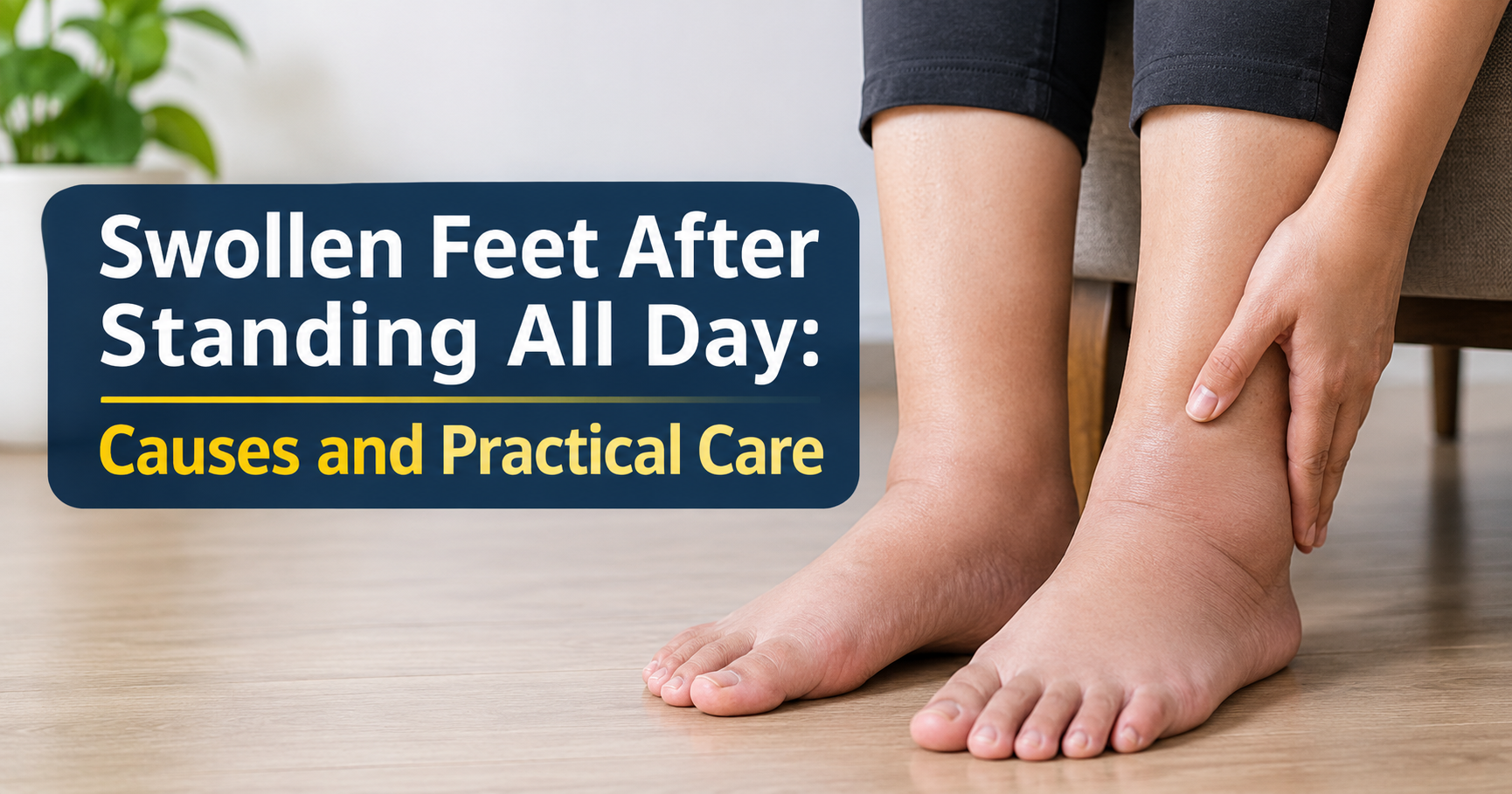
You finish a long shift on your feet, take off your shoes, and notice your feet look puffy, feel tight and ache with every step. If this sounds familiar, you are far from alone. Swollen feet after standing all day is one of the most common complaints among nurses, teachers, retail workers, cooks, factory workers, hairdressers and anyone else who spends hours upright.
The good news is that in most cases this swelling is temporary and responds well to simple habits. This guide explains exactly why it happens, which relief methods actually work, how to prevent it during your workday, and which warning signs mean you should speak with a healthcare professional.
Quick Answer: Why Do Feet Swell After Standing All Day?
Your feet swell because gravity pulls blood and fluid toward your lower legs, and standing still prevents your calf muscles from pumping that fluid back up toward your heart. Over several hours, extra fluid builds up in the soft tissue of your feet and ankles. This is called dependent edema, and it usually improves with rest, movement and leg elevation.
What Is Happening Inside Your Legs?
Your circulatory system sends blood down to your feet through arteries, then returns it to the heart through veins. Because the return trip is uphill, your body relies on two helpers: one-way valves inside your veins and the squeezing action of your calf muscles, often called the “calf muscle pump.”
When you walk, your calves contract and push blood upward. When you stand still for hours, that pump hardly works. Blood pressure inside the leg veins rises, and fluid is forced out of the tiny blood vessels into the surrounding tissue. The result is swelling, heaviness and tightness.

Common Causes of Swollen Feet After Standing
1. Prolonged Standing or Sitting Without Movement
The most common cause is simply staying in one position too long. Static posture weakens circulation in the legs, whether you are standing at a counter or sitting at a desk.
2. Hot Weather and Warm Work Environments
Heat makes blood vessels expand, which makes it easier for fluid to leak into surrounding tissue. Kitchens, factories, outdoor jobs and summer days often make swelling noticeably worse.
3. High Salt Intake
Sodium makes your body hold on to water. A salty lunch followed by a long shift on your feet is a classic recipe for puffy ankles by evening.
4. Dehydration
It may sound surprising, but not drinking enough water can encourage your body to retain fluid. Steady hydration helps your body balance its fluids more effectively.
5. Unsupportive or Tight Footwear
Shoes that are too narrow, too flat, or lack cushioning force your feet to work harder and may restrict circulation. Hard floors such as concrete or tile add extra stress.
6. Excess Body Weight
Extra weight increases pressure on leg veins and makes it harder for fluid to return to the heart.
7. Pregnancy
Pregnancy increases the total volume of fluid in the body, and the growing uterus puts pressure on the large veins in the pelvis. Mild foot swelling is common, but sudden or severe swelling should always be checked by a doctor.
8. Hormonal Changes
Fluctuations during the menstrual cycle can cause temporary water retention, including in the feet and ankles.
9. Underlying Health Conditions
Persistent swelling can sometimes be linked to chronic venous insufficiency, heart, kidney or liver problems, or certain medications. If your swelling does not follow the normal pattern described in this article, medical advice is important.
How to Reduce Swollen Feet After a Long Day
These practical steps are widely recommended for ordinary, temporary swelling. Many people get the best results by combining several of them.

Elevate Your Feet
Lie down and rest your feet on pillows so they sit above heart level for 15 to 20 minutes. Gravity now works in your favor, helping fluid drain back toward the body. This is often the fastest and simplest remedy.
Do Ankle Pumps and Gentle Movement
While elevated, point your toes away from you and then pull them toward you slowly, 15 to 20 times. You can also rotate your ankles in circles. These movements activate the calf muscles and encourage circulation.
Wear Graduated Compression Socks
Graduated compression socks apply the most pressure at the ankle and gradually less toward the knee, helping veins push blood upward. Many people who stand for work find them helpful when worn during the shift. Choose the correct size and compression level, and put them on in the morning before swelling starts. If you have circulation problems or diabetes, ask a healthcare professional before using them.
Drink Enough Water and Watch Your Salt
Sip water through the day and go easy on processed foods, instant noodles, canned soups and salty snacks. Foods rich in potassium, such as bananas, potatoes and leafy greens, may help support healthy fluid balance.
Try a Cool Foot Soak
A soak in cool water for 10 to 15 minutes can feel soothing and may ease puffiness. Keep it comfortably cool rather than icy, and dry your feet well afterward.
Give Your Feet a Gentle Massage
Using light pressure, stroke from your toes toward your ankles and up the calf. Massage in this upward direction supports fluid movement. Stop if you feel pain.
Choose Supportive Footwear and Insoles
Shoes with adequate toe room, a stable heel and good cushioning reduce strain on your feet. Cushioned insoles or anti-fatigue insoles can absorb shock on hard floors and make long shifts more comfortable. Try on shoes in the afternoon, when your feet are at their largest, for the most accurate fit.
How to Prevent Swelling While You Are at Work
- Keep moving: Shift your weight from foot to foot, walk a few steps, or rise onto your toes whenever you can.
- Do calf raises: Ten slow heel raises each hour wake up your calf muscle pump.
- Take micro-breaks: Even a two-minute sit with your feet raised on a stool helps.
- Use an anti-fatigue mat: A cushioned mat reduces pressure from hard floors.
- Avoid locking your knees: Keep them slightly soft to protect circulation.
- Dress for comfort: Avoid tight waistbands, tight socks with strong elastic bands and restrictive clothing around the legs.
- Stay cool: Use fans, ventilation or breathable footwear when possible.
A Simple Evening Routine for Tired, Swollen Feet
- Remove your shoes and socks as soon as you get home.
- Soak your feet in cool or lukewarm water for 10 minutes.
- Dry them thoroughly and massage upward from toes to ankles.
- Lie back and elevate your feet above heart level for 15 to 20 minutes.
- Do 20 ankle pumps and slow ankle circles.
- Drink a glass of water and keep dinner light on salt.
When Swollen Feet Are Not Normal: Warning Signs
Ordinary swelling from standing tends to affect both feet, builds up through the day and fades after a night of rest. Swelling that behaves differently deserves attention.

Seek medical advice promptly if you notice:
- Swelling in only one foot or one leg
- Sudden or severe swelling
- Pain, redness, warmth or tenderness in the calf
- Shortness of breath, chest pain or dizziness together with swelling
- Swelling that does not improve after rest and elevation
- Skin that looks shiny, stretched, or leaves a deep dent when pressed
- Swelling during pregnancy with headaches, vision changes or sudden puffiness of the face and hands
If you have difficulty breathing or chest pain, treat it as an emergency and get urgent medical help right away.
Frequently Asked Questions
Is it normal for feet to swell after standing all day?
Yes. Mild swelling in both feet by the end of a long day on your feet is very common and usually harmless, especially if it goes down after rest.
How long does it take for swelling to go down?
Often within a few hours of elevating your feet, or overnight after a good rest. If swelling lasts for days, speak with a healthcare professional.
Do compression socks really help?
For many people who stand or sit for long periods, graduated compression socks help reduce end-of-day swelling and leg heaviness. Proper fit is important.
Should I use heat or cold for swollen feet?
Cool water is generally more comfortable for swelling after long standing, since heat can encourage blood vessels to widen. Avoid extreme temperatures, particularly if you have reduced sensation in your feet.
Can drinking more water really reduce swelling?
Staying well hydrated can help your body regulate fluid balance, especially when combined with lower salt intake.
Which shoes are best if I stand all day?
Look for shoes with a roomy toe box, firm heel support, shock-absorbing cushioning and a slip-resistant sole. Replace worn-out shoes regularly, since cushioning breaks down over time.
Final Thoughts
Swollen feet after standing all day are usually a sign that your circulation needs a little help, not a sign of something serious. By moving more during your shift, supporting your feet with the right shoes, insoles and compression, managing salt and hydration, and elevating your feet at night, you can make a real difference in how your feet feel by the end of the day.
Pay attention to your body, and if swelling is one-sided, sudden, painful or persistent, do not wait: get it checked.
Disclaimer: This article is for general educational purposes only and does not replace advice from a qualified healthcare professional. If you have a medical condition or are concerned about your symptoms, please consult your doctor.