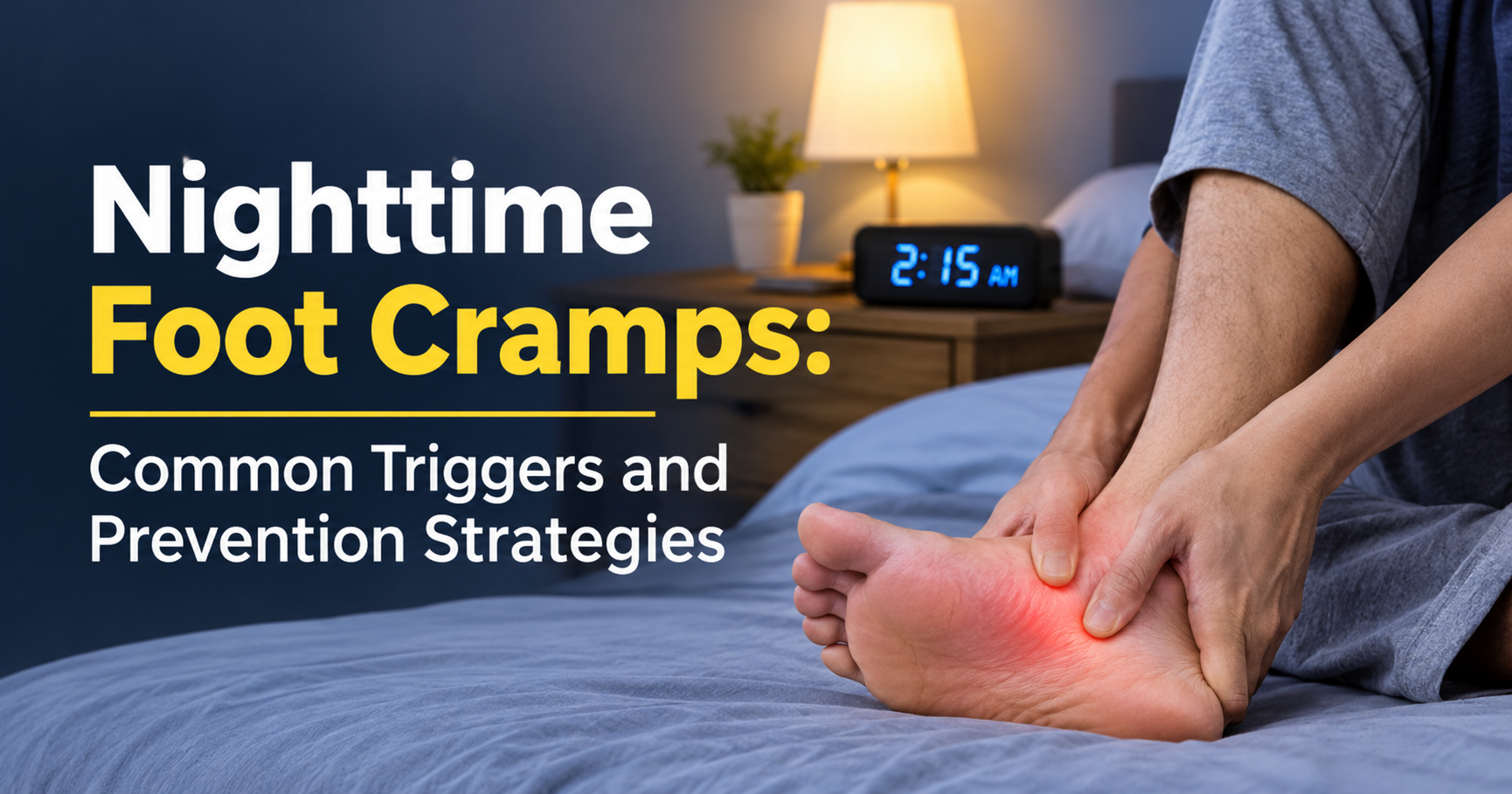
You are sleeping peacefully, and suddenly a sharp, tight, burning pain grabs your foot or calf. Your toes curl, the muscle turns hard as a rock, and you jump out of bed trying to walk it off. If this sounds familiar, you are definitely not alone. Foot cramps at night are one of the most common reasons people wake up suddenly, and they can leave the muscles sore for hours or even days afterward.
The good news is that in most cases night-time foot cramps are harmless and can be managed with simple habits. The key is to understand what is causing them. In this complete guide, we will explain the most common causes of foot cramps at night, what a cramp actually is, how to stop one quickly, how to prevent them from coming back, and when it is time to talk to a healthcare professional.
Table of Contents
- What Are Night-Time Foot Cramps?
- Main Causes of Foot Cramps at Night
- Nutrients and Muscle Health
- Who Is More Likely to Get Night Cramps?
- How to Stop a Foot Cramp Fast
- How to Prevent Foot Cramps at Night
- Helpful Foot Comfort Products to Consider
- When to See a Doctor
- Frequently Asked Questions
- Final Thoughts
What Are Night-Time Foot Cramps?
A cramp is a sudden, involuntary and painful tightening of a muscle. In the foot, it often affects the arch, the muscles under the toes, or the calf muscles that connect to the foot. The muscle contracts hard and refuses to relax for several seconds or even several minutes. Many people describe it as a knot, a spasm or a “charley horse.”
When these cramps happen during sleep, they are often called nocturnal leg and foot cramps. They usually last from a few seconds to about ten minutes. Afterward, the area may feel tender, tight or sore for the rest of the night or the next day.
Doctors do not fully agree on one single reason why cramps strike mostly at night. Most experts believe that tired, overloaded or shortened muscles combined with unusual nerve signals are involved. At night, your body is still for many hours, your feet are often relaxed in a pointed position, and your muscles are slightly shortened. This is the perfect situation for a cramp to start.

Main Causes of Foot Cramps at Night
There is rarely a single cause. Often, two or three small factors add up. Let us go through the most common ones.
1. Muscle Fatigue and Overuse
If you spent the day standing on hard floors, walking long distances, climbing stairs or exercising intensely, your foot and calf muscles may be overworked. Tired muscles are more irritable and more likely to spasm once the body relaxes at night. People who work as nurses, teachers, factory workers, shop staff, drivers or runners often notice this pattern.
2. Prolonged Sitting or Standing
Staying in one position for many hours reduces circulation and keeps certain muscles shortened or constantly loaded. Sitting all day with bent knees can shorten calf muscles, while standing all day tires the arches. Either habit can set the stage for cramps after bedtime.
3. Poor Sleeping Position
Many people sleep with their toes pointed downward, especially when lying on their back with heavy blankets pressing on the feet or when lying on their stomach with feet hanging over the mattress. This position keeps the calf and foot muscles in a shortened state for hours, which makes them more likely to cramp.
4. Dehydration
Water is essential for normal muscle and nerve function. When you do not drink enough fluids, or when you lose a lot of fluid through sweat, hot weather, fever, vomiting or diarrhea, the balance of fluids around muscle cells can change. Even mild dehydration may increase the chance of cramps in some people.
5. Electrolyte and Mineral Imbalance
Muscles rely on minerals such as magnesium, potassium, calcium and sodium to contract and relax properly. Heavy sweating, diets low in fruits, vegetables and whole foods, and certain health situations can disturb this balance. It is worth noting that research on magnesium supplements for night cramps has shown mixed results, so it is best to discuss any supplement with a healthcare professional rather than guessing.

6. Aging and Muscle Changes
Night cramps become more common with age. As we get older, we naturally lose some muscle mass, and the tendons around the muscles tend to shorten. Nerves may also send signals less smoothly. Many adults over 50 experience night-time leg and foot cramps regularly.
7. Pregnancy
Foot and calf cramps are very common during the second and third trimesters of pregnancy. Extra body weight, changes in circulation, pressure from the growing baby and shifts in mineral needs may all play a role. Pregnant women should always speak with their doctor or midwife before taking any supplement.
8. Medications
Certain medicines are known to increase the risk of muscle cramps in some people. These may include some statins (cholesterol medicines), diuretics (water pills), some blood pressure medicines, certain asthma medicines and some hormone-related treatments. If you notice that cramps started soon after beginning a new medicine, do not stop it on your own. Instead, ask your doctor or pharmacist whether it could be related.
9. Underlying Health Conditions
Sometimes frequent night cramps are a clue that something else is going on. Possible conditions include:
- Diabetes and related nerve damage (neuropathy)
- Peripheral artery disease or other circulation problems
- Kidney disease, which can change mineral levels
- Thyroid disorders
- Liver disease
- Nerve compression in the lower back, such as spinal narrowing
- Varicose veins or chronic venous problems
These conditions are not the cause in most people, but they are important to rule out when cramps are frequent, severe or accompanied by other symptoms.
10. Alcohol and Caffeine
Alcohol can dehydrate the body and affect nerves and muscles. Large amounts of caffeine can also increase fluid loss in some people. Heavy evening drinking is a commonly reported trigger for next-night foot and calf cramps.
11. Footwear, Flat Feet and Foot Structure
Shoes that lack arch support, high heels worn all day, or very flat unsupportive footwear can overwork the small muscles in the feet. People with flat feet or high arches may be more prone to arch cramps because their foot muscles must work harder to stabilize each step.
12. Cold Temperatures
Sleeping in a cold room or with cold feet may make muscles tighter and more sensitive. Many people notice that night cramps happen more often in winter.
Who Is More Likely to Get Night Cramps?
Anyone can have an occasional cramp, but some groups are affected more often:
- Adults over 50 and older people
- Pregnant women
- Athletes, runners and people who exercise intensely
- People who stand or walk for many hours at work
- People who take certain regular medications
- People with diabetes, kidney problems or circulation issues
- People who do not drink enough fluids
How to Stop a Foot Cramp Fast
When a cramp hits, the goal is to gently lengthen the tight muscle and encourage it to relax. Try these steps right away:

- Flex your foot. Pull your toes up toward your shin. You can use your hand or a towel around the ball of your foot to help. Hold for 20 to 30 seconds.
- Stand and stretch the calf. Put your weight on the cramped leg, press the heel into the floor and lean gently forward with your hands on a wall. Hold for about 30 seconds.
- Massage the muscle. Use your thumbs or fingertips to gently knead the arch or calf. Avoid pressing so hard that it hurts more.
- Apply warmth. A warm towel or heating pad on low can help tight muscles relax. Always check that the heat is comfortable and never fall asleep on a heating pad.
- Walk around slowly. A few steps can help circulation return to normal.
- Drink some water if you feel thirsty or have been sweating.
If the muscle remains sore afterward, a cool compress for a few minutes may help comfort it. Soreness often continues for a day, which is normal.
How to Prevent Foot Cramps at Night
Prevention usually works best when you combine several small habits. Here are practical, evidence-informed steps.
Stretch Before Bed
Spend two to five minutes stretching your calves and feet before going to bed. A simple wall calf stretch, a seated toe pull and gentle ankle circles are enough. Studies on older adults suggest that regular calf stretching may reduce how often night cramps occur, even though results vary from person to person.
Stay Hydrated Through the Day
Drink water regularly during the day rather than all at once in the evening. If you sweat a lot, exercise heavily or live in a hot climate, consider replacing fluids and electrolytes with balanced foods or drinks.
Eat a Balanced, Mineral-Rich Diet
Include foods such as bananas, leafy greens, beans, nuts, seeds, yogurt, whole grains, potatoes and fruit. A varied diet supports the minerals muscles need. Talk to a healthcare professional before starting high-dose supplements, especially if you have kidney problems or take regular medicines.
Adjust Your Sleep Position
Try not to let your toes point downward all night. If you sleep on your back, loosen tight blankets at the foot of the bed so your feet can rest naturally. If you sleep on your stomach, let your feet hang over the edge of the mattress so your ankles stay relaxed instead of pointed. Some people use a small pillow or cushion to keep the feet in a more neutral position.
Keep Your Feet Warm
Soft, breathable, warm socks can protect your feet from cold air in winter and may help reduce muscle tightness for some people. Choose a loose, non-restrictive top band so circulation is not squeezed.
Wear Supportive Footwear During the Day
Good shoes with proper arch support, cushioning and enough toe room reduce strain on the foot muscles. Avoid wearing high heels or completely flat, unsupportive shoes for many hours. Replace worn-out shoes regularly.
Stay Active, But Do Not Overdo It
Regular walking, light exercise and gentle strengthening keep muscles healthy. Increase activity gradually and always include warm-up and cool-down stretches, because sudden heavy exercise can be a trigger.
Limit Alcohol in the Evening
Cutting back on evening alcohol may reduce cramp episodes for people who notice a link between the two.
Review Your Medicines With a Professional
If you take regular medicines and your cramps started after a change, a pharmacist or doctor can check whether an adjustment is possible. Never stop prescribed medicine without medical advice.
Helpful Foot Comfort Products to Consider
Alongside lifestyle habits, some people find that simple comfort products make nights easier. These are not cures, but they may support comfort and healthy foot positioning:
- Soft cushioned or warm sleeping socks to keep feet comfortable at night.
- Compression socks worn during the day, which may support circulation for people who stand or sit for long hours.
- Supportive insoles or arch supports to reduce daytime strain on foot muscles.
- Night splints or stretching boots that keep the foot gently flexed while sleeping, which some people use to prevent the toes from pointing downward.
- Foot massage tools such as a massage ball or roller for relaxing the arch before bed.
- Heating pads or warm foot soaks for evening relaxation.
- A balanced electrolyte drink or mineral-rich snacks for people who sweat heavily, if suitable for their diet.
Before buying any product, check that it fits correctly, is comfortable and suits your personal health situation. If you have diabetes, poor circulation or reduced sensation in your feet, ask a healthcare professional before using compression, heat or splints.
When to See a Doctor
Occasional night cramps are common and usually not serious. However, you should speak with a healthcare professional if:

- Cramps happen very frequently, wake you up most nights or keep getting worse.
- The pain is severe or does not go away with stretching.
- You notice swelling, redness or warmth in the leg or foot.
- You have numbness, tingling, burning or muscle weakness.
- Your feet feel cold or look pale or bluish, or you get leg pain when walking short distances.
- The cramps began soon after starting a new medicine.
- You have diabetes, kidney disease, thyroid disease or liver problems.
- You are pregnant and the cramps are intense or one leg is swollen and painful.
Seek urgent medical help if you have sudden swelling and pain in one leg, shortness of breath or chest pain, as these can signal a more serious problem such as a blood clot.
A doctor may ask about your medications, diet, activity and sleep, check your pulses and nerves, and sometimes order blood tests to look at mineral levels, kidney function, thyroid function or blood sugar.
Frequently Asked Questions
Why do I get foot cramps only at night?
At night, your muscles stay still and shortened for hours, your feet may be pointed downward, and you may be mildly dehydrated or tired from the day. This combination makes cramps more likely.
Is a foot cramp at night a sign of a serious disease?
Most of the time, no. Occasional cramps are very common. However, frequent, severe or unexplained cramps should be checked, especially if you have other symptoms or health conditions.
Does drinking water really help with cramps?
For people whose cramps are linked to dehydration or heavy sweating, staying well hydrated can help. It may not solve every case, but it is a simple and healthy habit.
Which vitamin deficiency causes foot cramps?
Low levels of magnesium, potassium, calcium or vitamin D may be linked to cramps in some people, but a deficiency is not always the cause. A blood test and a medical opinion are the best way to know.
Can wearing socks to bed help?
Warm, soft socks with a loose top may help keep your feet comfortable and may reduce cold-related tightness for some people. They are a comfort measure, not a cure.
How long does a night foot cramp last?
Most cramps last from a few seconds to several minutes. The soreness afterward can remain for hours or sometimes a day.
Should I stretch before bed?
Yes. A short routine of calf and foot stretches before sleep is one of the easiest and most commonly recommended prevention steps.
Final Thoughts
Foot cramps at night can be painful and frustrating, but they are rarely dangerous. The most common causes include tired muscles, long periods of standing or sitting, dehydration, mineral imbalance, sleeping with toes pointed, aging, pregnancy, certain medicines and, occasionally, an underlying health condition.
By stretching before bed, drinking enough fluids, eating a balanced diet, wearing supportive footwear, keeping your feet warm and adjusting your sleeping position, most people can greatly reduce how often cramps wake them up. If your cramps are frequent, severe or come with other symptoms, do not ignore them. A healthcare professional can help find the cause and recommend the right treatment.
Disclaimer: This article is for general educational purposes only and does not replace professional medical advice, diagnosis or treatment. Always consult a qualified healthcare provider about your personal health concerns.