If you’ve noticed persistent pain along the outer edge of your foot, frequent ankle sprains, or shoes that wear out unusually on the outside, you may be dealing with supination while walking—a common but often misunderstood gait issue. Also known as underpronation, supination occurs when your foot rolls outward excessively during each step, placing undue stress on the lateral (outer) side of your foot and reducing your body’s ability to absorb shock. This can lead to a chain reaction of problems, including plantar fasciitis, shin splints, knee pain, and even hip or lower back discomfort.
The good news? Supination can be corrected—not by changing your foot’s natural structure, but by improving muscle control, choosing the right footwear, and retraining your walking mechanics. In this guide, you’ll learn how to identify supination, understand its root causes, and take targeted steps to correct it. Whether your supination stems from high arches, weak glutes, old ankle injuries, or poor walking habits, this step-by-step plan will help you walk with better balance, less pain, and greater confidence.
Identify Your Supination Pattern
Before you can fix supination, you need to confirm it’s happening—and understand how severe it is.
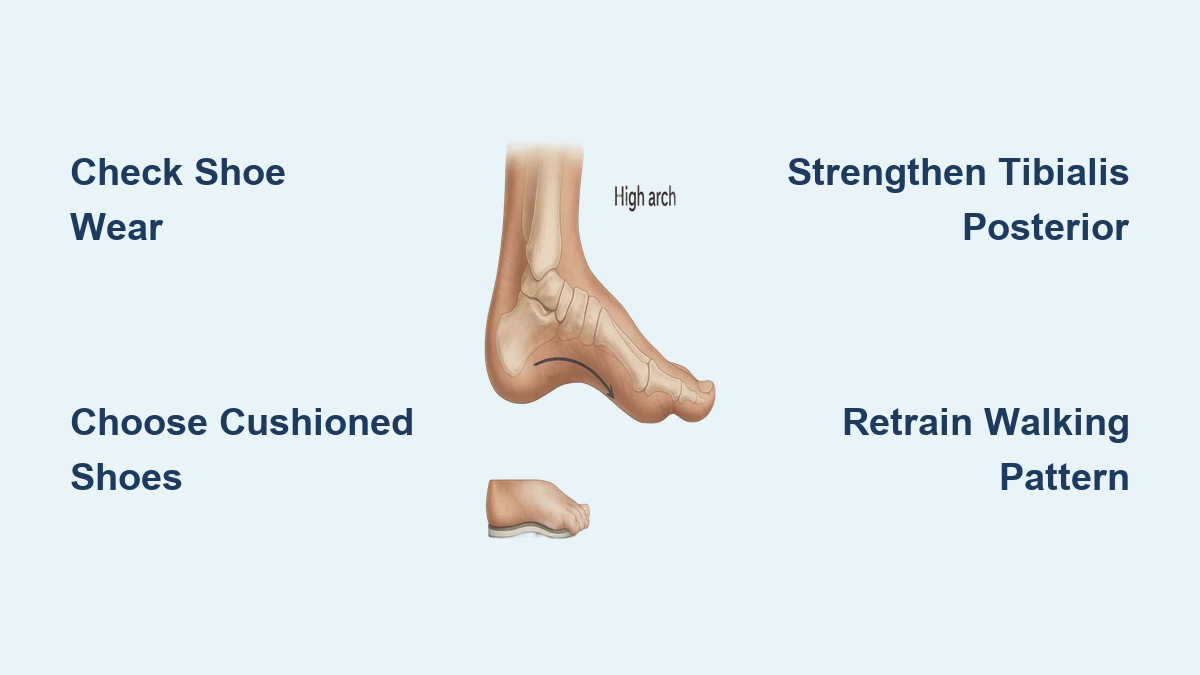
Check Your Shoe Wear
Start by inspecting the soles of your most worn walking or running shoes.
Signs of supination include:
– Heavy wear on the outer edge of the heel
– Smooth or worn spots under the lateral (pinky toe) side of the forefoot
– Shoes that visibly tilt outward when placed on a flat surface
✅ Pro Tip: Compare both shoes. Asymmetrical wear may indicate uneven gait or even a leg length discrepancy.
Perform the Wet Foot Test
Wet the bottom of your foot and step onto a dark, absorbent surface like cardboard or pavement.
– Normal arch: The middle portion of the arch is partially filled in
– Supinator (high arch): Very little or no imprint along the arch—just the heel and forefoot
This suggests rigid, high arches that don’t flatten enough during walking, limiting natural shock absorption.
Choose the Right Walking Shoes

Footwear is your first and most impactful defense against supination.
Key Features to Look For
- Cushioned midsole: Compensates for poor shock absorption due to rigid foot mechanics
- Flexible forefoot: Allows a smooth, natural push-off from the big toe
- Neutral support: Avoid stability or motion-control shoes—they’re designed for overpronators and can worsen supination
- Curved or semi-curved last: Encourages a more natural inward roll during gait
- Firm heel counter: Stabilizes the ankle without restricting motion
❌ Avoid: Hard, stiff shoes or those with excessive medial posting—they can force your foot further outward.
Top Shoe Recommendations for Supinators
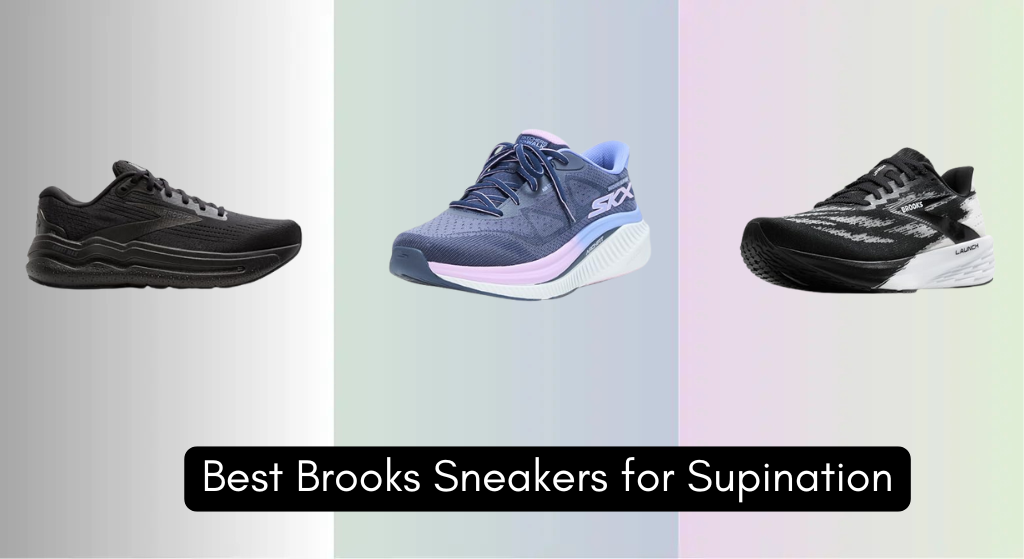
- Brooks Ghost – Balanced cushioning and flexibility for everyday walking
- Hoka Clifton – Maximal cushioning to protect high-arched feet from impact
- ASICS Gel-Nimbus – Soft ride with excellent forefoot flexibility
- New Balance 1080 – Smooth transition and neutral support ideal for supinators
Replace your walking shoes every 300–500 miles or when the sole compresses unevenly—especially on the outer edge.
Use Supportive Insoles or Orthotics

Even the best shoes may need extra support. Insoles and orthotics can help redistribute pressure and improve alignment.
When You Might Need Orthotics
Consider orthotics if you have:
– Severe high arches (pes cavus)
– Chronic pain like plantar fasciitis or shin splints
– A history of multiple ankle sprains
– Leg length discrepancy
Types of Insoles That Help
| Type | Best For | Notes |
|---|---|---|
| Custom orthotics | Severe or rigid supination | Molded to your foot for precise support and cushioning |
| Prefabricated cushioned insoles | Mild to moderate cases | Look for arch contour and deep heel cup |
| Medial wedge insert | Encourages pronation | Adds slight lift to the inner foot to balance outward roll |
⚠️ Caution: Poorly fitted orthotics can worsen symptoms. Always consult a podiatrist for evaluation and fitting.
✅ Pro Tip: Orthotics for supination should provide cushioning and alignment, not arch collapse—your high arch needs support, not flattening.
Strengthen Weak Muscles
Supination is often caused by muscle imbalances, not just foot shape. Strengthening key muscles restores control and stability.
1. Activate the Tibialis Posterior
This deep muscle supports the arch and helps control foot motion.
Resistance Band Inversion
- Sit with one leg extended
- Loop a resistance band around the ball of your foot, anchor the other end
- Pull your foot inward (big toe toward midline) against resistance
- 3 sets of 12 reps per foot, 3x/week
🔍 Visual cue: Imagine drawing a straight line inward with your big toe.
2. Build Glute Strength
Weak glutes lead to a narrow, unstable gait—making supination worse.
Clamshells
- Lie on your side, knees bent, feet together
- Lift top knee while keeping heels touching
- 3 sets of 15 reps per side
Glute Bridges
- Lie on your back, knees bent, feet flat
- Squeeze your glutes to lift your hips
- Hold 2 seconds at the top
- 3 sets of 12
✅ Walking cue: “Squeeze your butt” with each step to stabilize your pelvis.
3. Train Intrinsic Foot Muscles
These small muscles fine-tune foot movement and push-off.
Toe Yoga
- Sit barefoot, feet flat
- Practice:
- Lifting only the big toe (keep others down)
- Lifting only the four smaller toes (big toe stays down)
- 2 sets of 10 reps per foot
💡 Why it works: Improves foot awareness and helps you push off through the big toe, not the outer toes.
Improve Ankle Stability and Balance
Weak ankles and poor balance increase supination risk—especially if you’ve had sprains.
4-Way Ankle Resistance
Use a resistance band for all directions:
– Up (dorsiflexion)
– Down (plantarflexion)
– In (inversion)
– Out (eversion)
Do 2 sets of 15 in each direction, 3x/week.
✅ Focus: Strengthen peroneals (outer calf) to prevent excessive inversion.
Single-Leg Balance Drill
- Stand barefoot on one foot
- Distribute weight evenly across three points:
- Heel
- Ball of big toe
- Ball of little toe
- Hold 30 seconds; work up to 60
- Progress: Close eyes or stand on foam
🎯 Goal: Improve proprioception—your foot’s ability to sense and adjust to the ground.
Stretch Tight Structures (Carefully)
Tight muscles can contribute to supination—but overstretching can make things worse, especially with peroneal tendinopathy.
Calf and Achilles Stretch
- Stand facing a wall, hands on wall
- Step one foot back, keep heel down
- Bend front knee, feel stretch in back calf
- Hold 25 seconds per leg, 2x/day
✅ Modification: Slightly bend back knee to target soleus (deeper calf muscle).
Shin Stretch (Tibialis Anterior)
- Kneel with toes tucked under, sit back on heels
- Gently increase pressure as tolerated
- Hold 20 seconds
❌ Avoid aggressive stretching if you have shin pain—start gently.
Plantar Fascia Stretch
- Sit, cross one ankle over opposite knee
- Pull toes back toward shin
- Feel stretch along arch
- Hold 10–15 seconds, repeat 5 times per foot
🌿 Best done first thing in the morning if you have heel pain.
Retrain Your Walking Pattern
You can retrain your brain and body to walk with better mechanics—even if supination has been habitual for years.
Widen Your Stance
Supinators often walk with feet close together, like on a tightrope.
Fix: Align Feet with Hips
- Imagine walking on a straight line
- Place each foot directly under your hip
- Practice in front of a mirror or use tape on the floor
✅ Visual cue: “Walk like a soldier” — feet straight ahead, aligned with shoulders.
Improve Foot Strike Awareness
Focus on landing more centrally under your ankle.
Drills to Try:
- Barefoot walking on grass: Enhances foot feedback
- Heel-to-toe walks: Emphasize smooth roll from heel to big toe
- Jump rope (light): Trains balanced landing and push-off
🔊 Listen to your step: A loud, heavy landing means poor shock absorption.
Engage Glutes with Every Step
Weak glutes = pelvic drop = inward collapse on one side = outward roll on the other.
Cue: “Squeeze and Step”
- As you step forward, gently squeeze the glute of your stance leg
- Feel your pelvis stay level
- Practice during short walks, then build up
🔄 Bonus: This reduces IT band strain and knee pain.
Manage Activity Load
Even perfect form can’t overcome too much stress too soon.
Follow the 10% Rule
- Increase walking or running distance by no more than 10% per week
- Example: If you walk 10 miles this week, do 11 next week
❌ Rapid increases = tissue overload = injury risk
Cross-Train Smartly
Give your feet a break from impact:
– Swimming
– Cycling
– Elliptical
✅ Keeps fitness up while reducing repetitive strain.
Address Root Causes
Supination is often a symptom, not the problem itself. Fix the underlying issue for lasting results.
1. Recurrent Ankle Sprains
Ligament laxity and peroneal weakness lead to instability.
Solution:
- Strengthen peroneals
- Improve balance
- Consider ankle brace during high-risk activities
💬 User insight: “After spraining my ankle 5 times, I started supinating to protect it.”
2. Leg Length Discrepancy (LLD)
Even a 1 cm difference can cause one foot to supinate to “reach” the ground.
What to Do:
- Get assessed by a physical therapist
- May need a heel lift in the shorter leg’s shoe
✅ Don’t self-diagnose—improper lifts can make things worse.
3. High Arches (Pes Cavus)
Genetic or neurological—can’t be changed, but function can be optimized.
Focus:
- Cushioning
- Supportive insoles
- Strengthening around the foot
🧩 Think: “Work with your structure, not against it.”
Track Progress and Prevent Relapse
Fixing supination takes time—typically 6–12 weeks for noticeable improvement, longer for full retraining.
Signs of Improvement
- Less outer-foot or ankle pain
- More even shoe wear
- Smoother, quieter walking
- Better balance on one leg
- Reduced need for painkillers
Monthly Check-Ins
- Inspect your shoes – Are they wearing more evenly?
- Test single-leg balance – Can you hold 60 seconds?
- Rate your pain – Use a 0–10 scale weekly
- Record walking distance – Are you increasing without pain?
✅ Goal: Walk 5 miles without discomfort within 3–6 months.
When to See a Professional
While many cases improve with self-care, some need expert help.
See a Podiatrist or Physical Therapist If:
- Pain persists after 6 weeks of self-treatment
- You have numbness or tingling (possible nerve involvement)
- Supination is only on one side
- You suspect leg length discrepancy
- You’ve had multiple ankle sprains
🩺 Gait analysis with video and pressure mapping can pinpoint exact issues.
⚠️ Surgery is rare—only considered for rigid deformities or failed conservative care.
Final Tips for Long-Term Success
- Walk barefoot at home (on safe surfaces) to stimulate foot muscles
- Replace shoes regularly—don’t wait for holes
- Do foot exercises daily—consistency beats intensity
- Listen to pain—it’s your body’s warning system
- Stay patient—neuromuscular retraining takes months
Supination isn’t a flaw—it’s a mechanical pattern that can be optimized. With the right shoes, targeted strength work, and mindful walking, you can reduce injury risk and move with greater ease. The goal isn’t a “perfect” foot, but a resilient, balanced gait that supports your active life.
Start today: Put on your shoes, check the wear pattern, and take one conscious step with your foot centered and your glutes engaged. That’s how change begins.