If you’ve ever stood up after a long day and felt a sharp or dull ache along the inside of your ankle—especially near the bony bump just behind your inner ankle bone—you’re likely dealing with inner ankle pain caused by flat feet. This discomfort isn’t just a minor nuisance; it’s often a sign of posterior tibial tendon dysfunction (PTTD), the most common cause of adult-acquired flatfoot. When your arch collapses due to overpronation or weakened foot mechanics, the posterior tibial tendon—your foot’s primary arch supporter—becomes overstretched, inflamed, or even begins to fail. Left unchecked, this condition can progress, leading to chronic pain, instability, and even joint damage. The good news? Most cases respond well to conservative treatment. In this guide, you’ll learn exactly how to stop inner ankle pain using proven strategies like targeted exercises, proper footwear, orthotics, and lifestyle adjustments—all backed by clinical insights and expert recommendations.
Identify the Source of Your Inner Ankle Pain
Before jumping into treatment, it’s crucial to confirm that flat feet are actually behind your discomfort. Not everyone with flat feet feels pain, but when symptoms do arise, they typically follow a predictable pattern tied to strain on the posterior tibial tendon.
Recognize Posterior Tibial Tendon Dysfunction (PTTD)
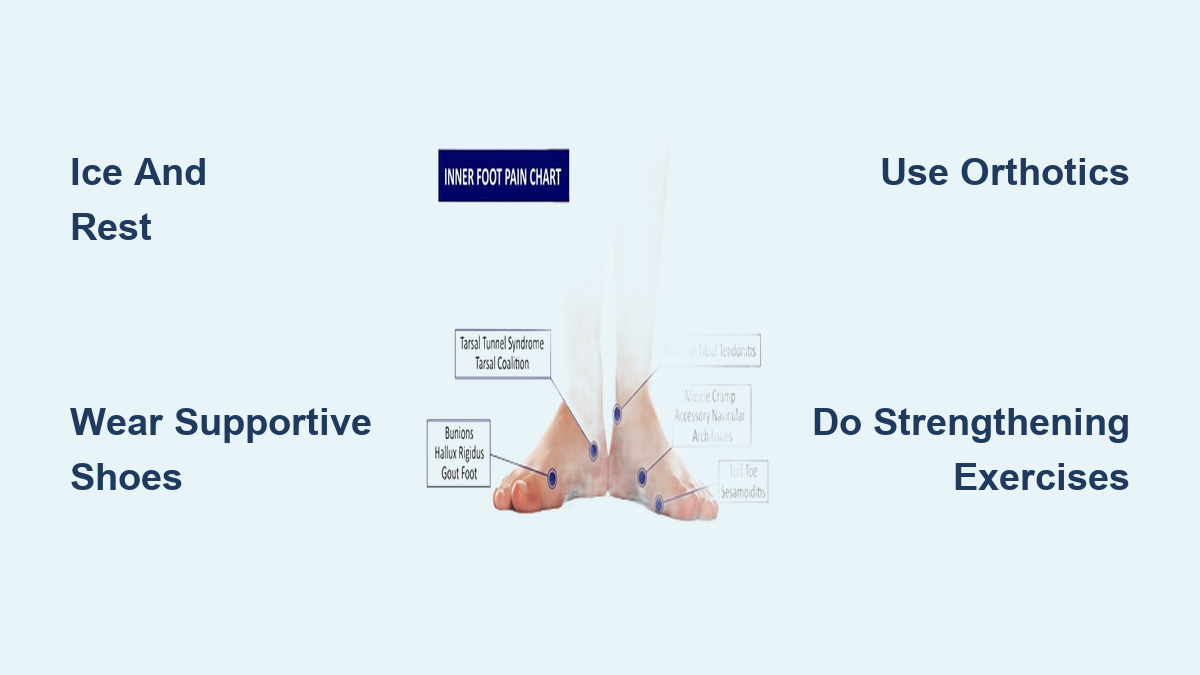
PTTD is the leading cause of inner ankle pain in adults with flat feet. This tendon runs from your calf, behind the medial malleolus (inner ankle bone), and attaches to the bones on the inside of your foot, helping maintain your arch. When overworked due to poor foot alignment or overpronation, it becomes inflamed or degenerates.
Common signs include:
– Pain and swelling along the inner ankle
– Aching in the arch after walking or standing
– Difficulty rising onto your toes
– Gradual flattening of the foot
– Fatigue in the foot during daily activities
One simple test: Try standing on one foot and rising onto your toes. If you can’t do it smoothly—or it causes pain—PTTD is likely the culprit.
Know Your Flat Foot Type
Not all flat feet are the same, and treatment depends on the type you have.
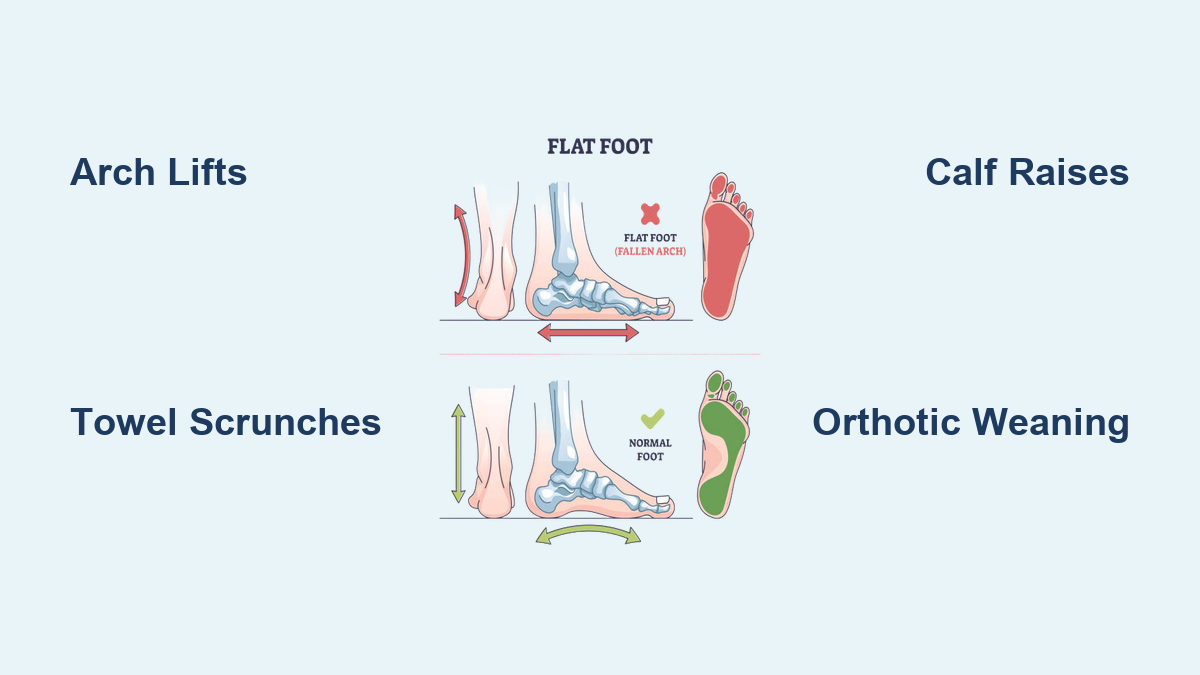
- Flexible flatfoot: Your arch disappears when standing but returns when sitting. Common and usually manageable with conservative care.
- Adult-acquired flatfoot: The arch collapses suddenly in adulthood, often due to PTTD. Strongly linked to inner ankle pain and requires early intervention.
- Rigid flatfoot: No arch in any position, often due to bone or joint issues. Less likely to cause isolated inner ankle pain.
Expert Insight: Adult-acquired flatfoot affects millions, particularly women over 40, especially those with obesity, diabetes, or a history of ankle injuries.
Watch for Signs of Worsening
Inner ankle pain that spreads or intensifies signals advancing dysfunction.
- Lateral ankle pain (outside of the ankle): Suggests bones are rubbing due to severe foot collapse.
- Inability to balance on one foot: Indicates significant tendon weakness.
- Stiffness or pain at rest: May point to Stage III or IV PTTD with arthritis.
If you notice these changes, it’s time to see a specialist.
Immediate Pain Relief Strategies
When pain flares up, act quickly to reduce inflammation and prevent further damage.
Ice, Rest, and Elevate
Apply ice to the inner ankle for 15–20 minutes, 3–4 times a day, especially after activity. Combine this with relative rest—avoid running, jumping, or prolonged standing. Swap high-impact workouts for low-impact options like swimming or cycling.
Use Anti-Inflammatory Medications
Over-the-counter NSAIDs like ibuprofen or naproxen can reduce swelling and pain. Use them short-term while addressing the root cause. If pain persists beyond a few days, don’t ignore it—escalate your care.
Compress and Elevate to Reduce Swelling
If your ankle is swollen, elevate your foot above heart level and use light compression with a supportive sock or wrap. Avoid tight bandages that cut off circulation.
Pro Tip: Ice your ankle while doing calf stretches—this combines pain relief with mobility work.
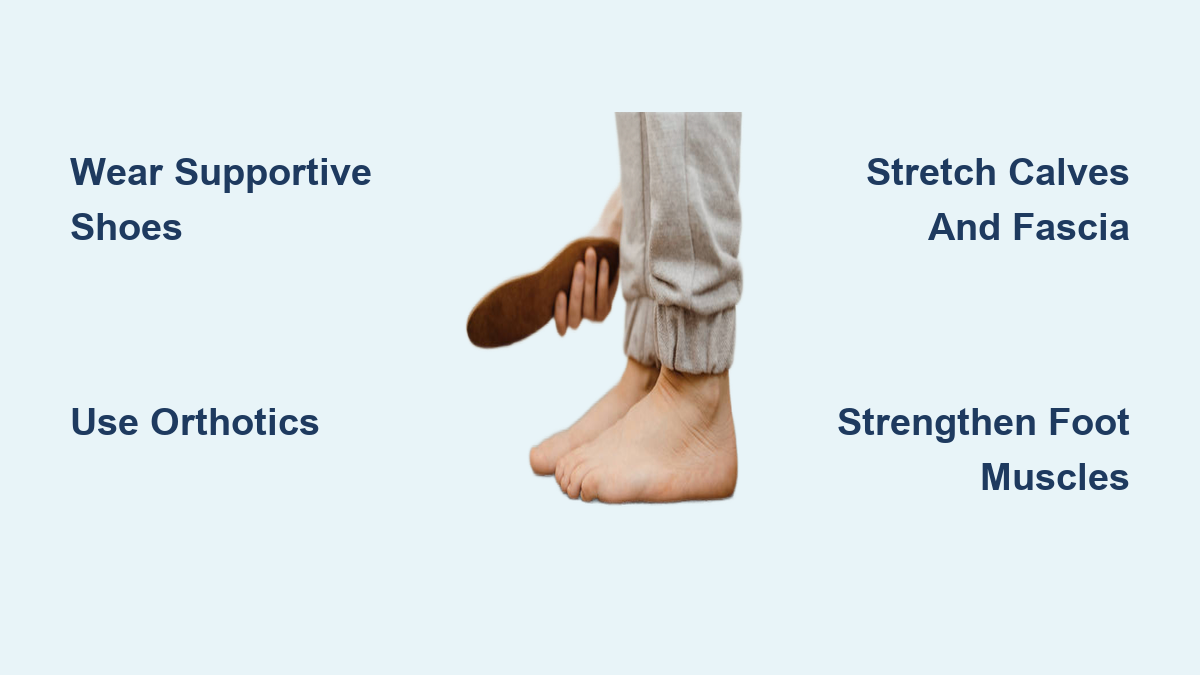
Use Orthotics to Support Your Arch

Arch support is essential. Without it, your posterior tibial tendon remains under constant strain.
Choose Effective Over-the-Counter Inserts
Not all insoles work. Look for semi-rigid orthotics with deep heel cups and firm arch support, such as:
– FootChair Podiatrist Designed Orthotic
– Powerstep Pinnacle
– Superfeet Green
These help correct overpronation and reduce tendon strain.
Consider Custom Orthotics for Lasting Relief
If OTC inserts don’t help after 2–3 weeks, custom orthotics may be worth the investment. Made from a 3D scan of your foot, they offer superior alignment and long-term pain reduction.
Expert Note: Custom orthotics won’t “fix” flat feet, but they can prevent deformity progression and significantly reduce pain.
Wear Slim Orthotics in Dress Shoes
For heels or narrow shoes, use slim-profile inserts like FootChair Slim. Never go barefoot or wear unsupportive footwear like ballet flats or flip-flops without arch support.
Wear the Right Shoes Every Day

Your footwear can either heal or harm your feet.
Key Features of Supportive Shoes
- Firm arch support – prevents overpronation
- Stable heel counter – controls rearfoot motion
- Wide toe box – allows natural toe splay
- Low heel-to-toe drop (0–8 mm) – promotes neutral alignment
- Shock-absorbing midsole – reduces impact
Avoid flat, flexible shoes like Converse or unsupportive sandals.
Top Recommended Shoe Brands
- Vionic: Built-in orthotic support in sandals and sneakers
- New Balance (928, 1540): Stability shoes with medial posting
- Brooks Addiction Walker: Designed for severe overpronation
- Orthofeet: Engineered specifically for flat feet and PTTD
Pro Tip: Replace athletic shoes every 300–500 miles or when the midsole compresses.
Use Bracing for Moderate to Severe Pain
When pain persists or your foot shows visible flattening, bracing adds critical support.
Try the Aircast AirHeel
This lightweight sleeve uses dual aircells under the arch and behind the heel to compress and support the tendon. Ideal for wearing barefoot at home or during yoga.
Upgrade to the AirLift PTTD Brace
For advanced PTTD, the AirLift brace provides rigid ankle support and limits motion. Bulkier but highly effective for long days on your feet or high-risk activities.
When to Use Braces: During flare-ups, long walks, or when transitioning to minimalist shoes.
Rehab Your Feet with Daily Exercises
Strengthening and stretching are essential to stop pain and prevent recurrence. Start gently and progress as pain allows.
Release Tension with Self-Massage
Tight calf muscles pull on the tendon.
How to do it:
– Apply lotion to reduce friction.
– Use your thumbs or a butter knife handle to press along the inner calf, behind the ankle, and into the arch.
– Spend 2–3 minutes per leg.
– Keep discomfort below 4/10—no sharp pain.
Do this daily, especially before stretching.
Stretch the Inner Calf
Tightness here worsens pain.
Wall Stretch (Inner Calf Focus)
- Stand in a lunge with the affected leg back.
- Turn the back foot outward 15–20°.
- Keep hips forward; lunge toward the wall.
- Hold 20 seconds; repeat 3 times.
Stair Stretch
- Stand on a step with heels hanging off.
- Slightly bend the knee and turn foot outward.
- Lower heels below step level.
- Hold 20 seconds; repeat 3 times.
Best Time: Morning or after sitting for long periods.
Strengthen the Posterior Tibialis
Weakness is the root of the problem.
Banded Adduction
- Anchor a resistance band to a fixed point on the inside of your foot.
- Pull foot outward, then slowly return.
- 3 sets of 10–15 reps.
Heel Raise with Tennis Ball Squeeze
- Stand with feet shoulder-width apart.
- Squeeze a tennis ball between your ankles.
- Rise onto your toes, then lower slowly.
- 3 sets of 10–15 reps.
- Advanced: Do it on a stair.
Single-Leg Balance with Reaches
- Stand on the affected leg for 60 seconds.
- Reach arms forward and back (10 reps each).
- Rotate hips 45° left/right while keeping knee aligned.
- 2–3 rounds.
Towel Curls and Arch Lifts
- Towel curls: Scrunch a towel toward you with your toes. 3 sets of 15.
- Arch lifts (seated): Lift your arch while keeping heel and toes down. 3 sets of 10–15.
Pseudo Arch Exercise
- Stand with feet under hips.
- Roll feet outward, curl toes under to form an arch.
- Return to flat; repeat slowly.
- 10–15 reps.
Frequency: Do exercises 4–5 times per week. Mild soreness is okay; stop if sharp pain occurs.
Prevent Pain from Coming Back
Stopping inner ankle pain isn’t just about treatment—it’s about long-term prevention.
Manage Your Weight
Excess weight increases load on the arch. Losing just 5–10% of your body weight can reduce symptoms and slow progression.
Modify High-Impact Activities
Replace running or jumping with low-impact alternatives:
– Swimming
– Cycling
– Elliptical training
– Yoga (especially Downward Dog and Child’s Pose)
Improve Gait and Posture
Avoid rolling your ankle inward. Consider a gait analysis by a physical therapist to correct inefficiencies.
Pro Tip: Practice walking with toes pointing straight ahead—not outward.
Know When to See a Specialist
Most cases improve with self-care, but some need professional help.
Red Flags That Need Medical Attention
- Pain interferes with walking
- Visible arch collapse
- Inability to do a single-leg heel raise
- Persistent swelling or redness
- Lateral ankle pain
- No improvement after 3 weeks
What a Specialist Can Do
- Diagnose PTTD with physical exam and imaging (X-ray, MRI)
- Prescribe custom orthotics or ankle-foot orthoses (AFOs)
- Refer to physical therapy
- Recommend corticosteroid injections (rarely)
- Discuss surgery if conservative care fails
Surgery is last resort: Options include tendon repair, transfer, bone realignment, or fusion.
Final Note: Inner ankle pain from flat feet doesn’t have to stop you. With the right combination of rest, support, strengthening, and proper footwear, you can stop the pain, protect your arch, and stay active. Start today—your feet are the foundation of your body. Treat them well, and they’ll carry you for life.