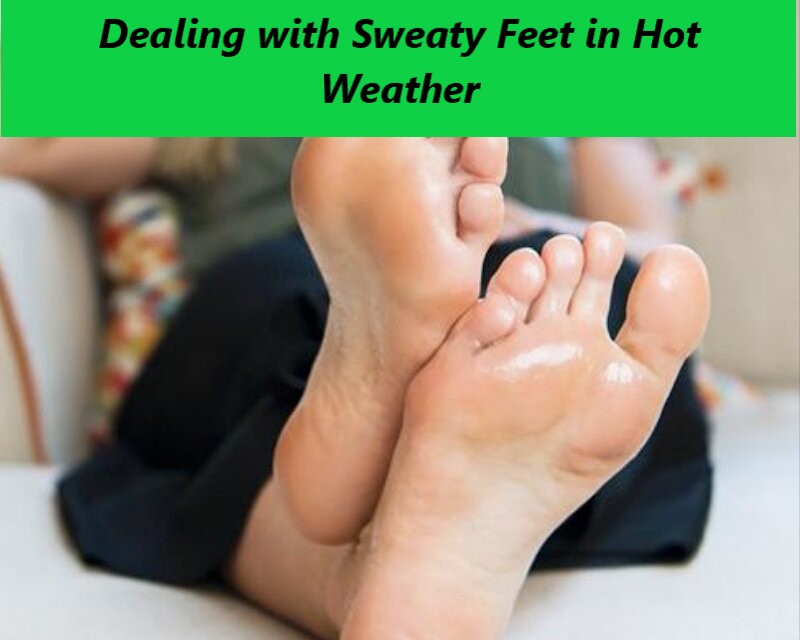
If you’ve ever had to carry extra socks just in case your feet soaked through a pair by midday, avoided walking barefoot at home for fear of damp footprints, or felt anxious about taking off your shoes around others, you’re not alone. Excessive sweating in feet, medically known as plantar hyperhidrosis, affects millions worldwide and goes far beyond normal perspiration. Unlike sweating triggered by heat or exercise, this condition can strike in cool weather, at rest, or even when you’re sitting still—often starting in childhood and persisting into adulthood.
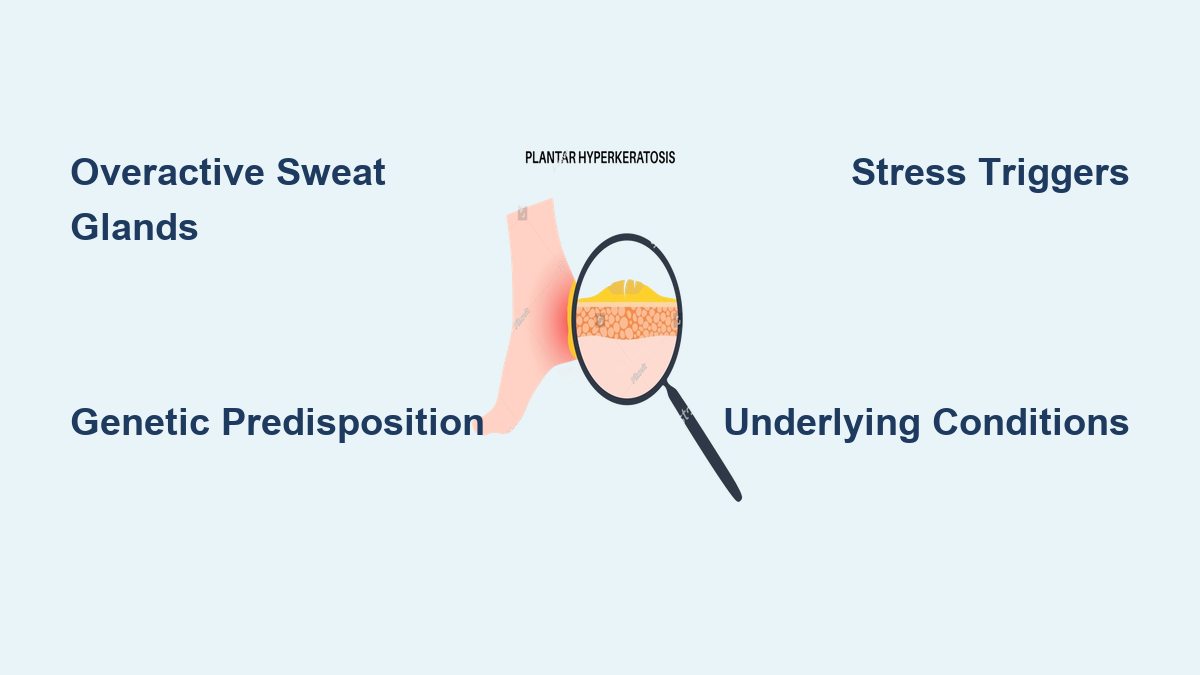
This isn’t poor hygiene or a sign of weakness—it’s a real medical condition rooted in overactive sweat glands and faulty nerve signals. Understanding what causes excessive sweating in feet is essential to managing it effectively. From genetic predisposition and stress triggers to underlying health issues and medication side effects, this guide dives deep into the science behind plantar hyperhidrosis, helping you identify the root cause and take meaningful steps toward relief.
Overactive Sweat Glands: The Core Mechanism

At the heart of plantar hyperhidrosis are the eccrine sweat glands, which densely populate the soles of your feet—each foot contains over 250,000, more than any other body area. These glands respond to signals from the sympathetic nervous system, part of your body’s automatic “fight-or-flight” response.
In people with hyperhidrosis, these nerves fire excessively, instructing sweat glands to produce moisture even when the body doesn’t need cooling. The result? Feet that feel constantly wet, cold, and slippery—regardless of temperature or activity level.
Why the Nervous System Misfires
- Neurological dysregulation: The hypothalamus, which regulates body temperature, may fail to properly control sweat output.
- Cholinergic overactivity: Acetylcholine—a neurotransmitter that activates sweat glands—is released in excess, leading to persistent stimulation.
- Normal glands, abnormal control: Research shows the sweat glands themselves are structurally normal. The problem lies not in the glands, but in overactive nerve signaling.
This form—called primary focal hyperhidrosis—is localized (to the feet) and not caused by another illness. It’s the most common type of foot sweating and often begins in youth.
Genetic Link: Why Family History Matters

One of the strongest predictors of plantar hyperhidrosis is genetics. Studies show that 30–65% of sufferers have a family member with the same condition, suggesting a hereditary component.
Signs of Genetic Involvement
- Autosomal dominant pattern: If one parent has it, there’s up to a 50% chance of passing it on.
- Early onset: Most people notice symptoms before age 25, often during puberty when hormonal and neurological changes amplify sweat responses.
- Symmetric sweating: Both feet sweat equally—a hallmark of inherited hyperhidrosis.
While no single gene has been identified, researchers believe multiple genes influence autonomic nervous system sensitivity, making some individuals more prone to overactive sweat responses.
Emotional Stress: A Powerful Trigger
Even mild anxiety can turn your feet into sweat factories. Stress, nervousness, or emotional tension directly activates the sympathetic nervous system, which in turn stimulates sweat production.
How Anxiety Fuels Sweating
- Fight-or-flight response: Your body prepares for perceived threats—like public speaking or job interviews—by increasing blood flow and sweat.
- Vicious cycle: Sweaty feet lead to odor and embarrassment, which increases anxiety, triggering more sweating.
- Social impact: Slipping inside shoes, damp socks, and foot odor reinforce self-consciousness and avoidance behaviors.
Many patients report worsening symptoms during exams, social events, or high-pressure situations—clear evidence of the mind-body connection in plantar hyperhidrosis.
Underlying Medical Conditions: When Sweating Signals Something Else

If excessive foot sweating starts suddenly in adulthood or occurs during sleep, it may point to an underlying health issue—a condition known as secondary hyperhidrosis.
Endocrine Disorders
- Hyperthyroidism: An overactive thyroid speeds up metabolism, raising body temperature and increasing sweat.
- Diabetes mellitus: Nerve damage (autonomic neuropathy) disrupts sweat regulation. Low blood sugar (hypoglycemia) also triggers sudden sweating.
- Menopause: Hormonal shifts cause hot flashes and night sweats that may include the feet.
Neurological Conditions
- Parkinson’s disease: Alters autonomic control, leading to abnormal sweating patterns.
- Spinal cord injury: Damaged nerves may misfire, causing localized or generalized sweating.
- Autonomic neuropathy: Common in long-term diabetes, this impairs the body’s ability to regulate sweating.
Infections and Systemic Illnesses
- Tuberculosis, HIV, endocarditis: Chronic infections often present with night sweats—a red flag for secondary hyperhidrosis.
- Lymphoma, pheochromocytoma: Certain cancers cause unexplained weight loss, fever, and persistent sweating, including in the feet.
Medications That Cause Sweaty Feet

Many common drugs list excessive sweating as a side effect. If heavy sweating began after starting a new medication, it could be the culprit.
Common Offenders
- Antidepressants: SSRIs (e.g., fluoxetine), SNRIs, and tricyclics increase serotonin, which can overstimulate brain centers that control sweating.
- Antipsychotics: Olanzapine, clozapine, and others affect dopamine and acetylcholine pathways.
- Diabetes medications: Insulin and sulfonylureas can cause hypoglycemia-induced sweating.
- Hormone therapies: Especially those used in cancer or menopause treatment.
- Opioid withdrawal: A well-known trigger for profuse sweating, including in the feet.
Never stop a prescribed medication without consulting your doctor—alternatives may be available.
Lifestyle and Environmental Triggers That Worsen Symptoms
Even with a biological predisposition, daily habits and surroundings can intensify foot sweating.
Poor Footwear Choices
- Synthetic materials: Rubber, plastic, or non-breathable shoes trap heat and moisture.
- Athletic boots and work shoes: Designed for protection, not ventilation—ideal environments for sweat buildup.
- Wearing the same shoes daily: Prevents full drying between uses, promoting dampness and odor.
Inadequate Socks
- Cotton socks absorb moisture but dry slowly, creating a warm, wet environment that encourages bacterial growth.
- Better options: Moisture-wicking fabrics like merino wool, bamboo, or synthetics (polyester, nylon) pull sweat away from the skin.
Heat and Humidity
- Warm climates naturally increase sweat production.
- Enclosed spaces (cars, offices, planes) with poor airflow worsen symptoms.
Complications of Chronic Foot Sweating

Left untreated, plantar hyperhidrosis leads to more than discomfort—it causes physical and emotional consequences.
Skin Infections
- Athlete’s foot (tinea pedis): Fungal infection thrives in moist, warm areas between toes.
- Onychomycosis: Fungal nail infections are more common in chronically wet feet.
- Intertrigo: Inflammation and infection in skin folds due to maceration.
Bacterial Growth and Odor
- Sweat is odorless, but bacteria like Brevibacterium break it down, producing bromodosis—a persistent, unpleasant foot smell.
Skin Damage
- Maceration: Prolonged moisture softens and whitens the skin, making it vulnerable to cracking.
- Fissures and blisters: Weakened skin is prone to injury, especially under shoe friction.
- Painful cracks on heels or ball of foot can interfere with walking.
Emotional and Social Impact
The psychological toll of excessive foot sweating is often underestimated.
Social Embarrassment
- Avoiding barefoot situations: beaches, gyms, yoga classes, or visiting friends’ homes.
- Fear of foot odor leading to isolation.
- Anxiety about slipping in sandals or damaging shoes.
Reduced Quality of Life
- Lower self-esteem and confidence.
- Difficulty in jobs requiring prolonged standing or specific footwear.
- Financial burden from frequent shoe replacement.
Studies show hyperhidrosis patients have higher rates of anxiety, depression, and social phobia—especially when symptoms start in adolescence.
How Doctors Diagnose the Cause
There’s no single test for hyperhidrosis, but doctors use clinical evaluation and exclusion to determine the cause.
Key Criteria for Primary Hyperhidrosis
You likely have primary plantar hyperhidrosis if:
– Sweating has lasted 6+ months without explanation.
– At least two of these apply:
– Onset before age 25
– Bilateral and symmetric sweating
– Impairs daily activities
– Weekly episodes
– Family history
– No sweating during sleep
Ruling Out Secondary Causes
If onset is sudden or occurs at night, your doctor may order:
– TSH test for thyroid function
– HbA1c to check for diabetes
– CBC, ESR, ANA for infection or autoimmune disease
– Chest X-ray to rule out TB or lymphoma
Clinical Tests
- Starch-iodine test (Minor test): Iodine and starch cause sweating areas to turn dark blue.
- Gravimetric testing: Measures sweat weight (used mainly in research).
When to See a Doctor
Seek medical advice if:
– Sweating interferes with work, exercise, or social life
– You have recurrent fungal or bacterial infections
– Foot odor persists despite hygiene
– Sweating starts after age 25 or occurs at night
– You have systemic symptoms like weight loss, fever, or palpitations
Early diagnosis prevents complications and opens access to effective treatments.
Summary: Key Facts About What Causes Excessive Sweating in Feet
- Plantar hyperhidrosis results from overactive eccrine glands driven by sympathetic nerve overactivity.
- It’s usually primary, with genetic roots, starting in youth and affecting both feet equally.
- Secondary causes include thyroid issues, diabetes, infections, and medications—especially if sweating begins later in life or occurs at night.
- Stress, hormones, heat, and poor footwear worsen symptoms.
- Complications include fungal infections, skin damage, odor, and emotional distress.
- Diagnosis is clinical, based on history and exclusion of systemic disease.
- ETS surgery should be avoided for foot-only cases due to severe side effects.
Excessive foot sweating is not a hygiene issue—it’s a medical condition with real physiological roots. With proper understanding and care, relief is possible. If your feet sweat uncontrollably, don’t suffer in silence. Talk to a dermatologist, podiatrist, or primary care provider to find the cause and start managing it effectively.