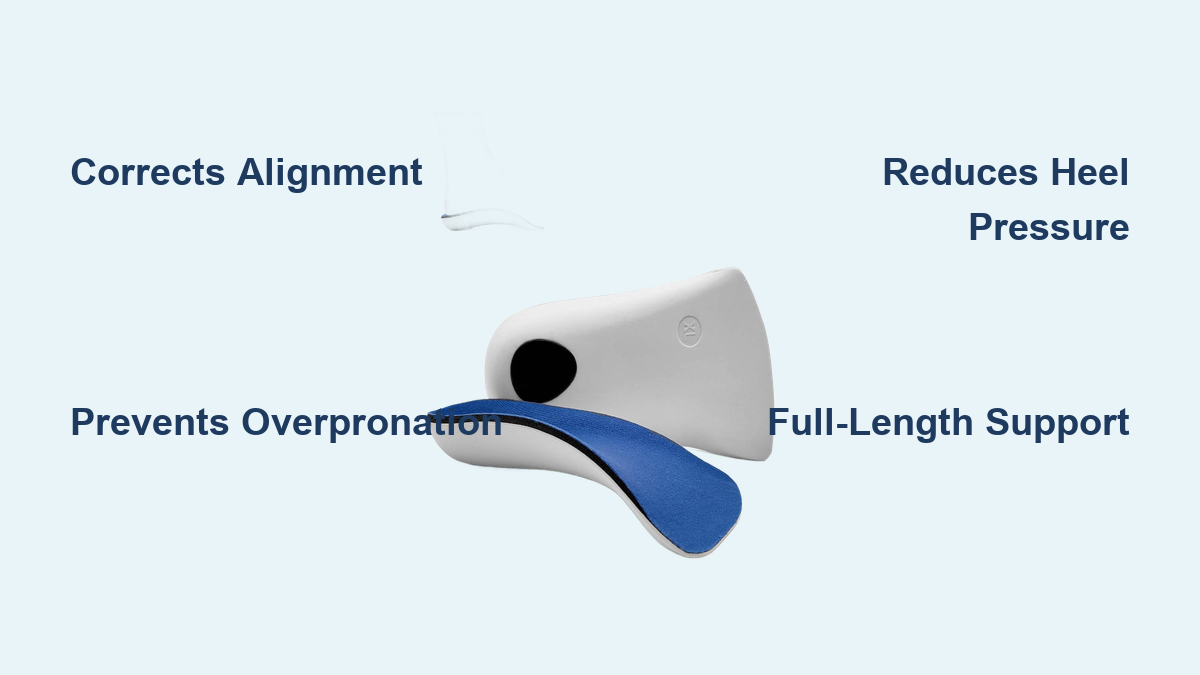
If you’re on your feet all day, deal with foot pain, or just want more comfort in your shoes, you’ve probably considered adding extra support—arch support or heel cushions. But are they the same? Can one replace the other? The answer is no. While both aim to improve foot comfort, arch support and heel cushions serve entirely different purposes, address distinct biomechanical issues, and deliver very different long-term results.
Choosing the wrong one could mean wasted money, unresolved pain, or even worsening your condition. For example, using a soft heel cup for plantar fasciitis might feel soothing at first—but it won’t fix the underlying arch collapse causing the problem. This guide breaks down the key differences between arch support and heel cushions, including how they work, who needs them, and which solution actually solves your foot pain.
Let’s dive into the science of foot mechanics, explore real-world applications, and help you make an informed decision—so you can stop guessing and start walking pain-free.
Arch Support: The Structural Foundation Your Feet Need

Arch support isn’t just about comfort—it’s about correcting how your foot moves during every step. It targets the medial longitudinal arch, the curved structure running from your heel to the ball of your foot, which acts as your body’s natural shock absorber. When this arch collapses under pressure, it leads to overpronation—your foot rolling inward—and sets off a chain reaction of strain that can affect your knees, hips, and lower back.
Prevents Overpronation and Long-Term Strain
Without proper arch support, flat feet or weak arches flatten during walking or standing, causing excessive stress on the plantar fascia, the thick band of tissue connecting your heel to your toes. This is a leading cause of plantar fasciitis, one of the most common sources of chronic heel and arch pain.
Arch support works like a mechanical scaffold, lifting and holding your arch in its natural position. This prevents collapse, stabilizes the midfoot, and ensures your weight is distributed evenly across your foot.
Key benefits include:
– Reduces tension on the plantar fascia
– Controls rearfoot motion by aligning the subtalar joint
– Prevents overpronation that misaligns the ankle and knee
– Minimizes fatigue during prolonged standing or walking
Pro Tip: If your shoes wear out faster on the inside edge of the sole, you likely overpronate—and need firm arch support.
Designed for Different Foot Types
Not all feet are the same, and neither should their support be.
- Flat Feet (Low Arches): Require rigid or semi-rigid arch supports to prevent collapse and correct overpronation. Soft insoles compress too quickly and offer no real support.
- High Arches (Cavus Feet): Need cushioned arch supports that fill the gap between the foot and shoe, improving balance and shock absorption.
- Neutral Arches: Benefit from moderate support to maintain alignment and delay fatigue during long days on hard floors.
Using the wrong type—like soft foam inserts for flat feet—can actually make instability worse over time.
Full-Length Coverage for Full-Body Impact
Effective arch support comes in full or three-quarter length insoles that replace or supplement your shoe’s original footbed. Unlike heel cushions, they influence your entire gait cycle—from heel strike to toe-off.
These insoles:
– Cover the heel, arch, and often the forefoot
– Prevent foot sliding inside the shoe
– Work dynamically with your natural stride
– Are essential for conditions like bunions, shin splints, and knee pain caused by poor foot mechanics
In short, arch support doesn’t just cushion—it corrects.
Heel Cushions: Targeted Relief, Not Long-Term Fix

Heel cushions, also known as heel cups, are small inserts designed to cradle the heel and absorb impact. They’re made from gel, silicone, EVA foam, or plastic shells and are shaped like a dome to fit snugly under the calcaneus (heel bone). Their job is simple: reduce pressure and provide temporary comfort.
Absorbs Shock at Heel Strike
Every time your foot hits the ground, your heel absorbs up to 2.5 times your body weight. On concrete or tile, that force adds up fast. Heel cushions act as mini shock absorbers, dampening this impact and reducing discomfort.
They’re ideal for:
– Workers who stand all day (nurses, retail staff, factory workers)
– People experiencing general heel fatigue
– Athletes dealing with repetitive heel stress
Many models also offer a slight lift, which can ease tension on the Achilles tendon, making them helpful for mild Achilles tendonitis.
Best for Localized Heel Conditions
Heel cushions shine when the pain is strictly in the heel and doesn’t radiate along the bottom of the foot.
Common uses include:
– Heel Spurs: Bony growths on the underside of the heel bone; cushions reduce pressure on the sensitive area
– Sever’s Disease: A common cause of heel pain in active children; cushions limit repetitive strain on the growth plate
– Post-Surgery Recovery: Silicone or gel pads protect sensitive tissue during healing
But here’s the catch: they don’t fix foot mechanics.
Warning: If your pain runs from your heel to your toes, a heel cup alone won’t help. You likely need arch support.
No Biomechanical Correction
Unlike arch supports, heel cushions:
– Do not stabilize the arch
– Do not correct overpronation or supination
– Do not influence gait or alignment
Think of them as band-aids for your feet—great for short-term relief, but ineffective for treating structural problems.
Key Functional Differences: Support vs. Cushioning

| Feature | Arch Support | Heel Cushion |
|---|---|---|
| Primary Goal | Correct alignment and prevent injury | Reduce localized heel pressure |
| Biomechanical Impact | Yes – controls foot motion | No – only absorbs shock |
| Coverage | Full or partial foot | Heel only |
| Long-Term Benefit | High – prevents chronic issues | Low – temporary relief |
| Best For | Plantar fasciitis, flat feet, high arches | Heel spurs, Sever’s disease, general fatigue |
Arch support is like a chiropractor for your feet—it realigns and stabilizes. Heel cushions are more like pain relievers—they mask discomfort but don’t fix the root cause.
Materials Tell the Story: What’s Inside Matters
Arch Support Materials
- Polypropylene, Thermoplastic, Carbon Fiber: Rigid bases that maintain shape and provide structural integrity
- EVA Foam, Memory Foam, Gel Top Layers: Add comfort without sacrificing support
- Custom Orthotics: Molded from 3D scans for a perfect fit—ideal for complex biomechanics
Expert Note: A soft insole may feel great in the store, but if it compresses within weeks, it’s useless. Firm arch support wins over time.
Heel Cushion Materials
- Gel (e.g., Dr. Scholl’s®): Conforms slightly to the heel, high shock absorption
- Multi-Cell EVA (e.g., Tuli’s): Progressive compression for repeated impact
- Silicone: Used in medical-grade pads for sensitive skin or post-surgery care
Softness feels good—but soft doesn’t mean supportive.
When to Use Which: Real-World Recommendations
Flat Feet or Overpronation? Use Arch Support
Choose rigid or semi-rigid insoles like EASYFEET Black. Look for:
– Deep heel cups
– Firm arch contouring
– Full-length design
Avoid soft-only insoles—they compress fast and offer zero support.
High Arches or Underpronation? Combine Support and Cushion
Try cushioned arch supports like EASYFEET Flame Boost. These fill the gap between your foot and the shoe, improving stability and comfort. Add forefoot padding if needed.
Plantar Fasciitis? Choose Full-Length Insoles
Do not rely on heel cups alone. The plantar fascia runs the length of your foot—so your solution must too.
Opt for full-length orthotics with:
– Firm arch support
– 4° medial heel wedge (to correct overpronation)
– Targeted heel cushioning
Recommended: Tuli’s Plantar Fasciitis Insoles or Dr. Scholl’s Pain Relief Orthotics.
“The best solution: a balance of both—firm arch base and plush top layer.”
— Article 1
Heel-Only Pain? Try Heel Cups First
If pain is strictly under the heel and doesn’t spread:
– Start with Tuli’s Heel Cups or Dr. Scholl’s Gel Heel Cups
– Use in work boots, heels, or athletic shoes
– Upgrade to full insoles if pain spreads or persists
They’re affordable, easy to use, and effective for short-term relief.
Hybrid Solutions: Best of Both Worlds
The most advanced foot care products combine arch support and heel cushioning in one integrated insole.
Full-Length Orthotics with Dual Zones
Modern insoles deliver:
– Firm arch base for structural support
– Plush top layer (gel, memory foam) for comfort
– Deep heel cup with shock-absorbing material
Perfect for nurses, teachers, runners, and anyone on their feet all day.
Custom Orthotics: The Gold Standard
For chronic pain or complex foot mechanics, custom orthotics are unmatched.
- Made from 3D foot scans and gait analysis
- Asymmetrical design (left and right feet differ)
- Durable materials that last 2–3 years
Retail “custom-fit” systems using 2D scans often fail—they’re like using a photo to tailor a suit.
“Custom orthotics are tailored medical devices, not mass-produced inserts.”
— Article 2
Common Mistakes to Avoid
Mistake 1: Choosing Softness Over Support
Myth: “Softer insoles are more comfortable.”
Reality: Soft foam compresses in weeks, leaving you with no arch support.
Fix: Prioritize firmness under the arch; softness only on top.
Mistake 2: Using Heel Cups for Plantar Fasciitis
Myth: “If my heel hurts, a heel cup will fix it.”
Reality: Plantar fasciitis involves the entire ligament—not just the heel.
Fix: Use full-length insoles with arch support.
Mistake 3: Ignoring Shoe Fit
Even the best insole fails if your shoe is too tight or too loose. Ensure there’s room for the insert without crowding your toes. Replace insoles every 6–12 months, depending on use.
Final Takeaway: Know What You Need
Arch support and heel cushions are not interchangeable. One corrects mechanics; the other relieves symptoms.
| Feature | Arch Support | Heel Cushion |
|---|---|---|
| Purpose | Correct alignment, prevent injury | Reduce heel pressure, absorb shock |
| Coverage | Full or partial foot | Heel only |
| Best For | Flat feet, high arches, plantar fasciitis | Heel spurs, Sever’s disease, fatigue |
| Long-Term Value | High – prevents chronic issues | Low – temporary relief |
Bottom Line:
– If you have chronic pain, alignment issues, or plantar fasciitis → Choose arch support
– If you have localized heel pain with no arch involvement → Try heel cushions first
– For optimal comfort and protection → Use hybrid insoles or custom orthotics with both features
Your feet carry you every single day. Don’t just cushion them—support them the right way.