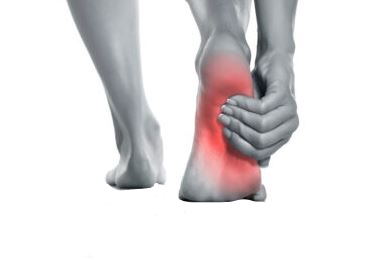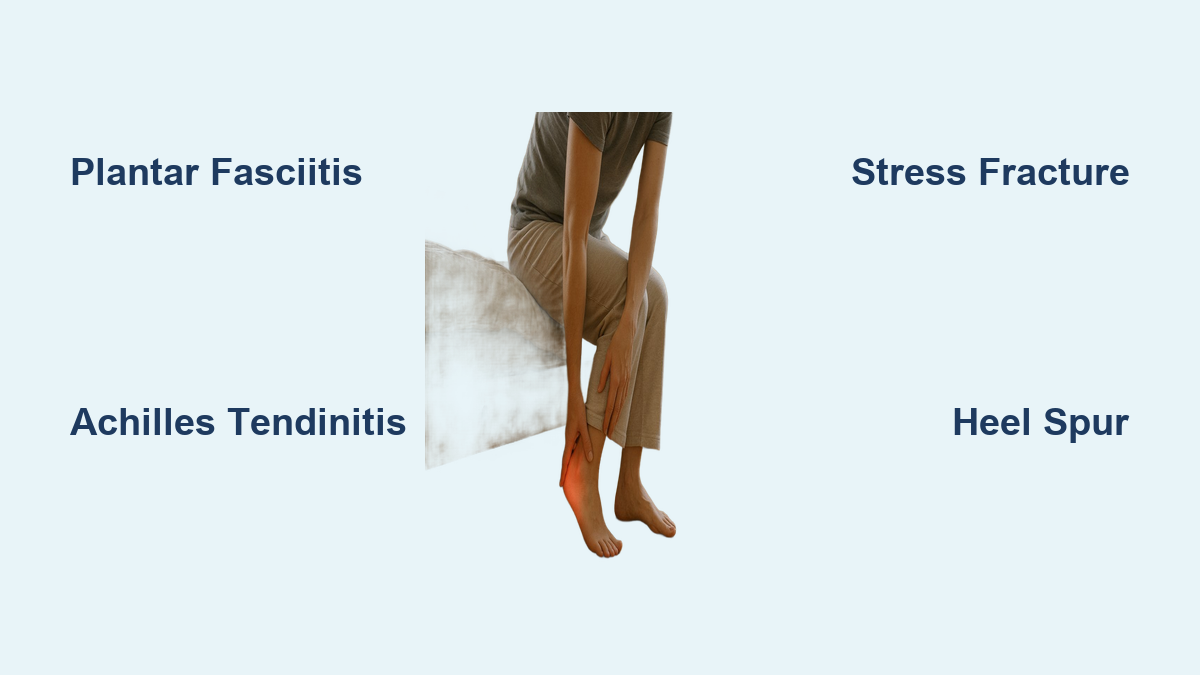
Waking up to sharp, stabbing pain in your heel is more than just a passing discomfort—it’s a warning sign that something in your foot isn’t functioning properly. If you’ve ever limped to the bathroom after rolling out of bed, feeling like you’re stepping on a shard of glass, you’re not alone. Common causes of heel pain in the morning affect millions of people worldwide, with plantar fasciitis alone responsible for up to 87% of diagnosed cases. This sudden onset of pain happens because soft tissues like the plantar fascia or Achilles tendon stiffen during hours of rest, then get abruptly stretched when you stand. While the pain may ease as you move around, ignoring it can lead to long-term damage, altered walking patterns, and even joint issues in your knees, hips, or back.
The good news? Most causes of morning heel pain are treatable—especially when identified early. In this guide, we’ll break down the top conditions behind heel pain upon waking, how to distinguish one from another, and what you can do immediately to reduce discomfort. From simple stretches to footwear fixes and red flags that demand medical attention, this comprehensive overview gives you the tools to take control of your foot health.
Why Morning Heel Pain Happens
Heel pain that spikes first thing in the morning is rarely random. It’s typically tied to tissue stiffness and inflammation that build up during prolonged inactivity. While you sleep, blood flow to the feet decreases, slowing healing and allowing micro-injuries to accumulate. Structures like the plantar fascia or Achilles tendon shorten and tighten. The moment you put weight on your foot, these tissues are suddenly stretched—sometimes tearing at a microscopic level—causing sharp, localized pain.
This mechanism explains why some conditions improve with walking (like plantar fasciitis), while others worsen (like stress fractures). Understanding this cycle is the first step toward effective relief.
Plantar Fasciitis: The #1 Cause of Bottom-of-Heel Pain

Sharp Pain Under the Heel That Eases With Walking
Plantar fasciitis is the most common reason for morning heel pain, affecting about 1 in 10 people at some point in their lives. It occurs when the plantar fascia—a thick, fibrous band running from your heel to your toes—becomes inflamed due to overuse, poor foot mechanics, or repetitive strain.
Why It Hurts First Thing in the Morning
While you sleep, the plantar fascia contracts and tightens. When you take your first steps, it’s violently stretched, causing microtears and intense pain. Because the area has poor blood circulation, healing is slow, creating a cycle of injury and inflammation.
How to Identify Plantar Fasciitis
- Location: Pain under the heel, often near the inner side.
- Sensation: Sharp, stabbing, or knife-like pain.
- Pattern: Worst with the first steps; improves after a few minutes of walking.
- Triggers: Returns after sitting for long periods or prolonged standing.
Who’s Most at Risk?
- Adults aged 40–60 (due to natural tissue degeneration).
- Overweight or obese individuals (extra load on the fascia).
- People with flat feet or high arches (altered biomechanics).
- Runners, teachers, nurses, or factory workers who stand all day.
- Those who wear unsupportive shoes like flip-flops or worn-out sneakers.
Common Mistakes That Make It Worse
- Walking barefoot on hardwood or tile floors.
- Ignoring early pain and continuing high-impact activities.
- Overusing corticosteroid injections, which can weaken the fascia over time.
Achilles Tendinitis: Pain at the Back of the Heel
Stiffness and Aching That Worsens With Activity
Unlike plantar fasciitis, Achilles tendinitis causes pain at the back of the heel, where the Achilles tendon attaches to the bone. The tendon stiffens overnight and is painfully stretched with the first steps, but the discomfort often persists or intensifies throughout the day, especially during running or climbing stairs.
Key Warning Signs
- Dull, throbbing ache above the heel.
- Swelling or warmth along the tendon.
- Tenderness when pressing on the tendon.
- Pain increases with uphill walking or sprinting.
What Triggers It?
- Sudden increase in training intensity (common in weekend athletes).
- Wearing high heels daily, which shortens the tendon.
- Tight calf muscles that pull excessively on the Achilles.
- Poor shoe support, especially lacking heel cushioning.
Quick Relief: Do This Before Getting Out of Bed
Perform a gentle calf stretch while still lying down:
1. Sit up, extend the affected leg.
2. Loop a towel around the ball of your foot.
3. Gently pull toes toward you, holding for 30 seconds.
4. Repeat 3 times.
This pre-emptive stretch reduces tension and prevents the painful morning pull.
Heel Spurs: Bony Growth, Not the Real Pain Source
Misunderstood and Often Blamed Incorrectly
A heel spur is a bony projection that develops on the underside of the heel bone due to long-term strain on the plantar fascia. While often blamed for heel pain, the spur itself is rarely the culprit. Most people with heel spurs—up to 95%—have no symptoms at all.
What You Need to Know
- Pain is caused by inflamed soft tissues, not the bone spur.
- Symptoms mirror plantar fasciitis: sharp bottom-of-heel pain in the morning.
- Diagnosed via X-ray, but imaging isn’t always necessary.
Bottom Line
If your symptoms match plantar fasciitis, treatment is the same—whether a spur is present or not. Focus on reducing inflammation and mechanical stress, not removing the spur.
Stress Fracture: When Pain Gets Worse, Not Better

A Red Flag for Constant, Deep Heel Pain
A calcaneal stress fracture is a small crack in the heel bone caused by repetitive impact—common in runners or those who suddenly increase activity. Unlike plantar fasciitis, the pain doesn’t improve with walking. Instead, it worsens with weight-bearing and may be constant.
Warning Signs
- Deep, localized pain that persists all day.
- Swelling or tenderness over the heel.
- Pain after a recent spike in activity (e.g., new workout routine).
- More common in women with low bone density or osteoporosis.
Don’t Wait: Get the Right Imaging
X-rays often miss early stress fractures. If pain lasts more than a few days, ask for an MRI or bone scan, which are far more sensitive.
Tarsal Tunnel Syndrome: Nerve Pain That Burns

Tingling, Numbness, and Electric Shocks in the Foot
Tarsal tunnel syndrome occurs when the posterior tibial nerve is compressed as it passes through a narrow space inside the ankle. It’s similar to carpal tunnel syndrome but in the foot.
Morning and Nighttime Pain Patterns
- Burning, tingling, or “pins and needles” in the heel and arch.
- Pain often worse at night and upon waking.
- May radiate into the sole of the foot.
Hidden Link: Hypothyroidism
Systemic swelling from low thyroid function can compress the nerve. If you also have fatigue, weight gain, cold intolerance, or hair loss, ask your doctor for a TSH blood test.
Test Yourself: Tinel’s Sign
Tap the inside of your ankle. If it causes shooting pain or tingling, the nerve may be compressed.
Fat Pad Atrophy: Lost Cushioning Under the Heel
Walking on Bone? It Might Be Thinned Fat Tissue
As we age or endure years of high-impact activity, the protective fat pad under the heel can thin out, reducing shock absorption.
Who Gets It?
- Older adults.
- Long-distance runners.
- Obese individuals (due to increased pressure).
How It Feels
- Deep, aching pain in the center of the heel.
- Worse on hard surfaces.
- Doesn’t improve with walking—unlike plantar fasciitis.
- Often described as “walking on a rock.”
Solution: Add Cushioning Back
Use gel heel cups or padded insoles to restore support and reduce impact.
Bursitis and Haglund’s Deformity: Back-of-Heel Pain
Swelling, Redness, and Shoe Rubbing
Both conditions affect the posterior heel and often occur together.
Bursitis: Inflamed Fluid Sac
- Caused by tight shoes rubbing the Achilles.
- Symptoms: Swelling, redness, deep ache.
- Pain worsens when wearing closed shoes.
Haglund’s Deformity: The “Pump Bump”
- A bony bump on the back of the heel.
- Common in people who wear rigid shoes like pumps or dress shoes.
- Often leads to bursitis and Achilles irritation.
Fix: Change Your Footwear
- Switch to open-back shoes or soft heels.
- Use heel pads or moleskin to reduce friction.
Systemic Conditions Behind Heel Pain
When the Problem Isn’t Just in Your Foot
Some causes of morning heel pain stem from whole-body conditions.
Rheumatoid Arthritis (RA)
- Autoimmune disease causing joint inflammation.
- Heel pain due to enthesitis—inflammation where tendons attach to bone.
- Morning stiffness lasts over 30 minutes and improves with movement.
- Often affects multiple joints symmetrically.
Hypothyroidism
- Can trigger tarsal tunnel syndrome or generalized foot pain.
- Look for: fatigue, dry skin, weight gain, hair loss.
Baxter’s Neuritis
- Nerve entrapment mistaken for plantar fasciitis.
- Causes burning, electric pain in the heel.
- Diagnosed with MRI or nerve block.
- Resists standard plantar fasciitis treatments.
Sever’s Disease: Heel Pain in Kids Only
Growth Plate Inflammation in Active Children
Affects kids ages 8–14, especially during growth spurts.
What Happens
- Inflammation of the heel’s growth plate.
- Caused by sports or repetitive impact.
- Pain worsens in the morning or after activity.
Good News: It’s Temporary
- Resolves when growth plates close.
- Treatment: rest, heel lifts, stretching.
How to Tell the Causes Apart

Use Location, Pattern, and Triggers
| Pain Location | Likely Cause |
|---|---|
| Bottom of heel | Plantar fasciitis, heel spur, fat pad atrophy |
| Back of heel | Achilles tendinitis, bursitis, Haglund’s |
| Inside heel/arch | Tarsal tunnel, Baxter’s neuritis |
| Deep, bone-like pain | Stress fracture, fat pad loss |
Does Pain Improve With Walking?
- ✅ Yes → Plantar fasciitis, RA
- ❌ No → Stress fracture, fat pad atrophy, bursitis
One Foot or Both?
- One foot → Injury-related (sprain, fracture)
- Both feet → Systemic (RA, hypothyroidism, obesity)
Immediate Relief Strategies
1. Roll a Frozen Water Bottle
Why: Combines cold therapy and massage.
How: Freeze a water bottle, roll underfoot for 5–10 minutes before stepping out of bed.
Best for: Plantar fasciitis, bursitis.
2. Stretch Before Standing
Do in bed:
– Calf stretch (towel pull)
– Plantar fascia stretch (toes to shin)
3. Wear Supportive Slippers
- Never walk barefoot in the morning.
- Use arch-supporting slippers with cushioning.
Long-Term Prevention
Footwear Rules
- Replace running shoes every 400–500 miles.
- Choose arch support, cushioned soles, heel stability.
- Avoid flat, unsupportive footwear.
Daily Habits
- Stretch calves and feet daily.
- Maintain a healthy weight.
- Avoid sudden activity increases.
Use Orthotics If Needed
- OTC inserts for mild issues.
- Custom orthotics for chronic pain or biomechanical problems.
When to See a Doctor
Seek help if:
– Pain lasts more than 3–4 weeks.
– You can’t walk without limping.
– There’s swelling, redness, or numbness.
– Pain is constant or worsening.
Specialists to Consult
- Podiatrist: Foot and ankle expert.
- Orthopedist: For fractures or surgery.
- Endocrinologist: If hypothyroidism is suspected.
Summary: Top 5 Takeaways
- Plantar fasciitis is the #1 cause—sharp pain under the heel that improves with walking.
- Check the pain location—back, bottom, or inside the heel points to different causes.
- Stretch before standing—it breaks the morning pain cycle.
- Support your feet—from slippers to sneakers, cushioning matters.
- Don’t ignore persistent pain—early care prevents chronic issues.
Morning heel pain isn’t something you have to live with. Whether it’s plantar fasciitis, a stress fracture, or a systemic condition, the right diagnosis leads to the right fix. Start with simple stretches and footwear changes—many people find relief within weeks. But if pain lingers, get it checked. Your feet carry you every day—give them the care they deserve.