If you’ve ever winced while slipping on shoes, felt a persistent ache at the base of your big toe, or noticed a growing bump pushing outward from your foot, you may be experiencing the early signs of a bunion. Affecting up to 35.7% of older adults and 23% of the general adult population, bunions—medically known as hallux valgus—are more than just a cosmetic issue. This progressive deformity causes the big toe to drift inward, creating pain, instability, and even an increased risk of falls, especially in older individuals.
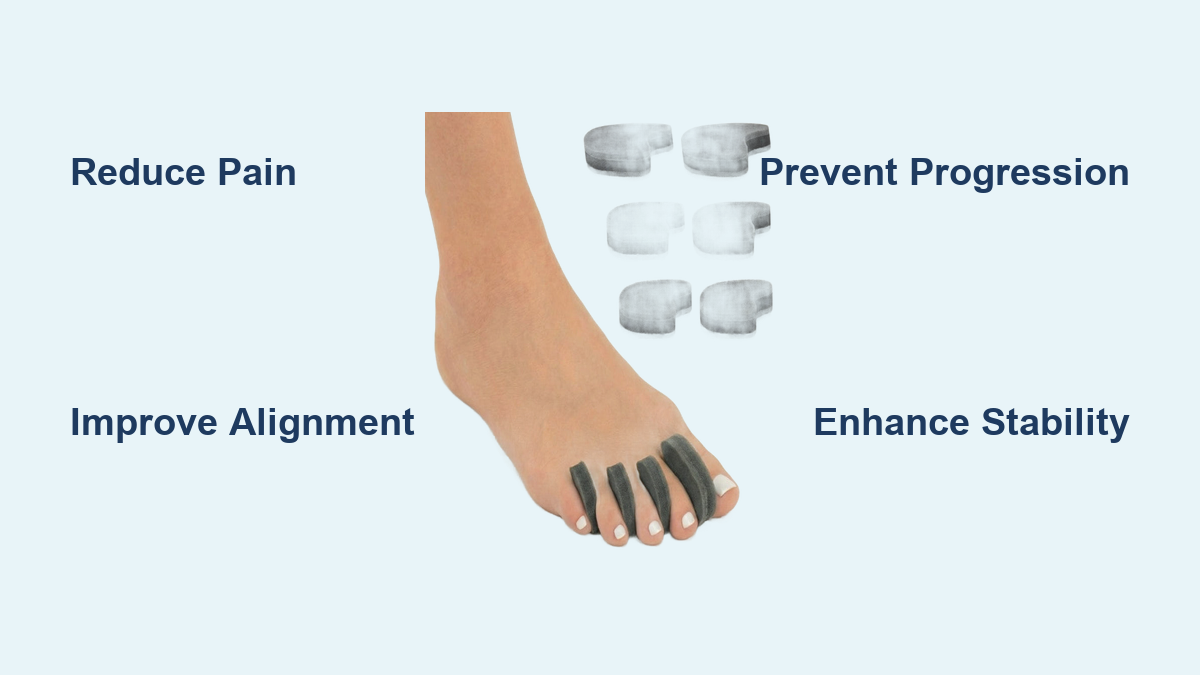
While surgery is often presented as the only long-term solution, many people are turning to a simpler, non-invasive approach: toe separators. These small silicone or gel spacers fit snugly between the toes and offer more than momentary comfort—they can actively reduce pain, slow bunion progression, improve foot alignment, and enhance overall foot function. Backed by clinical research and used widely in both conservative care and post-surgical recovery, toe separators are emerging as a powerful tool in managing bunion symptoms without scalpels or downtime.
In this guide, you’ll discover the science-backed benefits of using toe separators, how they work to support foot health, and the best practices for using them effectively. Whether you’re in the early stages of a bunion or recovering from surgery, this low-cost, non-invasive strategy could be the key to walking with greater ease and confidence.
Reduce Bunion Pain and Discomfort
One of the most immediate and noticeable benefits of using toe separators is significant pain relief. By creating space between the big and second toes, these devices reduce pressure on the inflamed joint, easing the constant friction that aggravates bunions.
How Spacers Alleviate Pain
As the big toe shifts inward, the metatarsophalangeal (MTP) joint protrudes, rubbing against shoes and compressing soft tissues and nerves. Toe separators counteract this by:
– Opening the first web space, reducing pressure on the bunion bump
– Minimizing soft tissue pinching and nerve irritation
– Distributing weight more evenly across the forefoot
Clinical studies confirm these effects. In a 2008 study by Tehraninasr et al., patients using an insole with a built-in toe separator saw their pain levels drop from 4.06 to 0.88 on a 10-point scale immediately after use. Another study by Tang et al. found pain scores fell from 4.06 to 0.42 after three months of daily use. Many users report feeling relief within minutes, especially when worn during rest or in roomy footwear.
Best Practices for Pain Relief
- Use spacers during low-impact activities or while resting
- Pair with bunion pads or gel sleeves for extra cushioning
- Wear only with wide-toe-box shoes—tight footwear negates the benefits
Improve Toe Alignment and Foot Mechanics

Proper toe positioning is essential for balance, gait efficiency, and joint health. Toe separators help restore natural alignment by gently guiding the big toe back toward its correct anatomical position.
Correct the Hallux Drift
As bunions progress, the hallux valgus angle (HVA) increases, pulling the big toe across the foot. Spacers apply gentle lateral pressure to counteract this drift. A randomized trial by Abdalbary et al. found that combining foot mobilization, exercises, and toe spacers for three months led to:
– Improved hallux strength and toe grip
– Better ankle range of motion
– Measurable reduction in HVA on X-rays
This shows spacers aren’t just passive supports—they actively contribute to functional correction when paired with movement therapy.
Restore Natural Toe Splay
Modern shoes often force toes together, weakening intrinsic foot muscles. Toe separators encourage natural toe splay, which:
– Enhances weight distribution
– Improves push-off power during walking
– Increases stability on uneven surfaces
Over time, this improved mechanics can reduce strain on the knees, hips, and lower back.
Prevent Bunion Progression

While toe separators can’t reverse bone changes, they are proven to slow or stop worsening, particularly in mild to moderate cases.
Evidence of Structural Impact
A 12-month study by Chadchavalpanichaya et al. followed 90 patients with moderate bunions. One group wore custom silicone separators for 6 hours nightly; the other received no treatment.
Results:
– Spacer group: HVA decreased by 3.3°
– Control group: HVA increased by 1.9°
– The difference was statistically significant (p < 0.05)
This suggests that consistent use can not only halt progression but may improve alignment over time.
Ideal for Early-Stage Intervention
For those with early signs—slight toe drift, occasional pain, or family history—starting early is crucial. Think of spacers like braces: most effective before severe deformity sets in.
Prevention tips:
– Begin use at first sign of misalignment
– Wear nightly or during long standing periods
– Combine with foot-strengthening exercises
Reduce Friction and Skin Irritation
Bunions often lead to corns, calluses, and even ingrown toenails due to constant rubbing. Toe separators eliminate direct contact between toes.
Stop Toe-on-Toe Rubbing
As the big toe crosses over or under the second, friction causes:
– Corns and blisters
– Interdigital ulcers
– Morton’s neuroma (nerve pain)
Spacers create a physical barrier, protecting sensitive skin and nerves.
Foot specialist Courtney Conley explains:
“Squeezing an irritated nerve into a narrow shoe is like pinching a finger in a door. Toe spacers relieve that compression—especially helpful for nerve-related foot pain.”
Protect Overlapping Toes
In advanced cases, toes may overlap or curl into hammertoes. Spacers help maintain space, reducing deformity progression and making footwear more tolerable.
For best results:
– Use full-foot spacers if multiple toes are affected
– Choose soft, flexible materials to avoid pressure points
– Wear with open-toe sandals or wide shoes
Enhance Intrinsic Foot Muscle Activation
Weak foot muscles contribute to bunion development. Spacers help retrain and strengthen these hidden stabilizers.
Stimulate Hidden Foot Muscles
The intrinsic muscles—like the abductor hallucis—support the arch and stabilize the big toe. When toes are cramped, these muscles weaken.
Spacers promote activation by:
– Encouraging natural toe splay
– Increasing neuromuscular feedback
– Supporting short foot exercise and other routines
A pilot study by Lee et al. (2013) found spacers:
– Increased tibialis anterior activity (improving shock absorption)
– Reduced peroneus longus overactivity (balancing foot control)
– Enhanced proprioception and ankle stability
Combine with Strengthening Exercises
For lasting results, pair spacers with:
– Short foot exercise: Contract arch muscles without curling toes
– Toe spreads: Actively spread toes apart
– Towel curls and marble pickups
Perform daily for 8–12 weeks to see measurable strength gains.
Improve Balance and Gait Stability
Better toe alignment means better balance—critical for athletes and older adults alike.
Widen the Base of Support
Splayed toes create a broader, more stable platform, improving:
– Postural control
– Single-leg stance balance
– Recovery from slips
One study found gel toe separators increased tibialis anterior activation, a key muscle for upright posture.
Reduce Fall Risk in Older Adults
Research links bunions to a 62% fall rate in older adults, nearly double that of people without bunions. Misaligned toes impair push-off and destabilize gait.
Spacers can:
– Enhance forefoot loading
– Improve step symmetry
– Increase walking confidence
Support Postoperative Recovery

After bunion surgery, maintaining correction is critical—spacers help prevent recurrence.
Prevent Relapse After Surgery
Surgeons often use spacers to:
– Keep the big toe in corrected position
– Protect surgical sites
– Prevent stiffness
Common protocols:
– Arbab et al.: 3 weeks of bandaging, then night splints and spacers for 3 months
– Waizy et al.: 4 weeks of dressing, then night orthosis and spacers for 6 weeks
While one study found no radiographic benefit from taping, spacers remain widely used due to comfort and practicality.
Aid Healing and Mobility
Patients report:
– Faster return to normal footwear
– Less swelling
– Improved toe mobility
Use as directed by your podiatrist, typically at night or during rest.
Low-Cost, Non-Invasive Symptom Management
Compared to surgery, which can cost $5,000–$15,000 and require months of recovery, toe separators offer a safe, affordable alternative.
Avoid Surgery with Conservative Care
Spacers:
– Cost $10–$30
– Are reusable (especially silicone)
– Require no downtime
– Pose minimal risk
Many patients delay or avoid surgery with consistent use, proper footwear, and exercises.
Ideal for Daily Use and Prevention
Spacers fit easily into daily life:
– Wear at home, during yoga, or at your desk
– Use sock-style spacers for all-day comfort
– Pair with zero-drop, foot-shaped shoes
They’re most effective as part of a holistic foot health routine.
Choose and Use Spacers Effectively
Getting the right type and using them properly ensures safety and results.
Pick the Right Material and Fit
| Type | Best For | Notes |
|---|---|---|
| Silicone | Long-term use | Durable, retains shape |
| Gel/Foam | Sensitive skin | Softer but may compress |
| Single spacer | Targeted relief | Focuses on first web space |
| Five-toe spacers | Full alignment | Improves overall splay |
| Sock-style | All-day wear | Breathable, discreet |
Avoid overly rigid models that may cause pressure sores.
Start Slowly and Build Tolerance
- Begin with 15–30 minutes per day
- Increase by 30-minute increments weekly
- Stop if you feel pain, numbness, or redness
Most users build up to 2–6 hours daily, often at night.
Combine with Other Treatments
Maximize results by integrating spacers into a full plan:
– Wear wide-toe-box shoes
– Use custom orthotics
– Stretch calves and Achilles
– Manage weight
– Apply ice during flare-ups
Know the Limitations and Risks
Spacers are helpful—but not a cure-all.
Not a Cure for Structural Deformity
- Cannot remove the bony bump
- Won’t correct severe angular deformities
- Effects are temporary if used alone
They are supportive tools, not substitutes for surgery in advanced cases.
Avoid If You Have Certain Conditions
Do not use without medical advice if you have:
– Diabetes or poor circulation
– Neuropathy
– Open wounds or ulcers
– Severe arthritis
In rare cases, improper use has led to skin breakdown or even metatarsal stress fractures.
Watch for Misuse Signs
Stop and reassess if you notice:
– Persistent redness or blisters
– Worsening pain
– New misalignment in other toes
Clean spacers regularly to prevent odor and bacteria.
When to See a Podiatrist
While home care helps, professional evaluation is essential.
Signs You Need Medical Help
Seek care if you have:
– Constant or worsening pain
– Swelling that doesn’t improve
– Difficulty walking
– Visible bunion progression
– Signs of infection
A podiatrist can:
– Order X-rays
– Prescribe custom orthotics
– Recommend physical therapy
– Discuss surgical options
Surgical Options for Severe Cases
Surgery may be necessary when:
– Pain limits daily life
– Conservative treatments fail
– Gait is severely compromised
Common procedures include osteotomy, Lapidus, Lapiplasty, and BTF fusion.
Final Note: Toe separators are not magic fixes, but they are powerful allies in bunion management. Backed by research and clinical experience, they reduce pain, improve alignment, prevent progression, and enhance foot function—especially when used early and consistently. Combined with proper footwear, exercises, and professional guidance, they offer a safe, low-cost path to healthier feet and a better quality of life.