Do your feet ache after just a few minutes of standing? Does walking on hard floors feel like stepping on pebbles? You might have high arches—also known as pes cavus—a condition affecting about 10% of people. Unlike flat feet, high arches don’t flatten when you stand, leaving your heel and the ball of your foot to bear most of your body weight. This lack of natural shock absorption leads to pain, instability, and even problems in your knees, hips, and back over time.
High arches can be inherited or caused by underlying neurological conditions like Charcot-Marie-Tooth disease. While some people live symptom-free, others struggle with chronic pain, frequent ankle sprains, and difficulty finding shoes that fit. The good news? Recognizing the signs of high arches in feet early can help you manage discomfort, prevent complications, and improve your mobility. In this guide, we’ll walk you through the telltale symptoms, how they affect your gait, and what steps you can take—whether it’s choosing better footwear, using orthotics, or knowing when to see a specialist.
Visible High Arch When Standing

Check Your Footprint with the Wet Test
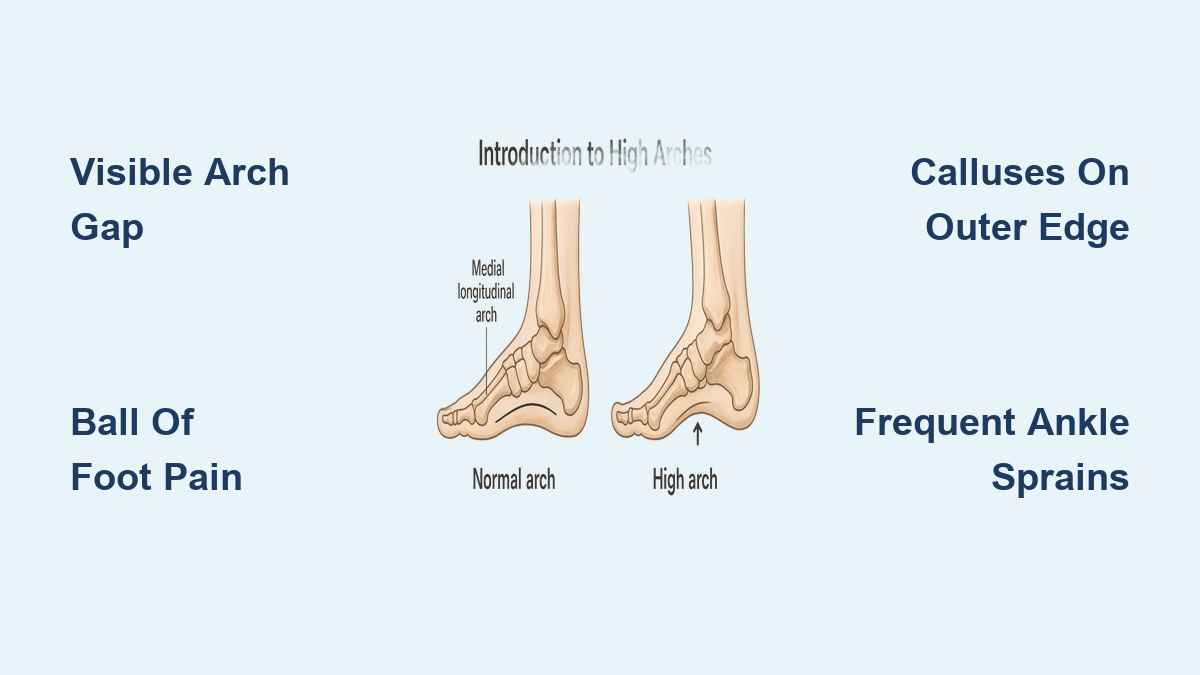
One of the clearest indicators of high arches is a visible gap between the inner foot and the ground when standing. Unlike normal or flat feet, the arch remains elevated under weight. A simple wet test at home can confirm this: wet your foot and step onto a dry surface like concrete or cardboard. If only your heel and forefoot leave an imprint—with little to no midfoot contact—you likely have high arches.
This lack of ground contact shifts pressure to the heel and ball of the foot, increasing discomfort during walking or standing. The more pronounced the arch, the greater the strain on surrounding structures.
Compare Your Footprint to Common Types
- Normal foot: Midfoot imprint connects heel and forefoot.
- Flat foot: Full or nearly full sole contact.
- High arch: Only heel and ball touch the ground.
If your footprint looks like a “C” shape, high arches are probable. While not painful for everyone, this structure reduces flexibility and shock absorption—setting the stage for long-term issues.
Foot Pain in Key Pressure Zones

Sharp or Burning Pain Under the Ball of the Foot
Excess pressure lands on the metatarsal heads—the bones just behind your toes. This leads to metatarsalgia, a sharp or burning pain that worsens with activity. You may feel like you’re walking on marbles or pebbles.
Why it happens: With the arch too rigid to flatten, the forefoot takes on more force during push-off. Over time, this can inflame soft tissues and even lead to stress fractures.
Heel and Arch Discomfort After Rest
Pain in the heel often results from poor shock absorption. Each step sends impact forces straight up, irritating the heel pad and plantar fascia. Arch pain, though less common than in flat feet, can still occur due to muscle strain or ligament tension.
Pro tip: Pain that flares in the morning or after rest may signal plantar fasciitis, a secondary condition linked to high arches.
Calluses and Corns from Uneven Pressure
Thick Skin on the Outer Edge of the Foot
Calluses often form on the lateral (outer) edge of the foot due to supination—the foot rolling outward during walking. This unnatural motion increases friction against your shoe, prompting the skin to thicken as protection.
You may also notice calluses:
– Under the ball of the foot
– On the tops of toes, from shoe pressure
– On the tips of toes, due to clawing
Painful Corns and Skin Breakdown
Corns—small, hard patches with a central core—develop from repeated rubbing. They’re common on bent toes (like hammertoes) and can become inflamed or infected if untreated.
Warning: People with nerve damage (e.g., from diabetes or neuropathy) should monitor these areas closely. Reduced sensation increases the risk of ulcers.
Frequent Ankle Sprains and Instability
Repeatedly Rolling Your Ankle
High arches often lead to chronic ankle instability. Because the foot supinates, the ankle joint tilts outward, weakening lateral ligaments. This makes you more prone to rolling your ankle, even on flat ground.
Signs you may be at risk:
– History of repeated sprains
– Feeling “wobbly” on uneven surfaces
– Avoiding hiking or trail running
Balance and Coordination Challenges
Supination reduces your foot’s ability to adapt to terrain, affecting balance. You might:
– Trip more often
– Struggle to stand on one foot
– Feel fatigued during long walks
Pro tip: Balance training and ankle-strengthening exercises can reduce fall risk and improve gait stability.
Shoes That Don’t Fit Right

Heel Slippage Despite Proper Sizing
Even if the toe box fits, heel slippage is common. The high arch lifts the midfoot, causing the shoe to loosen in the heel. This leads to blisters, discomfort, and inefficient walking mechanics.
Tightness Across the Top of the Foot
Standard shoes aren’t designed for high arches. You may feel:
– Pinching across the instep
– Pressure on the top of the foot
– Toes crammed despite correct size
Solution: Look for shoes with:
– Removable insoles (to fit custom orthotics)
– Deep toe boxes
– Adjustable straps or lacing
Many brands like New Balance, Brooks, and Hoka offer models ideal for supinated feet.
Claw Toes and Hammertoes
Toes That Curl or Bend Abnormally
Muscle imbalances from high arches pull toes into abnormal positions:
– Claw toes: Toes curl at both middle and end joints.
– Hammertoes: Bend only at the middle joint.
These deformities cause:
– Painful rubbing against shoes
– Calluses on top of toes
– Difficulty wearing closed footwear
Overlapping or Curled Toes
In severe cases, toes may overlap or press into adjacent toes. This can lead to corns, infections, or difficulty finding socks that fit.
Early intervention with toe spacers, splints, or orthotics can slow progression and reduce discomfort.
Tired, Aching Feet After Minimal Activity
Rapid Fatigue During Walking or Standing
Do your feet feel heavy or burn after minimal activity? High-arched feet work harder to stabilize and absorb shock. The rigid structure lacks natural flexibility, leading to rapid fatigue.
Symptoms include:
– Aching after standing at work
– Burning sensation in the arch or ball of foot
– Needing to sit down frequently during walks
Unlike normal fatigue, this doesn’t always improve with rest—especially if biomechanics remain uncorrected.
Impact on Daily Mobility
Chronic foot fatigue affects more than comfort. It can:
– Reduce walking endurance
– Limit participation in exercise
– Contribute to sedentary habits
Tip: Cushioned insoles and low-impact activities (like swimming) help preserve mobility without overloading the feet.
Altered Gait and Body-Wide Pain

Walking on the Outer Edge of Your Foot
People with high arches often walk on the lateral edge of the foot. This supinated gait is stiff and less fluid, reducing natural shock absorption.
You might notice:
– Uneven shoe wear—more on the outer sole
– A bouncy or rigid walking pattern
– Stiffness in the ankle or calf
Knee, Hip, and Lower Back Pain
Altered gait doesn’t stop at the foot. The kinetic chain transmits stress upward:
– Knee pain, especially on the outer side
– Hip soreness from uneven stride
– Lower back pain due to poor alignment
These secondary issues are often misdiagnosed—treating the root cause (high arches) can relieve pain throughout the body.
Progressive Foot Deformities Over Time
Development of Pes Cavovarus
The most common form of high arch is pes cavovarus, where:
– The arch is high
– The heel tilts inward (varus)
– The forefoot points downward
This creates a “hollow foot” appearance and increases instability. Over time, the foot may become rigid and painful.
Pes Calcaneocavus (Less Common)
In neuromuscular cases, pes calcaneocavus occurs:
– Heel is dorsiflexed (lifted)
– Forefoot points down
– Arch is highest near the heel
Often linked to nerve damage (e.g., after stroke or spinal injury), this type requires specialized evaluation.
What Causes High Arches?
Hereditary High Arches
Many people inherit high arches with no other health issues. These are usually stable and non-progressive, appearing in childhood and remaining consistent.
Family history is a strong indicator. If multiple relatives have similar foot shapes or shoe problems, genetics are likely involved.
Neuromuscular Disorders
High arches can signal a neurological condition, especially if they worsen over time. Common causes include:
– Charcot-Marie-Tooth disease (most frequent)
– Friedreich’s ataxia
– Cerebral palsy
– Spina bifida
– Spinal cord injuries
These disorders disrupt nerve signals, causing muscle imbalances that pull the foot into a high-arched position.
Final Note: High arches aren’t just a foot shape—they’re a biomechanical challenge that can affect your entire body. Recognizing the signs of high arches in feet early allows you to take control with proper footwear, orthotics, and targeted exercises. If pain, instability, or toe deformities interfere with daily life, don’t wait—see a foot specialist. Whether your high arches are inherited or linked to a neurological condition, the right care can keep you moving comfortably for years to come.