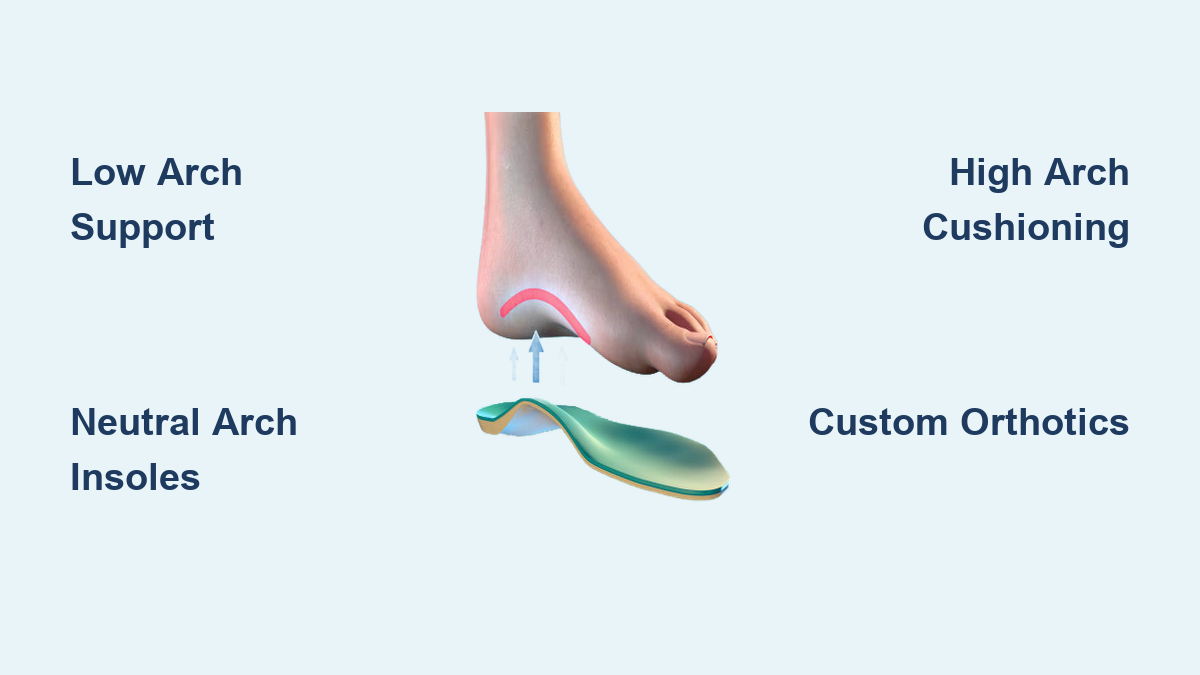
If you’ve ever struggled with aching feet, persistent heel pain, or unexplained knee and back discomfort, your foot arch type could be the root cause. The types of arch supports for different foot shapes are not interchangeable—your low, neutral, or high arches each demand specific support to maintain proper alignment and prevent long-term injury. Choosing the wrong insole can do more than just feel uncomfortable; it can worsen biomechanical imbalances, increase injury risk, and reduce your mobility over time.
Understanding your foot’s natural structure is the first step toward lasting relief. Whether you’re on your feet all day, training for a 5K, or simply walking through daily life, the right arch support can transform how your body feels and functions. This guide breaks down how to identify your arch type, the gait implications of each shape, and the best arch supports to match your anatomy. You’ll learn exactly which materials, designs, and insoles work best—backed by biomechanics, podiatrist insights, and real-world results.
Identify Your Arch Type

Perform the Wet Test at Home
The wet test is a simple, effective way to determine your arch type using nothing more than water and a flat surface.
- Wet the sole of your bare foot in a shallow pan.
- Step onto a dry, absorbent surface like cardboard or paper.
- Examine the footprint left behind.
- Low arch (flat feet): The imprint shows nearly the entire sole, with little to no inward curve.
- Neutral arch: A distinct, narrow band connects the heel and forefoot—about half the arch is filled in.
- High arch: Only a thin line or no imprint appears along the inner edge—just the heel and ball of the foot are visible.
This footprint reveals your pronation pattern: whether your foot rolls inward too much (overpronation), outward (supination), or maintains a balanced motion. That insight guides your support needs.
Try the Pencil Test for Precision
The pencil test, popularized by Superfeet, offers a more accurate assessment.
- Stand barefoot on a hard floor, distributing your weight evenly.
- Slide the eraser end of a pencil under the highest point of your arch.
- Low arch: The eraser hits resistance—no space under the arch.
- Medium arch: The metal ferrule fits snugly beneath.
- High arch: The pencil slides deep under, past the ferrule.
This method helps differentiate between moderate and extreme arch heights—critical when selecting pre-made insoles that match your foot’s exact contour.
Seek a Clinical Gait Analysis for Chronic Issues
If you’re dealing with ongoing pain or athletic performance concerns, a professional podiatric evaluation is invaluable. A podiatrist may use:
- 3D foot scanning
- Pressure mapping
- Treadmill gait analysis
These tools detect subtle issues like early-stage posterior tibial tendon dysfunction or rigid flatfoot—conditions invisible to DIY tests. If you’re experiencing persistent foot, knee, or back pain, a clinical assessment ensures you’re not guessing at the solution.
Arch Support Needs for Low Arches

Choose Rigid or Semi-Rigid Orthotics
Flat feet (low arches) tend to overpronate, meaning the foot rolls excessively inward during walking or running. This collapses the arch, misaligning the ankle and knee, and increasing strain on the plantar fascia, Achilles tendon, and joints up the kinetic chain.
To correct this, rigid or semi-rigid arch supports made from polypropylene, carbon fiber, or thermoplastic are essential. These materials provide structural reinforcement that lifts and stabilizes the arch.
- Best for: Overpronators, plantar fasciitis sufferers, or those with diagnosed flat feet.
- Look for: Deep heel cups, firm arch profiles, and motion-control design.
Avoid soft, cushioned insoles—they may feel comfortable at first but allow further arch collapse, worsening instability.
Wear Motion Control Shoes to Enhance Support
Footwear plays a crucial role. Motion control shoes are designed to work with rigid orthotics and include:
- Straight lasts (shoe shape)
- Firm midsoles
- Reinforced heel counters
Brands like Brooks Beast, Adrenaline GTS, and ASICS Gel-Kayano are engineered for flat-footed runners. These features limit excessive inward roll and improve gait efficiency.
Avoid curved-lasted or minimalist shoes—they lack the support low arches need and can accelerate joint wear.
Prevent Overpronation-Related Injuries
Without proper support, flat feet increase the risk of:
- Plantar fasciitis
- Shin splints
- Bunions and hammertoes
- Knee valgus (“knock knees”)
- Lower back pain
A well-fitted orthotic redistributes pressure, reduces fatigue, and protects your entire body. For those on their feet all day, this isn’t just comfort—it’s a necessity for long-term health.
Support Solutions for Neutral Arches
Use Moderate Arch Insoles for Balanced Support
Neutral arches are biomechanically efficient, but they still benefit from moderate support, especially during high-impact activities or prolonged standing.
OTC insoles with semi-curved lasts and medium-density foam maintain natural alignment without overcorrecting.
- Best materials: EVA foam, memory foam with a firm base layer.
- Avoid: Aggressive arch lifts or rigid supports—they can cause strain on a normally functioning foot.
Think of it as preventive maintenance: like shock absorbers in a car, even a well-built system performs better with support.
Prioritize Cushioning and Flexibility
Neutral arches need balanced cushioning—not too soft, not too stiff.
- For running: Look for insoles with heel gel pads and responsive forefoot cushioning.
- For work shoes: Choose anti-fatigue designs with metatarsal support.
- For casual wear: Flexible inserts like Superfeet Blue or Spenco Polysorb offer all-day comfort.
These supports enhance performance without interfering with natural gait mechanics.
Prevent Early Signs of Strain
Even neutral feet aren’t immune to problems. Aging, weight gain, or pregnancy can lead to arch collapse over time.
Using preventive arch supports with heel stabilization and mild arch contouring can delay or prevent flatfoot progression. Adding a metatarsal pad also reduces forefoot pressure—useful if you notice ball-of-foot pain.
Arch Support Strategies for High Arches
Maximize Cushioning and Shock Absorption
High arches (cavus feet) are rigid and underpronate (supinate)—they roll outward, reducing natural shock absorption. This concentrates pressure on the heel and ball of the foot, increasing risk for:
- Stress fractures
- Metatarsalgia
- Ankle sprains
- Plantar fasciitis
The solution? Highly cushioned insoles made from gel, air, or Sorbothane.
- Best features: Thick midsole padding, deep heel cups, energy-return materials.
- Top picks: Sorbothane Heel Cups, Superfeet Yellow, Spenco Total Support Max.
These materials absorb impact that your foot can’t—protecting bones and joints with every step.
Fill the Arch Gap with High-Profile Supports
Unlike flat feet, high-arched feet need arch fill, not arch lift. The goal is to bridge the gap under the medial arch to distribute weight evenly.
- Look for: Tall, contoured arches in OTC or custom insoles.
- Custom orthotics are ideal—they’re molded to your exact arch height and foot shape.
Avoid low or medium arch insoles—they won’t make contact and offer no support.
Stabilize the Heel and Forefoot
Due to instability, high-arched feet benefit from:
- Deep heel cups to prevent lateral roll
- Lateral support walls in shoes
- Metatarsal pads to relieve ball-of-foot pressure
These features reduce the risk of ankle sprains and forefoot injuries—common complaints among supinators.
Shoes with curved lasts and flexible soles also accommodate the rigid foot structure, allowing smoother transitions during gait.
Compare Arch Support Materials

Choose Gel for Comfort and Conformity
Gel insoles, typically silicone-based, mold to your foot and provide excellent cushioning.
- Best for: High arches, heel pain, or temporary relief.
- Pros: Soft, shock-absorbing, works well in dress shoes.
- Cons: Wears down over time, lacks structural control—not ideal for overpronators.
Use gel supports when comfort is the priority, but pair with a firmer base if you need motion control.
Opt for Foam in Daily and Athletic Shoes
EVA or memory foam insoles are lightweight and affordable—ideal for daily wear or running.
- Best for: Neutral to high arches.
- Pros: Comfortable, widely available, good for mild support needs.
- Cons: Compresses with use—replace every 6–12 months.
Look for models with dual-density foam—a soft top layer over a firmer base—for better durability and support.
Consider Rigid Plastic for Biomechanical Correction
Polypropylene or carbon fiber insoles offer maximum control for flat feet.
- Best for: Overpronation, PTTD, or post-injury recovery.
- Pros: Long-lasting, corrects gait, prevents deformities.
- Cons: Requires break-in period; may not fit in narrow shoes.
These are the gold standard for structural support—especially when prescribed by a podiatrist.
Test Air-Filled Supports for Adjustable Relief
Inflatable insoles let you customize firmness—useful for swelling, diabetes, or fluctuating foot volume.
- Best for: Travel, post-surgery, or variable conditions.
- Pros: Adjustable, lightweight.
- Cons: Risk of puncture; less stable than solid supports.
Not a primary solution, but helpful as a short-term or situational option.
Select the Right Insoles by Activity

Use Firm Supports for Running and Hiking
High-impact activities demand durable, motion-controlling insoles.
- Runners with flat feet: Choose rigid orthotics with deep heel cups (e.g., PowerStep Pinnacle).
- Hikers with high arches: Prioritize cushioning and ankle stability (e.g., Superfeet Green or Yellow).
Look for moisture-wicking covers to prevent blisters during long treks.
Wear Cushioned Insoles for All-Day Standing
If you work on your feet—nursing, retail, construction—anti-fatigue insoles are essential.
Key features:
- Thick EVA or gel layers
- Metatarsal pads
- Heel cushioning
- Arch support matched to your foot type
These reduce muscle fatigue, improve circulation, and prevent cumulative stress injuries.
Pick Low-Profile Inserts for Dress Shoes
Tight footwear requires low-profile insoles.
- Best options: Superfeet Run Support Low Arch, Footbalance Dress Insoles.
- Remove the original shoe liner to make room.
- Prioritize arch contour over cushioning—thin doesn’t mean weak.
Even in formal shoes, proper support prevents long-term damage.
Know When to Upgrade to Custom Orthotics
Get Custom Supports for Chronic Pain
Over-the-counter insoles help mild to moderate issues, but custom orthotics are the gold standard for:
- Severe overpronation or supination
- Diabetic foot care
- Post-surgical recovery
- Persistent plantar fasciitis or tendonitis
Made from a 3D scan or cast of your foot, they offer precision correction unmatched by OTC products.
Understand the Custom Orthotic Process
- Consult a podiatrist—discuss symptoms and activity level.
- Foot imaging—via foam box, plaster cast, or digital scan.
- Prescription—specifying corrections for pronation, arch height, or leg length differences.
- Fabrication—lab-made with durable, layered materials.
- Fitting and adjustment—ensure comfort and effectiveness.
Though more expensive ($300–$600), many insurance plans cover custom orthotics with a diagnosis.
Recognize the Long-Term Value
Custom orthotics typically last 2–3 years with proper care. They:
- Prevent progression of foot deformities
- Reduce reliance on pain medication
- Improve posture and gait efficiency
For athletes, workers, or those with chronic conditions, they’re an investment in mobility and quality of life.
Avoid Common Arch Support Mistakes
Don’t Use Too Much Support
Yes, too much arch support can hurt.
Forcing a high-arch insole into a flat foot—or using rigid supports without a break-in period—can cause:
- Top-of-foot pain
- Arch strain
- Altered gait
Solution: Match insole height to your natural arch. Start with moderate support and upgrade only if needed.
Never Skip the Break-In Period
Even the best orthotics require adjustment.
- Day 1: Wear 1 hour
- Day 2: 2 hours
- Gradually increase over 1–2 weeks
If you feel sharp pain, stop and consult a professional. Discomfort is normal; pain is not.
Always Check Shoe Compatibility
Not all insoles fit all shoes.
- Full-length insoles work in sneakers and boots.
- 3/4-length or low-profile versions fit in dress shoes or running flats.
- Remove the original insole to avoid crowding.
A poorly fitting insert can cause blisters, pressure points, or reduced effectiveness.
The right arch support isn’t about comfort alone—it’s about biomechanical alignment. Whether you have flat feet needing control, neutral arches needing balance, or high arches needing cushioning, matching your support to your foot shape prevents pain, enhances performance, and protects your body from head to toe. Start with a simple wet test, choose the right material and design, and don’t hesitate to seek custom solutions when OTC options fall short. Your feet carry you every day—give them the support they’re built for.