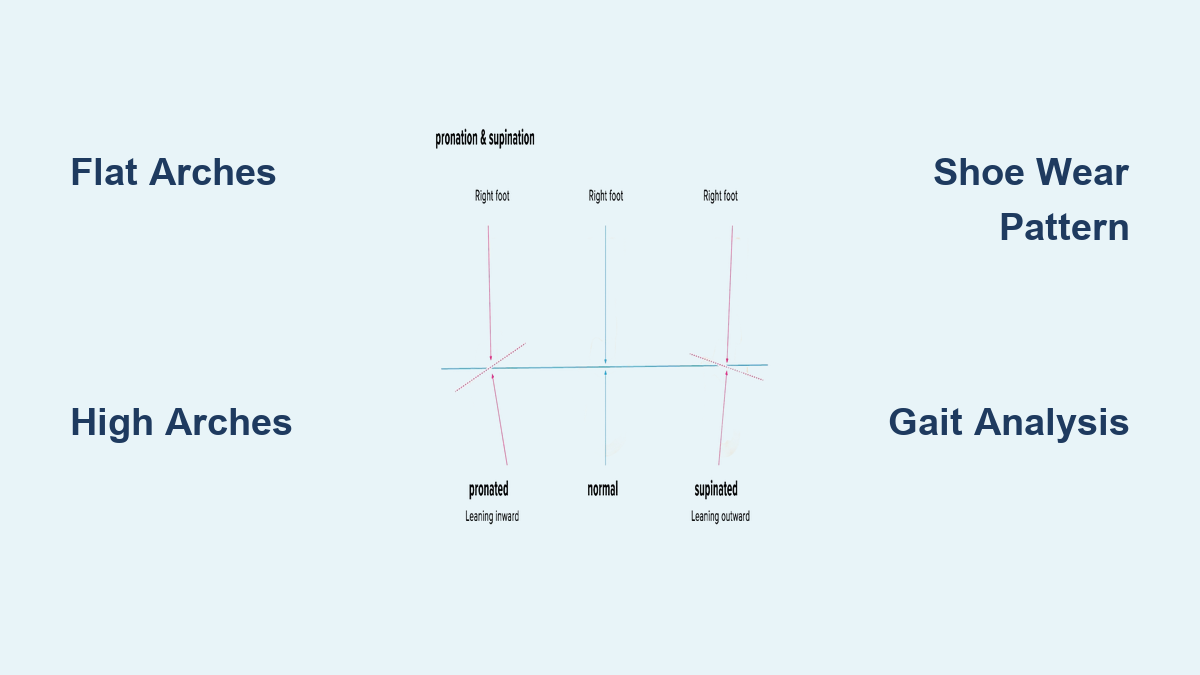
If you’ve ever felt persistent foot pain, shin splints, or knee discomfort after walking or running, your gait could be the hidden culprit. Two of the most common biomechanical imbalances—overpronation and supination (also known as underpronation)—affect millions of people, often without them realizing it. While both involve the foot’s natural inward and outward rolling motion during movement, they represent opposite extremes that can lead to serious injuries if ignored.
Understanding the difference between overpronation and supination is critical for choosing the right footwear, preventing injury, and improving overall movement efficiency. This guide breaks down the core distinctions, including causes, symptoms, and solutions. You’ll learn how to identify your foot type using simple at-home tests, and discover targeted fixes—from supportive shoes and orthotics to specific exercises that restore balance.
Whether you’re a daily walker, a weekend runner, or someone on their feet all day, knowing your gait pattern can transform your comfort, performance, and long-term joint health.
Overpronation: When the Foot Rolls Too Far Inward

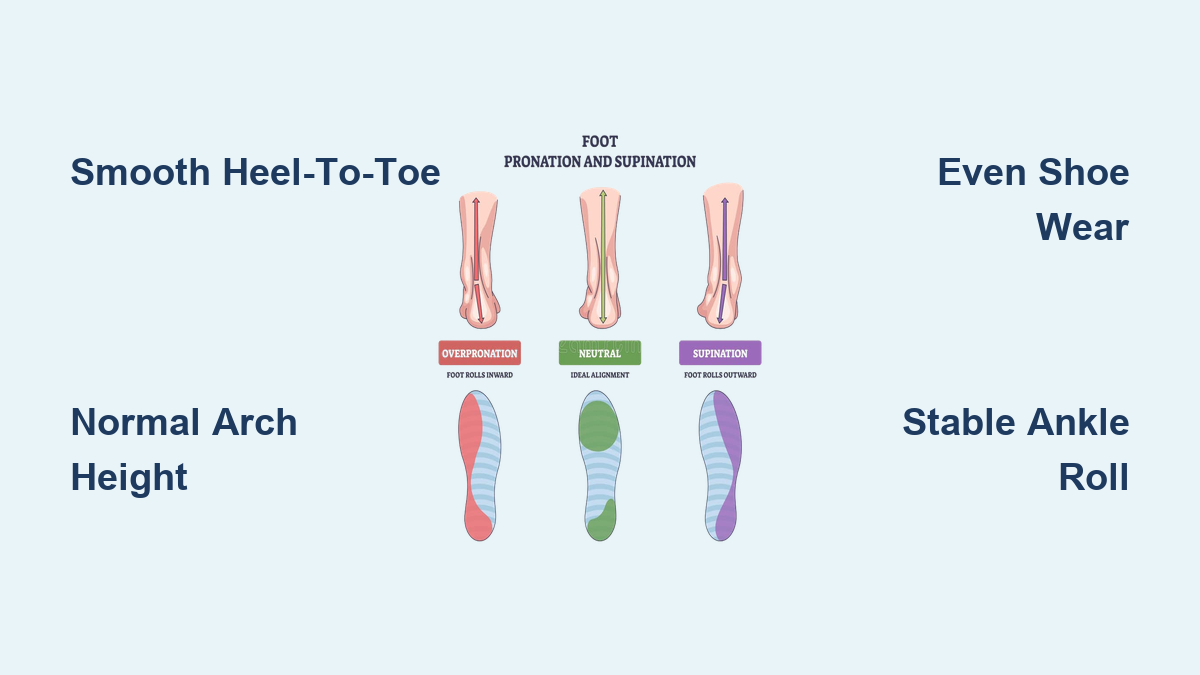
Overpronation occurs when your foot rolls excessively inward during the gait cycle—beyond the healthy 15% range. This over-rotation flattens the arch and shifts weight to the inner edge of the foot, compromising stability and alignment from the ground up.
How to Recognize Overpronation
- Flat or collapsing arches when standing.
- Ankle tilting inward during walking or running.
- Shoe wear on the inner sole, especially under the ball of the foot and near the big toe.
- Feet that splay outward due to arch collapse.
- Calluses or bunions forming on the inside of the foot from excessive pressure.
“Overpronation is when the arch of the foot collapses excessively downward and inward with each step.” — Joseph Dobrusin, DPM
What Causes Overpronation?
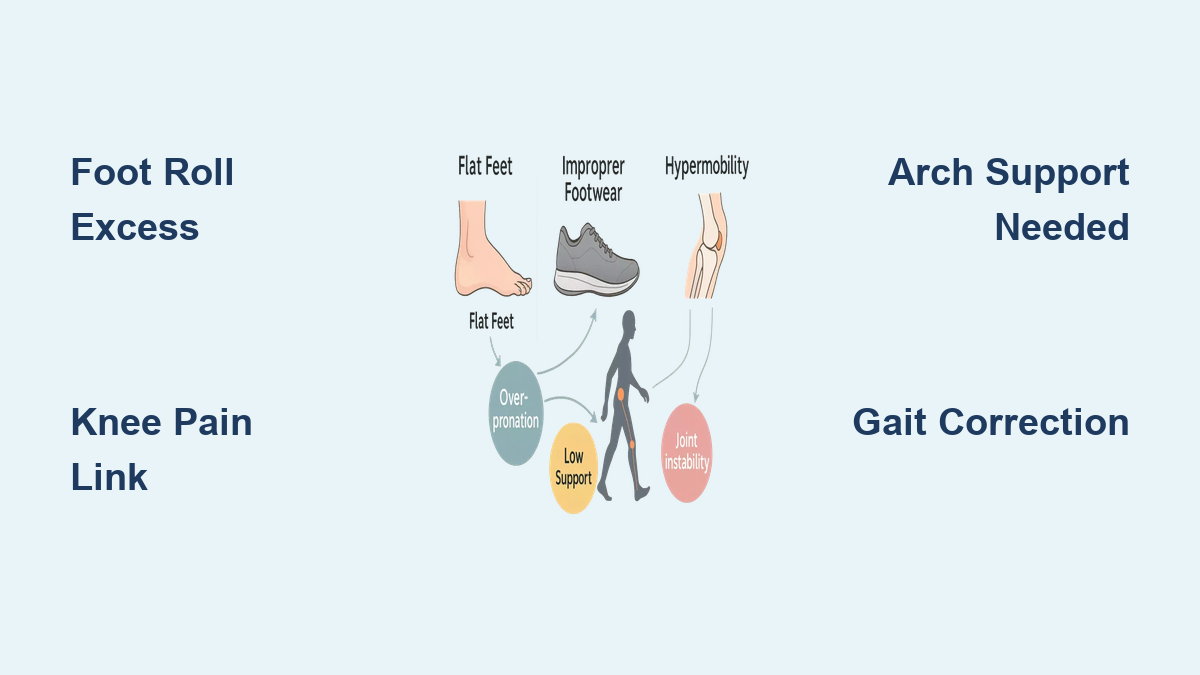
- Structural flat feet or weak arches, either genetic or developed over time.
- Weak posterior tibialis muscle, a key stabilizer of the arch.
- Worn-out or unsupportive shoes that fail to control inward motion.
- High body weight, increasing strain on the arches.
- Hip or pelvic misalignment, which alters gait mechanics through the kinetic chain.
Common Injuries Linked to Overpronation
This imbalance doesn’t just affect the foot—it sends shockwaves up the body:
– Plantar fasciitis: Inflammation from overstretching the foot’s bottom fascia.
– Shin splints: Pain along the inner shin due to overworked tibialis posterior.
– Achilles tendonitis: Resulting from altered ankle mechanics.
– Knee pain (patellofemoral syndrome): Caused by internal tibia rotation.
– Hip and lower back pain: From asymmetrical loading and pelvic tilt.
How to Test for Overpronation at Home
The Wet Footprint Test
- Wet the sole of your bare foot.
- Step onto a dark surface like concrete or paper.
- Examine the imprint:
– Overpronation: Nearly the full footprint with little to no arch gap.
– Neutral: Moderate arch visible—about half of the midfoot.
– Supination: Only a thin outer strip connects heel and forefoot.
“If the impression is almost your entire footprint, you’re an overpronator.” — Joseph Dobrusin, DPM
Shoe Wear Check
Inspect your most worn shoes. Excessive wear on the inner edge, especially under the big toe, is a strong indicator of overpronation.
Supination: When the Foot Rolls Too Far Outward

Supination, or underpronation, happens when the foot doesn’t roll inward enough after heel strike. Instead, it stays on the outer edge, failing to absorb shock effectively and increasing stress on joints.
Signs You Might Be a Supinator
- High, rigid arches that don’t flatten during stance.
- Weight concentrated on the outer foot when walking or running.
- Shoe wear on the lateral (outer) heel and forefoot.
- Frequent ankle sprains due to lateral instability.
- Calluses on the outer toes or heel from uneven pressure.
“Supination is when the foot rolls outward, placing most of a person’s body weight on the outer border of the foot.” — Carol Mack, D.P.T.
What Causes Supination?
- Naturally high arches (cavus foot), often hereditary and less flexible.
- Tight calf muscles and Achilles tendon, limiting ankle dorsiflexion.
- Narrow or stiff footwear that restricts natural foot motion.
- History of ankle sprains, leading to protective gait patterns.
- Muscle imbalances, especially weak hip abductors.
Injuries Common in Supinators
Despite being less discussed, supination carries serious risks:
– Ankle sprains: High risk due to instability on the outer foot.
– Stress fractures: From concentrated impact on small foot areas.
– IT band syndrome: Tightness on the outer knee due to reduced internal rotation.
– Plantar fasciitis: Poor shock absorption can strain the fascia.
– Achilles tendonitis: Caused by tight posterior chain muscles.
How to Test for Supination
Wet Footprint Test
- Supination pattern: Only a thin strip along the outer edge connects heel and forefoot.
- Little to no midfoot contact with the surface.
Shoe Wear Analysis
Look for excessive outer-edge wear, particularly on the heel and lateral forefoot. Combine this with gait observation for accuracy.
“If the impression shows just your heel, the ball of your foot, and a thin line on the outside, you’re an underpronator.” — Joseph Dobrusin, DPM
Diagnosing Your Gait: Professional vs. At-Home Methods
While home tests offer clues, a professional gait analysis provides the most accurate diagnosis.
Video Gait Analysis
– How it works: Walk or run on a treadmill while recorded in slow motion.
– What it reveals: Real-time foot roll, ankle alignment, and push-off mechanics.
– Where to get it: Specialty running stores, physical therapy clinics, or podiatry offices.
Clinical Biomechanical Assessment
Conducted by podiatrists or physical therapists, this includes:
– Visual evaluation of stance and stride.
– Pressure mapping systems (e.g., Foot Levelers Kiosk).
– 3D motion capture or force plates for precise data.
– Static and dynamic foot posture analysis.
“Someone skilled in biomechanics can evaluate your stride and determine if you pronate, supinate, or have other issues.” — Joseph Dobrusin, DPM
How Overpronation and Supination Affect the Whole Body
Both conditions disrupt the kinetic chain, leading to compensatory issues up the body.
Overpronation’s Ripple Effect
- Ankle: Rolls inward, straining medial ligaments.
- Knee: Tibia rotates internally, increasing patellar stress.
- Hip: Gluteus medius overworks to stabilize.
- Lower back: Asymmetrical forces may cause sacroiliac dysfunction.
“Overpronation can lead to other joints rotating excessively inward, such as the knee and hip.” — Carol Mack, D.P.T.
Supination’s Impact
- Ankle: Prone to inversion sprains.
- Knee: Reduced internal rotation increases IT band friction.
- Hip and spine: Less shock absorption means more impact travels upward.
- Foot: Stress fractures common in metatarsals due to poor force distribution.
“The lack of natural shock absorption means more impact travels straight up through the bones and joints.” — Article 6
Choosing the Right Shoes for Your Foot Type
Your footwear can either correct or worsen gait imbalances.
Best Shoes for Overpronation

Look for stability or motion-control features:
– Firm midsole to resist inward roll.
– Medial posting: Denser foam on the inner side.
– Structured arch support.
– Heel counter for rearfoot stability.
– Straight or semi-curved last.
Examples: Brooks Adrenaline GTS, ASICS Gel-Kayano, Saucony Guide.
“Look for motion-controlled shoes and insoles that provide proper arch support.” — Article 2
Best Shoes for Supination

Choose neutral, cushioned, flexible models:
– Soft midsole for shock absorption.
– Maximum cushioning, especially in heel and forefoot.
– Lightweight design.
– Deep heel cup for stability.
– Wide toe box for natural toe splay.
Examples: Nike Pegasus, Nike Vomero, Nike React Infinity Run.
“Choose neutral shoes like the Nike Pegasus or Nike Vomero to take advantage of their shock absorption and cushioning.” — Article 3
Orthotics: Custom vs Over-the-Counter Solutions
Insoles can significantly improve alignment and reduce pain.
Custom Orthotics
- Most effective for correcting biomechanical imbalances.
- Made from 3D scans or molds.
- Address individual foot mechanics precisely.
- Improve alignment, reduce pain, and extend shoe life.
“The most effective solution is customized orthotic insoles. Over-the-counter options typically do not provide sufficient correction.” — Article 1
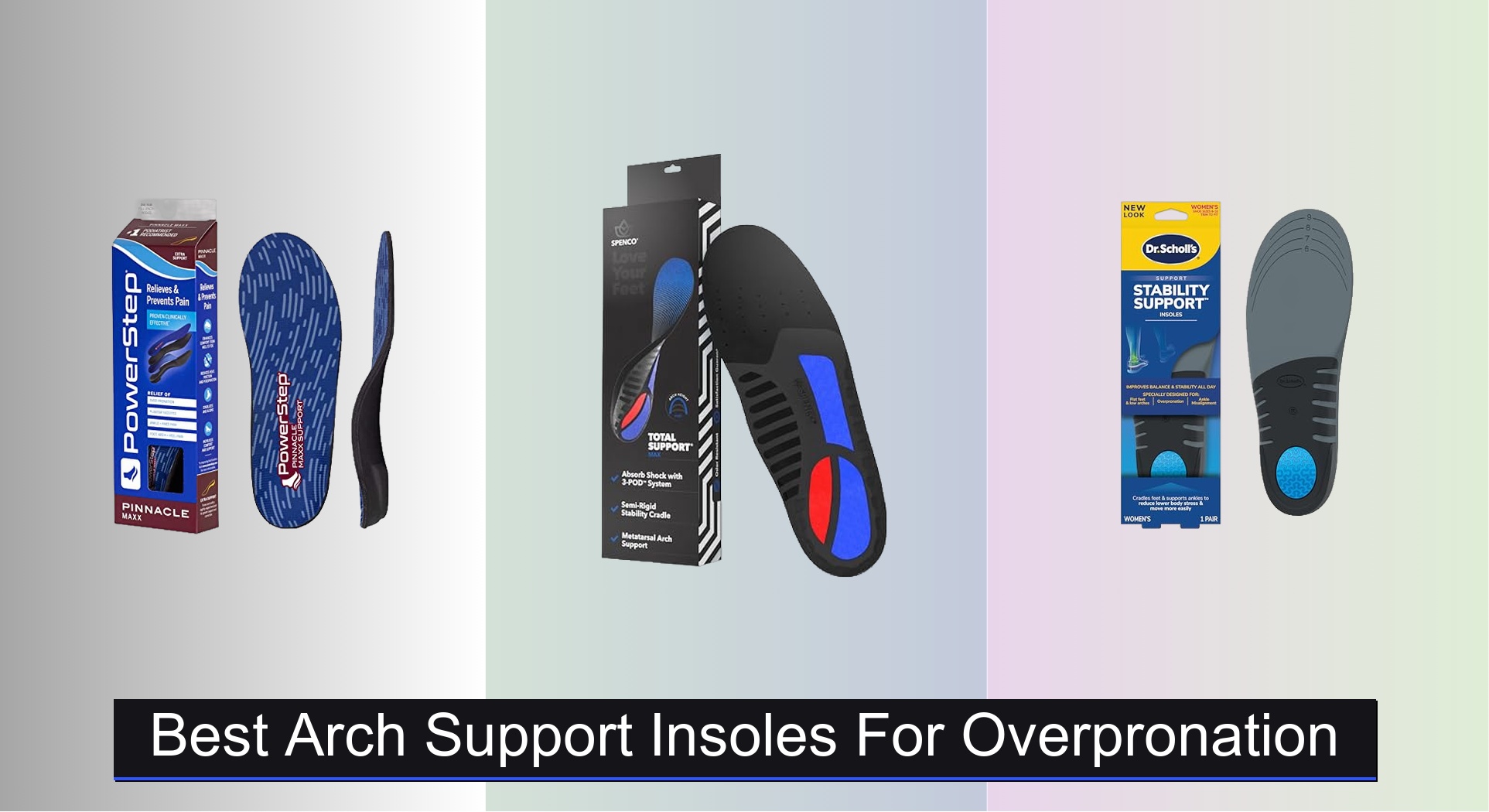
Over-the-Counter Insoles
- Good for mild cases.
- For overpronation: Rigid arch supports with medial posting.
- For supination: Cushioned, flat insoles with gel padding.
- Limitation: Less personalized than custom options.
“Arch supports or orthotic inserts can also help.” — Article 4
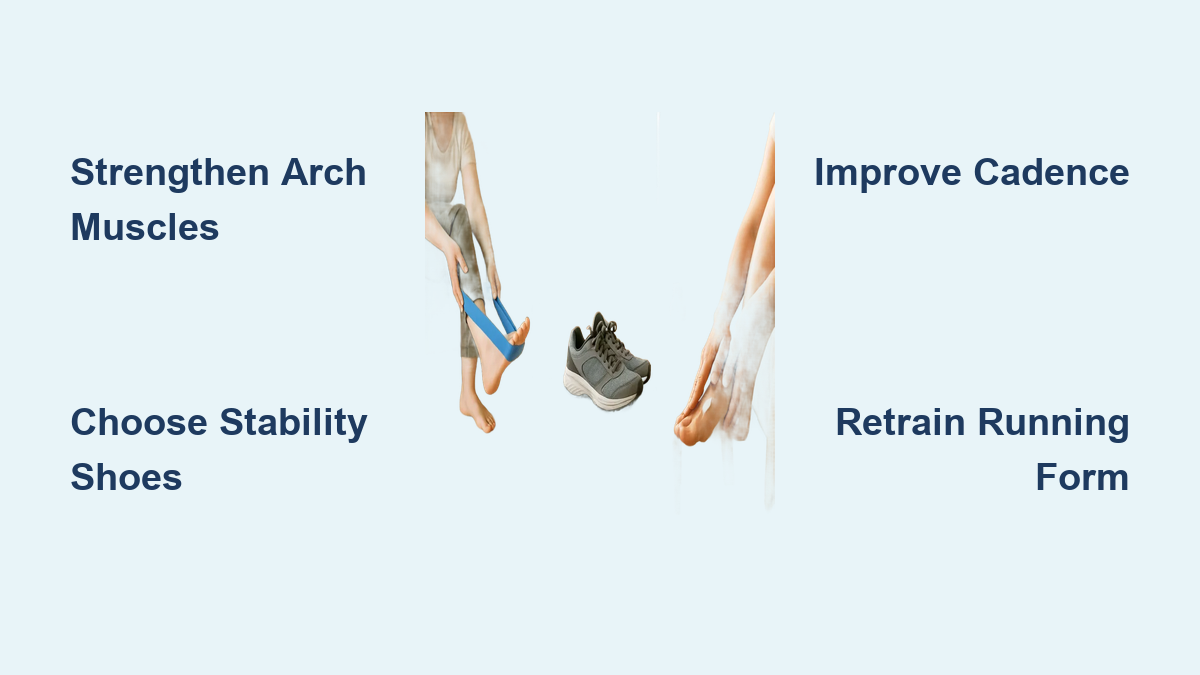
Exercises to Correct Overpronation and Supination
Targeted training can improve foot function over time.
For Overpronation
- Calf raises: 3 sets of 15 reps (double then single leg).
- Toe curls: Grab a towel with your toes to strengthen intrinsic muscles.
- Glute bridges: Activate glutes to support hip alignment.
- Single-leg balance: Stand on one foot for 30–60 seconds.
- Ankle circles: Improve mobility and proprioception.
“Exercises that assist with strengthening the arch of the foot, calves, and hips.” — Larisa Durrenberger, P.T.
For Supination
- Calf and Achilles stretches: Hold 30 seconds, 2–3 times daily.
- IT band foam rolling: Reduce lateral tension.
- Lateral band walks: Strengthen gluteus medius.
- Heel raises with ball squeeze: Promote neutral alignment.
- Single-leg reverse deadlifts: Improve balance and hip control.
“Stretching your calves, Achilles tendon, and the bottom of your foot also helps maintain flexibility.” — Article 6
Daily Foot Health Tips
- Walk barefoot (when safe): Strengthens foot muscles.
- Maintain tripod stance: Equal pressure on heel, big toe, and little toe.
- Spend 5–10 minutes daily on foot exercises for long-term improvement.
“If it’s comfortable, weightlifting without shoes makes the foot muscles work harder.” — Larisa Durrenberger, P.T.
Advanced Interventions When Needed
When conservative methods fall short:
– Physical therapy: For muscle imbalances or chronic pain.
– Bracing or taping: Short-term support during activity.
– Surgical options: Reserved for severe structural deformities.
Bonus: Forearm Pronation and Supination
While this guide focuses on foot mechanics, pronation and supination also occur in the forearm:
– Pronation: Palm faces down (e.g., typing).
– Supination: Palm faces up (e.g., holding a bowl).
– Normal range: ~75° pronation, ~85° supination.
– Daily tasks require about 50° of motion in each direction.
“If rotation is limited by more than 30 degrees, more shoulder rotation is required, which can be problematic if chronic.” — Article 3
The difference between overpronation and supination lies in the direction and degree of foot roll during gait. Overpronation means too much inward roll, linked to flat feet and medial injuries. Supination means too little inward roll, tied to high arches and lateral instability. Both increase injury risk and affect the entire kinetic chain.
You can identify your pattern using simple at-home tests—wet footprint and shoe wear—and confirm it with professional gait analysis. The fix? Wear corrective footwear, use custom orthotics, and perform targeted exercises. Early intervention prevents long-term damage and boosts comfort, mobility, and performance.
Your feet are your foundation. Understanding your gait isn’t just about foot health—it’s about optimizing how your whole body moves.