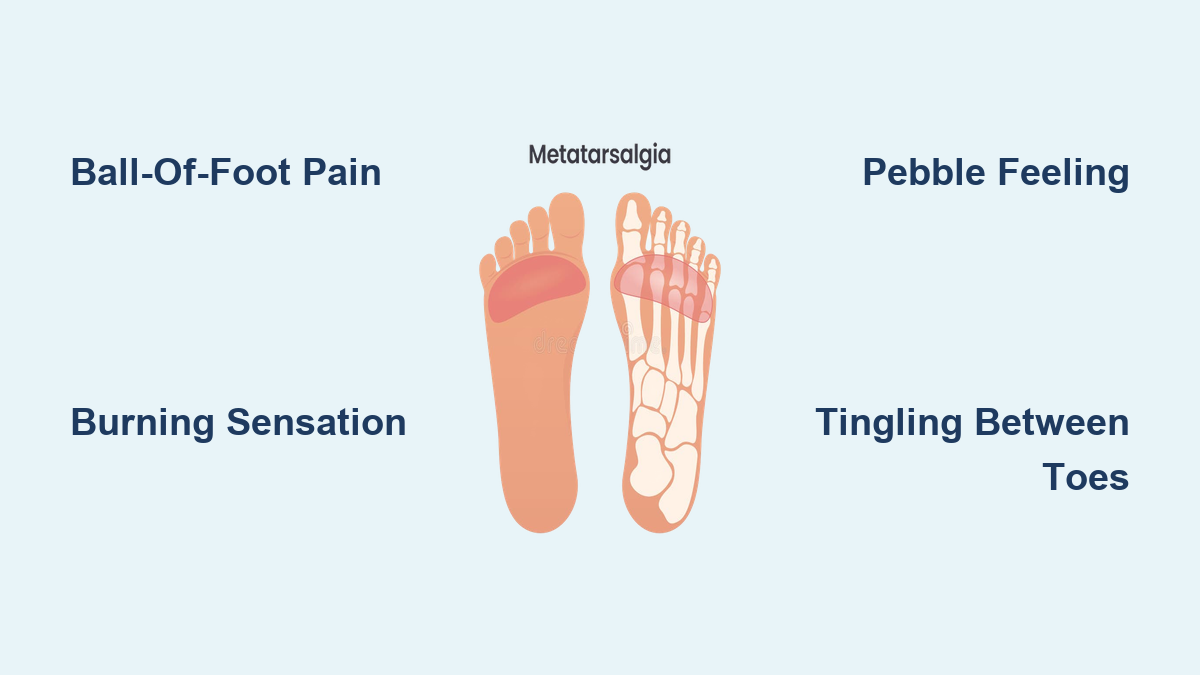
If you’re a runner and feel a sharp, burning, or bruise-like pain under the ball of your foot during or after a run, you may be experiencing metatarsalgia—a common overuse condition affecting the forefoot. This discomfort typically centers beneath the metatarsal heads, especially the second, third, or fourth, and often flares up during push-off while running. For endurance athletes, this isn’t just soreness—it’s a red flag signaling repetitive stress, improper loading, or underlying structural issues.
Metatarsalgia isn’t a diagnosis but a symptom cluster pointing to forefoot overload. Runners often describe it as walking on a pebble, even with no object in their shoe. The pain usually worsens with activity—especially uphill runs or long distances—and eases with rest. But if ignored, it can progress from post-run twinges to constant pain that hinders daily walking. This guide breaks down the key symptoms, how they evolve, and what they might really mean beneath the surface.
Forefoot Pain: The Core Symptom
The defining feature of metatarsalgia is pain under the ball of the foot, specifically at the base of the toes where the metatarsal bones meet the phalanges. This area bears immense force during running—up to 110 tons per mile—and when pressure becomes uneven or excessive, inflammation and pain follow.
Sharp, Burning, or Bruise-Like Sensations
Runners report varying pain qualities:
– Sharp or stabbing pain during toe-off.
– Burning discomfort that lingers after running.
– Aching or bruised feeling, like stepping on a rock.
These sensations may occur separately or together, depending on the duration and intensity of activity. Early-stage pain often resolves with rest but returns with running. Over time, it can become persistent, even at rest.
Location Under the Metatarsal Heads
Pain most commonly targets the second metatarsophalangeal (MTP) joint, followed by the third and fourth. This pattern stems from biomechanics: the second metatarsal is often longer or stiffer, concentrating force during propulsion. While pain can affect one or both feet, bilateral symptoms suggest systemic causes like poor footwear or training errors.
Avoid mistaking big toe base pain for typical metatarsalgia—it may indicate sesamoiditis, a related but distinct condition requiring different management.
Activity Triggers and Relief Patterns
Metatarsalgia symptoms are highly responsive to mechanical load. Recognizing what worsens or eases pain helps confirm the condition and guide treatment.
Running and Hard Surfaces Worsen Pain
Common aggravators include:
– Long or intense runs, especially on concrete or asphalt.
– Uphill running, which increases forefoot pressure due to greater ankle dorsiflexion.
– Sprinting or jumping, boosting impact forces.
– Worn-out or unsupportive shoes with collapsed midsoles.
Even walking on tile or standing for hours can trigger discomfort in sensitive cases. Barefoot running on hard ground removes cushioning, further increasing strain on the metatarsal heads.
Rest and Offloading Bring Relief
Key relieving factors:
– Stopping activity—pain often disappears immediately when running ends.
– Resting with feet elevated post-run.
– Walking on soft surfaces like grass or trails.
– Removing shoes and avoiding weight-bearing.
This on-off pattern—pain during loading, relief with rest—is a hallmark of early-stage metatarsalgia. If pain persists at rest, consider more serious conditions like stress fractures.
Nerve-Related Sensations in the Foot
Beyond pain, neurological symptoms suggest nerve irritation or compression, often overlapping with conditions like Morton’s neuroma.
Numbness and Tingling Between Toes
Many runners report:
– Numbness in the third and fourth toes.
– Tingling or “pins and needles” during or after runs.
These symptoms arise from interdigital nerve irritation, commonly between the third and fourth metatarsals. Tight shoes or forefoot swelling can compress these nerves, mimicking neuroma symptoms—even if no neuroma is present.
Feeling of a Pebble in the Shoe
One of the most telling signs is the persistent sensation of walking on a stone, despite an empty shoe. This “foreign body” feeling occurs due to localized pressure, inflammation, or nerve hypersensitivity under the metatarsal head. It often persists barefoot or with thick socks, confirming the issue is internal, not external.
This symptom is so common it’s colloquially called a “stone bruise”—but true bruising may not exist. Instead, it reflects focal tissue irritation from repetitive microtrauma.
Visible and Palpable Physical Signs

While metatarsalgia starts as pain, chronic cases develop observable changes indicating prolonged overload.
Swelling and Joint Tenderness
Look for:
– Subtle swelling around the MTP joints, especially after activity.
– Tenderness when pressing on a specific metatarsal head.
Swelling may not be visible but can be detected through palpation. If present, it suggests synovitis or capsulitis—inflammation of the joint lining or capsule—common in overtrained runners.
Calluses Under the Forefoot
Thickened, hardened skin (calluses) under the metatarsal heads signal chronic pressure. These form as the body’s defense against friction and load but can worsen pain by creating rigid, high-pressure zones. Calluses under the second or third metatarsal are strong indicators of uneven weight distribution.
Never cut or aggressively file calluses—this risks ulceration. Instead, address the root cause: improper loading or footwear.
How Symptoms Progress Over Time

Metatarsalgia doesn’t appear overnight. Symptoms evolve based on training load, biomechanics, and intervention timing.
Sudden Onset After Intense Runs
Acute cases may follow:
– A marathon or half-marathon.
– Sprint intervals on pavement.
– Running barefoot on sand.
Pain starts mid-run and resolves with rest. Without changes to shoes, form, or training, it returns with each session.
Gradual Buildup From Repetitive Stress
More often, symptoms creep in over weeks:
– Early: Mild ache after running, gone by morning.
– Mid-stage: Pain starts earlier in runs, lasts longer post-run.
– Late: Pain during walking, standing, or even at rest.
At this stage, structural changes like joint inflammation or nerve irritation are likely. Ignoring progression risks chronic pain or secondary injuries.
Gait and Biomechanical Clues
Symptoms are tightly linked to how you run. Subtle gait flaws or foot structure can overload the forefoot.
High Arches or Overpronation Increase Risk
Risk factors include:
– High arches (pes cavus): Reduce shock absorption, shifting load to forefoot.
– Flat feet (overpronation): Cause the forefoot to twist, increasing pressure on the lateral metatarsals.
– Morton’s toe: A longer second metatarsal concentrates force under that joint.
These structural traits amplify stress during toe-off, especially in minimalist shoes or worn-out trainers.
Altered Running Form as a Coping Mechanism
Pain changes how you run:
– Shifting to heel striking to avoid forefoot loading.
– Shortened stride to reduce push-off force.
– Reduced propulsion, leading to inefficient running.
These compensations may protect the foot short-term but increase injury risk in knees, hips, or lower back.
Conditions That Mimic Metatarsalgia

“Metatarsalgia” is not a final diagnosis—it’s a symptom with multiple possible causes. Treating it generically risks missing the real problem.
Metatarsal Stress Fracture
- Focal, worsening pain that persists at rest.
- May hurt more at night.
- Swelling and point tenderness.
- Requires MRI or X-ray for confirmation.
Stress fractures often start as metatarsalgia but progress to unremitting pain. Runners with sudden increases in mileage are at highest risk.
Morton’s Neuroma
- Electric-shock-like pain between third and fourth toes.
- Numbness and tingling dominate.
- Worse in narrow or tight shoes.
Ultrasound or MRI can confirm nerve thickening. Often misdiagnosed as simple metatarsalgia.
Plantar Plate Sprain
- Pain under a single MTP joint, often with swelling.
- May cause toe drifting or hammertoe formation.
- Pain increases with upward toe movement.
This ligament injury requires specific stabilization and rehab, not just rest.
Sesamoiditis
- Pain under the big toe joint.
- Aggravated by running uphill or on toes.
- Common in dancers and sprinters.
Often confused with first metatarsal metatarsalgia but involves the sesamoid bones beneath the joint.
Why Footwear and Training Matter
Your shoes and training habits directly influence symptom onset and severity.
Worn-Out or Poorly Cushioned Shoes
Shoes with:
– Collapsed midsoles lose shock absorption.
– Thin forefoot padding increase impact.
– Narrow toe boxes compress nerves and metatarsals.
Replace running shoes every 300–500 miles. Minimalist shoes may increase forefoot load—transition slowly.
Training Errors That Trigger Pain
Common mistakes:
– Sudden mileage increases (more than 10% per week).
– Too much speedwork or hill training.
– Running on hard surfaces without adaptation.
Gradual progression and surface variation reduce forefoot stress.
Risks of Ignoring the Symptoms
Leaving metatarsalgia unchecked leads to long-term issues.
Chronic Pain and Joint Damage
Untreated overload can cause:
– Chronic MTP joint inflammation.
– Cartilage degeneration (e.g., Freiberg’s disease).
– Stiffness or reduced toe mobility.
These changes impair push-off mechanics and running efficiency.
Secondary Injuries From Altered Gait
Compensating for foot pain shifts load elsewhere, increasing risk of:
– Patellofemoral pain (runner’s knee).
– Iliotibial band syndrome.
– Hip or lower back strain.
Fix the root cause—don’t just run through pain.
Diagnostic Steps to Identify the Real Cause
Since “metatarsalgia” is a symptom, not a diagnosis, accurate assessment is crucial.
Clinical Exam and Palpation
A podiatrist or sports medicine provider should:
– Press on each metatarsal head to locate tender spots.
– Assess toe alignment for drift or hammertoes.
– Test range of motion at the MTP joints.
– Evaluate gait, both barefoot and shod.
Imaging When Needed
Imaging helps rule out specific pathologies:
– X-ray: Check for stress fractures or bone changes.
– Ultrasound or MRI: Detect neuromas, plantar plate tears, or soft tissue inflammation.
– Pressure mapping: Measure force distribution during walking or running.
This data guides targeted treatment—not guesswork.
Final Note: Metatarsalgia in runners is more than just forefoot soreness—it’s a warning sign of overload, poor mechanics, or underlying injury. Recognizing symptoms like ball-of-foot pain, pebble-like sensations, and activity-related numbness allows for early intervention. But don’t stop at the label “metatarsalgia.” Seek a detailed evaluation to uncover the real cause—whether it’s a stress fracture, neuroma, or plantar plate injury—and get the right treatment to stay running safely.