Introduction
Foot sprains and strains are common injuries that can affect anyone, from athletes to individuals simply walking on uneven ground. A sprain occurs when ligaments—fibrous tissues connecting bones—are stretched or torn, while a strain involves damage to muscles or tendons. Both can lead to pain, swelling, and limited movement.
Understanding how to properly treat these injuries is crucial for a smooth recovery. Ignoring symptoms or failing to follow proper care techniques can lead to long-term complications. Whether you’re dealing with a minor strain or a more severe sprain, knowing the right steps can help you heal faster and prevent future injuries.
Understanding Sprains and Strains
While sprains and strains share similar symptoms, they affect different structures in the foot.

- Sprains occur when ligaments are stretched or torn, often due to sudden twisting or rolling of the foot.
- Strains involve muscle or tendon damage, commonly caused by overuse or overstretching.
Severity Levels:
- Mild (Grade 1): Minor stretching with slight pain and swelling
- Moderate (Grade 2): Partial tearing of ligaments or tendons with noticeable swelling and bruising
- Severe (Grade 3): Complete tear of ligaments, leading to instability and extreme pain
Common Symptoms:
- Pain, especially when moving or putting weight on the foot
- Swelling and bruising
- Tenderness and stiffness
- Limited range of motion
Causes and Risk Factors
Understanding the common causes of foot sprains and strains can help prevent them in the future.
Common Causes:
- Overuse: Engaging in repetitive activities without proper rest
- Improper Footwear: Wearing unsupportive shoes can increase injury risk
- Sudden Impact: Tripping, falling, or misstepping on an uneven surface
- Weak Muscles: Lack of strength or flexibility can lead to instability
Who’s at Risk?
- Athletes involved in high-impact sports
- People with poor balance or weak ankle stability
- Those who frequently wear high heels or unsupportive footwear
- Individuals with previous foot injuries
Immediate First Aid for Foot Sprains and Strains
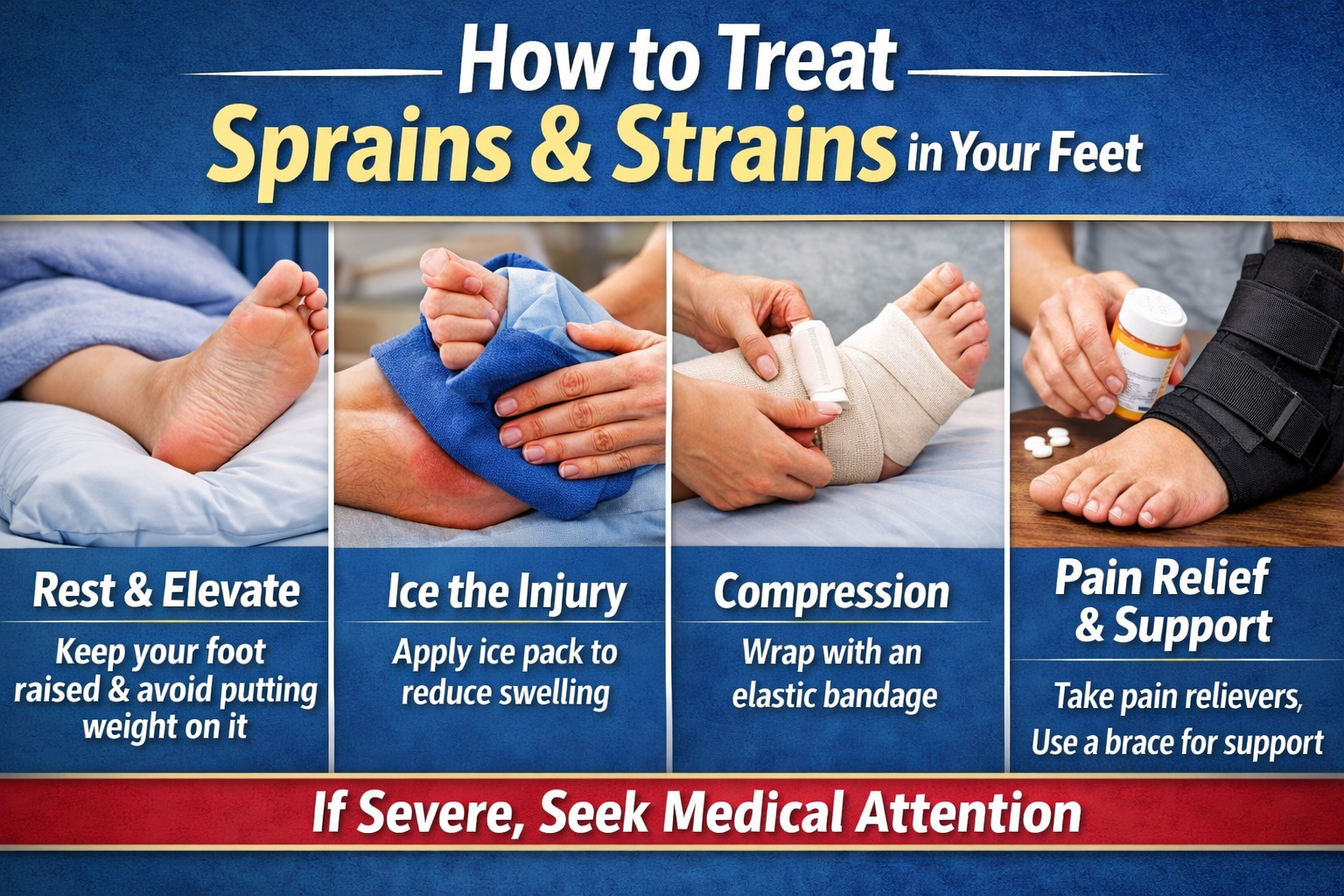
The best way to manage a foot sprain or strain immediately after injury is by using the R.I.C.E method:

- Rest: Avoid putting weight on the injured foot to prevent further damage.
- Ice: Apply an ice pack wrapped in a towel for 15-20 minutes every 2-3 hours.
- Compression: Use an elastic bandage to reduce swelling, but don’t wrap too tightly.
- Elevation: Keep the foot raised above heart level to minimize swelling.
Additional Tips:
- Avoid heat treatments (like hot packs) in the first 48 hours as they can worsen swelling.
- Use crutches if necessary to avoid putting weight on the foot.
- Over-the-counter pain relievers like ibuprofen can help manage discomfort.
When to Seek Medical Attention
Most mild sprains and strains heal with home care, but severe cases may require professional treatment.
Signs You Should See a Doctor:
- Severe pain that doesn’t improve with rest
- Inability to bear weight on the foot
- Visible deformity or extreme swelling
- Numbness or tingling in the foot
- Symptoms that persist beyond a few weeks
A doctor may perform X-rays or MRIs to determine the extent of the injury. In rare cases, surgery may be required for torn ligaments or severe instability.
Home Remedies for Mild Sprains and Strains
If your foot injury is mild, you can speed up recovery with simple home remedies.

Gentle Stretching and Mobility Exercises
After a few days of rest, start gentle movements to prevent stiffness:
- Toe stretches: Slowly stretch your toes upward and downward.
- Ankle rotations: Rotate your foot in small circles to regain mobility.
- Towel stretch: Sit with your leg extended, loop a towel around your foot, and gently pull back.
Natural Anti-Inflammatory Remedies
- Turmeric paste: Apply a mix of turmeric and water to reduce inflammation.
- Ginger tea: Drinking ginger tea may help reduce swelling.
- Epsom salt soaks: Soaking your foot in warm water with Epsom salt can relax muscles and relieve pain.
Medical Treatments and Therapies
For moderate to severe injuries, professional treatment may be necessary.
Physical Therapy
A therapist can guide you through:
- Strengthening exercises
- Balance training
- Manual therapy to improve mobility
Medications for Pain Relief
- Over-the-counter pain relievers like ibuprofen
- Prescription painkillers for severe cases
Advanced Treatments
- Ultrasound therapy: Helps reduce deep tissue inflammation.
- Corticosteroid injections: Used for chronic pain and swelling.
Recovery and Rehabilitation
Recovery time depends on the severity of the injury:
- Mild sprains: 1-2 weeks
- Moderate sprains: 3-6 weeks
- Severe sprains: Several months
Steps to Full Recovery
- Gradually Increase Activity: Avoid sudden movements that could re-injure the foot.
- Strengthening Exercises: Resistance band exercises can help rebuild strength.
- Proper Footwear: Wear shoes with arch support and cushioning.
Preventing Future Sprains and Strains
To avoid reinjury, follow these steps:

Proper Warm-Ups and Cool-Downs
- Stretch before and after physical activities.
- Perform dynamic movements like toe taps before exercising.
Strengthening Foot Muscles
- Try standing on one leg for balance training.
- Do calf raises to strengthen ankle support.
Wearing the Right Shoes
- Use shoes designed for your activity.
- Avoid worn-out footwear that lacks support.
Lifestyle Adjustments for Foot Health
Maintaining a Healthy Weight
Excess weight puts more strain on your feet, increasing injury risk. A balanced diet and regular exercise can help maintain a healthy weight.
Avoiding High-Risk Activities
If you’ve had multiple foot injuries, be mindful of high-impact sports and uneven surfaces.
The Benefits of Regular Foot Massages
Massaging your feet improves circulation, relieves tension, and promotes healing.
Special Considerations for Athletes
Athletes face a higher risk of foot injuries due to intense physical activity.
Common Sports-Related Foot Injuries
- Ankle sprains from sudden movements.
- Plantar fasciitis from repetitive stress.
- Achilles tendon injuries due to overuse.
Best Practices for Athletes
- Always warm up before training.
- Wear sport-specific footwear.
- Strengthen muscles around the foot and ankle.
The Role of Diet in Healing and Prevention
What you eat plays a crucial role in your recovery and foot health.
Nutrients That Promote Tissue Repair
- Protein: Supports muscle healing (found in lean meats, fish, and eggs).
- Vitamin C: Helps with collagen production (found in citrus fruits and bell peppers).
- Omega-3 Fatty Acids: Reduce inflammation (found in salmon and walnuts).
Hydration and Its Impact on Foot Health
Staying hydrated prevents muscle cramps and keeps tissues flexible.
Foods to Avoid
- Processed foods high in sugar
- Excess salt, which can cause water retention and swelling
Using Orthotics and Supportive Devices
If you’re prone to foot injuries, consider using orthotics.
Benefits of Orthotic Inserts
- Provides arch support
- Reduces strain on ligaments and tendons
Choosing the Right Brace for Support
- Ankle braces offer stability for weak ankles.
- Compression sleeves help control swelling.
Myths and Misconceptions About Foot Injuries
There are many myths surrounding foot sprains and strains.
Common Myths Debunked
- “You should walk it off.” → Resting is crucial for healing.
- “If you can move it, it’s not broken.” → Some fractures allow movement.
- “Only athletes get foot injuries.” → Anyone can suffer from sprains or strains.
Conclusion
Sprains and strains in the feet can be painful and frustrating, but with the right treatment, recovery is possible. The key is to act fast, follow proper care techniques, and take steps to prevent future injuries. Whether using home remedies or seeking medical treatment, prioritizing foot health can help you stay active and pain-free.
FAQs
1. How long does it take for a sprained foot to heal?
Mild sprains take about 1-2 weeks, while severe cases may take months.
2. Can I walk on a sprained foot?
It depends on the severity. For mild cases, limited movement is okay, but severe injuries require rest.
3. Are home remedies enough for treating a foot sprain?
For mild cases, yes. However, if pain persists, medical treatment is necessary.
4. Should I use heat or ice for a foot sprain?
Use ice for the first 48 hours to reduce swelling, then switch to heat for relaxation.
5. Can wearing the wrong shoes cause foot injuries?
Yes, unsupportive shoes can increase the risk of sprains and strains.