If you’ve ever finished a hike with bruised toenails, throbbing toes, or blisters on your pinky toe, you know the misery of hiking boot toe pain. It’s one of the most common—and preventable—problems hikers face, especially on long descents. The culprit? Your foot slides forward with every step, slamming your toes into the front of the boot. Over time, this repeated impact leads to black toenails, numbness, blisters, and even long-term foot damage.
But here’s the good news: toe pain isn’t inevitable. With the right boot fit, lacing techniques, gear choices, and hiking form, you can eliminate toe jamming for good. Whether you’re tackling steep mountain trails or weekend day hikes, this guide gives you a complete action plan to stop toe pain before it starts—using proven biomechanical principles, real-world testing, and expert-backed strategies.
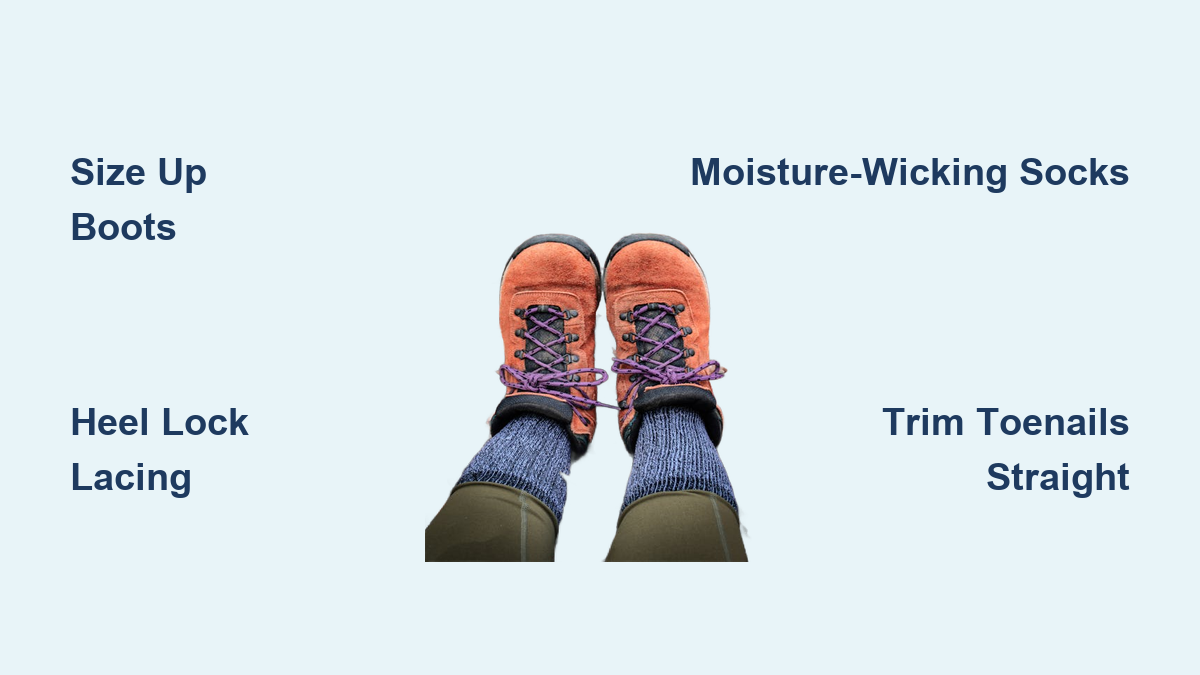
Lock Your Heel in Place with Smart Lacing

Improper lacing is one of the fastest ways to invite toe pain. Most hikers lace their boots like sneakers—but hiking demands more stability, especially downhill. A few simple adjustments can dramatically reduce foot movement.
Use the Heel Lock Lacing Technique
The heel lock (or “lace lock”) method is the single most effective way to stop your foot from sliding forward. It secures your heel deep in the boot’s heel cup, minimizing forward surge.
How to do it:
1. Lace your boots normally up to the second-to-last eyelet.
2. Instead of crossing the laces, run each lace straight up through the top eyelet on the same side.
3. Pull each lace diagonally across and thread it under the opposite lace loop.
4. Tighten and tie securely.
This creates a locking “pocket” around your ankle and heel, reducing forward foot movement by up to 60%. It’s especially effective in low-cut trail runners or flexible hiking shoes.
Secure Your Midfoot with the Surgeon’s Knot
Standard shoelace knots loosen over time, especially on rocky terrain. The surgeon’s knot adds an extra wrap to increase friction and keep your laces tight.
Steps:
1. After lacing, form a loop with each lace.
2. Wrap the free end around the loop twice (not once).
3. Pull through and finish with a regular bow.
Use this at the ankle or instep to maintain midfoot stability during long descents. It’s ideal for stiff, high-cut boots that tend to loosen over time.
Relieve Pressure with Window or Skip Lacing
Sometimes, your toes hurt because the top of your foot is too tight. Window lacing and skip lacing help relieve pressure without sacrificing heel security.
- Window lacing: Skip two eyelets over a high-pressure zone (like a bunion or swollen instep) and cross the laces around it to create a “window” of relief.
- Skip lacing: Start lacing from the third eyelet up to reduce pressure on the ball of the foot—perfect if you have metatarsal pain or Morton’s neuroma.
These techniques let you customize fit on the fly, so you stay comfortable without compromising support.
Choose the Right Boot Fit—Not Just the Right Size

Even perfect lacing can’t fix a poorly fitting boot. Many hikers assume their boots are too small when toes hurt—but boots that are too big are just as likely to cause jamming due to excessive foot movement.
Check Toe Box Clearance
When standing on a downhill slope (simulate this by placing your heel on a step), there should be ½ to 1 inch (1.25–2.5 cm) between your longest toe and the front of the boot. Any less, and you’ll risk constant impact. Any more, and your foot will slide forward with each step.
Pro tip: Always try boots on late in the day, when feet are naturally swollen, and wear the same socks you plan to hike in.
Assess Key Fit Zones
- Heel hold: Walk around and squat. Your heel should not lift more than 3–5 mm. If it does, the boot is too large or lacks proper heel lock design.
- Forefoot width: Your foot should lie flat without squeezing. Narrow boots compress toes; wide ones allow sliding.
- Lacing capacity: If laces max out at the top eyelets, the boot has too much volume—look for models with adjustable midfoot lacing.
Break In Boots Gradually
New boots often feel stiff and don’t conform to your foot immediately. Wear them on short hikes before tackling long trails. Avoid waterproof membranes like Gore-Tex during break-in—they trap heat and moisture, increasing friction and blister risk.
Optimize Socks and Insoles for Stability and Comfort

Your boot is only as good as what’s inside it. Socks and insoles dramatically affect fit, cushioning, and moisture control.
Wear the Right Socks
- Merino wool blends: Wicks moisture, resists odor, and regulates temperature.
- Synthetic performance socks: Dry fast and withstand heavy use.
- Double-layer socks: Reduce shear forces—ideal for blister-prone hikers.
- Liner + outer sock combo: A thin polypropylene liner reduces friction; a thick wool outer adds cushion.
Never wear cotton socks—they retain sweat, increase friction, and are a leading cause of blisters.
Match Sock Thickness to Boot Fit
Too thin? Not enough cushion. Too thick? Compressed fit increases pressure and heat. Aim for a snug but not tight feel with full circulation. You should be able to wiggle your toes freely.
Upgrade to Supportive Insoles
Stock insoles compress quickly, leading to heel slippage and foot fatigue. Replace them with:
– Superfeet, Tread Labs, or Sorbothane for arch support and heel stability.
– Custom orthotics if you have flat feet, overpronation, or biomechanical imbalances.
Add gel toe pads under the forefoot for extra cushion on long descents. Replace insoles every 300–500 miles—they wear out silently.
Adjust Your Hiking Technique to Reduce Toe Impact
Your body position and stride play a huge role in toe impact—especially going downhill.
Shorten Your Stride on Descents
Long strides increase forward momentum and force your toes into the boot. Instead:
– Take short, quick steps.
– Land flat-footed or slightly heel-first to reduce toe pressure.
– Focus on balance, not speed.
This reduces impact forces by up to 30% and gives you better control.
Maintain an Athletic Stance
Avoid leaning backward—this shifts your weight onto your heels and forces your feet forward. Instead:
– Keep a slight bend in hips, knees, and ankles.
– Center your weight over the arch of your foot.
– Engage your core to stay upright.
Think of yourself as a skier in a ready position—balanced and ready to absorb terrain.
Use Trekking Poles
Trekking poles transfer 20–30% of lower-body load to your arms, reducing stress on your feet and legs. They also help you:
– Control descent speed.
– Maintain balance on loose terrain.
– Prevent uncontrolled foot slide.
Use adjustable poles and set them slightly longer for downhill sections.
Zigzag Down Steep Slopes
Going straight down increases continuous toe impact. Instead, zigzag across the trail or use switchbacks. This breaks up the descent, reduces forward force, and lets you pivot using natural terrain features.
Protect Your Toes and Prevent Blisters
Even with perfect fit and form, friction can still cause hot spots and blisters. Protect your toes before they become a problem.
Tape Vulnerable Areas Early
At the first sign of rubbing, apply Leukotape or athletic tape in overlapping strips over the affected toe. It sticks well even when sweaty and prevents blisters far better than treating them after.
Preemptive taping is key—especially on multi-day hikes or wet trails.
Apply Anti-Chafe Products
- BodyGlide or similar balms reduce skin-on-boot friction. Apply to toes, heels, and pressure points before every hike.
- Tegaderm: Waterproof, breathable film that protects toes for days. Ideal for long-distance hikers.
Use Wool Protection (WURU Wool)
New Zealand wool wrapped around toes absorbs moisture, reduces friction, and stays in place. It’s reusable, breathable, and perfect for sensitive or blister-prone areas.
Strengthen Your Feet and Legs
Weak intrinsic foot muscles lead to poor stability and increased foot movement. Strong feet stay centered in the boot and resist sliding.
Do the Arch Shortening Drill
- Stand barefoot and focus on shortening your arch without curling your toes.
- Hold for 5 seconds, repeat 10 times per foot.
- Activates small foot muscles that stabilize your arch and improve balance.
Perform this daily to build neuromuscular control.
Try the Pee Step-Down Exercise
- Stand on a step with heels hanging off.
- Slowly lower heels, then rise onto toes.
- Do 3 sets of 10 reps.
This strengthens the vastus medialis obliquus (VMO) and forefoot stabilizers—critical for controlled descents.
Follow a Pre-Hike Training Plan
- 30-Day Couch to Summit Program: Gradually builds endurance and foot strength.
- 8-Week Progressive Hiking Program: Includes load-carrying drills and downhill training.
Stronger legs and feet mean better control, less fatigue, and reduced toe jamming.
Practice Smart Foot and Boot Care
Daily maintenance keeps your feet healthy and your boots performing.
Check Your Feet Mid-Hike
Stop at least once per hike to:
– Remove boots and inspect for hot spots, swelling, or debris.
– Air out feet to reduce moisture.
– Re-lace or adjust socks if needed.
Catch problems early—before they turn into blisters or bruised nails.
Wash and Dry Feet After Hiking
- Clean with soap and water; dry thoroughly, especially between toes.
- Trim toenails straight across—never rounded or too short.
- Use antifungal powder if prone to infections.
Maintain Your Boots
- Empty debris before and after each hike.
- Hang to air dry—never store damp.
- Avoid sealed bags or closets that trap moisture and promote mold.
Replace boots if you notice persistent heel slip, worn midsoles, or recurring pain despite adjustments.
Know When to Replace Your Boots
Even the best boots wear out. Don’t ignore these warning signs:
– Persistent toe pain despite lacing, socks, and insoles.
– Heel slippage that won’t resolve.
– Recurrent blisters in the same spot.
– Visible wear on insoles, midsole compression, or upper stretching.
Tips for Buying New Boots
- Shop at outdoor retailers with generous return policies.
- Try multiple brands—fit varies widely (e.g., Salomon runs narrow; KEEN runs wide).
- Get professionally fitted if possible.
- Break in new boots on short hikes before long trips.
Recognize When to See a Professional
Toe pain isn’t normal—it’s a warning sign. Seek medical advice if you experience:
– Persistent pain lasting more than a few weeks.
– Redness, swelling, or pus—signs of infection.
– Numbness or tingling—could indicate nerve compression.
– Yellow, thickened toenails—likely onychomycosis (fungal infection).
– Ingrown toenails—painful and prone to abscess if untreated.
A podiatrist can diagnose underlying issues and recommend custom orthotics or treatment.
Final Note: Toe pain from hiking boots is preventable, not inevitable. By combining proper fit, smart lacing, strong feet, and proactive care, you can hike longer, descend steeper trails, and protect your toes mile after mile. Start with one fix—like the heel lock lacing—and build from there. Your feet will thank you.